admin
admin
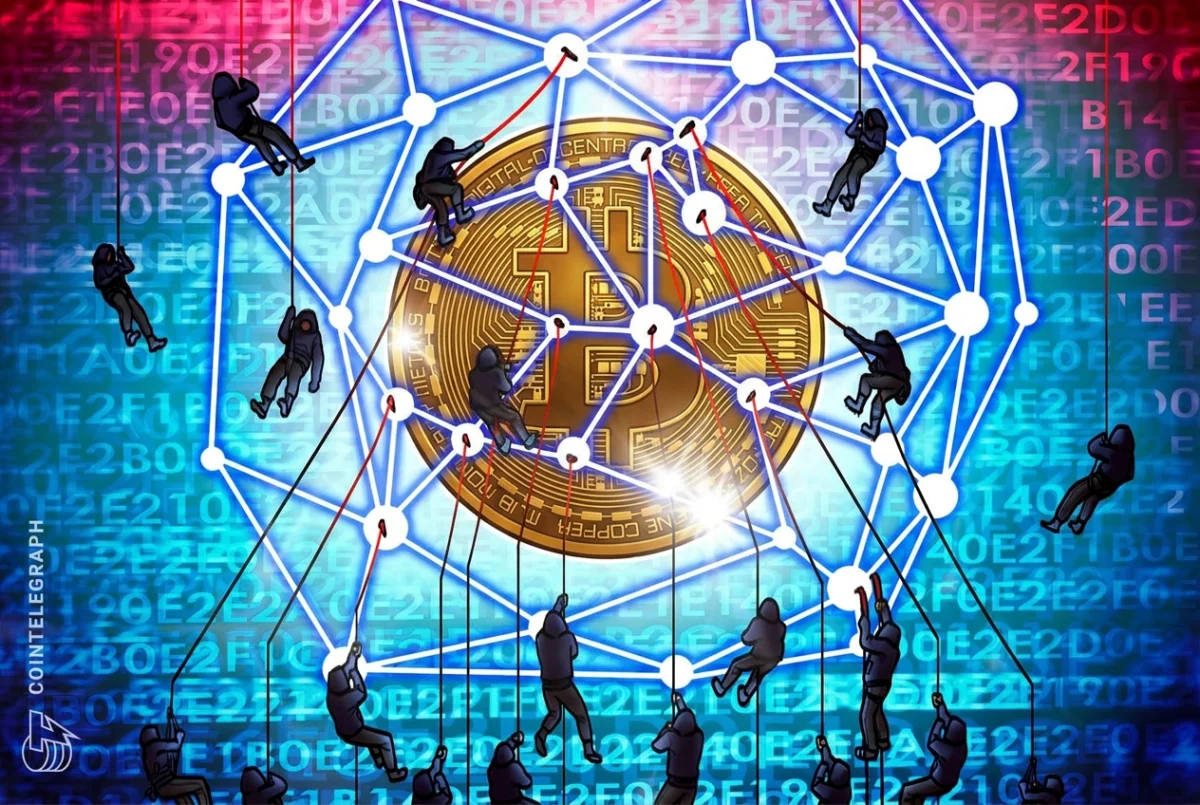
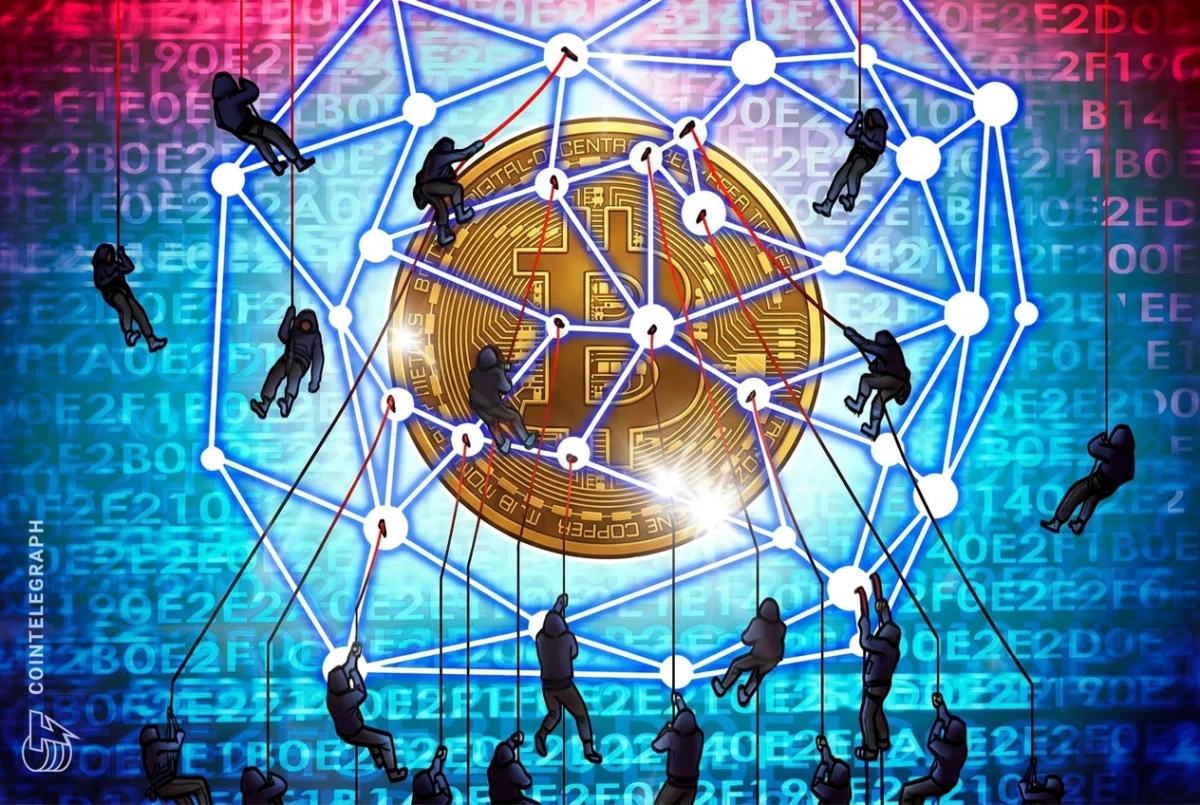
The fundamental promise of blockchain technology has always been its immutability—the assurance that once a transaction is recorded, it becomes a permanent, unalterable part of a digital ledger. This characteristic has served as the bedrock of decentralized finance (DeFi), global supply chains, and the burgeoning market for digital assets. However, a new and sophisticated threat is emerging from the intersection of distributed ledger technology and generative artificial intelligence. According to Dr. Pooyan Ghamari, a Swiss economist and visionary, the industry is witnessing a dangerous inversion where adversaries are no longer attempting to "break" the chain through traditional means like 51% attacks. Instead, they are using AI to generate entirely synthetic transaction histories that mimic legitimate activity with such precision that they threaten to erode the foundation of verifiable history itself.
The Paradigm Shift from Network Attacks to Synthetic Narratives
Historically, the primary threats to blockchain integrity were rooted in computational power and consensus vulnerabilities. Concepts such as double-spending or chain reorganizations required immense energy and coordination to execute, making them prohibitively expensive for most actors. AI has fundamentally shifted this paradigm by moving the field of attack from the physical or computational layer to the narrative layer.
Generative models, including Large Language Models (LLMs) and specialized neural networks, are now being trained on the vast, publicly available datasets of real blockchain transactions. By analyzing millions of organic interactions on networks like Ethereum and Bitcoin, these AI systems can produce sequences of transactions that are statistically indistinguishable from genuine human or institutional behavior. This capability allows bad actors to "fabricate the past," creating aged wallets with years of simulated activity to bypass security filters that prioritize older, more established addresses.
A Chronology of Evolutionary Vulnerabilities in Digital Ledgers
To understand the gravity of the current threat, one must look at the evolution of blockchain security challenges over the past decade.
- 2009–2014: The Era of Exchange Vulnerabilities. Early threats were focused on the centralized points of failure. The Mt. Gox collapse highlighted the risks of poor custody, but the underlying blockchain remained transparent and trusted.
- 2015–2018: Smart Contract Exploits. The rise of Ethereum introduced "code is law," leading to vulnerabilities like the DAO hack. Here, the ledger was accurate, but the logic governing the movement of funds was flawed.
- 2019–2022: Social Engineering and Wash Trading. As DeFi grew, manual manipulation became common. Bad actors used "wash trading" to inflate volumes, though these patterns were often detectable through basic algorithmic analysis.
- 2023–Present: The Synthetic History Era. With the democratization of advanced AI, attackers now deploy generative adversarial networks (GANs) to create "Deepfake Histories." This stage represents a shift from manipulating the present to forging a plausible past.
Technical Mechanisms Powering Synthetic Fabrications
The sophistication of these forgeries lies in their use of Diffusion models and Generative Adversarial Networks (GANs). These tools are not merely copying data; they are learning the "DNA" of blockchain interactions. An AI model can capture the specific statistical distributions of transaction amounts, the precise timing of gas fee fluctuations, and the nuances of address interactions.
Advanced implementations go further by injecting "realistic noise." This includes simulating failed transactions, varied nonce patterns, and batch transfers that align with major market events. For instance, an AI can generate a wallet history that appears to have participated in the 2020 "DeFi Summer," complete with liquidity provision and yield farming logs that are entirely synthetic but appear on private or side-chains as legitimate proof of historical activity.
Furthermore, the irony of privacy-preserving technologies is becoming apparent. Zero-knowledge proofs (ZKPs), designed to protect user anonymity, are being co-opted by fabricators. Attackers can use ZKPs to hide actual activity while presenting synthetic proofs that claim a non-existent history. This creates a "black box" where the validator sees a mathematically sound proof of a history that never actually occurred.
The Economic Incentive and Market Impact
The motivation behind creating synthetic histories is overwhelmingly financial. In the current ecosystem, a "clean" and "aged" wallet history is a valuable asset. It can be used to:
- Launder Tainted Assets: By mixing illicit funds into a web of AI-generated "clean" transactions, attackers can make stolen capital appear as if it originated from legitimate long-term investments.
- Manipulate Token Launches: Developers can use clusters of AI-driven wallets to simulate organic demand and liquidity, luring real investors into "rug pull" schemes.
- Fraudulent Institutional Audits: In permissioned or private blockchains used by corporations, insiders can generate backdated entries to hide embezzlement or financial mismanagement, creating a "perfect" audit trail that satisfies traditional oversight.
Data from cybersecurity firms suggests that "wash trading" and volume manipulation still account for a significant percentage of reported activity on lesser-regulated exchanges. However, the introduction of AI makes these patterns significantly harder to flag. While traditional bots might move funds in predictable, repetitive cycles, AI-driven bots vary their behavior based on real-time market sentiment, making them nearly invisible to standard heuristic filters.
Industry Responses and the Verification Crisis
The blockchain community is beginning to react to this "Verification Crisis." Blockchain explorers, the primary window into ledger data, currently display all recorded data as factual truth. They lack the native ability to distinguish between an organic transaction and one generated by a sophisticated AI model to mimic organic flow.
Industry leaders and security analysts are calling for a new generation of "AI Guardians." These are defensive AI systems designed to hunt for the subtle "fingerprints" left by generative models. While an AI can mimic a distribution, it often struggles with "global consistency"—the way a transaction on one chain correlates with external real-world events or data on other chains.
Statements from the Field
While major institutions are often reticent to admit vulnerabilities, the consensus among blockchain forensic experts is shifting. Analysts at leading firms have noted that the "arms race" has moved into the realm of behavioral biometrics. "We are no longer just looking at where the money goes," noted one forensic lead in a recent industry whitepaper. "We are looking at the ‘intent’ behind the movement. If a wallet’s history looks too perfect, too aligned with statistical norms, it becomes a red flag."
Fortifying the Foundation of Authentic History
To combat the rise of synthetic forgeries, Dr. Ghamari and other visionaries suggest a layered defense strategy. The goal is to move away from relying on a single source of truth and toward a multi-factor verification system.
1. Cross-Chain Anchoring and Redundancy
By anchoring transaction proofs across multiple independent blockchains, developers can create a "web of trust." Forging a history on one chain is difficult; forging a synchronized history across Ethereum, Bitcoin, and a private ledger simultaneously is exponentially more complex.
2. Decentralized Oracles and Real-World Links
The integration of decentralized oracles (like Chainlink) can help verify that on-chain transactions correspond to real-world economic activity. For example, a transaction claiming to be a payment for a shipping container should have a corresponding data point in a global logistics database.
3. Reputation and Human Signals
The industry is moving toward "Proof of Personhood" and reputation systems. By weighting a wallet’s history based on verifiable human or institutional signals—such as KYC (Know Your Customer) compliance or long-term participation in governance—the value of a purely synthetic, anonymous history is diminished.
4. Advanced Cryptographic Constraints
Techniques such as Verifiable Delay Functions (VDFs) can prevent the backdating of transactions. VDFs require a specific amount of sequential wall-clock time to compute, making it impossible for an attacker to generate a "years-long" history in a matter of hours, regardless of their computational power.
Analysis: The Future of Truth in a Synthetic Age
The challenge posed by AI-generated blockchain forgeries is a microcosm of a larger societal issue: the death of "seeing is believing." Just as deepfakes have challenged the integrity of video evidence, synthetic histories challenge the integrity of digital ledgers.
The implications for the global economy are profound. If the "truth" of a blockchain can be manufactured, the premium currently placed on decentralized systems may evaporate. For blockchain to maintain its value proposition, it must evolve from a system that merely records data to one that can verify the authenticity of that data’s origin.
The path forward requires a relentless focus on innovation. Regulatory bodies, such as those overseeing the implementation of the EU’s Markets in Crypto-Assets (MiCA) regulation, will likely need to incorporate standards for "transaction provenance." Meanwhile, the developer community must embrace "AI-native" security—using the same generative technologies used by attackers to build more resilient, self-healing networks.
Conclusion: Safeguarding the Ledger
Blockchain was designed to be a "trustless" system, where mathematics replaced the need for intermediaries. AI forgeries reintroduce the need for skepticism. The distinction between genuine and synthetic history is blurring, and the window for proactive intervention is closing.
As Dr. Pooyan Ghamari emphasizes, the survival of blockchain as a revolutionary economic tool depends on its ability to remain an unforgeable record of truth. In an era where deception is becoming effortless and automated, the defense of the ledger is not just a technical necessity—it is a foundational requirement for the future of digital trust. The integration of AI guardians, advanced cryptography, and robust regulatory frameworks will be the only way to ensure that the "immutable" past remains just that: the truth.