James Watt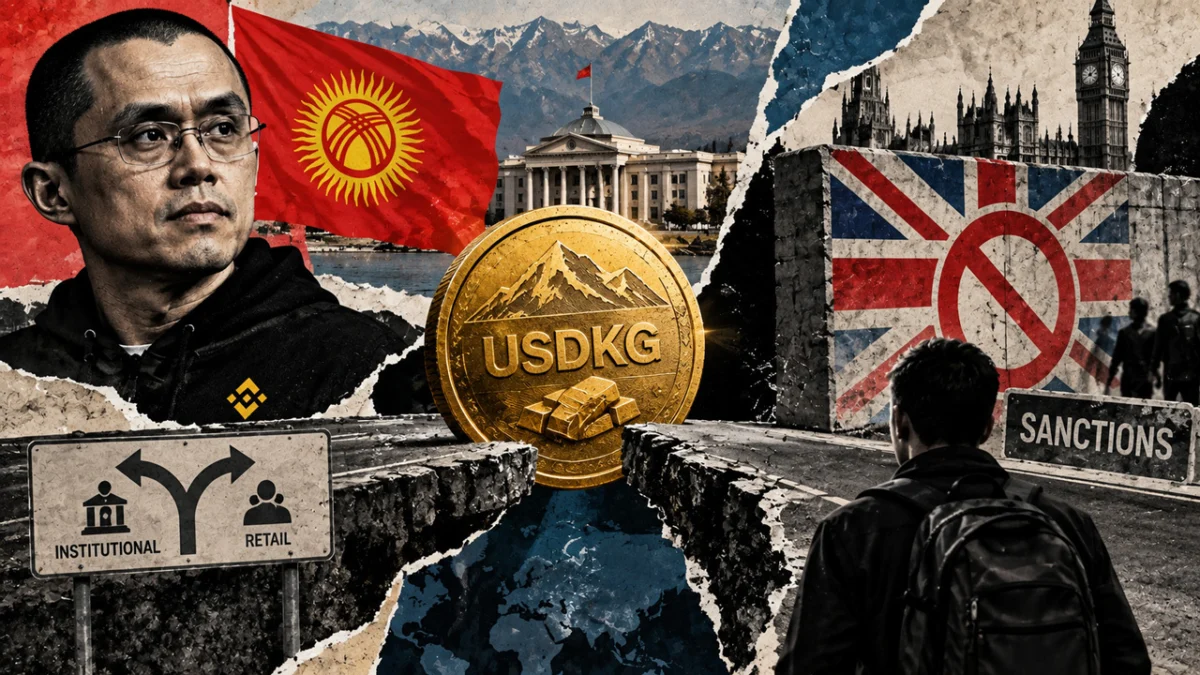
The landscape of virtual assets in Kyrgyzstan reached a critical juncture on September 5, 2026, as President Sadyr Japarov convened the third meeting of the National Council for the Development of Virtual Assets and Blockchain Technologies in Cholpon-Ata. The high-level session, which featured the personal attendance of prominent industry figure Changpeng Zhao, widely known as CZ, resulted in a series of stringent three-month deadlines for new regulatory frameworks. While the government aims to position the Central Asian nation as a burgeoning crypto hub, the proceedings underscored a growing friction between domestic legislative ambitions and the restrictive reality of international sanctions, specifically regarding the state-backed USDKG stablecoin.
Presidential Mandates and the NAVA Roadmap
President Japarov’s leadership during the National Council meeting signaled a transition from theoretical exploration to administrative enforcement. The National Agency for Virtual Assets (NAVA) emerged from the session with two primary assignments, both carrying a 90-day window for completion. First, NAVA is tasked with securing the formal adoption of a comprehensive package of secondary regulations designed to provide granular clarity to the existing virtual assets law. Second, the agency must draft and propose amendments to primary legislation to address gaps in security and market oversight.
The timeline established by the President extends into the broader fiscal and technological infrastructure of the state. The State Tax Service has been granted a two-month period to finalize and review tax regulations specifically tailored for virtual asset service providers (VASPs) and individual traders. Furthermore, NAVA has been given a one-month deadline to finalize the budgetary requirements and funding sources for a centralized digital licensing and supervision platform. This platform is slated for pilot testing beginning January 1, 2027, representing a significant move toward automated regulatory compliance.
The CZ Visit and the Stablecoin Divergence
The presence of Changpeng Zhao at the council meeting provided a degree of international validation for Kyrgyzstan’s efforts. In a public statement following the event, CZ praised the country’s progress, specifically highlighting the success of the circulating KGST stablecoin. However, industry observers noted a conspicuous absence of mention regarding USDKG, another major Kyrgyz project.
The distinction between KGST and USDKG is more than nominal; it represents the difference between a market-integrated asset and a state-controlled financial instrument. While KGST has found favor in circulating markets, USDKG—a gold-backed, dollar-pegged asset—remains entangled in geopolitical complexities. The Kyrgyz Ministry of Finance clarified in late 2025 that USDKG is distinct from both the digital som and KGST, operating with unique backing mechanisms and goals. Despite its state-backed status, USDKG’s journey has been fraught with international resistance.
Sanctions and the Limits of Sovereign Backing
The case of USDKG serves as a definitive case study on the limitations of government-issued virtual assets in a globalized economy. On May 22, 2026, the issuer of USDKG—OJSC Virtual Asset Issuer, which is 100% owned by the Kyrgyz Ministry of Finance—announced the listing of the token on OSL HK’s over-the-counter platform for professional investors. This expansion into the Asian digital asset ecosystem was met with an immediate and severe response from Western regulators.
Just four days after the OSL listing, the United Kingdom’s Office of Financial Sanctions Implementation (OFSI) designated the issuer under reference RUS3618. The UK sanctions notice, dated May 26, 2026, implemented an asset freeze, trust-services sanctions, and director disqualifications. Most notably for the digital sector, the UK imposed internet-services sanctions, requiring service providers to take reasonable steps to prevent UK-based users from accessing websites or applications provided by the designated issuer.
The rationale provided by the UK government centered on the suspicion that the issuer obtained a benefit from or supported the Russian government through business activities of economic significance. This designation highlights a core vulnerability for Kyrgyzstan: domestic authorization and state ownership do not grant immunity from the compliance obligations of foreign financial jurisdictions. For UK-based entities or any "UK person" worldwide, interacting with USDKG carries significant legal risk, effectively severing the token from a major segment of the global capital market.
Technical Architecture and Administrative Control
A deep dive into the technical documentation and smart contract audits of USDKG reveals a system designed for high levels of centralized control, which may further complicate its adoption in decentralized markets. According to project documentation and a January 2025 audit by Consensys Diligence, the USDKG smart contract on the Ethereum network includes functions that grant administrators substantial power over user funds.
The contract includes an "owner" role with the ability to pause all transfers and an "administrator" role capable of blacklisting specific wallet addresses. Crucially, the system allows administrators to "burn" balances held by blacklisted accounts—a feature designed for regulatory compliance but one that inherently requires users to place absolute trust in the state-owned issuer. The Ethereum contract (0xE820C06321E60d36257C666643Fa5436643445E3) confirms these interfaces, showing verified code that facilitates pausing, blacklisting, and direct issuance.
For the retail holder, these technical controls mean that possession of the token is not synonymous with absolute control. The USDKG redemption model further emphasizes this divide. Direct redemption for the underlying gold or fiat reserves is reserved exclusively for institutional clients who undergo rigorous identity and anti-money-laundering (AML) checks. Retail users are instead directed to secondary markets and exchanges for liquidity. This leaves retail holders dependent on the existence of a willing counterparty—a counterparty whose willingness may be diminished by the looming presence of international sanctions.
Market Performance and Liquidity Realities
As of early September 2026, market data suggests that USDKG struggles with liquidity outside of controlled institutional environments. On-chain monitoring via CoinGecko indicated that USDKG market rows on decentralized exchanges like Uniswap V3 and Curve were largely inactive, with no recorded trades over significant intervals.
While the issuer’s "tokenomics" explanation from December 2025 detailed a fiat liquidity buffer intended to support redemptions without immediate gold liquidation, the efficacy of this buffer is tied to the issuer’s ability to move funds through international banking channels. With the UK sanctions in place and the potential for other jurisdictions to follow suit, the "practical exit route" for a non-institutional holder remains narrow. The issuer’s transparency page, which last displayed a full audit report in the fourth quarter of 2025, remains a focal point for investors seeking proof of the 100% gold-backing claims.
The Digital Som and the 2027 Horizon
Parallel to the stablecoin debates, the National Bank of the Kyrgyz Republic is proceeding with its own sovereign digital currency project. The central bank has been assigned to develop and pilot a "digital som" platform by December 31, 2026. This project is intended to be a true Central Bank Digital Currency (CBDC), distinct from the private-sector-facing USDKG.
The roadmap for the digital som includes:
- Late 2026: Finalization of the basic digital som platform.
- January 2027: Commencement of real-world testing in controlled environments.
- Post-2027: Phased national deployment as a legal tender.
By separating the digital som from USDKG and KGST, the government is attempting to insulate its core national monetary policy from the volatility and regulatory scrutiny currently affecting its gold-backed stablecoin initiatives.
Implications for Kyrgyzstan’s Economic Positioning
The decisions made during the September 5 council meeting reflect a nation attempting to navigate a "middle path" in the global digital economy. President Japarov’s aggressive deadlines indicate a desire to provide the legal certainty that major players like Binance (represented by CZ’s interest) require to invest in the region.
However, the USDKG situation illustrates that a "pro-crypto" domestic policy is only one half of the equation. The broader implication for Kyrgyzstan is that its virtual asset market is now a theater for geopolitical maneuvering. The ability of the country to attract international capital will depend not just on its internal regulations, but on its ability to mitigate the risks posed by its proximity—both economic and political—to sanctioned states.
As the three-month deadline approaches in December 2026, the global crypto community will be watching to see if NAVA can produce a framework that satisfies both the President’s desire for growth and the international community’s demands for transparency and sanctions compliance. For now, the "state-supervised" label on Kyrgyz tokens remains a double-edged sword: it provides a veneer of stability at home, but serves as a red flag for regulators abroad. The success of the 2027 pilot programs will ultimately determine whether Kyrgyzstan becomes a true digital hub or remains a localized market restricted by the boundaries of international law.