James Watt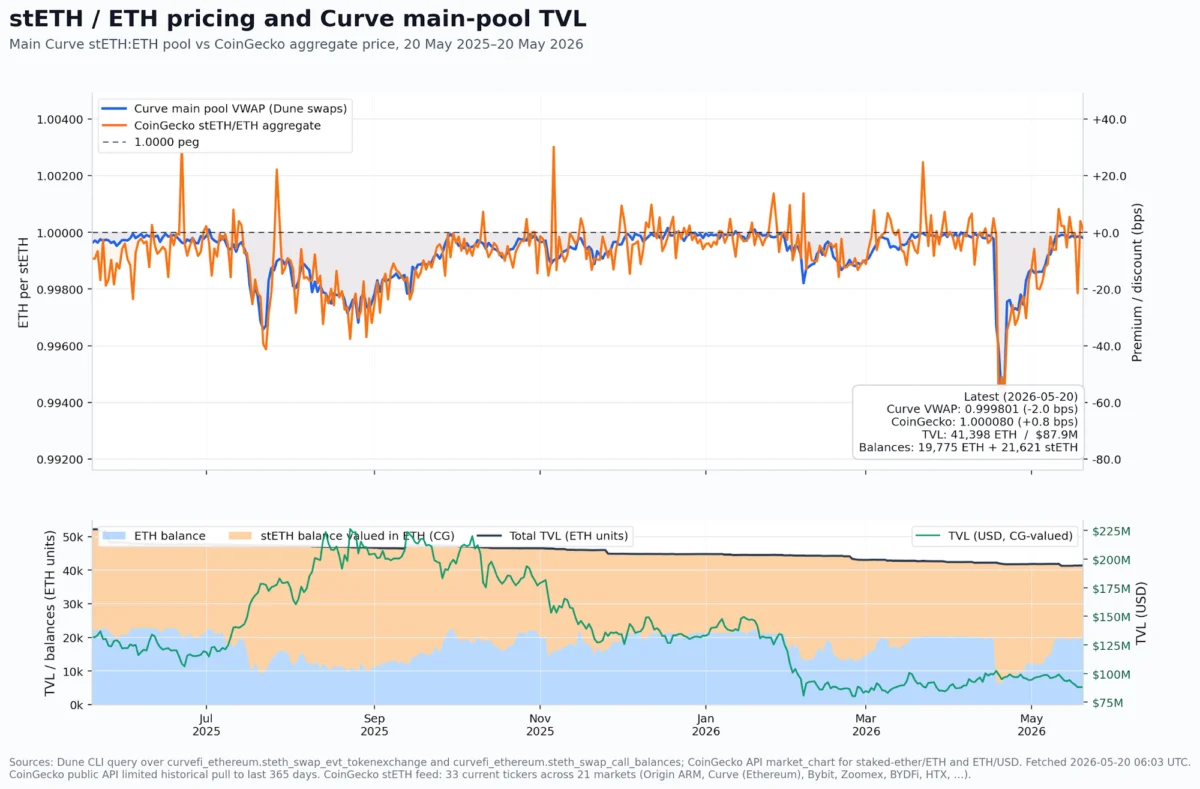
The decentralized finance (DeFi) landscape experienced a significant external shock in April 2026, when the KelpDAO rsETH exploit sent ripples through restaking and ETH-denominated lending markets. While the incident posed a substantial challenge to certain segments of the ecosystem, a detailed analysis of secondary-market stETH and wstETH pricing and liquidity reveals a robust performance, underscoring the resilience of Ethereum’s largest liquid staking token. Despite initial price movements and increased market depth costs, the core asset remained functional and steadfast, demonstrating an impressive ability to absorb a major stress event without compromising its fundamental integrity.
The KelpDAO Exploit: A Detailed Account of a Cross-Chain Vulnerability
On April 18, 2026, the DeFi community was alerted to a critical exploit targeting KelpDAO’s rsETH bridge path, a LayerZero-based mechanism. Public post-incident analyses quickly identified the root cause as a cross-chain verification failure, a vulnerability that allowed attackers to mint approximately 116,500 rsETH on the Ethereum mainnet without a corresponding burn on the source chain. This unauthorized issuance equated to a staggering $292 million, injecting a significant amount of unbacked value into the ecosystem. The immediate repercussions were felt primarily across restaking collateral and associated lending markets, creating a severe liquidity crunch and prompting widespread concern among users and protocols alike.
It is crucial to emphasize that this incident did not directly compromise Lido’s core staking protocol or the fundamental mechanics of stETH and wstETH. The exploit was confined to a specific cross-chain restaking asset path, a distinction that proved vital in how the market reacted and recovered. While the broader market naturally repriced risk, participants were ultimately able to differentiate between a failure in a specific, layered financial product and the underlying stability of stETH, which remained unaffected in its operational integrity.
Understanding the Landscape: Liquid Staking, Restaking, and the Interconnected DeFi Web
To fully appreciate the implications of the KelpDAO incident and stETH’s subsequent performance, it is important to contextualize the evolving DeFi ecosystem of 2026. Liquid Staking Tokens (LSTs) like stETH had, by this point, become foundational assets within Ethereum, representing staked ETH while maintaining liquidity and composability across various DeFi protocols. This innovation allowed users to earn staking rewards while simultaneously utilizing their capital in lending, borrowing, and other decentralized applications.
Building upon LSTs, the concept of "restaking" emerged, further enhancing capital efficiency. Protocols like KelpDAO allowed users to restake their LSTs (or other assets), often via liquid restaking tokens (LRTs) such as rsETH, to secure additional protocols and earn further rewards. While offering significant yield opportunities, this layering of derivatives also introduced new vectors for risk, particularly through cross-chain bridges designed to facilitate interoperability and asset transfers across different blockchain environments. These bridges, while essential for a multi-chain future, have historically been prime targets for exploits due to their complex smart contract interactions and reliance on external verification mechanisms. The KelpDAO incident served as a stark reminder of these inherent vulnerabilities, especially when layered with advanced financial primitives like LRTs.
Chronology of the Stress Window: April 18 – May 20, 2026
The exploit on April 18 immediately triggered a period of intense market stress. As news spread and the magnitude of the unauthorized rsETH minting became apparent, panic began to set in across affected markets. Users rushed to withdraw funds from protocols exposed to rsETH, and a wave of deleveraging swept through lending platforms that had accepted rsETH as collateral.
- April 18: KelpDAO rsETH bridge exploit detected. Approximately $292 million in rsETH is illicitly minted on Ethereum.
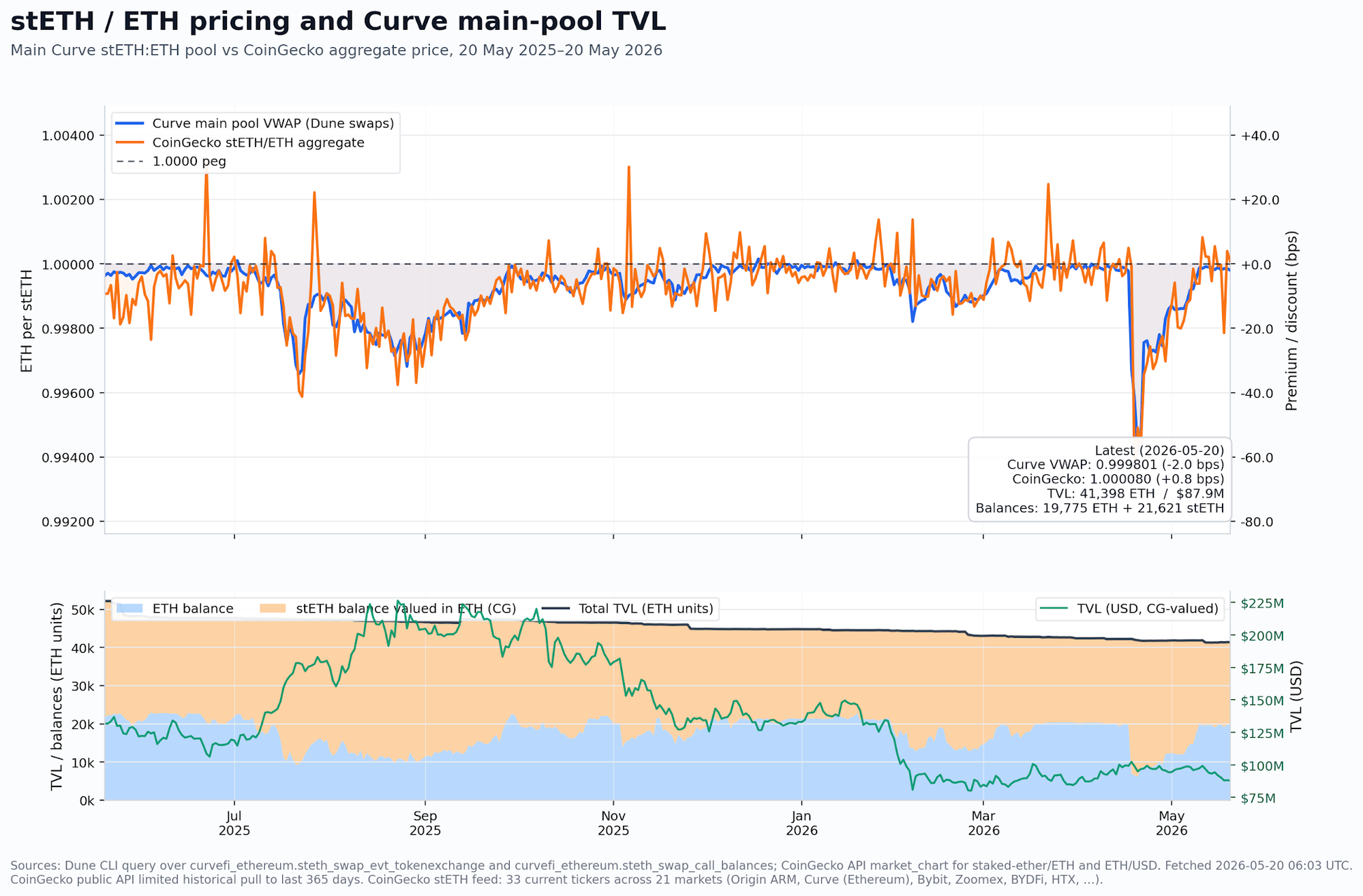
- April 18 – April 28: This ten-day period marked the primary stress window for ETH-denominated markets. During this time, stETH experienced its most significant price deviation from parity. The Curve main-pool daily Volume-Weighted Average Price (VWAP) for stETH reached a low of approximately 0.9941 ETH per stETH, representing a deviation of about -59 basis points (bps) from the 1:1 peg. Concurrently, CoinGecko’s aggregate stETH/ETH pricing recorded a comparable low of approximately 0.9934 ETH. This period also saw Lido’s protocol process one of its largest periods of net outflows, as market participants reacted to the broader uncertainty.
- April 29 – May 19: Following the initial shock, the market began a gradual process of stabilization and recovery. The clear distinction that stETH itself was not compromised allowed for a more contained reaction compared to scenarios where the core asset’s integrity is directly threatened. Arbitrageurs, recognizing the temporary discount, began to buy stETH, contributing to the restoration of the peg.
- May 20: By this date, approximately one month after the exploit, market pricing for stETH had largely normalized. The Curve main-pool VWAP was back near parity at 0.99980 ETH, while CoinGecko’s aggregate price stood at 1.00008 ETH, effectively demonstrating a full recovery to pre-exploit levels.
StETH and wstETH: A Resilient Performance Under Pressure
Despite the significant external pressure, stETH and its wrapped counterpart, wstETH, exhibited remarkable resilience. While a temporary de-peg occurred, it was relatively minor compared to the scale of the exploit and the potential for broader contagion. The ability of the market to quickly distinguish between the compromised asset (rsETH) and the unaffected core asset (stETH) was paramount. Lido’s internal protocol mechanics functioned exactly as intended throughout the crisis, ensuring that staking rewards continued to accrue and withdrawals were processed efficiently, even amidst heightened demand.
This distinction was critical. Unlike previous "de-pegging" events that might have been caused by fundamental questions about an LST’s backing or protocol stability, the April 2026 incident was clearly an external shock to a derivative product. Market participants, equipped with transparent on-chain data and a mature understanding of the ecosystem, were able to make informed decisions, preventing a cascade of panic selling that could have severely impacted stETH’s stability.
Beyond Price: The Crucial Metric of Liquidity Depth
While headline prices offer a snapshot of market sentiment, a more granular understanding of market health during a crisis requires examining liquidity depth. Stable prices can sometimes mask a deterioration in execution quality, where large trades become increasingly costly due to shallow order books. For this reason, the behavior of liquidity depth for wstETH/ETH during the KelpDAO incident provides a more telling indicator of market resilience.
Analysis of the quote impact for a hypothetical $1 million fixed-sell wstETH order on the Ethereum mainnet revealed important insights:
- Pre-Exploit Baseline: In the 30 days preceding the exploit, the median daily quote impact for a $1 million wstETH sell was a mere -0.1 basis points (bps). This signifies extremely efficient execution and deep liquidity under normal market conditions.
- During Stress Window: During the 10-day stress window (April 18-28), the median daily quote impact increased to -5.0 bps. Furthermore, the 7-day moving average of this impact reached a trough of -15.9 bps.
- Overall Trend: Across 236 observations, the median daily quote impact was -1.6 bps, indicating that even with the stress period factored in, overall liquidity remained robust.
This data demonstrates a real and measurable increase in execution costs during the crisis. Traders executing large wstETH sales would have faced a slightly higher slippage compared to tranquil periods. However, and crucially, this did not translate into a disappearance of liquidity. The market for wstETH/ETH remained actionable, routable, and interpretable. Large orders could still be executed, albeit at a premium, preventing a "liquidity black hole" where trades become impossible or prohibitively expensive. This sustained depth is a testament to the robust infrastructure supporting stETH, including major liquidity pools like Curve’s stETH/ETH pool, and the continuous activity of market makers and arbitrageurs.
Factors Contributing to stETH’s Comparative Resilience
Several interconnected factors underpinned stETH’s ability to weather the KelpDAO storm:
- Robust Protocol Design: Lido’s protocol is built with security and decentralization at its core. Its audited smart contracts and transparent on-chain operations ensure that the underlying staking mechanism functions independently of external shocks to derivative products.
- Deep Market Liquidity: Years of ecosystem development have fostered exceptionally deep liquidity for stETH across various DeFi platforms, most notably the Curve main-pool. This extensive liquidity acts as a crucial buffer, absorbing large buy and sell orders without drastic price movements.
- Clear Asset Differentiation: The market demonstrated a sophisticated understanding of the DeFi stack. Participants were able to quickly distinguish that the KelpDAO exploit targeted rsETH, a liquid restaking token built on top of LSTs, rather than stETH itself. This clarity prevented a misdirected panic and allowed for a more contained market reaction.
- Efficient Arbitrage Mechanisms: The temporary de-peg of stETH from ETH created profitable arbitrage opportunities. Decentralized exchanges and sophisticated trading firms quickly moved to capitalize on these price discrepancies, buying stETH at a discount and selling it against ETH, thereby helping to restore the peg.
- Transparent On-Chain Data: The inherent transparency of blockchain technology allowed anyone to verify the status of the Lido protocol, the balances in liquidity pools, and the flow of assets. This access to real-time, immutable data fostered trust and helped counter misinformation during a period of uncertainty.
- Lido’s Withdrawal Mechanism: The protocol’s ability to handle significant net outflows efficiently, as observed during the stress window, provided a safety valve for users who wished to redeem their staked ETH. This confidence in the underlying redemption mechanism further contributed to market stability.
Reactions and Broader Implications for the DeFi Ecosystem
The KelpDAO incident elicited responses from various stakeholders and carries significant implications for the future of decentralized finance.
Lido’s Perspective: While not directly compromised, Lido would have actively monitored market conditions and likely reiterated the security of its core protocol and the integrity of stETH. Their focus would be on emphasizing the clear distinction between their product and the exploited asset, reassuring users of stETH’s continued functionality and reliability as a foundational Ethereum asset. The robust performance of stETH during this period served as a validation of their long-term strategy in building a resilient LST ecosystem.
KelpDAO and LayerZero’s Response: Following such a significant exploit, KelpDAO and LayerZero would have undertaken extensive post-mortem analyses, communicated transparently with their communities, and implemented measures to mitigate user losses and prevent future occurrences. Such incidents often lead to intensified audits, bug bounties, and a re-evaluation of security practices, particularly for cross-chain bridges.
Market Analyst Views: Industry analysts would likely frame the KelpDAO exploit as a critical stress test for the burgeoning restaking ecosystem and the broader DeFi landscape. While acknowledging the severity of the exploit itself, many would highlight stETH’s resilience as a positive indicator of the increasing maturity and robustness of core DeFi infrastructure. The event underscored the importance of distinguishing between various layers of financial derivatives and the fundamental security of underlying assets.
Broader Implications:
- Heightened Scrutiny on Cross-Chain Bridges: The exploit reinforced the persistent security challenges associated with cross-chain interoperability solutions. Expect continued innovation and investment in more secure bridging technologies, as well as increased due diligence from protocols and users before integrating with them.
- Risk Management in Restaking: The incident will undoubtedly lead to a more conservative approach to risk management within the restaking sector. Protocols and users will likely demand greater transparency, more rigorous audits, and clearer disclosures regarding the risks associated with LRTs and their underlying collateral.
- Consolidation of Trust in LSTs: For stETH, the event served to solidify its reputation as a resilient and reliable asset. Its ability to navigate a major external shock reinforces its position as a go-to collateral asset in the Ethereum ecosystem, particularly for institutions and larger liquidity providers.
- Regulatory Attention: Events of this magnitude invariably attract the attention of global financial regulators. Expect renewed calls for clearer frameworks and oversight in the DeFi space, especially concerning complex, multi-layered financial products and cross-chain operations. The industry will need to proactively address these concerns to foster sustainable growth.
- Ecosystem Maturity: The swift recovery and continued functionality demonstrate a growing maturity within the DeFi ecosystem. The ability of market participants to react rationally, combined with deep liquidity and robust protocols, indicates a system that is becoming more adept at handling stress.
The Takeaway: Resilience Where It Matters Most
The April 2026 KelpDAO incident served as an undeniable reminder of why liquidity and asset stability must be rigorously evaluated under stress, not merely in calm market conditions. For stETH, the outcome was a powerful affirmation: its deep secondary markets, transparent on-chain pricing, and extensive ecosystem integration proved capable of absorbing a severe external shock without compromising the core staking asset. Prices moved, execution costs temporarily rose, but critically, the market remained functional and capable of handling significant volume.
This robust performance is not accidental. It reflects years of diligent liquidity building around stETH as a foundational Ethereum asset, a strategic effort to ensure its utility extends beyond quiet periods into moments of market turbulence. For users, integrators, and protocols that rely on staking collateral to be both useful and dependable, the KelpDAO incident provided invaluable real-world validation. It underscored that stETH’s resilience is a core advantage, ensuring that it remains a trusted and liquid asset even when the broader decentralized finance ecosystem faces its most significant challenges. The data pulled on May 20, 2026, from Dune queries 5965996 / 9625248 for wstETH/ETH liquidity depth and Dune queries 5596727 and 710202 plus CoinGecko API for stETH/ETH pricing, provides clear evidence of this enduring strength.