admin
admin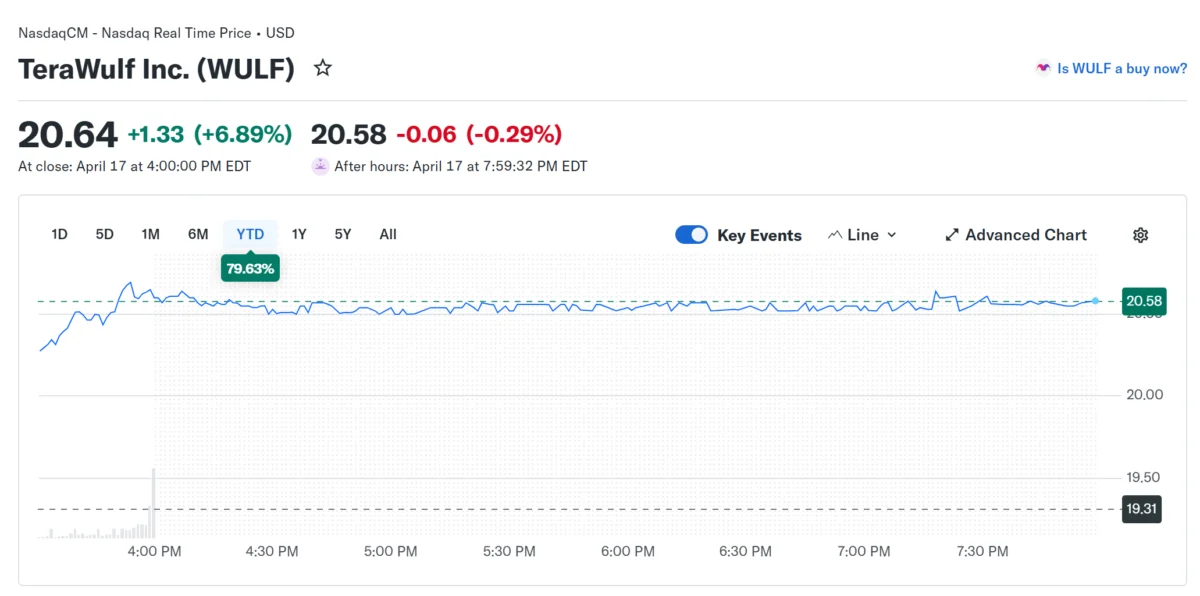
United States aluminum producer Alcoa Corporation is reportedly in the final stages of negotiations to sell its long-dormant Massena East smelting facility in upstate New York to the New York Digital Investment Group (NYDIG), a leading Bitcoin-focused financial services and infrastructure firm. The move signals a significant shift in the repurposing of heavy industrial "Rust Belt" assets into high-capacity hubs for the digital economy. Alcoa Chief Executive Officer Bill Oplinger confirmed the advanced nature of the discussions during a recent briefing, indicating that the transaction is expected to reach a definitive conclusion by the middle of 2026. The Massena East site, which has remained largely inactive for over a decade, represents a strategic acquisition for NYDIG as it seeks to expand its vertical integration within the cryptocurrency mining and high-performance computing (HPC) sectors.
The Massena East facility, situated along the banks of the St. Lawrence River, has a storied history in American manufacturing but fell victim to the shifting economics of the global aluminum market. Alcoa curtailed smelting operations at the site in 2014, citing a combination of prohibitive energy costs and intensifying competition from overseas producers. While the smelting pots have long been cold, the site’s underlying electrical infrastructure remains among the most robust in the northeastern United States. This infrastructure, originally designed to support the 24/7, energy-intensive requirements of primary aluminum production, is now the primary driver of interest for digital infrastructure developers who require massive power loads to fuel Bitcoin mining rigs and Artificial Intelligence (AI) data centers.
The Strategic Value of Industrial Infrastructure
The transition from aluminum smelting to Bitcoin mining is driven by a fundamental synergy: both industries are essentially "energy arbitrage" businesses. Aluminum production requires vast amounts of electricity to separate aluminum oxide into pure metal through the Hall-Héroult process. Similarly, Bitcoin mining requires significant power to run the specialized ASICs (Application-Specific Integrated Circuits) that secure the blockchain network. By acquiring an existing industrial site like Massena East, NYDIG bypasses the multi-year hurdles associated with greenfield data center development.
Traditional data center projects often face significant delays—sometimes lasting three to five years—due to the complexities of securing grid interconnection agreements, building high-voltage substations, and laying miles of transmission lines. The Massena East site already possesses these critical components, including direct high-capacity grid connections and existing substations capable of handling hundreds of megawatts of power. For a firm like NYDIG, this "plug-and-play" capability represents a massive reduction in time-to-market and capital expenditure.
Furthermore, the site benefits from a proximity to the St. Lawrence Power Project, a massive hydroelectric facility operated by the New York Power Authority (NYPA). The availability of low-cost, renewable hydropower is a decisive factor for NYDIG. As institutional investors increasingly demand adherence to Environmental, Social, and Governance (ESG) standards, the ability to power Bitcoin mining operations with carbon-neutral energy provides a significant competitive advantage.
A Decade of Transition: The Massena East Chronology
The potential sale to NYDIG marks the final chapter in a long-running effort to revitalize the Massena East property. To understand the significance of this deal, one must look at the timeline of the facility’s decline and subsequent interest from the tech sector:
- 1900s–2000s: The Massena operations served as a cornerstone of Alcoa’s global production, leveraging the cheap hydroelectric power of the St. Lawrence River.
- 2014: Alcoa announced the permanent closure of the Massena East smelting lines, though it maintained some downstream operations at the nearby Massena West facility. The closure resulted in the loss of hundreds of industrial jobs and left a massive power vacuum in the local grid.
- 2018–2020: As Bitcoin prices surged, the site began attracting interest from cryptocurrency miners. Coinmint, a digital asset mining company, established a significant presence at the Massena complex, utilizing portions of the idled infrastructure under a long-term lease.
- 2023–2024: NYDIG, already an investor in the site’s mining operations through its stake in Coinmint and other ventures, began exploring a full acquisition of the property to consolidate its infrastructure holdings.
- April 2026: Alcoa CEO Bill Oplinger confirms that a deal with NYDIG is nearing completion, with a target closing date in the second or third quarter of the year.
The Broader Industrial Rebirth Trend
The Alcoa-NYDIG transaction is not an isolated event but rather part of a broader national trend where retired industrial sites are being reborn as "digital furnaces." Throughout the United States, the collapse of traditional manufacturing has left behind a landscape of "stranded" power infrastructure that is now being reclaimed by the technology sector.
Earlier in 2026, Century Aluminum completed the sale of its Hawesville smelter in Kentucky to TeraWulf, a zero-carbon Bitcoin mining company, for approximately $200 million. Similar to the Massena East deal, the Hawesville facility is being repurposed not just for Bitcoin mining, but as a "New Digital Infrastructure Campus" designed to support high-performance computing and AI workloads. This diversification is becoming a standard blueprint for the industry; as the rewards for Bitcoin mining decrease due to periodic "halving" events, miners are leveraging their power capacity to provide compute resources for the burgeoning AI market.
The financial markets have reacted positively to these infrastructure-heavy strategies. Shares of companies like TeraWulf have seen year-to-date gains exceeding 80%, as investors begin to value these firms not merely as crypto miners, but as specialized real estate and energy infrastructure plays.
NYDIG’s Growing Infrastructure Footprint
For NYDIG, the acquisition of Massena East is a logical extension of its long-term strategy to own the "picks and shovels" of the digital asset ecosystem. Owned by Stone Ridge Holdings Group, NYDIG has methodically built a portfolio of mining assets and infrastructure. This includes its existing stake in Coinmint and its 2025 acquisition of Crusoe Energy’s Bitcoin mining business.

The Crusoe deal was particularly telling, as it included "digital flare mitigation" technology—a process that captures wasted natural gas from oil fields to power mobile mining units. By moving into a fixed, high-capacity site like Massena East, NYDIG is balancing its portfolio between mobile, opportunistic mining and large-scale, permanent industrial data centers.
Industry analysts suggest that NYDIG’s move may also be a defensive play against the rising costs of power and the scarcity of grid-connected land. By owning the underlying real estate and the power interconnection rights at Massena East, NYDIG insulates itself from the rising lease rates and competitive bidding wars that are currently characterizing the data center market in Northern Virginia and other tech hubs.
The Pivot to Artificial Intelligence
While the primary focus of the Massena East site has been Bitcoin mining, the industry-wide pivot toward AI is expected to influence the site’s future development. The high-density power requirements of AI training models are remarkably similar to those of Bitcoin mining, though they require more sophisticated cooling systems and low-latency fiber optic connections.
Other major players in the space have already blazed this trail. MARA Holdings (formerly Marathon Digital) recently acquired a 64% stake in Exaion, a French infrastructure firm, specifically to bolster its AI service offerings. Meanwhile, firms like Hive Digital Technologies, Hut 8, and Iren (formerly Iris Energy) have all announced plans to reallocate a portion of their power capacity to HPC and AI data centers. Some, like CoreWeave, have completed a total transformation, moving away from mining entirely to become one of the world’s leading providers of GPU-based cloud compute for AI companies.
By acquiring the Massena East site, NYDIG gains the flexibility to follow a similar path. If the economics of Bitcoin mining fluctuate, the facility’s massive power envelope can be partitioned to house racks of H100 or B200 GPUs, serving the insatiable demand for AI processing power.
Economic and Regulatory Implications for New York
The deal also carries significant implications for the regional economy of upstate New York and the state’s complex regulatory environment. For years, the town of Massena has sought to replace the high-paying industrial jobs lost when the smelters closed. While data centers typically employ fewer workers than traditional manufacturing plants, the "re-industrialization" of the site brings in tax revenue and supports local service industries.
However, the transaction takes place against a backdrop of strict regulatory scrutiny. In 2022, New York State implemented a two-year moratorium on certain types of proof-of-work cryptocurrency mining operations that rely on carbon-based fuel sources. While the Massena East site’s reliance on hydropower likely exempts it from the harshest aspects of this legislation, the state’s Department of Environmental Conservation (DEC) maintains rigorous oversight of all large-scale energy users.
Official responses from local Massena leadership have been cautiously optimistic. Economic development officials have noted that the "re-powering" of idled industrial sites is the most viable path toward economic recovery in the North Country. By utilizing existing infrastructure, the project avoids the "not-in-my-backyard" (NIMBY) opposition that often plagues new, large-scale industrial developments.
Conclusion: A New Era for Heavy Industry
As Alcoa and NYDIG move toward a final agreement, the sale of the Massena East smelter stands as a landmark example of the evolving American economy. The site, which once produced the raw material for the 20th century’s infrastructure, is now poised to provide the processing power for the 21st century’s digital frontier.
The transaction highlights a fundamental truth in the current technological landscape: power is the new gold. As the race for AI dominance intensifies and the Bitcoin network continues to grow, the value of idled industrial assets with high-capacity grid connections will only continue to rise. For Alcoa, the deal provides a clean exit from a legacy liability; for NYDIG, it secures a strategic foothold in the future of global computing. The transformation of Massena East from a silent relic of the industrial age into a humming hub of the digital era is expected to be completed by the end of 2026, marking a new chapter for the St. Lawrence River valley.