admin
admin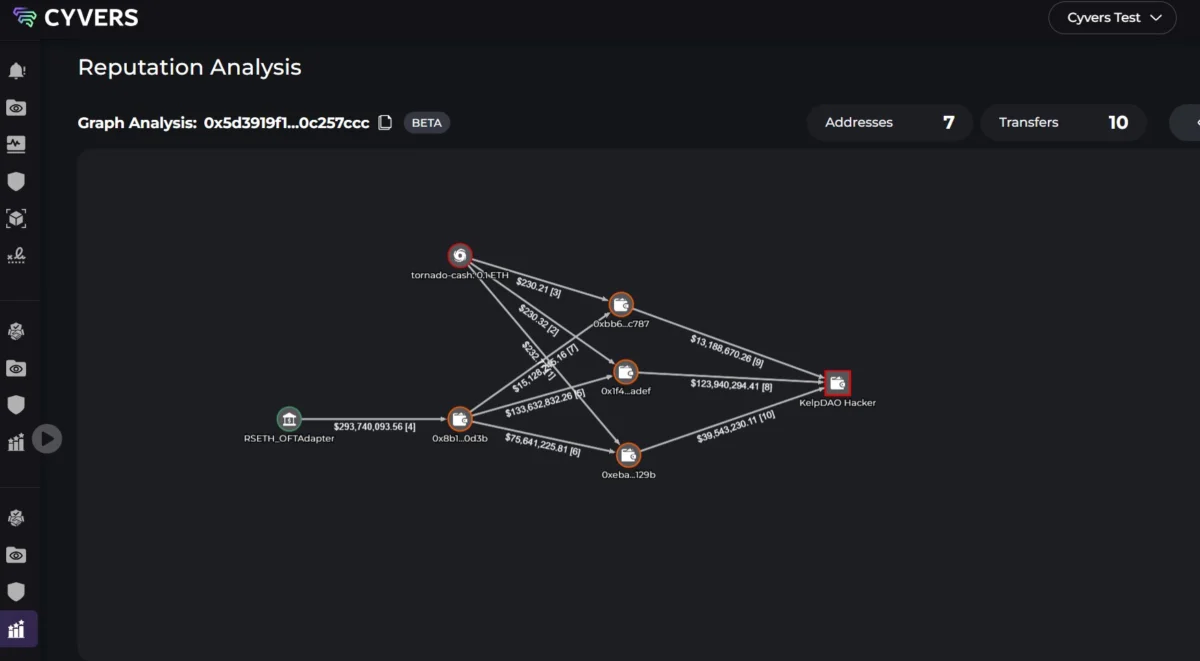
The decentralized finance (DeFi) ecosystem is currently grappling with the aftermath of a massive security breach involving the Kelp liquid restaking protocol, an event that has reignited urgent debates regarding the systemic vulnerabilities inherent in non-isolated lending and cross-protocol integrations. On Saturday, April 2026, the Kelp platform became the target of a sophisticated cyberattack that resulted in the drainage of approximately $293 million in digital assets. While the immediate financial loss is staggering, industry experts and blockchain security firms are increasingly concerned by the "contagion effect" that followed, which saw the impact of the exploit cascade across multiple major DeFi platforms. The incident underscores a critical turning point for the sector, highlighting how the very composability that makes DeFi innovative can also serve as a high-speed conduit for financial instability.
The Anatomy of a $293 Million Exploit
The exploit targeted Kelp’s liquid restaking token (rsETH) infrastructure. Liquid restaking has emerged as one of the most prominent trends in the 2025–2026 DeFi cycle, allowing users to earn additional yields on their staked assets while maintaining liquidity through derivative tokens. However, this layer of abstraction introduces complex smart contract dependencies. According to preliminary post-mortem reports from blockchain security firms, the root cause of the Kelp breach was traced back to the protocol’s cross-chain bridging architecture.
Bridging infrastructure, which facilitates the transfer of assets and data between disparate blockchain networks, has historically been one of the most vulnerable points in the crypto ecosystem. In the case of Kelp, attackers managed to exploit a flaw in the way the protocol synchronized its state across chains, allowing them to mint unauthorized rsETH or manipulate the underlying collateral reserves. As soon as the anomaly was detected, Kelp moved to pause its smart contracts to prevent further drainage, but by that point, the attacker had already moved nearly $300 million into various mixer services and decentralized exchanges for laundering.
The immediate fallout was felt in the price and liquidity of rsETH. As news of the exploit spread, the "peg" or value relationship between rsETH and its underlying assets began to fluctuate wildly, triggering automated responses from integrated protocols that rely on rsETH as a collateral asset.
Understanding the Contagion: Why Nine Protocols Were Forced to React
What began as a localized exploit on Kelp quickly evolved into a systemic event. Blockchain security firm Cyvers reported that the incident became a "cross-protocol contagion event" almost instantly. Because DeFi is built on the principle of "money legos," where one protocol’s output becomes another’s input, the failure of a major restaking token like rsETH had immediate implications for the broader market.
At least nine major DeFi protocols and platforms—including Aave, Fluid, Compound Finance, SparkLend, and Euler—were forced to take emergency measures. These actions ranged from freezing rsETH lending markets to adjusting risk parameters and liquidation thresholds. The primary concern for these platforms was the prevention of "bad debt." If the value of rsETH used as collateral were to crash to zero, and the lending protocol could not liquidate those positions fast enough, the protocol itself would be left with a hole in its balance sheet.
Deddy Lavid, CEO of Cyvers, noted that the challenge for the industry has shifted. "It is no longer just about preventing exploits at the individual contract level," Lavid stated. "The industry must now focus on understanding how fast these failures can cascade across integrated protocols. The speed of contagion in a highly integrated environment often outpaces the manual intervention capabilities of DAO governance."

The Risk of Non-Isolated Lending: Insights from Michael Egorov
The Kelp exploit has brought the concept of "non-isolated lending" into the spotlight. Michael Egorov, the founder of Curve Finance, has been a vocal critic of lending architectures that do not sufficiently isolate risk. In non-isolated lending models—which were common in earlier versions of major protocols like Aave—all assets in a single liquidity pool share the same risk profile. If one token used as collateral (such as rsETH) is compromised or suffers a catastrophic price drop, it can potentially jeopardize the entire pool, including unrelated tokens like USDC or ETH.
Egorov argued that the Kelp incident serves as a stark reminder of these dangers. In a series of communications following the hack, Egorov emphasized that DeFi teams must vet prospective digital assets with extreme rigor. He suggested that before any token is approved as lending collateral, it must be audited for single points of failure and "attack surfaces" that could be exploited by malicious actors.
"Cross-chain is hard and potentially risky," Egorov warned. "Only use cross-chain infrastructure when absolutely necessary, and do it really carefully." He advocated for a shift toward isolated lending markets, where the failure of one specific asset class is contained within its own silo, preventing the kind of systemic "meltdown" witnessed during the Kelp exploit.
A Chronology of the Kelp Incident and Subsequent Market Response
To understand the scale of the crisis, it is necessary to look at the timeline of events that unfolded over the weekend:
- Saturday, 08:00 UTC: On-chain monitoring tools detect unusual withdrawal patterns from Kelp’s vault contracts.
- Saturday, 08:30 UTC: The attacker successfully exploits the cross-chain bridge vulnerability, draining assets across multiple chains.
- Saturday, 09:15 UTC: Kelp DAO officially acknowledges the "unusual activity" and pauses all smart contract interactions for rsETH.
- Saturday, 10:00 UTC: Cyvers and other security firms issue alerts to integrated protocols. Aave and Compound Finance begin emergency governance votes or utilize "guardian" roles to freeze rsETH markets.
- Saturday, 12:00 UTC: The contagion spreads to smaller "long-tail" lending protocols. Liquidations begin to trigger as the price of rsETH de-pegs on decentralized exchanges.
- Sunday, 04:00 UTC: Kelp releases a preliminary report confirming the $293 million loss and begins working with law enforcement and "white hat" hackers to trace the funds.
- Monday, 09:00 UTC: The broader DeFi market stabilizes, but rsETH remains frozen on most major platforms as developers conduct deep-dive audits of the integration points.
DeFi Security in 2026: A Quarter Defined by Escalating Losses
The Kelp exploit is not an isolated event but rather part of a troubling trend in the first half of 2026. The Web3 sector has seen a dramatic increase in the frequency and sophistication of attacks. According to data from Hacken and other security aggregators, losses from crypto hacks, code exploits, and scams reached a staggering $482 million in the first quarter of 2026 alone.
The Kelp incident followed closely on the heels of the Drift Protocol decentralized exchange hack, which saw $280 million drained just one week prior. In the weeks leading up to these major events, at least 12 other crypto entities and DeFi protocols reported breaches of varying scales. This cluster of high-profile exploits suggests that attackers are increasingly targeting the "middleware" of DeFi—the bridges, oracles, and restaking layers that connect the primary blockchains.
This surge in cybercrime has led to the formation of specialized response units, such as the "SEAL 911" team of white-hat hackers, who work in real-time to intercept attacks. However, as the Kelp exploit demonstrates, the sheer speed of execution in automated smart contract environments remains the greatest challenge for defenders.
The Shift Toward Isolated Markets and Rigorous Asset Vetting
The fallout from the Kelp exploit is expected to drive significant changes in how DeFi protocols manage risk. Industry analysts predict a move away from "universal" liquidity pools in favor of "isolated" or "permissioned" pools for newer, more volatile assets like liquid restaking tokens.

In an isolated model, a user might be able to borrow against rsETH, but that activity would be confined to a specific pool that does not touch the protocol’s core reserves of stablecoins or blue-chip assets. This "firewalling" of risk ensures that even if a token like rsETH is exploited for $293 million, the damage is capped at the value within that specific pool.
Furthermore, there is a growing call for "proof of security" for any asset seeking to be listed as collateral. This would involve not just a smart contract audit of the token itself, but an audit of the entire supply chain, including the bridges used to move the asset and the governance structures that control its minting.
Broader Impact and the Path to Resilience
While the $293 million loss is a significant blow to Kelp and its users, the incident is being viewed by some as a necessary, albeit painful, learning experience for the DeFi sector. The transition from a "move fast and break things" mentality to one of "institutional-grade resilience" is often paved with such crises.
The Kelp exploit has demonstrated that the DeFi ecosystem is no longer a collection of independent islands but a deeply interconnected financial web. This interconnectedness provides immense utility but requires a new paradigm of security—one that accounts for "externalities" and the risk that a failure in one protocol can instantly become a failure in ten others.
As the industry moves forward, the focus will likely remain on three pillars: the implementation of isolated lending markets, the reduction of reliance on risky cross-chain bridges, and the development of automated, real-time circuit breakers that can pause protocols across the entire ecosystem when a major exploit is detected. Only by addressing these systemic vulnerabilities can DeFi hope to achieve the stability required for mass adoption and institutional integration.
In the interim, the Kelp DAO continues its investigation, and the affected lending protocols remain cautious, with rsETH markets largely remaining in "withdraw-only" or "frozen" modes. The event serves as a sobering reminder to investors and developers alike that in the world of decentralized finance, the price of innovation is eternal vigilance.