admin
admin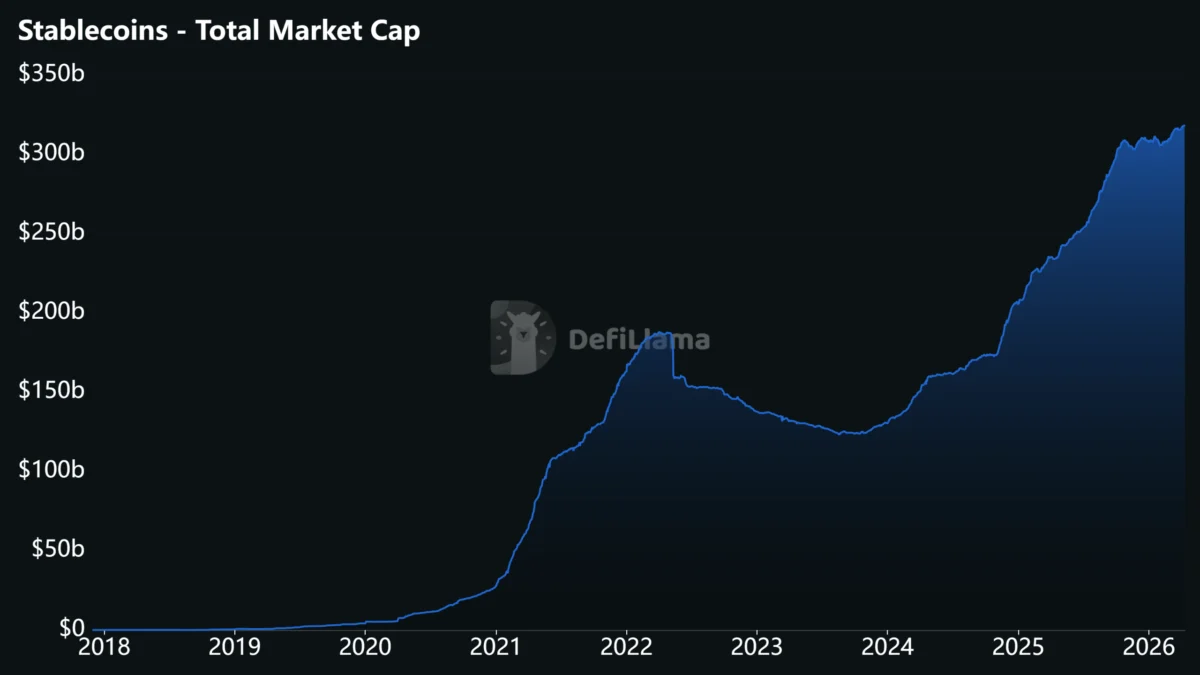
The digital asset market is currently navigating a complex landscape defined by a tenuous price recovery for Bitcoin, a fundamental shift in how European financial institutions approach stablecoins, and growing concerns regarding the inherent privacy vulnerabilities of mobile operating systems. While Bitcoin has shown signs of a rebound over the past week, market analysts warn that the recovery remains highly susceptible to external shocks, particularly those originating from geopolitical instability in the Middle East and the resulting macroeconomic pressures on global inflation. Simultaneously, the regulatory clarity provided by the Markets in Crypto-Assets Regulation (MiCA) is driving European banks to move from theoretical exploration to the active implementation of stablecoin infrastructure. However, as the industry matures, new technical risks are coming to light, with Telegram co-founder Pavel Durov highlighting how push notification logs can serve as a "backdoor" for law enforcement and forensic analysts to bypass end-to-end encryption.
The Fragility of the Bitcoin Recovery and the 2026 Macro Outlook
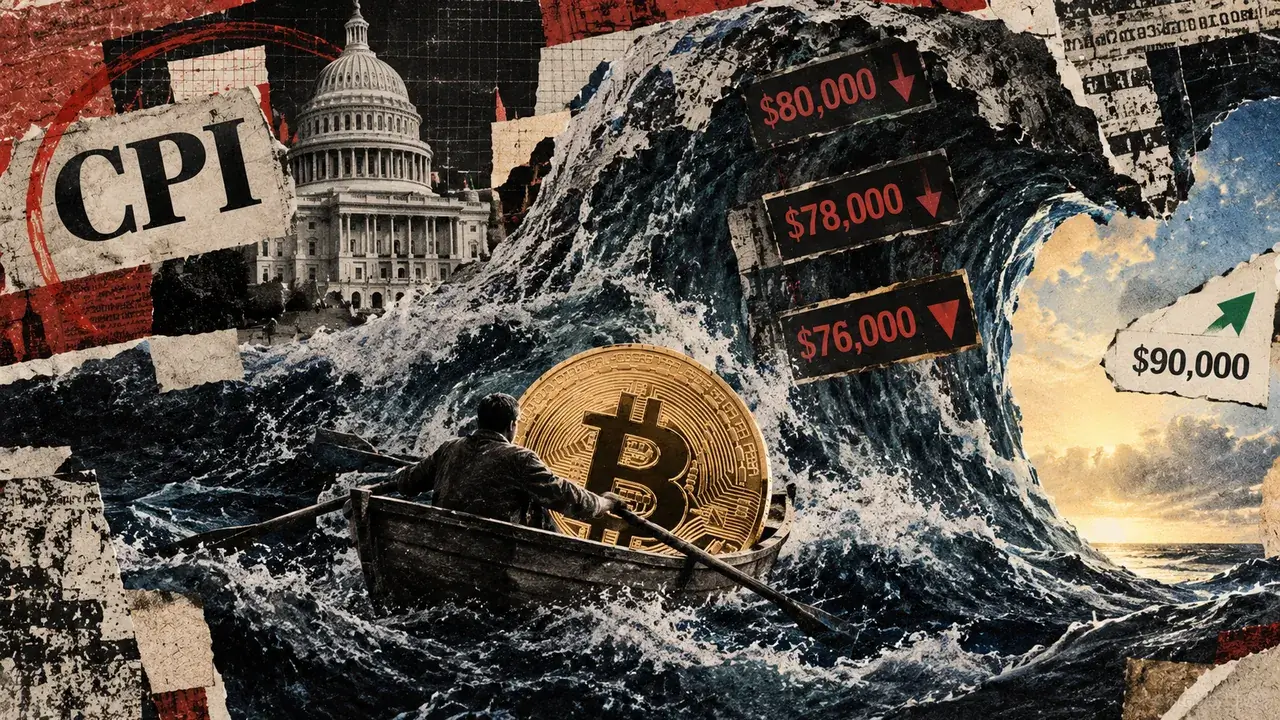
The recent upward movement in Bitcoin (BTC) prices, while welcomed by investors, is being characterized by market experts as a "fragile" recovery. Nic Puckrin, a prominent crypto market analyst and the founder of Coin Bureau, suggests that the market is currently caught between technical recovery signals and overwhelming geopolitical headwinds. According to Puckrin, the ongoing conflict involving Iran and the broader Middle East is not merely a short-term volatility event but a structural shift that will likely dominate market narratives well into 2026.
Puckrin notes that the geopolitical fallout has fundamentally altered the timeline for monetary policy easing. While many investors had hoped for aggressive interest rate cuts in the early half of the year, the inflationary pressure exerted by regional instability—specifically its impact on energy prices and global supply chains—has forced a reassessment. "Even if the war ends now, its repercussions will likely be the story of 2026, and certainly the dominant narrative for Q2," Puckrin stated. He further cautioned that the prospect of a rate cut by the Federal Reserve has been pushed back significantly, with expectations now landing in late Q3 or Q4 of 2026, if they occur at all.
From a technical perspective, the recovery’s sustainability hinges on specific price levels. Analysts are closely watching the $71,000 mark; a weekly close above this threshold could provide the necessary momentum to challenge the $74,000 resistance level. However, Bitcoin continues to trade below its 200-day exponential moving average (EMA), a key indicator often used by institutional traders to determine long-term trend health. Failure to reclaim these levels could result in a period of stagnation or a retracement, especially if macroeconomic data continues to signal persistent inflation.

Inflationary Pressures and the US Bureau of Labor Statistics Report
The cautious outlook shared by analysts is supported by recent data from the US Bureau of Labor Statistics (BLS). The Consumer Price Index (CPI) report published on Friday revealed an inflationary spike that has effectively "chilled" hopes for near-term credit easing. In the context of digital assets, inflation acts as a double-edged sword. While Bitcoin is often touted as "digital gold" or a hedge against currency debatement, its performance in recent years has shown a high correlation with "risk-on" assets.
When inflation remains high, central banks are incentivized to maintain elevated interest rates to cool the economy. High interest rates increase the cost of borrowing and make traditional yield-bearing assets, such as Treasury bonds, more attractive relative to non-yielding assets like Bitcoin. The BLS report suggests that the "sticky" nature of current inflation, driven in part by geopolitical costs, is creating a "higher-for-longer" interest rate environment. This macro backdrop serves as a significant ceiling for the crypto market, preventing a full-scale bull run despite positive internal developments such as the growth of spot Bitcoin ETFs.
European Stablecoin Adoption: From Strategy to Execution
While the price of Bitcoin remains subject to macro volatility, the underlying infrastructure of the digital asset industry in Europe is undergoing a period of rapid professionalization. Lamine Brahimi, co-founder and managing partner of the crypto custody technology provider Taurus, reports a significant shift in the behavior of European banks and corporate entities. The era of "educational" workshops regarding blockchain technology appears to be concluding, replaced by a phase of active partner selection and system integration.
Brahimi indicates that eighteen months ago, financial institutions were primarily focused on understanding the risks and theoretical benefits of stablecoins. Today, the conversation has shifted toward execution. Large-scale firms with board-level approval are now vetting infrastructure providers to launch live services. This transition is largely credited to the implementation of the Markets in Crypto-Assets Regulation (MiCA). By replacing a patchwork of national regulations with a unified framework, MiCA has provided the legal certainty necessary for traditional banks to commit resources to digital asset projects.
The integration strategy has also evolved. Rather than viewing digital assets as a peripheral "sandbox" project, some of Europe’s most stringent financial institutions are concluding that stablecoins must reside within the existing banking stack. This allows for seamless interoperability with traditional fiat accounts and internal accounting systems. The primary drivers of this demand are corporate treasury teams. These departments are looking to leverage stablecoins to bypass the limitations of the traditional banking system, such as restricted operating hours and the high costs associated with cross-border settlements. By using stablecoins, a corporation can move funds globally in minutes rather than days, ensuring 24/7 liquidity management.

Privacy Vulnerabilities: The Push Notification "Backdoor"
As the industry scales, the security and privacy of the tools used by participants are coming under renewed scrutiny. Pavel Durov, the co-founder of Telegram, recently issued a stark warning regarding a privacy loophole that exists outside the control of encrypted messaging applications: push notification logs.
Durov’s warning follows reports that forensic analysts at the Federal Bureau of Investigation (FBI) successfully retrieved messages from Signal—an application widely regarded as the gold standard for privacy—by accessing the notification database on an Apple iPhone. While the messages themselves were encrypted during transmission (end-to-end encryption), the "snippets" or previews of those messages were stored by the mobile operating system (iOS or Android) to facilitate push notifications.
This revelation highlights a critical weakness in the privacy ecosystem. Even if an application uses robust encryption, the metadata and temporary logs generated by the device’s operating system can be harvested by authorities with physical access to the device or through legal requests to the providers of notification services (Apple’s APNs or Google’s FCM). Durov emphasized that simply turning off notification previews may not be sufficient, as the privacy of a conversation depends on both the sender and the receiver. "You never know whether the people you message have done the same," Durov noted, pointing out that a single unhardened device in a communication chain can compromise the entire history.
Chronology of Recent Market and Regulatory Events
To understand the current state of the market, it is essential to look at the timeline of events that led to this juncture:
- Early Q1 2026: Geopolitical tensions in the Middle East escalate, leading to a surge in energy prices and a shift in global market sentiment toward "risk-off" assets.
- Mid Q1 2026: Bitcoin experiences a sharp correction, dropping below the 200-day EMA as investors react to the prospect of delayed interest rate cuts.
- Late Q1 2026: The MiCA framework begins its final stages of implementation across the EU, prompting major banks in France, Germany, and Switzerland to announce stablecoin pilot programs.
- April 2026: The US BLS releases a CPI report showing higher-than-expected inflation, leading Nic Puckrin and other analysts to forecast a "fragile" recovery for BTC and a lack of rate cuts until the end of the year.
- April 2026: Forensic reports regarding the FBI’s access to Signal messages via notification logs go public, prompting a debate on the limits of end-to-end encryption in a mobile-first world.
Broader Impact and Implications for the Digital Asset Ecosystem
The convergence of these three narratives—fragile market prices, institutional infrastructure growth, and privacy concerns—presents a nuanced picture of the crypto industry’s future. The "fragility" of the Bitcoin recovery suggests that the market has not yet decoupled from traditional finance or global politics. For Bitcoin to achieve its next leg of growth, it may need to prove its utility as a stable store of value in a high-inflation, high-interest-rate environment, rather than merely acting as a speculative vehicle.

In Europe, the move toward "execution" for stablecoins suggests that the "tokenization of money" is no longer a distant prospect. As banks integrate these assets into their core stacks, the line between "crypto" and "traditional finance" will continue to blur. This could lead to a more stable market characterized by institutional liquidity, but it also brings the industry under a stricter regulatory umbrella, which may clash with the original decentralized ethos of the space.
Finally, the privacy concerns raised by Pavel Durov serve as a reminder that the "stack" of digital security is only as strong as its weakest link. For high-stakes users, including corporate treasurers and privacy advocates, the focus may shift toward specialized hardware or operating systems that do not rely on centralized notification services. As we move further into 2026, the ability of the industry to address these technical vulnerabilities while navigating a volatile macro environment will determine the long-term viability of the current recovery.