Karin Novilda
Cryptocurrency markets experienced a significant upward trajectory on Friday, fueled by a dual catalyst of geopolitical de-escalation in the Middle East and continued robust inflows into spot exchange-traded funds (ETFs). Bitcoin, the world’s largest cryptocurrency by market capitalization, spearheaded the rally, climbing decisively above the $77,000 mark. The renewed optimism followed Iran’s declaration that the strategically vital Strait of Hormuz was fully reopened to commercial shipping, signaling a notable reduction in regional tensions that had weighed heavily on global risk assets for weeks.
Bitcoin’s price action reflected this newfound confidence, with the digital asset trading near $77,274 by late Friday, marking an impressive 3.7% increase over the preceding 24 hours and a 5.8% gain for the week. Earlier in the trading session, BTC briefly touched $78,000, underscoring the strong bullish momentum. Despite these gains, Bitcoin remains approximately 39% below a projected future all-time high of $126,198, which some analyses anticipate by October 2025, highlighting substantial potential for further appreciation. Meanwhile, Ether, the second-largest cryptocurrency, mirrored Bitcoin’s performance, trading around $2,425, an increase of 4.1% on the day and 8% over the week. The broader cryptocurrency market capitalization ascended to $2.7 trillion, with Bitcoin maintaining its dominant position at 57.2%.
Key Market Movers and Broader Performance
Beyond Bitcoin and Ether, several other major cryptocurrencies also posted solid gains, reflecting a widespread positive sentiment across the digital asset ecosystem. XRP advanced by 3.1% to reach $1.48, while Solana saw a 2% rise, bringing its price to $89. BNB, the native token of the Binance ecosystem, climbed 1.5% to $640. This broad-based rally suggested a return of investor confidence, moving capital into various segments of the crypto market. Among the top 100 cryptocurrencies by market cap, Ethena’s ENA token led the charge with a remarkable 14% rally, followed by Morpho, which gained 10%. The list of decliners was notably shallow, with only minor corrections observed in select assets. Zcash slipped a marginal 1.3% to $332, Toncoin edged 1% lower, and LEO Token gave back 0.6%, indicating the pervasive bullish sentiment.
Geopolitical Breakthrough: The Reopening of the Strait of Hormuz
The primary catalyst for Friday’s market surge was the significant geopolitical breakthrough concerning the Strait of Hormuz. Iranian Foreign Minister Abbas Araghchi formally announced the reopening via a social media post, confirming that the critical maritime passage for all commercial vessels was "completely open for the remaining period of ceasefire." This declaration followed closely on the heels of a confirmed 10-day ceasefire agreement between Israel and Lebanon, a crucial precondition that Tehran had established during ongoing regional peace talks. The cessation of hostilities in Lebanon, involving various factions, paved the way for this pivotal de-escalation.
The Strait of Hormuz, a narrow waterway situated between the Persian Gulf and the Gulf of Oman, holds immense strategic and economic importance. It serves as the world’s most vital oil transit chokepoint, through which approximately one-fifth of global oil consumption and a significant portion of liquefied natural gas (LNG) supply passes daily. The weeks-long disruption to commercial shipping in the strait, precipitated by the US-Israel war on Iran that commenced in late February, had been identified as the single largest macroeconomic overhang on global risk assets. The conflict had involved a series of naval confrontations, threats to shipping lanes, and heightened regional tensions, creating considerable uncertainty for international trade and energy markets. News of its reopening immediately translated into a sharp decline in global oil prices, which dropped roughly 12% on the announcement, easing inflationary pressures and bolstering investor appetite for riskier assets like cryptocurrencies.
Official Reactions and Broader Economic Implications
The reopening of the Strait of Hormuz elicited immediate reactions from international political figures. President Donald Trump, commenting on the development, affirmed that the strait was "ready for full passage." However, he also emphasized that the US naval blockade of Iranian ports would "remain in full force" until a formal, comprehensive peace deal is signed between the involved parties. This statement underscored the fragile nature of the current de-escalation and highlighted the ongoing complexities of achieving lasting regional stability. While the immediate crisis was averted, the underlying geopolitical tensions persist, with significant implications for future diplomatic efforts and global energy security.
The economic implications of the Strait’s reopening extend far beyond the energy markets. The easing of supply chain anxieties and the reduction in geopolitical risk typically foster a more favorable environment for global economic growth. Lower oil prices can lead to decreased operational costs for businesses, potentially stimulating consumer spending and investment. For central banks worldwide, this development could offer some respite from persistent inflationary pressures, potentially influencing future monetary policy decisions, including the timing and magnitude of interest rate adjustments. A more stable global economic outlook often encourages investors to rotate capital into growth-oriented and riskier assets, a category that increasingly includes cryptocurrencies.
The Impact of Sustained ETF Inflows
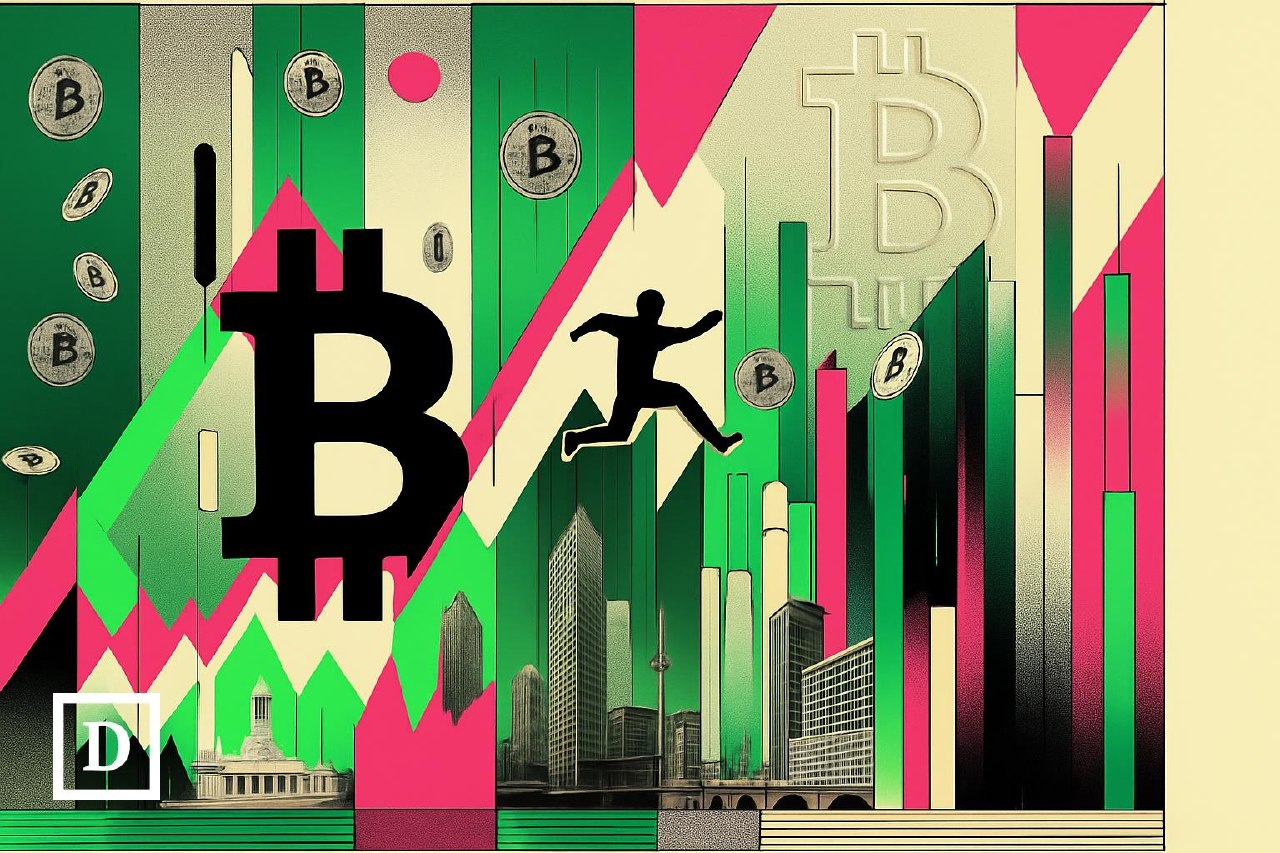
Complementing the geopolitical tailwinds, sustained positive inflows into spot Bitcoin and Ether ETFs played a critical role in bolstering the cryptocurrency market’s rally. These institutional investment vehicles have emerged as a significant demand driver for digital assets, offering regulated and accessible pathways for traditional investors to gain exposure to cryptocurrencies without directly holding the underlying assets.
According to data from SoSoValue, spot Bitcoin ETFs recorded a net inflow of $26 million on April 16. This contributed to a robust weekly net inflow total of $332 million, following an even more substantial $786 million haul in the prior week. The consistent positive sentiment surrounding Bitcoin ETFs highlights growing institutional adoption and confidence in Bitcoin as a legitimate asset class. The introduction of these ETFs earlier in the year has been a game-changer for the crypto market, providing liquidity and mainstream validation.
Spot Ether ETFs have also demonstrated impressive performance, extending their winning streak to a sixth consecutive session with $18 million in net inflows on April 16. This consistent demand has lifted cumulative inflows for the Ether ETF category to an impressive $11.82 billion, underscoring the increasing institutional interest in Ether. Analysts widely interpret these sustained inflows as a signal of institutional conviction in the long-term value proposition of both Bitcoin and Ether, indicating a maturation of the crypto market and its integration into traditional financial ecosystems. The anticipation of further regulatory approvals for similar products in other jurisdictions also contributes to this positive sentiment.
Leveraged Positioning and the Short Squeeze Phenomenon
The rapid market ascent triggered by these combined factors led to a significant reset in leveraged trading positions, a common occurrence in volatile cryptocurrency markets. Data from CoinGlass revealed approximately $805 million in futures liquidations over the past 24 hours. A substantial portion of these liquidations, specifically $643 million, comprised short positions. This phenomenon, known as a "short squeeze," occurs when a rapid price increase forces traders who bet against the market (short sellers) to close their positions to mitigate further losses. To close a short position, traders must buy back the asset, which in turn adds further buying pressure, amplifying the upward price movement.
The data indicated that nearly $390 million of Bitcoin derivatives positions were liquidated, alongside $181 million of ETH positions. This mass liquidation of short positions provided additional momentum to the rally, effectively "squeezing" out bearish bets and clearing the path for further price appreciation. Such events underscore the highly leveraged nature of parts of the cryptocurrency market and how sudden shifts in sentiment or macro events can lead to dramatic price movements.
Chronology of Events Leading to the Rally
The path to Friday’s market surge was paved by a series of interconnected geopolitical and market developments:
- Late February: The "US-Israel war on Iran" escalates, leading to heightened tensions in the Middle East and disruptions to commercial shipping in the Strait of Hormuz. This period saw increased volatility and risk aversion across global markets, including cryptocurrencies.
- Early March – Mid-April: Weeks of sustained geopolitical uncertainty contribute to a macroeconomic "overhang" on risk assets. Despite this, Bitcoin and Ether ETFs continue to register net inflows, demonstrating a resilient underlying demand from institutional investors.
- April 15-16: Spot Bitcoin ETFs maintain positive inflow streaks, totaling $332 million for the week. Spot Ether ETFs extend their winning streak to six consecutive sessions, accumulating significant cumulative inflows.
- Thursday, April 18: Confirmation emerges of a 10-day ceasefire agreement between Israel and Lebanon, a critical diplomatic breakthrough. This sets the stage for further de-escalation.
- Friday, April 19: Iranian Foreign Minister Abbas Araghchi announces the full reopening of the Strait of Hormuz to commercial shipping. This news is immediately met with a sharp drop in oil prices and a surge in global risk assets, including cryptocurrencies.
- Friday, April 19 (Continued): Cryptocurrency markets experience a significant rally, with Bitcoin climbing above $77,000. A large-scale short squeeze amplifies the upward movement, liquidating hundreds of millions in leveraged short positions.
Future Outlook and Analyst Perspectives
Looking ahead, market analysts are closely watching several factors that could influence the sustainability of this crypto rally. While the geopolitical de-escalation provides a significant tailwind, the fragile nature of peace in the Middle East, as hinted by President Trump’s statement on the naval blockade, means that potential renewed tensions remain a risk.
The continued performance of spot Bitcoin and Ether ETFs will be paramount. Should inflows remain robust, it would signal enduring institutional confidence and provide a strong floor for prices. Furthermore, the broader macroeconomic environment, including global inflation trends, central bank interest rate policies, and economic growth projections, will continue to shape investor sentiment towards risk assets. Upcoming events such as Bitcoin’s halving, anticipated later this year, are also historically significant catalysts that could influence market dynamics. The prospect of regulatory clarity and potential new ETF products for other cryptocurrencies, such as Solana, could also unlock new waves of institutional capital, further integrating digital assets into the mainstream financial landscape. The current rally represents a significant moment for the crypto market, showcasing its responsiveness to both traditional macroeconomic forces and evolving institutional adoption.