admin
admin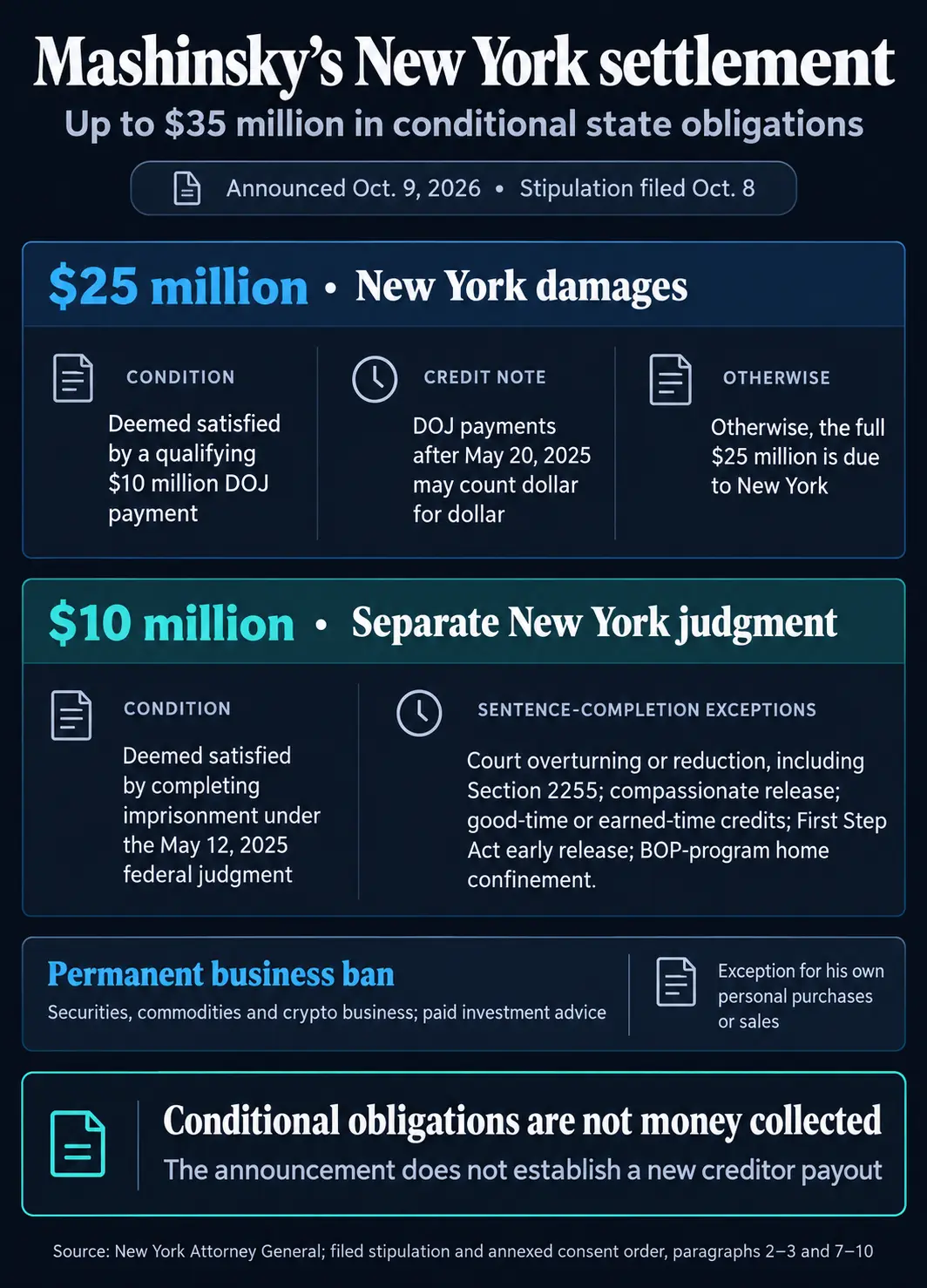
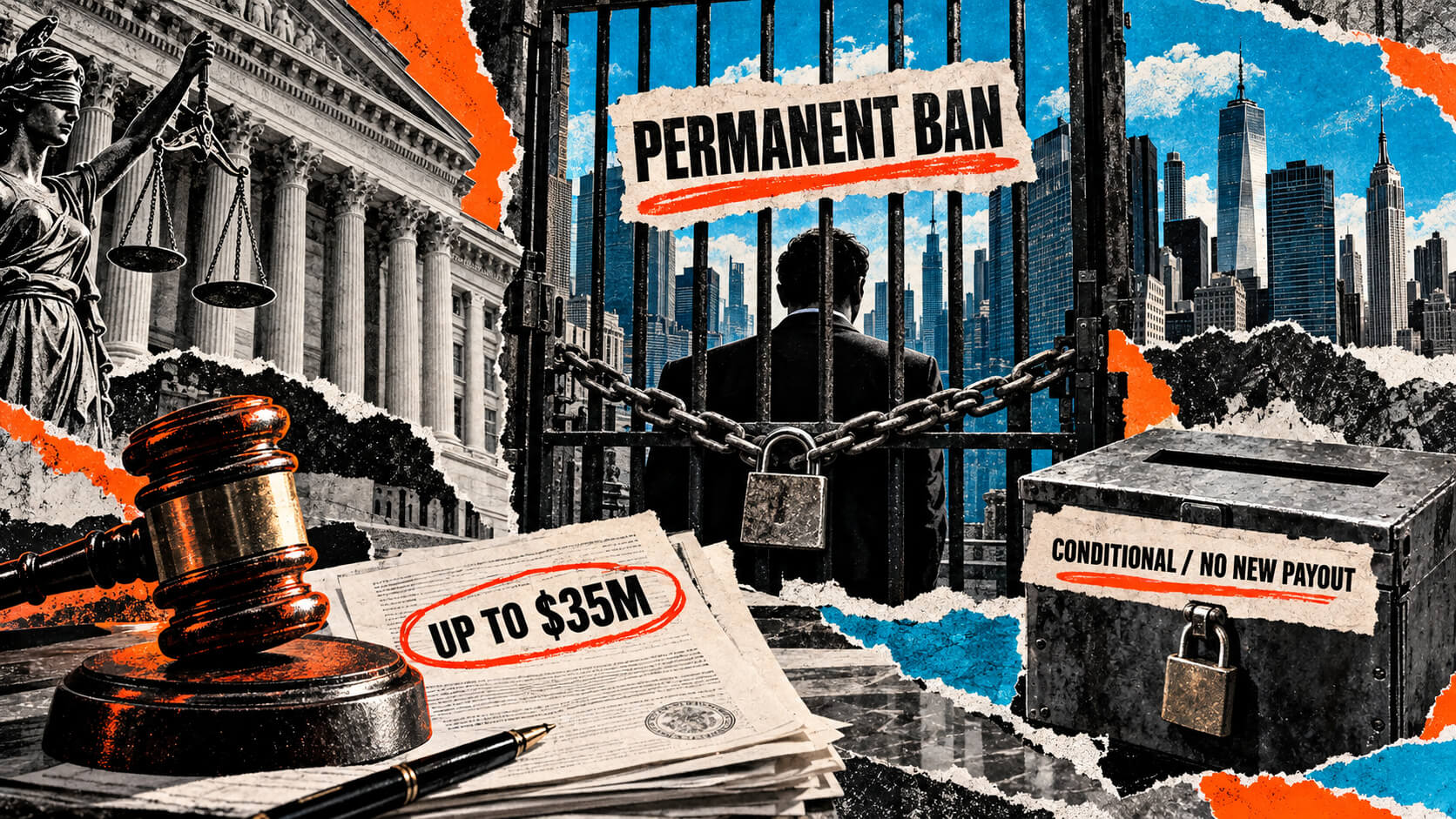
The founder of the now-bankrupt cryptocurrency lending platform Celsius, Alex Mashinsky, has reached a settlement with New York authorities that imposes a permanent ban from the securities, commodities, and cryptocurrency industries. Announced on October 9, 2026, the agreement also outlines conditional payment obligations totaling up to $35 million, critically noting that these payments will not result in any new distributions to Celsius creditors. This settlement resolves a civil lawsuit brought by New York and runs parallel to a federal criminal case, in which Mashinsky is already serving a 12-year prison sentence.
Background of the Celsius Collapse and Legal Proceedings
The downfall of Celsius Network, once a titan in the burgeoning crypto lending space, was a significant event that sent shockwaves through the digital asset market. Founded in 2017, Celsius attracted billions of dollars in customer deposits by offering high yields on various cryptocurrencies, promising investors a lucrative way to grow their digital assets. However, behind the scenes, the company was allegedly engaged in risky investment strategies and obfuscated its financial precariousness.
The company’s troubles began to surface in mid-2022, culminating in a dramatic halt to customer withdrawals in June of that year. This freeze left millions of customers unable to access their funds, sparking widespread panic and a swift decline in the value of Celsius’s native token, CEL. The ensuing liquidity crisis led to Celsius filing for Chapter 11 bankruptcy protection in July 2022, initiating a complex and protracted process to untangle its vast financial obligations and assets.
Investigations by state and federal authorities quickly followed, scrutinizing the actions of its leadership, particularly CEO Alex Mashinsky. Allegations of fraud, market manipulation, and misleading investors became central to the legal battles that ensued. New York State, through its Attorney General’s office, was among the key entities pursuing civil charges, aiming to hold Mashinsky accountable for defrauding New York residents and investors.
Key Provisions of the New York Settlement
The settlement agreement, formalized through a consent order, lays out a multi-faceted approach to addressing Mashinsky’s alleged misconduct. The core components involve a stringent industry ban and a series of financial obligations tied to specific conditions.
The Permanent Industry Ban:
The settlement unequivocally bars Alex Mashinsky from participating in the securities, commodities, and cryptocurrency businesses in any capacity. This prohibition is comprehensive, covering roles such as a broker, investment adviser, manager, officer, or consultant within these sectors. Furthermore, it extends to any activity involving the distribution of investment advice for compensation or any economic benefit. This broad scope aims to prevent Mashinsky from engaging in similar activities that regulators believe contributed to the Celsius collapse and investor losses.
Understanding the $35 Million in Conditional Payments:
The financial aspect of the settlement is structured with conditional obligations, emphasizing that these payments are not intended as a direct payout to the creditors of Celsius.
-
$25 Million in Damages to New York: The first major financial obligation is a $25 million damages payment to the state of New York. However, this obligation can be considered satisfied under specific circumstances. Paragraph 2 of the annexed consent order stipulates that this amount is deemed fulfilled by a qualifying $10 million payment made to the U.S. Department of Justice (DOJ) under paragraph 11 of Mashinsky’s federal forfeiture order. Payments made to the DOJ after May 20, 2025, can be credited dollar-for-dollar towards this $10 million requirement. Crucially, if this specified $10 million DOJ payment is not made, New York’s Attorney General will be entitled to the full $25 million.
-
$10 Million Monetary Judgment: The second financial component is a separate $10 million monetary judgment payable to New York. Paragraph 3 of the consent order outlines that this judgment is deemed satisfied by the completion of Mashinsky’s imprisonment under the federal judgment entered on May 12, 2025. This condition is subject to specific exceptions, including instances where the sentence is overturned or reduced by a court, such as through a Section 2255 challenge. Other exceptions include early release through compassionate release, good-time credits, earned-time credits, the First Step Act, or confinement through a Bureau of Prisons program.
Important Caveat Regarding Creditor Payouts:
A significant point emphasized by the New York Attorney General’s office is that the qualifying DOJ payments, which would satisfy one condition of the settlement, will not establish any new distributions to Celsius creditors. This clarifies that the settlement’s financial terms are primarily directed towards resolving the state’s civil claims and do not alter the existing bankruptcy proceedings and their potential outcomes for those who lost money in Celsius.
Mashinsky’s Admissions and Personal Transactions:
The settlement document also includes Mashinsky’s admission that he misled investors regarding Celsius’s regulatory approval status. Furthermore, he admitted to selling Celsius’s native CEL token while allegedly aware of the company’s precarious financial situation. However, the settlement retains an explicit exception allowing Mashinsky to conduct his own personal purchases and sales of assets. This provision is noteworthy, especially given the broad industry ban.
Timeline of Events and Legal Milestones
To fully understand the context of this settlement, a chronological overview of key events is essential:
- 2017: Celsius Network is founded by Alex Mashinsky.
- 2018-2022: Celsius experiences rapid growth, attracting billions in deposits and offering high yield returns on cryptocurrencies.
- June 2022: Celsius halts all customer withdrawals, citing "extreme market conditions."
- July 2022: Celsius files for Chapter 11 bankruptcy protection.
- January 2023: New York files its civil suit against Alex Mashinsky, alleging fraud.
- March 2023: Alex Mashinsky is arrested and faces federal criminal charges.
- May 8, 2025: Alex Mashinsky is sentenced to 12 years in prison on federal charges.
- May 20, 2025: The federal forfeiture order of $48.4 million is entered.
- October 9, 2026: Alex Mashinsky and New York authorities announce the civil settlement, including the permanent industry ban and conditional payments.
Supporting Data and Broader Impact
The collapse of Celsius and the subsequent legal actions highlight the inherent risks within the decentralized finance (DeFi) and cryptocurrency lending sectors. While the exact figures for investor losses directly attributable to Mashinsky’s alleged actions are complex to isolate due to the intertwined nature of the bankruptcy proceedings, the scale of Celsius’s operations suggests substantial financial harm.

According to reports, Celsius distributed over $3.4 billion to creditors as of August 2026. However, the total amount lost by customers remains a subject of ongoing calculations within the bankruptcy proceedings. The federal forfeiture order against Mashinsky, set at $48.4 million, underscores the gravity of the financial misconduct alleged by prosecutors.
The New York settlement, while not directly providing new funds to creditors, serves to reinforce regulatory oversight and accountability in the digital asset space. The permanent ban on Mashinsky’s participation in these industries is a significant deterrent and signals a clear message to other industry players about the consequences of fraudulent or misleading practices.
Official Responses and Analysis
New York Attorney General Letitia James, in a statement accompanying the settlement announcement, emphasized the office’s commitment to protecting consumers. "Alex Mashinsky defrauded thousands of investors and caused immense financial hardship," James stated. "This settlement holds him accountable by permanently banning him from the financial industry and imposing significant monetary penalties. We are committed to ensuring that those who exploit the trust of consumers face justice."
The implications of this settlement are multifaceted. For the cryptocurrency industry, it represents another step towards greater regulatory clarity and enforcement, potentially fostering a more secure environment for investors. For Celsius creditors, the settlement’s stipulation that it does not create new payout opportunities means their prospects for recovery remain tied to the ongoing bankruptcy proceedings. The complexity of distributing assets in such cases is often protracted, and this settlement does little to accelerate that process.
The distinction between the federal criminal sentence and the civil settlement is also important. While Mashinsky is serving a prison term for criminal convictions, the civil settlement addresses the state’s claims and imposes a separate set of penalties, including the industry ban and financial obligations. The conditional nature of these payments suggests a strategic approach by the state to ensure compliance and leverage existing federal legal outcomes.
The exception allowing Mashinsky to trade his own assets, while seemingly contradictory to a broad industry ban, is likely a carefully negotiated clause. It acknowledges his right to personal financial management while severely restricting his ability to operate within regulated financial markets or engage in activities that could harm others.
Conclusion
The settlement between Alex Mashinsky and New York authorities marks a significant development in the aftermath of the Celsius Network collapse. The permanent ban from the financial industry and the substantial conditional payment obligations aim to penalize Mashinsky and prevent future misconduct. While the settlement does not offer immediate relief to Celsius creditors, it underscores the persistent efforts of regulatory bodies to ensure accountability and maintain integrity within the rapidly evolving cryptocurrency landscape. The case serves as a stark reminder of the risks associated with high-yield promises in nascent financial markets and the critical importance of transparency and regulatory oversight.