admin
admin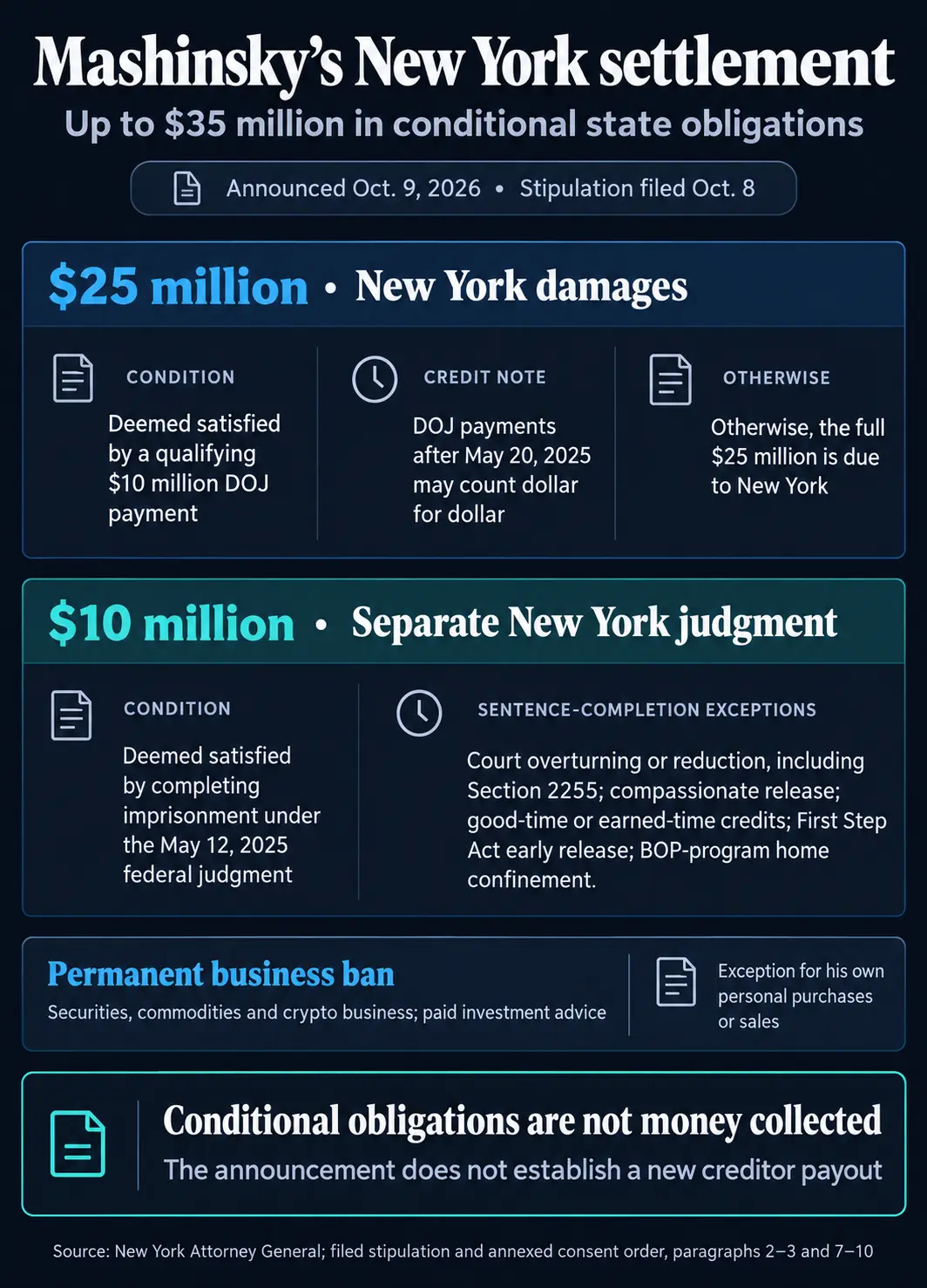
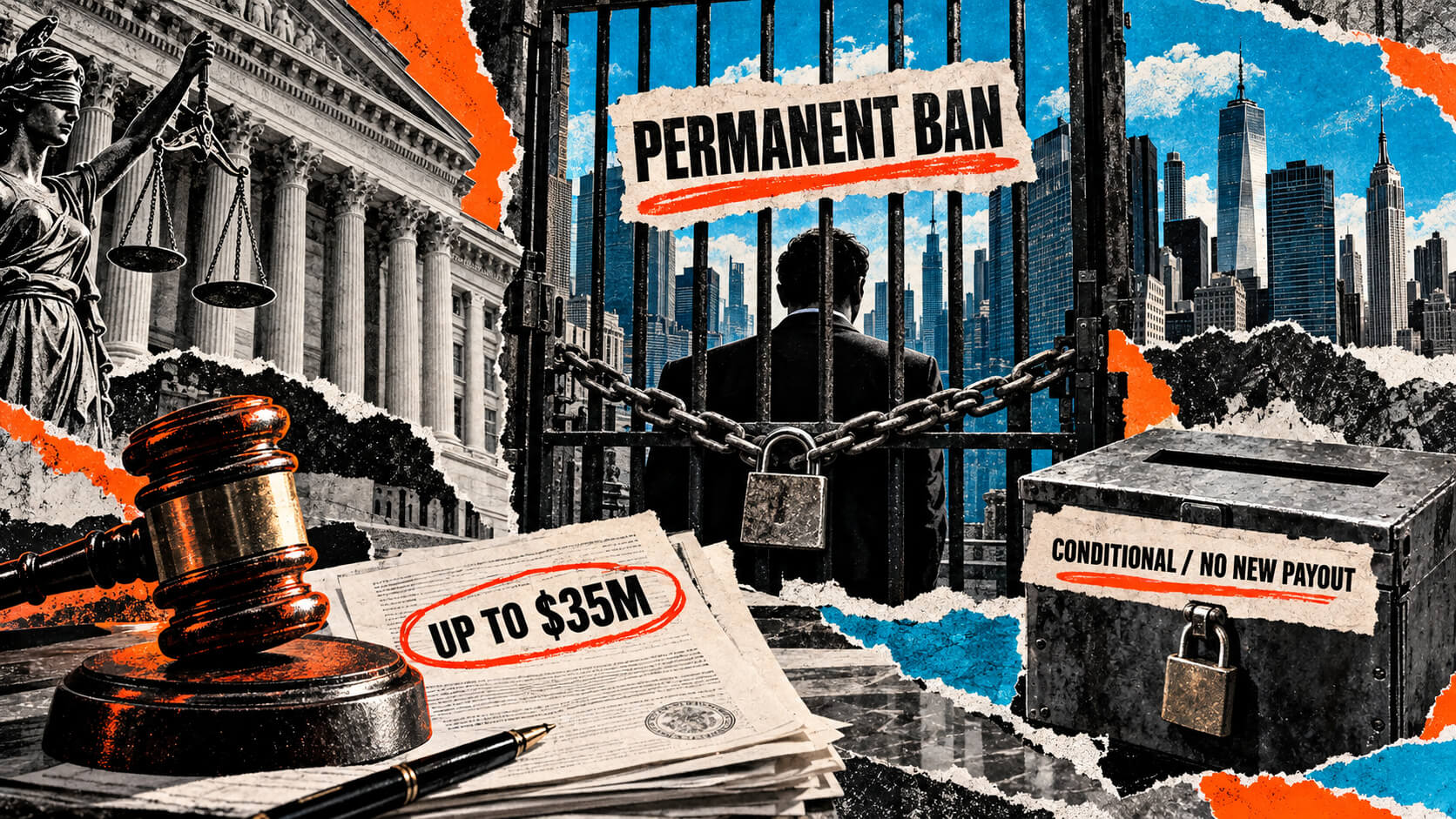
The fallout from the collapse of cryptocurrency lending giant Celsius continues, with its founder, Alex Mashinsky, agreeing to a significant settlement with New York State. Announced on October 9, 2026, the agreement imposes a permanent ban on Mashinsky from participating in the securities, commodities, and cryptocurrency industries. This civil settlement adds another layer to the legal repercussions Mashinsky faces, who is already serving a substantial prison sentence following a federal criminal conviction. The New York settlement also outlines conditional payment obligations totaling up to $35 million, though it explicitly states these do not constitute a new distribution to Celsius creditors, who have been awaiting recovery from the company’s bankruptcy.
A Permanent Industry Ban and Complex Financial Obligations
The core of the New York settlement is the comprehensive and permanent prohibition placed upon Alex Mashinsky’s future involvement in the financial sector, particularly within the volatile cryptocurrency landscape. This ban extends to a wide array of roles, including those of a broker, investment adviser, manager, officer, and consultant. Furthermore, it prohibits him from distributing investment advice for compensation or any form of economic benefit. This sweeping restriction aims to prevent Mashinsky from engaging in similar activities that led to the downfall of Celsius and the alleged defrauding of its investors.
The settlement also details a series of conditional financial obligations. The first is a $25 million damages payment to New York State. However, this obligation is notably complex. It can be deemed satisfied by a qualifying $10 million payment made by Mashinsky to the U.S. Department of Justice (DOJ) under his federal forfeiture order. Payments made to the DOJ after May 20, 2025, are eligible to count towards this $10 million requirement on a dollar-for-dollar basis. Should this specified DOJ payment not materialize, New York State would then be entitled to the full $25 million.
The second financial obligation involves a separate $10 million monetary judgment payable to New York. This amount is contingent on the completion of Mashinsky’s imprisonment as stipulated in the federal judgment entered on May 12, 2025. Crucially, this condition includes several express exceptions. These exceptions encompass scenarios where the federal sentence is overturned or reduced by a court, including through a Section 2255 challenge, as well as provisions for compassionate release, good-time credits, earned-time credits, early release under the First Step Act, and confinement at home through a Bureau of Prisons program.
Background: The Rise and Fall of Celsius
Celsius Network emerged as a prominent player in the burgeoning cryptocurrency lending market, promising high yields to customers who deposited their digital assets. Founded by Alex Mashinsky, the platform positioned itself as a secure and profitable alternative to traditional banking, attracting billions of dollars in customer deposits. Mashinsky, a vocal proponent of the crypto industry, often touted Celsius’s innovative approach and robust risk management.
However, beneath the veneer of success, Celsius faced mounting challenges. The company’s business model relied heavily on proprietary trading and complex DeFi strategies, which exposed it to significant market volatility. As the crypto market began to experience a downturn in 2022, Celsius found itself unable to meet its obligations. This led to a liquidity crisis, culminating in a dramatic halt to customer withdrawals in June 2022. The company subsequently filed for Chapter 11 bankruptcy protection in July 2022, leaving hundreds of thousands of customers unable to access their funds.
Legal Proceedings and Mashinsky’s Conviction
The collapse of Celsius triggered a wave of investigations and legal actions from various regulatory bodies and law enforcement agencies. In January 2023, New York filed its civil suit against Mashinsky, alleging that he had defrauded investors by making false and misleading statements about the company’s financial health, its regulatory status, and the safety of customer assets.
Separately, federal prosecutors pursued criminal charges against Mashinsky. These charges included securities fraud, commodities fraud, and conspiracy. During his trial, prosecutors presented evidence suggesting that Mashinsky had intentionally misled investors about Celsius’s risks and had personally profited from selling Celsius’s native token, CEL, while publicly assuring customers of its stability.
On May 8, 2025, a jury found Alex Mashinsky guilty on multiple counts, including securities fraud, commodities fraud, and conspiracy. The federal court subsequently sentenced him to 12 years in prison. The federal forfeiture order in his criminal case stipulated a disgorgement of $48.4 million.
The New York Settlement: A Complementary Legal Resolution
The New York settlement, announced on October 9, 2026, serves to resolve the state’s civil claims against Mashinsky. It integrates with, rather than replaces, the ongoing legal ramifications from his federal conviction. The agreement underscores the New York Attorney General’s commitment to holding individuals accountable for fraudulent activities within the financial markets.
The stipulation accompanying the settlement includes Mashinsky’s admission that he misled investors regarding Celsius’s regulatory approval and his own sales of the CEL token. These admissions are significant, providing further validation for the claims brought by regulatory bodies and reinforcing the narrative of deception that led to the company’s collapse.

Implications for Creditors and the Crypto Industry
While the New York settlement imposes substantial financial obligations on Alex Mashinsky, it is critical to note its impact on Celsius creditors. The agreement explicitly states that these conditional payments do not establish a new payout mechanism for those who lost funds when Celsius collapsed. Creditors have been engaged in a protracted bankruptcy process, seeking to recover a portion of their assets. The total amount distributed to Celsius creditors as of August 2026, according to the New York Attorney General’s office, exceeded $3.4 billion. However, the recovery rate for many customers has been significantly lower than their initial investment.
The permanent ban imposed on Mashinsky has broader implications for the cryptocurrency industry. It sends a clear message that individuals found to have engaged in fraudulent or deceptive practices will face severe consequences, including permanent exclusion from the sectors they have harmed. This could potentially lead to increased caution among industry participants and a greater emphasis on regulatory compliance.
The settlement also highlights the intricate nature of financial penalties and their satisfaction. The conditional payments, tied to existing federal obligations and future legal outcomes, demonstrate a complex approach to restitution and punishment. The exceptions to the sentence-completion condition for the $10 million judgment are particularly noteworthy, reflecting potential avenues for legal challenges or adjustments to Mashinsky’s sentence.
Broader Context and Future Outlook
The Celsius saga, and Alex Mashinsky’s role in it, serves as a cautionary tale within the cryptocurrency space. It underscores the inherent risks associated with high-yield investment schemes and the importance of robust due diligence for investors. The failure of Celsius, alongside other prominent crypto entities like FTX and Terra/Luna, has fueled calls for more stringent regulation of the digital asset market.
The New York settlement, by permanently barring Mashinsky from the industry, represents a significant step in the legal resolution of the Celsius case from the state’s perspective. However, the ultimate recovery for Celsius creditors will depend on the ongoing bankruptcy proceedings and the successful liquidation of the company’s remaining assets. The criminal conviction and subsequent sentencing of Mashinsky provide a measure of justice for victims of his alleged fraud, while the civil settlement aims to reinforce regulatory oversight and deter future misconduct. The industry will continue to monitor the outcomes of these legal processes as they shape the future regulatory landscape of digital assets.