James Watt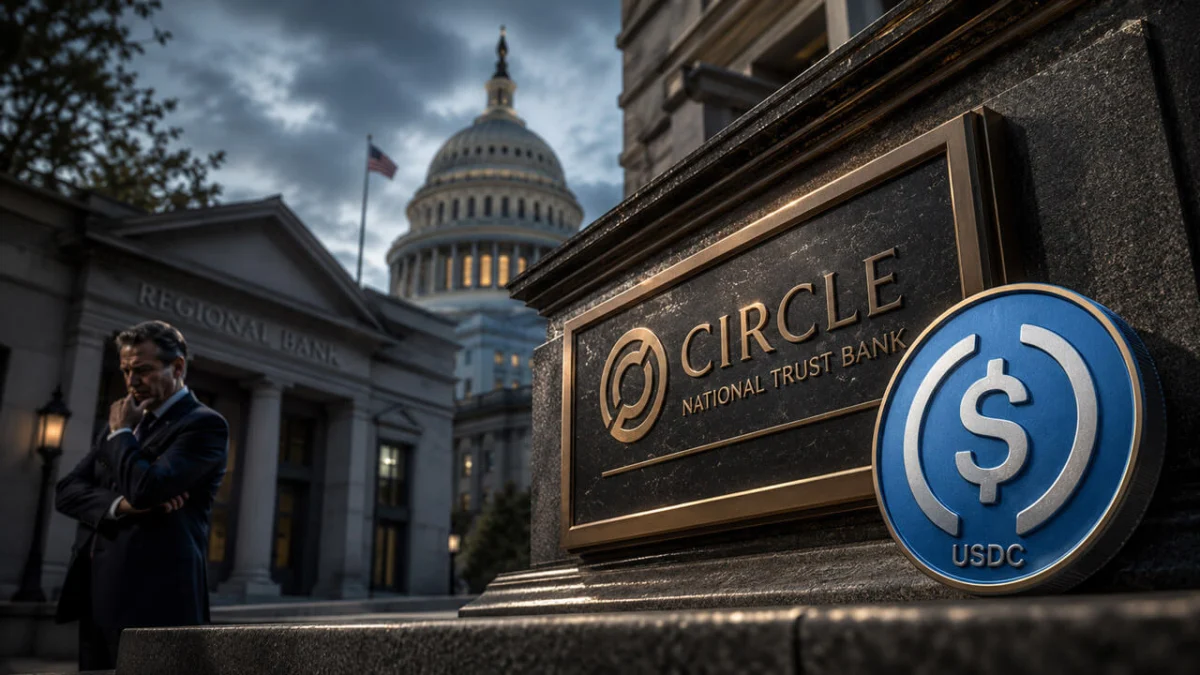
The United States government has formally integrated one of the world’s most prominent digital currencies into the federal financial framework, marking a transformative shift in the intersection of traditional finance and blockchain technology. On July 10, 2026, Circle Internet Financial received final approval from the Office of the Comptroller of the Currency (OCC) to establish a national trust bank under federal supervision. This milestone provides Circle’s flagship stablecoin, USDC, with a level of regulatory legitimacy and operational permanence that has historically been reserved for legacy financial institutions.
While Circle characterizes this development as a foundational step for institutional adoption, the approval has reignited a fierce debate within the American banking sector. Traditional lenders, particularly regional and community banks, view the federal embrace of stablecoins as a direct threat to their core funding models. As stablecoins transition from speculative crypto-trading tools to regulated financial infrastructure, the implications for domestic liquidity, credit availability, and the very architecture of the U.S. monetary system are becoming increasingly profound.
The Path to Federal Supervision: A Chronology of Integration
The journey toward Circle’s national trust bank charter reflects a multi-year effort to reconcile the fast-moving digital asset industry with the stringent requirements of federal banking laws. This process accelerated following the 2023 banking crisis, which saw the collapse of Silicon Valley Bank and a temporary de-pegging event for USDC, highlighting the critical need for a more robust regulatory framework.
The timeline of Circle’s federal integration includes several pivotal moments:
- December 12, 2025: The OCC issues conditional approval for Circle to establish a "national trust bank." The conditions stipulated that the institution would focus on fiduciary digital-asset custody and trust-company activities, strictly separating the bank’s operations from the core stablecoin issuance function.
- January 2026: Leading financial analysts, including those at Standard Chartered, began issuing warnings regarding the competitive pressure stablecoins would exert on bank deposits. Estimates suggested a potential migration of $500 billion from traditional deposits to stablecoins by the end of 2028.
- May 2026: The Federal Reserve released a comprehensive follow-up note examining the historical responses of the banking sector to financial innovation, comparing the rise of stablecoins to the emergence of money-market funds in the 20th century.
- July 10, 2026: Circle receives final OCC approval. The company announces the launch of Circle National Trust, signaling a new era of federal oversight for the issuer.
- July 13, 2026: Circle updates its transparency reporting, revealing a reserve structure increasingly dominated by government-backed instruments rather than private bank deposits.
Defining the National Trust Bank Charter
It is essential to distinguish the charter Circle has received from the traditional commercial banking licenses held by institutions like JPMorgan Chase or Bank of America. A national trust bank is a specialized entity that does not engage in the traditional "business of banking"—namely, the gathering of retail deposits to fund consumer and commercial loans.
Circle National Trust is designed to provide fiduciary services, digital asset custody, and eventually, reserve management. By operating under the OCC, Circle gains a "regulatory passport" that allows it to operate across state lines under a single federal standard, rather than navigating the fragmented state-by-state money transmitter licensing system. For institutional counterparties—such as asset managers, corporate treasuries, and payment processors—this federal oversight mitigates the reputational and legal risks previously associated with using stablecoins for large-scale settlement and liquidity management.
The Economic Friction: Stablecoins vs. Bank Deposits
The primary concern for the American banking industry is not the existence of stablecoins, but rather where the money goes when a user "mints" a digital dollar. When a customer moves $10,000 from a regional bank account to purchase USDC, those dollars do not disappear from the financial system, but they do move off the balance sheet of the local lender.
The Federal Reserve’s December 2025 FEDS Note, titled "Banks in the Age of Stablecoins," outlines the potential impact on credit supply. The research suggests that the extent of the disruption depends on the "reserve mix" chosen by the issuer. If a stablecoin issuer keeps 100% of its reserves in deposits at commercial banks, the impact on lending is neutralized. However, as stablecoin issuers seek maximum safety and liquidity, they increasingly favor government-backed assets like Treasury bills and overnight reverse repurchase agreements (repo).
Projected Impact on Bank Lending (Federal Reserve Estimates)
| Adoption Scenario | Estimated Reduction in Bank Lending | Primary Driver |
|---|---|---|
| Low Adoption | $65 Billion – $141 Billion | Shift from retail deposits to stablecoin reserves. |
| Moderate Adoption | $190 Billion – $408 Billion | Increased institutional use for B2B payments. |
| High Adoption | $600 Billion – $1.26 Trillion | Integration with Fed Master Accounts and mass retail use. |
For a community bank, these outflows represent the loss of a "cheap and stable" funding source. Unlike wholesale funding, which is expensive and flighty, retail deposits allow banks to offer mortgages and small business loans at competitive rates. If stablecoins continue to gain legitimacy, banks may be forced to raise the interest rates they pay on deposits to retain customers, thereby compressing their profit margins and potentially reducing the overall supply of credit to the economy.
Analyzing Circle’s Reserve Composition
The data released by Circle on July 13, 2026, illustrates why the banking sector remains on edge. With $72.95 billion in USDC in circulation, the reserve structure heavily favors government-backed instruments over bank-intermediated credit.
USDC Reserve Mix (As of July 13, 2026)
- Overnight Reverse Treasury Repo: $54.09 billion (73.9% of total)
- U.S. Treasuries (Under 3 months): $7.51 billion (10.3% of total)
- Deposits at Systemically Important Institutions: $10.63 billion (14.5% of total)
- Other Bank Deposits: $0.92 billion (1.3% of total)
The data shows that roughly 84.2% of the USDC reserve is parked in short-term government-backed instruments. This structure is a direct response to the "USDC shock" of 2023. By prioritizing liquidity and assets that can be liquidated almost instantly under stress, Circle has built a product that is exceptionally safe for the holder but provides minimal support for the traditional bank-led credit cycle. Only 15.8% of the reserves are currently feeding back into the balance sheets of banks, and the vast majority of that is concentrated in "systemically important" giant institutions, leaving smaller regional lenders with almost no benefit from the stablecoin’s growth.
The Legislative Context: The GENIUS Act and Regulatory Moats
The OCC’s approval of Circle’s charter coincides with a broader legislative shift in Washington. The GENIUS Act (Generating Enhanced National Infrastructure for Unprecedented Stablecoins) has fundamentally altered the policy landscape. The debate has moved past the initial "crypto-skeptic" phase, where lawmakers questioned the right of stablecoins to exist, and into a "regulatory-moat" phase.
Regulators are now focused on how to supervise these assets to prevent them from becoming "shadow banks." By granting Circle a trust bank charter, the OCC is effectively pulling the stablecoin industry into the regulatory perimeter. However, this creates a paradox: while supervision makes the system safer, it also makes stablecoins more attractive to the public, which in turn accelerates the drain on traditional bank deposits.
The GENIUS Act and subsequent regulatory guidance have begun to address the "deposit-like" nature of stablecoins. There is ongoing discussion regarding whether private digital dollars should be required to hold a portion of their reserves in actual bank deposits to support the lending economy, or whether they should be allowed to function as "narrow banks"—entities that hold only safe, liquid government assets.
Broader Implications for the Financial System
The institutionalization of USDC through a federal charter carries several long-term implications for the global and domestic economy:
1. Enhanced Payment Efficiency
For corporate treasury desks, the ability to use a federally supervised digital dollar means that settlement can occur 24/7/365. The traditional banking system’s reliance on the FedWire or ACH systems, which operate on limited hours and can take days to settle, becomes less competitive against the instant finality of onchain USDC.
2. Dollar Dominance
From a geopolitical perspective, the U.S. government views the proliferation of dollar-backed stablecoins as a tool for maintaining the greenback’s status as the global reserve currency. By providing a clear regulatory path for issuers like Circle, Washington ensures that the digital evolution of the dollar remains under U.S. jurisdiction rather than migrating to offshore, unregulated entities.
3. The "Tokenized Deposit" Counter-Response
In response to the threat posed by stablecoins, major banks are increasingly exploring "tokenized deposits." These are digital representations of traditional bank deposits that move on blockchain rails but remain on the bank’s balance sheet. The OCC’s approval of Circle is likely to accelerate the development of these bank-backed alternatives as the industry fights to keep its funding base.
4. Credit Contraction Risks
The Federal Reserve remains wary of the "transmission mechanism" of stablecoins. If a significant portion of the M2 money supply moves into stablecoin reserves that are parked at the Fed (via reverse repo) or in Treasury bills, the "multiplier effect" of the banking system is weakened. This could lead to a permanent tightening of credit conditions, making it more expensive for the average American to borrow money for a home or a car.
Conclusion: A New Era of Competition
The OCC’s final approval for Circle National Trust is more than a mere administrative milestone; it is a recognition that the architecture of money is changing. Washington is no longer treating stablecoins as a temporary byproduct of a speculative crypto market. Instead, it is integrating them into the federal oversight system, acknowledging their utility as a superior settlement rail for the digital age.
However, this legitimacy comes with a cost. The tension between the efficiency of digital dollars and the stability of the traditional lending model remains unresolved. As the "legitimacy fight" fades, it is being replaced by a much harder struggle over the control of the dollar’s velocity and the preservation of the credit-granting power of the American banking system. The coming years will determine whether stablecoins and traditional banks can coexist in a balanced ecosystem, or if the rise of the digital dollar will necessitate a fundamental redesign of how credit is supplied to the U.S. economy.