admin
admin
The U.S. Securities and Exchange Commission (SEC) and the Commodity Futures Trading Commission (CFTC) have jointly issued a significant clarification regarding the regulatory treatment of crypto assets, marking what many in the industry had hoped would be a pivotal moment for market stability and growth. This comprehensive guidance, released on March 18, 2026, aims to delineate the boundaries between digital commodities and securities, a distinction that has been a source of prolonged legal battles and market uncertainty. However, despite the potential for this clarity to act as a major bullish catalyst, the cryptocurrency market responded with a muted, almost indifferent, reaction, signaling a deeper shift in investor expectations and a growing demand for legislative action over regulatory interpretation.
The core of the new guidance establishes a taxonomy for classifying digital assets, separating them into categories such as digital commodities, digital collectibles, digital tools, payment stablecoins, and digital securities. This move, championed by SEC Chairman Paul Atkins, explicitly acknowledges that a majority of crypto assets are not inherently securities. Nevertheless, the guidance also reiterates that a token can still fall under securities law if it is structured and offered as part of an investment contract, a nuanced point that maintains a degree of regulatory oversight. Furthermore, the joint statement addressed complex areas like staking, airdrops, mining, and the use of wrapped versions of non-security crypto assets, providing the industry with a more defined operational map within the federal legal framework.
For years, the cryptocurrency sector in the United States has operated under a cloud of regulatory ambiguity. This uncertainty has permeated every facet of the industry, influencing everything from the valuations of nascent projects and the design of innovative products to the listing decisions of exchanges and the very structure of custody solutions. Companies and developers have often found themselves navigating a precarious landscape, where the SEC could, at any point, assert that a significant portion of the digital asset ecosystem fell under the purview of securities law. This existential threat has acted as a persistent overhang, dampening investment, stifling innovation, and driving many forward-thinking companies to seek more crypto-friendly jurisdictions.
The latest pronouncements from the SEC and CFTC represent a tangible shift, offering a clearer and more predictable framework than has been available in recent memory. In theory, this level of regulatory clarity should have been met with an enthusiastic market response. Historically, such definitive statements from regulators have often preceded periods of increased investment and market confidence. The ability for founders to launch projects with greater assurance, exchanges to list assets with reduced risk, and investors to assess token viability without the specter of retroactive reclassification, are all elements that should, under normal circumstances, lead to a positive repricing of the sector.
However, the market’s tepid reaction underscores a critical evolution in investor sentiment. Traders and market participants appear to have moved beyond simply accepting regulatory goodwill as sufficient grounds for a sector-wide re-rating. The lack of a significant upward price movement in major cryptocurrencies like Bitcoin (BTC) following the announcement suggests that the market is now prioritizing a more robust and durable form of legal certainty – one that can only be provided by legislative action from Congress.
A Policy Win That Fell Short of Market Expectations
The new guidance, issued on March 18, 2026, represents a genuine policy victory for the crypto industry, addressing long-standing concerns about regulatory overreach and inconsistency. Chairman Atkins’ statement that the SEC now recognizes most crypto assets as non-securities, while maintaining that investment contracts remain subject to oversight, offers a more refined approach than the broad-brush enforcement actions of previous years. This distinction is crucial, allowing for the development of open crypto markets while still safeguarding investors in cases where digital assets are marketed as investment opportunities.
The comprehensive nature of the guidance, touching upon staking, airdrops, and mining, provides much-needed clarity for a range of common industry practices. These are activities that have frequently been scrutinized by regulators, leading to uncertainty for both developers and users. By offering a clearer path forward, the SEC and CFTC have, in essence, drawn a broader and more defined perimeter for federal law application to digital assets. This is precisely the kind of clarity that the industry has been lobbying for, particularly since the SEC’s enforcement actions began to tighten the legal landscape.

The implications of this clarity are far-reaching. Founders can now structure their token launches with a greater degree of confidence, knowing the baseline classification of their assets. Exchanges can mitigate listing risks by understanding which regulator holds primary jurisdiction over different types of tokens. Investors, in turn, can make more informed decisions, as the discount historically applied to U.S. regulatory uncertainty should, in principle, shrink. On paper, all the ingredients for a bullish surge were present.
Yet, the market remained largely unmoved. Bitcoin, the bellwether of the crypto market, did not experience a significant price jump in response to the announcement. Instead, its price movements continued to be dictated by broader macroeconomic forces, a trend observed across most risk assets over the preceding month. This divergence between regulatory progress and market performance highlights a fundamental shift in what the market values most.
Adding to the muted sentiment, financial institutions like Citigroup issued revised outlooks for major cryptocurrencies. On March 17, 2026, Citigroup reportedly cut its 12-month price targets for Bitcoin and Ethereum (ETH), citing the stalled progress on U.S. market structure legislation as a key factor. This move by a major financial institution underscores the market’s growing impatience with the lack of legislative solutions, even in the face of regulatory clarity.
Furthermore, broader market anxieties, including the ongoing energy crisis and inflation fears exacerbated by geopolitical conflicts in regions like Iran, have continued to weigh on investor sentiment across all asset classes. These macroeconomic headwinds likely overshadowed the positive regulatory news, contributing to the muted response.
The market’s apparent indifference to this regulatory development suggests that traders have moved beyond the question of whether the current SEC is more favorable than its predecessors. The more pressing concern now is the durability and longevity of the regulatory framework itself. Investors are asking whether these rules will withstand political shifts, future litigation, and the transition to subsequent administrations.
Congress: The Unavoidable Bottleneck for Sustainable Growth
The crux of the issue lies in the transition from regulatory interpretation to legislative certainty. For years, the cryptocurrency industry in the U.S. was primarily hampered by agency hostility and interpretive ambiguity, acting as the first significant bottleneck. The recent guidance, while welcome, highlights that the industry has now moved to a second, arguably more formidable, bottleneck: durability and legal finality.
While guidance and interpretations from agencies like the SEC and CFTC are valuable, they are inherently subject to change. Rulemaking processes are more robust, but even these can be influenced by shifts in administration and political priorities. The ultimate authority to solidify jurisdictional lines, definitively classify tokens as commodities or securities, and grant oversight authority with long-term stability rests with Congress. Only through legislation can the U.S. establish a comprehensive and enduring rulebook for digital assets.

This is precisely why the market barely reacted to a regulatory shift that, just a few years ago, would have been considered transformative. The industry is no longer satisfied with the assurance that certain policymakers in Washington understand the sector. It demands tangible proof that the operational framework within which they are building will be solid, stable, and resistant to political whims.
The SEC itself framed its recent action as "complementary" to congressional efforts, rather than a substitute for them. This implicit acknowledgment reinforces the idea that regulatory pronouncements, while helpful, are not the final word. A favorable interpretation by an agency can be narrowed, challenged in court, and ultimately replaced by different interpretations under a new administration or regulatory leadership.
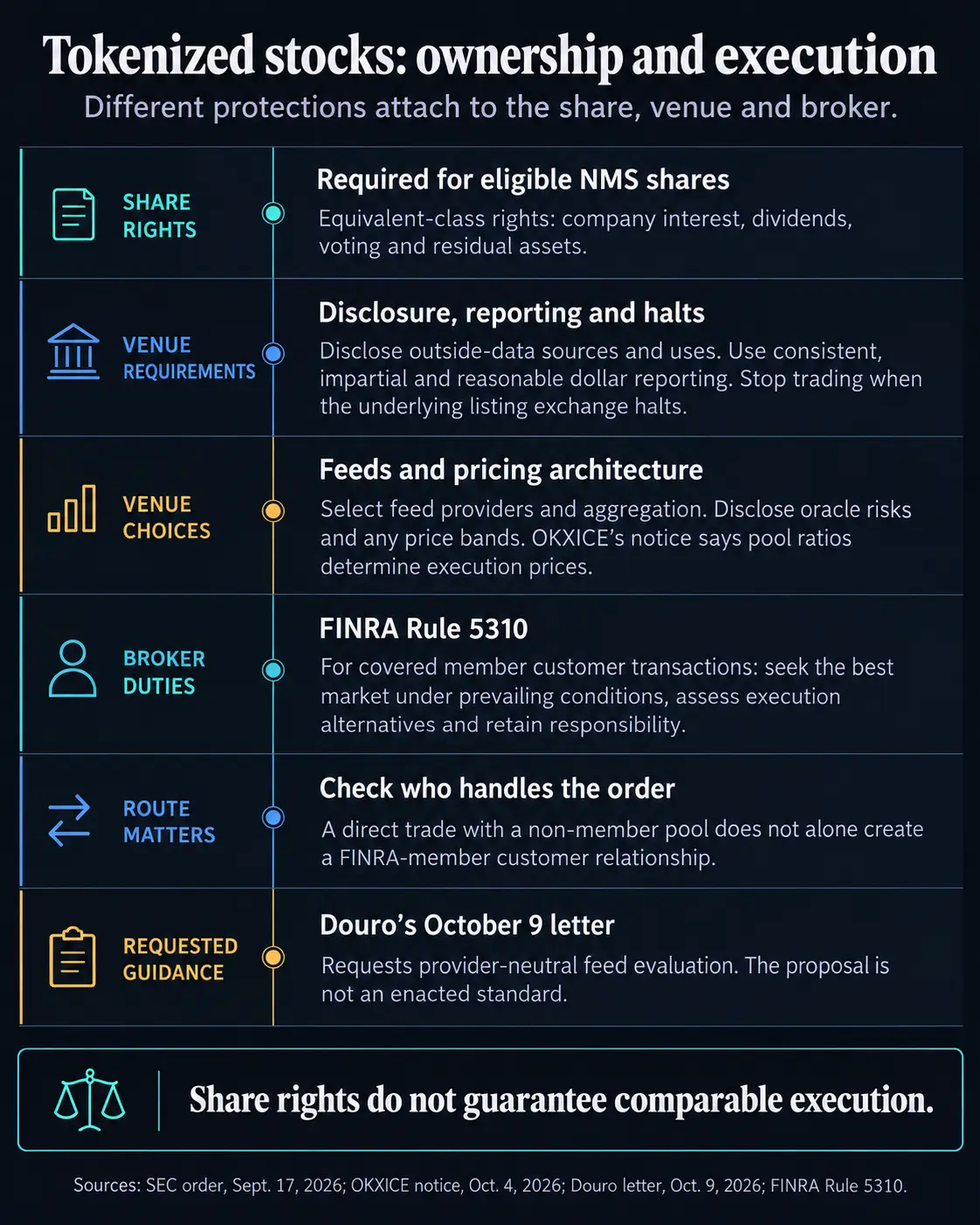
Adding another layer of complexity to this situation is the potential impact of this regulatory clarity on traditional finance. The same guidance that provides more breathing room for crypto-native markets may also accelerate the tokenization of traditional financial products more rapidly than it benefits permissionless blockchain networks. The SEC has been explicit that tokenized stocks and bonds are still considered securities, as articulated in its January 2026 statement on tokenized securities.
This was further underscored by the SEC’s approval on March 18, 2026, of Nasdaq’s plan to facilitate the trading and settlement of certain stocks and ETFs in tokenized form. This development strongly suggests that Washington’s comfort zone lies in integrating blockchain technology into familiar, supervised market infrastructures. Consequently, the next wave of adoption may not exclusively benefit crypto-native companies. If tokenized equities, ETFs, Treasuries, and other regulated instruments gain traction due to incumbents’ ability to leverage blockchain technology, Wall Street firms could potentially capture a significant share of the upside that many crypto companies had anticipated would be theirs.
Therefore, the market’s muted reaction should not be misconstrued as apathy. Traders understood the significance of the regulatory message, acknowledged it as a step forward, and subsequently priced in the remaining gap. This gap is Congress. Until there is demonstrable progress on legislative initiatives and clear evidence that exchanges, issuers, and custodians can build their businesses around a durable and legally sound framework, regulatory goodwill will continue to trade at a discount.
The SEC and CFTC can refine their classifications and assert their jurisdictions, but the next substantial re-rating of the crypto market will likely hinge on something more substantial: a law that can withstand the scrutiny of election cycles, potential litigation, and the ever-shifting political landscape in Washington. The industry’s focus has unequivocally shifted from seeking clarity to demanding certainty, a demand that only legislative action can ultimately fulfill. The journey from regulatory pronouncements to codified law remains the critical path forward for the sustained growth and maturation of the digital asset ecosystem in the United States.