Layla Zulfa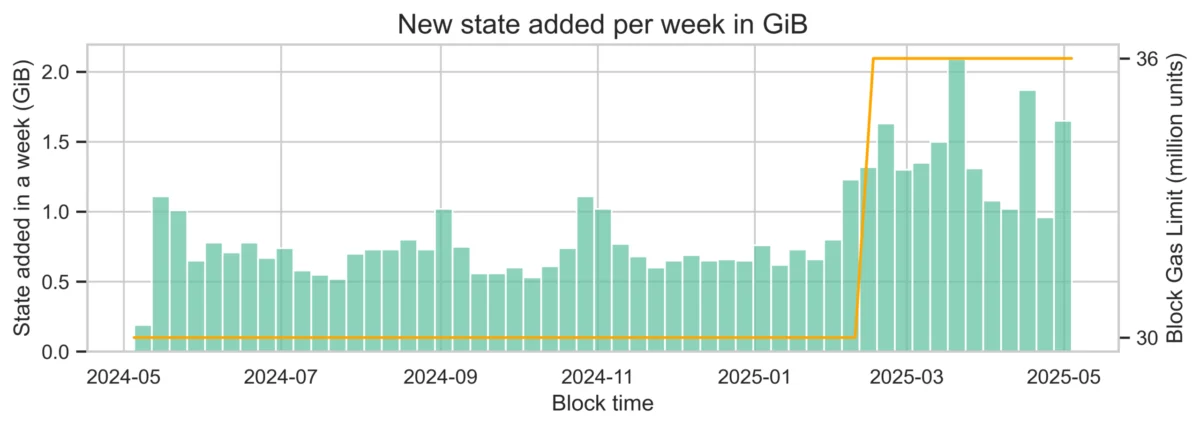
Ethereum, once an audacious experiment in decentralized computing, has unequivocally transformed into a foundational pillar of global digital infrastructure, processing billions in value daily, orchestrating myriad applications, and serving as the bedrock for an expansive ecosystem of Layer 2 solutions. At the heart of this intricate and ever-evolving network lies a single, indispensable component: the blockchain’s "state." This crucial concept, representing the collective memory of the entire network at any given moment, now presents one of the most significant challenges to Ethereum’s long-term sustainability and decentralization as the platform continues its unprecedented growth.
The information contained within this analysis represents a proposal from the Stateless Consensus team. It is important to note that this content may not reflect a universal consensus view within the Ethereum ecosystem, as the Ethereum Foundation (EF) itself embodies a rich diversity of opinion across its protocol and broader organizational structure, a diversity that ultimately strengthens the Ethereum network. Special gratitude is extended to Ladislaus von Daniels and Marius van der Wijden for their insightful review of this article.
Understanding Ethereum’s "State" and Its Critical Importance
In the simplest terms, Ethereum’s state can be conceptualized as "everything Ethereum knows right now." It is a comprehensive snapshot of all account balances, smart contract code, and stored data across the entire network. When a user checks their ETH balance, that information isn’t stored in their personal wallet; it resides within Ethereum’s state. Similarly, the logic and data of every decentralized application (DApp), from complex DeFi protocols to NFT marketplaces, are recorded and maintained within this global ledger. Every transaction, every contract interaction, every token transfer fundamentally alters and updates this state.
This singular, universally agreed-upon state underpins virtually every function and security guarantee of the Ethereum network. Without a consistent and verifiable state, smart contracts would be unable to execute predictably, transactions could not be validated, and the entire edifice of decentralized finance and web3 applications would collapse. The integrity and accessibility of this state are paramount, serving as the ultimate source of truth for all participants. If the state becomes excessively large, prone to centralization, or prohibitively difficult to access and serve, the stability, cost-effectiveness, and decentralization of all layers built upon Ethereum are inevitably compromised.
The Growth Conundrum: Scaling Ethereum’s Layer 1 and its Unintended Consequences
Ethereum has embarked on an ambitious, multi-year journey to enhance its scalability, a necessary evolution to meet the soaring demand for decentralized computing. This journey has seen the implementation of various critical upgrades and proposals, including the proliferation of Layer 2 (L2) scaling solutions, the introduction of EIP-4844 for "data blobs" to reduce L2 transaction costs, strategic increases in the gas limit, gas repricing mechanisms, and the development of enshrined Proposer-Builder Separation (ePBS) via EIP-7732. Each of these advancements has demonstrably increased the network’s capacity to handle more activity and process a greater volume of transactions. However, these scaling triumphs have concurrently introduced a formidable challenge: the relentless and accelerating growth of the network’s state.
The Persistent Challenge of State Growth
One of the most pressing concerns is that Ethereum’s state size exhibits a unidirectional trend: it only ever increases. Each new account created, every piece of storage written to by a smart contract, and every byte of bytecode deployed adds data that the network is obligated to preserve indefinitely. This perpetual expansion incurs tangible and escalating costs across the network:
- Storage Burden: Full nodes must allocate ever-increasing disk space to store the entire state, demanding more robust hardware.
- I/O Performance Degradation: Accessing and updating the state becomes slower as the database grows, impacting transaction processing speeds and block validation times.
- Network Synchronization Overhead: New nodes joining the network or existing nodes syncing after downtime face longer and more resource-intensive synchronization periods, requiring significant bandwidth and computational power to download and verify the colossal state.
As illustrated by data tracking new state added per week, such as that collected for EIP-8037, the growth trend is undeniable and shows little sign of abating. For instance, over the past year, the network has consistently added gigabytes of new state weekly, pushing the total state size into the terabyte range for archive nodes. Gas limit increases, while beneficial for throughput, inherently amplify this problem by allowing more write operations per block, accelerating the rate at which new state is generated.
This phenomenon is not unique to Ethereum; other burgeoning blockchain networks have already encountered similar issues. When state sizes become prohibitively large, running a full node—an essential component for maintaining decentralization and censorship resistance—becomes unrealistic for the average user. This inevitably centralizes the responsibility of holding and serving the full state into the hands of a few large, well-resourced providers, such as professional staking services, major RPC providers, or institutional actors.
On Ethereum, a significant majority of blocks are already produced by sophisticated block builders, often operating highly optimized infrastructure. A critical concern arises regarding how many independent parties can realistically construct blocks from end-to-end, especially in scenarios where censorship resistance is paramount. If only a tiny cadre of actors possesses the resources to store and serve the full state, the network’s censorship resistance and credible neutrality are severely undermined, as fewer diverse parties retain the ability to include transactions that might be censored by dominant players.
To mitigate these risks, mechanisms like FOCIL (Forced Online Censorship-Resistant Inclusion List) and VOPS (Validity-Only Partial Statelessness) are being explored. These proposals aim to preserve censorship resistance even in a future where block building is increasingly specialized. However, their effectiveness hinges on the continued existence of a robust ecosystem of nodes capable of accessing, holding, and serving the state without incurring prohibitive costs. Therefore, controlling state growth is not merely an optional optimization but a fundamental prerequisite for Ethereum’s enduring health and decentralized ethos.
The Ethereum community is actively engaged in measuring and stress-testing the network’s capacity to identify potential bottlenecks. Initiatives like bloatnet.info track metrics such as:
- The total state size and its growth rate.
- The hardware requirements for running various types of nodes (full, archival, light).
- The synchronization times for new nodes.
- The performance implications of state bloat on transaction processing.
These efforts provide crucial data points to inform future protocol development and ensure proactive measures are taken before state growth becomes an insurmountable barrier.
The Paradox of Statelessness: Who Holds and Serves the State?
Even if Ethereum were to maintain its current gas limit indefinitely, the network would eventually confront significant state growth challenges. Simultaneously, there is a clear and persistent demand from the community for increased transaction throughput. This has driven much of the research into "statelessness," a paradigm shift where validators no longer need to store the entire state to validate new blocks, instead relying on cryptographic proofs. This represents a major scalability breakthrough, potentially allowing the network to meet demand for higher throughput.
However, statelessness introduces a profound new challenge: it formalizes and potentially accelerates the centralization of state storage. While validators become "stateless" in the sense of not needing the full state locally, the state itself must still exist somewhere. This responsibility would likely consolidate among:
- RPC Providers: Entities like Infura, Alchemy, and others that serve as primary interfaces for DApps and users.
- Block Builders: Specialized actors in the transaction supply chain (MEV-boost) who need access to the state to construct optimal blocks.
- Specialized Data Providers: New services that might emerge specifically to store and serve historical and current state data.
In essence, while validators gain efficiency, the underlying state becomes significantly more centralized. This has several critical implications:
- Availability Risks: Relying on a smaller number of centralized entities to store and serve the state creates single points of failure. If these providers experience downtime, censorship, or technical issues, large segments of the network could be affected, impacting user experience and DApp functionality.
- Increased Costs and Potential for State Rent: Centralized providers may eventually pass on the significant costs of storing and serving the state to users or DApps through higher fees, or even lead to the implementation of "state rent" at the protocol level, where inactive state incurs a cost to remain accessible.
- Censorship Vectors: A concentrated control over state data could empower a few entities to selectively deny access to certain parts of the state or even to censor specific transactions by refusing to serve the necessary proofs.
- Impact on L2 Security Guarantees: Layer 2 solutions, particularly optimistic rollups, rely on users’ ability to "force-include" their transactions directly on Layer 1 in case of malicious or unresponsive L2 operators. This safety valve fundamentally depends on reliable, decentralized access to the rollup contract state on L1. If L1 state access becomes fragile or highly centralized, these crucial security mechanisms become much harder to utilize in practice, potentially undermining the security model of L2s.
Even if a multitude of entities were to store the state, there currently exists no robust, in-protocol mechanism to cryptographically prove that they are actively and reliably serving it, nor are there strong economic incentives for them to do so without charging a premium. While "snap sync" is widely served by default by many nodes, general RPC access to the full state is not. Without making state serving more economically attractive and technically simpler, the network’s collective ability to access its own state risks becoming concentrated in the hands of a few gatekeepers.
Charting a Path Forward: Strategic Directions for State Management
Addressing the complex challenges posed by state growth and the implications of statelessness requires a multi-faceted approach. The Ethereum community is actively exploring three broad directions, each offering distinct trade-offs and potential benefits.

1. State Expiry: Pruning the Digital Garden
A significant portion of Ethereum’s state is rarely accessed. Recent analyses, such as one detailed on ethereum-magicians.org, indicate that approximately 80% of the network’s state has remained untouched for over a year. Despite this inactivity, current nodes bear the full cost of perpetually storing this dormant data. State expiry aims to alleviate this burden by temporarily removing inactive state from the "active set" that every node maintains, requiring a cryptographic proof to reintroduce it when needed. Two primary categories of state expiry are under consideration:
-
Mark, Expire, Revive: This approach involves the protocol explicitly marking rarely used state as inactive. This inactive state would no longer be part of the "hot" active set that every node must keep readily available. However, it could be "revived" and brought back into the active set by presenting a cryptographic proof of its prior existence. This design allows frequently accessed contracts and balances to remain "hot" and cheap to access, while "cold" or long-forgotten state doesn’t burden every node but remains retrievable if someone requires it. The primary benefit is fine-grained control and simpler revival, though it necessitates additional metadata storage.
-
Multi-era Expiry: In a multi-era design, the state is periodically "rolled over" into distinct "eras," for example, annually. The "current era" would remain small, active, and fully accessible. Older eras would be effectively "frozen" from the perspective of live execution, meaning new state writes would only occur within the current era. To access or modify state from a previous era, a user would need to provide proofs demonstrating its existence in that historical context. This concept is simpler from a high-level archiving perspective but typically involves more complex and larger revival proofs.
Both "Mark, Expire, Revive" and "Multi-era Expiry" share the overarching goal of keeping the "active state" small by temporarily offloading inactive components, while still ensuring these components can be reactivated. They diverge, however, in their trade-offs concerning technical complexity, user experience, and the distribution of computational and storage burdens between clients and infrastructure providers.
Additional readings on these concepts provide deeper technical insights into the proposed EIPs and research initiatives aimed at achieving state expiry.
2. State Archive: Separating Hot from Cold
State archive represents another strategic direction, focusing on the explicit separation of "hot" (frequently accessed, recent) and "cold" (infrequently accessed, older) portions of the state.
- Bounded Active State: In this model, nodes would primarily store only the recent, frequently used state data.
- Specialized Archive Providers: Older, less frequently accessed data would be offloaded to specialized "archive nodes" or dedicated archival services.
The practical implication of a state archive design is that even as the total historical state of Ethereum continues its inexorable growth, the "hot set"—the portion requiring rapid access for current transaction execution and block validation—can remain relatively bounded and manageable. This ensures that the execution performance of a node, particularly the critical I/O cost associated with accessing state from disk, can remain stable over time, rather than progressively degrading as the blockchain ages and accumulates more data. This approach offers a pragmatic way to manage performance without completely removing historical data from the network, instead segmenting it based on access frequency.
3. Making it Easier to Hold and Serve State: Empowering Broader Participation
Beyond fundamental architectural changes like state expiry and archiving, a crucial line of inquiry revolves around whether sufficient decentralization and utility can be maintained even with less data held by individual participants. This involves designing nodes and wallets that remain valuable contributors to the network without necessarily storing the entire, ever-growing state indefinitely.
One promising avenue is partial statelessness:
- Reduced Data Requirements for Validators: This allows validators to operate with a smaller local state footprint, primarily focused on the most active data, significantly lowering hardware requirements and operational overhead for block validation.
- Light Client Enhancements: Advances in light client technology aim to enable users and DApps to interact securely with the network, verifying transactions and state without needing to download or store the full blockchain state, relying instead on cryptographic proofs provided by full nodes.
Another critical direction is to lower the barrier to running useful infrastructure:
- Optimized Client Software: Continuous improvements in Ethereum client implementations (e.g., Geth, Erigon, Nethermind) are crucial for enhancing efficiency, reducing resource consumption, and making it easier for a wider range of participants to run nodes.
- Decentralized RPC Networks: Developing and fostering decentralized alternatives to centralized RPC providers could distribute the burden of serving state data, enhancing resilience and censorship resistance.
- Wallet Integration: Integrating light client capabilities directly into wallets would empower users with greater self-sovereignty and direct verification capabilities, reducing reliance on third-party RPC services.
These ideas are being explored in detail through various research initiatives and EIPs, aiming to strike a balance between scalability, decentralization, and accessibility.
The Road Ahead: Implementation, Community, and Long-Term Vision
Ethereum’s state, often an unseen technical detail, is quietly at the epicenter of some of the most profound and strategic questions facing the protocol’s future. These include:
- How can Ethereum continue to scale its transaction throughput without compromising its core tenet of decentralization?
- What is the optimal balance between storing historical data and maintaining a lean, performant active state?
- How can the network ensure broad participation in state management, preventing control from consolidating among a few powerful entities?
- What are the economic models and incentives required to encourage diverse actors to hold and serve the state reliably?
While many of these questions remain open and are the subject of ongoing research and debate, the overarching strategic direction is clear: the Ethereum community is committed to reducing state as a performance bottleneck, lowering the cost associated with holding it, and making it significantly easier to serve for a diverse array of participants.
The current priorities of the Stateless Consensus team and broader Ethereum development efforts are focused on low-risk, high-reward initiatives that deliver immediate benefits while laying the groundwork for more ambitious future changes.
Archive Solutions: Experimentation is underway with "out-of-protocol" solutions for state archiving. These solutions aim to keep the active state bounded while relying on specialized archives for older data. This approach is designed to generate valuable real-world data regarding performance, user experience, and operational complexities before any potential "in-protocol" changes are considered. If proven successful and necessary, these experimental solutions could eventually be integrated directly into the Ethereum protocol.
Partial Stateless Nodes and RPC Enhancements: Recognizing that most users and applications interact with Ethereum via centralized RPC providers, significant work is being dedicated to improvements that:
- Increase the efficiency and speed of data access for RPC services.
- Enhance caching mechanisms to reduce the burden on underlying nodes.
- Promote the development of more decentralized RPC networks to distribute the load and mitigate risks associated with single points of failure.
- Enable partial stateless nodes to contribute meaningfully to the network without needing to store the entire state, thereby increasing the number of participants who can run useful infrastructure.
These projects have been deliberately chosen for their immediate utility and forward-compatibility. They are designed to strengthen Ethereum’s health and resilience today while simultaneously preparing the ecosystem for more profound protocol changes that may be implemented in the future.
As these iterations and research efforts progress, the development teams are committed to transparently sharing their findings, progress, and remaining open questions. Addressing the complexities of state management is a collaborative endeavor that cannot be solved in isolation. Therefore, the broader Ethereum community—including client developers, node operators, infrastructure providers, L2 builders, and anyone invested in Ethereum’s long-term health—is actively invited to engage. This involves sharing feedback on proposals, participating in discussions on forums and community calls, and contributing to the testing and validation of new approaches in practice. Through collective effort and innovation, Ethereum aims to overcome its state challenges, ensuring its continued evolution as a robust, decentralized, and scalable global infrastructure.