Nila Kartika Wati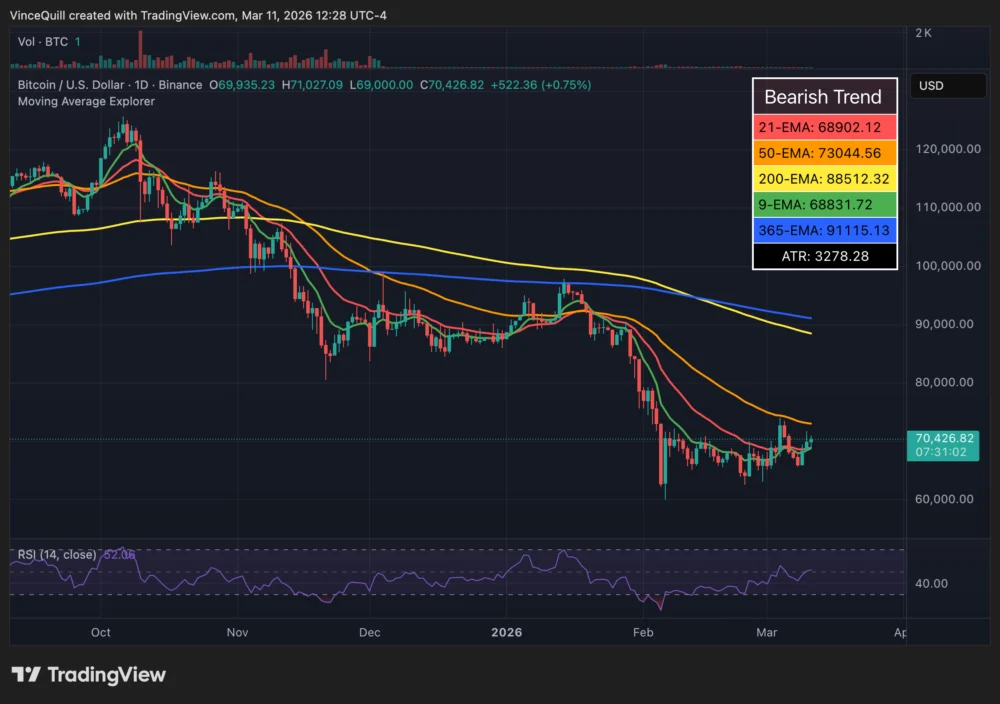
The latest release of the Consumer Price Index (CPI) data for February has confirmed market expectations, showing an increase that was "in line with estimates." This anticipated rise in inflation has already been largely factored into macroeconomic projections, particularly for the upcoming March CPI report. The market consensus, as reflected by various analysts, suggests that the implications for monetary policy, especially from the Federal Reserve, remain a critical point of focus, even as cryptocurrency markets demonstrate notable resilience.
Understanding the Consumer Price Index: A Key Economic Barometer
The Consumer Price Index (CPI) is a crucial economic indicator that measures the average change over time in the prices paid by urban consumers for a market basket of consumer goods and services. Compiled and released monthly by the U.S. Bureau of Labor Statistics (BLS), the CPI serves as a primary gauge of inflation, reflecting the cost of living and the purchasing power of the dollar. It encompasses a wide array of categories, including food, energy, housing, transportation, medical care, and education.
The significance of the CPI extends far beyond mere statistical reporting. It is a critical tool for policymakers, particularly the Federal Reserve, in formulating monetary policy. The Fed operates under a "dual mandate" from Congress: to achieve maximum employment and maintain price stability, which is generally understood as targeting an average annual inflation rate of 2%. Persistent deviations from this target, whether above or below, can trigger adjustments to interest rates, quantitative easing, or other policy tools designed to steer the economy toward its objectives. For businesses, the CPI influences pricing strategies, wage negotiations, and investment decisions. For consumers, it directly impacts their purchasing power, savings, and overall financial well-being. Therefore, each CPI release is meticulously scrutinized by economists, investors, and the public alike.
A Closer Look at February’s Inflation Data
According to the U.S. Bureau of Labor Statistics (BLS) February CPI report, several key sectors experienced price increases, contributing to the overall inflationary trend. The shelter component, a significant portion of household expenses and a major contributor to core inflation, rose by 0.2% in February. This consistent upward movement in housing costs underscores the ongoing demand in the real estate market and the lagging effect of rental agreements on reported inflation figures.
The food sector of the CPI saw an increase of 0.4%, reflecting continued pressure on household budgets from grocery bills. This rise can be attributed to various factors, including supply chain dynamics, commodity price fluctuations, and labor costs within the agricultural and processing industries. Energy prices, often the most volatile component of the CPI, increased by 0.6% in February. This segment includes gasoline, electricity, and natural gas, and its fluctuations are frequently driven by geopolitical events, global supply and demand dynamics, and seasonal factors.
Perhaps most critically, the index for all items, excluding food and energy—commonly known as "core CPI"—rose by 0.2%. Core CPI is often considered a more reliable indicator of underlying inflation trends because it strips out the volatile food and energy components, which can experience rapid, temporary swings. The Federal Reserve often pays closer attention to core inflation when assessing long-term inflationary pressures and making monetary policy decisions. The sustained, albeit moderate, increase in core CPI signals that inflationary forces remain embedded in the broader economy, even if headline inflation figures are influenced by more transient factors. These figures, while deemed "in line with estimates," nonetheless highlight the persistent inflationary environment that central banks globally are grappling with.
The Federal Reserve’s Tightrope Walk: Monetary Policy Implications
The consistent, albeit expected, rise in the CPI places considerable pressure on the Federal Open Market Committee (FOMC), the policymaking arm of the Federal Reserve responsible for setting interest rates. Stephen Coltman, head of macro at exchange-traded product (ETP) issuer 21Shares, articulated this dilemma, stating, "What matters now is the Fed’s reaction function to the coming higher CPI prints. Do they ‘look through’ this temporary shock despite having been burned in the previous inflation cycle? Or do they tilt hawkish as a precautionary measure?"

This statement encapsulates the critical decision facing the Fed. "Looking through" implies treating the current inflation as a transient phenomenon, allowing it to run its course without aggressive monetary tightening. This approach carries the risk of repeating past mistakes, where the Fed initially characterized post-pandemic inflation as "transitory" only to see it become entrenched, forcing a more aggressive hiking cycle later. Conversely, "tilting hawkish" would mean adopting a more restrictive monetary stance, potentially through higher interest rates or a more stringent quantitative tightening policy, as a precautionary measure against re-accelerating inflation. Such a move, however, risks stifling economic growth and potentially pushing the economy into a recession.
The Fed’s current interest rate policy range of 3.50%-3.75% reflects a period of significant tightening aimed at bringing inflation down from multi-decade highs. The central bank is acutely aware of its dual mandate to achieve maximum employment and price stability. With employment data showing mixed signals—for instance, the U.S. economy recently losing 92,000 jobs, and finance job openings falling to a 13-year low—the Fed must carefully balance the need to curb inflation without unduly harming the labor market. The historical context of being "burned" by underestimating inflation in the recent past weighs heavily on their decisions, making any perceived passivity a difficult choice. The upcoming FOMC meetings will be pivotal in signaling the Fed’s chosen path, with global markets keenly awaiting any indications of a shift in their inflation outlook or policy stance.
Market Reactions and Analyst Perspectives
The financial markets’ response to the February CPI report was largely muted, primarily because the inflation figures aligned with pre-release estimates. This phenomenon, where an expected outcome generates minimal market volatility, indicates that the data had already been "priced into the macroeconomic data" for the March CPI print. Sophisticated algorithms and human analysts continuously forecast economic indicators, and when actual results mirror these forecasts, the market has already adjusted.
From a broader market perspective, this "in line" report prevented any sharp sell-offs in traditional asset classes like equities or bonds, which might have occurred if inflation had significantly exceeded expectations, signaling a need for more aggressive Fed action. Instead, the focus quickly shifted to the Federal Reserve’s forward guidance and the implications for future monetary policy.
Market analysts at 21Shares, an exchange-traded product (ETP) issuer, played a key role in framing the narrative, emphasizing the anticipatory nature of market pricing. Their insights highlight the sophistication of modern financial markets, where information is rapidly disseminated and integrated into asset valuations. The calm reaction underscores a market that, while acknowledging persistent inflationary pressures, is also positioning itself for the Federal Reserve’s subsequent moves rather than reacting impulsively to data that was already widely expected. This nuanced response contrasts sharply with periods of unexpected economic data, where markets can experience significant turbulence, reflecting the underlying uncertainty and the need for immediate repricing of assets.
Resilience in the Cryptocurrency Landscape
In a notable demonstration of market strength, the cryptocurrency sector exhibited remarkable resilience following the release of the February CPI report. Despite ongoing inflationary pressures and the looming uncertainty surrounding the Federal Reserve’s future monetary policy, crypto markets largely absorbed the news without significant downside. The Total 3 market indicator, which tracks the entire cryptocurrency market capitalization excluding Bitcoin (BTC) and Ether (ETH), experienced only a modest decline of approximately 1% from its intraday high of about $722 billion.
This resilience is particularly significant given the historical volatility of cryptocurrencies and their sometimes-pronounced sensitivity to macroeconomic shifts and central bank pronouncements. In the past, adverse economic news or indications of tighter monetary policy could trigger more substantial corrections across the digital asset space. The current stability suggests a growing maturity within the crypto ecosystem, potentially driven by increased institutional adoption, a more robust underlying infrastructure, and a clearer understanding among investors of the asset class’s long-term potential.
Analysts suggest that this muted reaction could stem from several factors. Firstly, the "in line" nature of the CPI report meant there were no major negative surprises that would warrant a dramatic repricing of risk assets. Secondly, a segment of crypto investors may view digital assets, particularly Bitcoin, as a potential hedge against inflation over the long term, even if short-term correlations with traditional markets exist. Thirdly, the ongoing development and adoption within specific crypto niches, such as decentralized finance (DeFi) and non-fungible tokens (NFTs), may be creating intrinsic demand that somewhat insulates the market from broader macroeconomic headwinds. The ability of the crypto market to hold steady in the face of persistent inflation and central bank scrutiny signals a potentially evolving dynamic for this nascent asset class.
Bitcoin’s Trajectory: Analysis and Forecasts

Against this backdrop of macroeconomic data and resilient crypto markets, Bitcoin’s price trajectory remains a central point of interest for investors and analysts. Matt Mena, a crypto research strategist at 21Shares, provided specific insights into Bitcoin’s immediate and medium-term outlook. According to Mena, in the immediate term, Bitcoin is likely to remain range-bound, trading between $68,000 and $74,000. This indicates a period of consolidation where buying and selling pressures are relatively balanced, preventing a decisive move in either direction.
However, Mena anticipates an imminent breakout past the $75,000 resistance zone. A "breakout" in technical analysis refers to a price moving outside a defined resistance or support level with increased volume, signaling a potential continuation of the trend in the direction of the breakout. If Bitcoin successfully breaches this $75,000 threshold, it could pave the way for a medium-term consolidation phase between $75,000 and $80,000. This suggests that after an initial surge, the price might stabilize at a higher level as new support is established and market participants digest the move.
Mena also drew parallels to historical price data, noting that Bitcoin typically rebounds by 15% or more after significant geopolitical market shocks. Such shocks, which can range from major international conflicts to unexpected economic crises or supply chain disruptions, often create widespread uncertainty across traditional financial markets, sometimes leading investors to seek alternative assets. A rebound of this magnitude would comfortably place Bitcoin’s price in the $77,000 to $80,000 range, aligning with the projected medium-term consolidation. This historical pattern suggests that Bitcoin can act as a "safe haven" or a high-beta asset that recovers strongly once the initial shock subsides, potentially attracting capital from those seeking to capitalize on volatility or preserve wealth.
Furthermore, Mena posited that a market recovery to these elevated levels could be "accelerated" if the Federal Open Market Committee (FOMC) resumes easing interest rates in 2026. Lower interest rates generally reduce the cost of borrowing, making riskier assets like cryptocurrencies more attractive compared to fixed-income investments. An environment of monetary easing typically injects more liquidity into the financial system, which can flow into higher-growth, higher-risk assets like Bitcoin. While 2026 might seem distant, market participants often price in future expectations, and a clear signal from the Fed regarding a dovish pivot could front-run this acceleration. Other factors contributing to Bitcoin’s potential upward trajectory include the impact of its halving events, which reduce the supply of new Bitcoin, growing institutional adoption, and ongoing technological advancements within the blockchain ecosystem.
The Path Ahead: Interest Rate Expectations and Future Outlook
The trajectory of the Federal Reserve’s monetary policy remains the most significant variable influencing both traditional and cryptocurrency markets. Current market sentiment, as indicated by the CME FedWatch tool, suggests a strong consensus against an immediate interest rate cut. Only a mere 0.6% of traders anticipate an interest rate cut from the current 3.50%-3.75% range at the upcoming March 18 FOMC meeting. This overwhelmingly low percentage implies that market participants largely expect the Fed to maintain its current stance, or potentially even lean slightly hawkish, given the persistent inflation data.
The Fed’s decision-making process is multifaceted, considering a broad spectrum of economic indicators beyond just inflation. While the CPI is critical, the FOMC also meticulously evaluates labor market data, including unemployment rates, job openings, and wage growth; economic growth figures, such as GDP; and consumer spending patterns. With the labor market showing signs of cooling in some sectors, as evidenced by falling finance job openings and overall job losses, the Fed faces a delicate balancing act. An overly aggressive tightening stance risks tipping the economy into recession, while premature easing could reignite inflationary pressures.
Looking further ahead, the prospect of the FOMC resuming interest rate easing in 2026, as suggested by Matt Mena, hinges on a sustained decline in inflation towards the Fed’s 2% target and signs of economic moderation. If inflation proves more stubborn than anticipated, or if economic growth remains robust, the timeline for rate cuts could be pushed back. Conversely, a significant downturn in economic activity or a more rapid disinflationary trend could accelerate the easing cycle. Potential risks that could alter this outlook include unforeseen geopolitical events, which can disrupt supply chains and commodity prices, or domestic economic shocks that impact consumer confidence and spending. The Fed’s communication strategy, including forward guidance and speeches from its officials, will be instrumental in shaping market expectations and providing clarity on the central bank’s evolving policy path as it navigates the complex economic landscape ahead.
The February CPI report, while confirming anticipated inflationary trends, has effectively shifted the market’s focus from the data itself to the Federal Reserve’s impending policy decisions. With crypto markets demonstrating unexpected resilience and Bitcoin eyeing significant price levels, the interplay between macroeconomic indicators and central bank responses will continue to define the financial narrative in the coming months.