admin
admin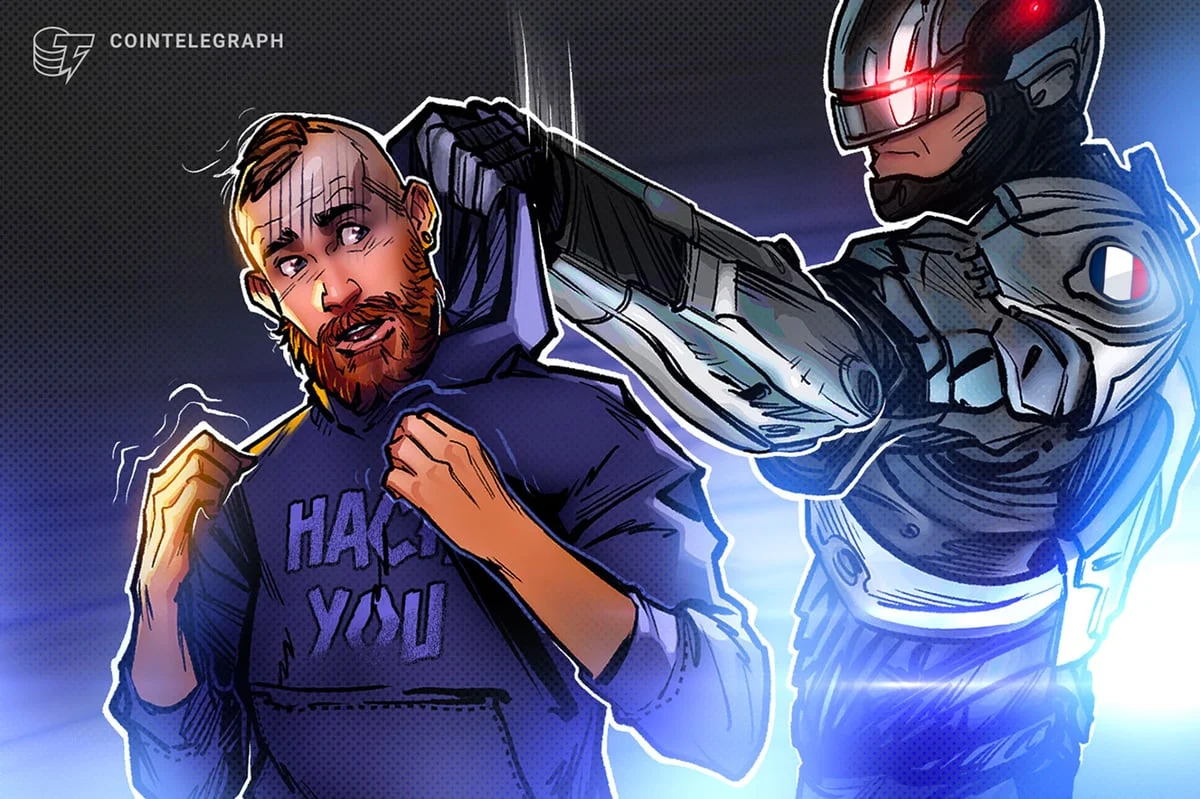
Jean-Didier Berger, the Minister Delegate to the Interior Minister of France, has officially signaled a decisive shift in the national security strategy to address the alarming rise of physical violence targeting digital asset holders. Speaking before an audience of industry leaders, developers, and investors at the 2026 Paris Blockchain Week, Berger detailed a comprehensive roadmap intended to curb the proliferation of "wrench attacks"—a term describing the use of physical force, threats, or kidnapping to coerce victims into transferring their cryptocurrency holdings. The announcement comes at a critical juncture for France, which has seen a disproportionate share of such crimes relative to its European neighbors, threatening its status as a premier global hub for blockchain innovation.
According to Berger, the French government has already moved beyond the preliminary stages of assessment, having launched a specialized prevention platform designed to educate high-net-worth individuals and crypto entrepreneurs on personal security. This platform has reportedly seen thousands of registrations in its initial weeks, underscoring the growing anxiety within the domestic crypto community. Furthermore, Berger revealed that he is working in close coordination with Interior Minister Laurent Nuñez on a "more serious plan" slated for release in the coming weeks, which is expected to involve specialized police units and enhanced cross-border cooperation to track assets laundered following physical robberies.
The Burgundy Kidnapping: A Catalyst for Government Action
The urgency of the government’s response was highlighted by a harrowing incident in the Burgundy region earlier this week. On Monday, four suspects allegedly abducted a mother and her 11-year-old child, holding them hostage to extort a ransom from the father, a prominent cryptocurrency entrepreneur. The kidnappers demanded a payment of 400,000 euros (approximately $471,000) in digital assets, betting on the speed and pseudonymity of blockchain transactions to facilitate a quick escape.
The Paris prosecutor’s office confirmed that the ordeal ended on Tuesday morning when law enforcement authorities successfully intercepted the suspects and secured the safe release of the victims. While the rapid response of the French police was praised, the event served as a stark reminder of the evolving tactics employed by organized crime. Unlike traditional bank heists or digital phishing scams, wrench attacks bypass sophisticated software encryption by targeting the human element—the weakest link in any security chain.
The Burgundy case is not an isolated event but rather part of a documented trend of escalating violence. In February 2026, French police arrested six individuals in connection with the kidnapping of a magistrate and her mother. In that instance, the criminals targeted the partner of the magistrate, who was involved in the crypto industry. These high-profile cases suggest that criminals are increasingly conducting detailed surveillance on potential targets, identifying families and personal vulnerabilities to ensure compliance.

Statistical Overview: France as a Global Epicenter for Physical Crypto Crime
Data released by local news outlet RTL provides a sobering look at the scale of the crisis. Since the beginning of 2026, France has recorded 41 reported crypto-related kidnappings. This statistic implies that, on average, a violent abduction or home invasion linked to digital assets occurs every 2.5 days within the country. This frequency has placed French law enforcement under immense pressure to adapt their investigative techniques to a crime that combines traditional kidnapping-for-ransom with the technical complexities of decentralized finance.
The surge in 2026 follows a record-breaking year for wrench attacks globally. Cybersecurity firm CertiK reported a 75% increase in verified wrench attacks in 2025, totaling 72 cases worldwide. Notably, France emerged as the primary hotspot for these incidents during that period, accounting for 19 confirmed cases. While Europe as a whole represented approximately 40% of global wrench attacks in 2025, France’s individual contribution was the highest of any single nation, prompting questions about whether the country’s proactive embrace of the "Crypto Hub" identity has inadvertently made its residents more visible targets.
Another significant incident occurred in March 2026, when a French couple in their late 50s was targeted in a sophisticated home invasion. The perpetrators, posing as police officers, gained entry to the residence and used the threat of violence to force the couple to transfer $1 million worth of Bitcoin (BTC). The use of authority-based deception, combined with the threat of physical harm, illustrates the diverse methods criminals are employing to bypass digital security protocols like two-factor authentication (2FA) and hardware wallets.
Chronology of Recent Major Wrench Attacks in France
The timeline of incidents over the past quarter reflects a disturbing acceleration in both the frequency and the audacity of these crimes:
- February 2026: Six suspects are apprehended following the abduction of a magistrate and her mother. The motive is identified as a crypto-ransom demand targeting a family member’s business assets.
- March 10, 2026: A home invasion involving impersonation of law enforcement results in the theft of $1 million in BTC from a couple. The incident highlights the shift toward targeting older investors who may be perceived as more vulnerable.
- April 13, 2026: The Burgundy kidnapping occurs, involving a minor and a mother. The suspects demand 400,000 euros in crypto.
- April 14, 2026: Law enforcement successfully frees the Burgundy hostages and takes seven men into custody for questioning.
- April 15, 2026: Minister Delegate Jean-Didier Berger addresses Paris Blockchain Week, promising a "serious plan" to protect investors.
Official Response and Preventative Strategies
Minister Berger’s remarks indicate that the French government is moving toward a multi-pronged strategy that balances technological solutions with traditional policing. The "preventative measures" currently in place focus on "operational security" (OpSec) for individuals. This includes advising crypto holders to avoid public displays of wealth, utilizing "duress PINs" on hardware wallets that show a decoy balance, and implementing multi-signature (multisig) wallets that require authorization from a geographically distant second party to move large sums.
The upcoming plan from the Ministry of the Interior and Minister Laurent Nuñez is expected to include:

- Specialized Task Forces: Increased funding for the "Office Central de Lutte contre la Criminalité liée aux Technologies de l’Information et de la Communication" (OCLCTIC) to bridge the gap between physical kidnapping investigations and blockchain forensics.
- Enhanced Surveillance of Peer-to-Peer (P2P) Off-Ramps: Tightening the monitoring of services where stolen crypto might be laundered or converted into fiat currency.
- Public Awareness Campaigns: Educating the public on the risks of sharing crypto-related information on social media, which often serves as the primary source of intelligence for criminals.
- Legislative Adjustments: Proposing stiffer penalties for kidnappings and assaults where the primary motive is the extortion of digital assets, recognizing the unique "irreversibility" of these crimes compared to traditional bank transfers.
Analysis of Implications: The Human Cost of Digital Assets
The rise of wrench attacks represents a fundamental shift in the risk profile of cryptocurrency ownership. For over a decade, the primary threat to crypto holders was digital: exchange hacks, smart contract exploits, and phishing links. However, as software security has become more robust and "cold storage" (offline wallets) has become the standard for significant holdings, criminals have reverted to the oldest form of theft: physical coercion.
The implications for France are twofold. Economically, the government is eager to attract blockchain startups and capital. However, if the country becomes synonymous with "crypto kidnappings," high-net-worth individuals may choose to relocate to jurisdictions perceived as safer, such as the UAE or Singapore. This "security drain" could undermine the very industry France has worked so hard to foster through its regulatory frameworks like MiCA (Markets in Crypto-Assets).
Socially, these attacks introduce a level of personal danger that is largely absent from traditional finance. While a bank can freeze a suspicious wire transfer or reverse a fraudulent credit card charge, a Bitcoin transaction sent under duress is, in most cases, permanent and immutable. This lack of a "safety net" makes the physical threat significantly more effective for the criminal and more devastating for the victim.
Experts suggest that the industry must respond by developing more "social recovery" and "time-lock" features. Time-locks, which prevent a wallet from sending funds for a set period (e.g., 24 or 48 hours), could act as a deterrent; if a criminal knows they must hold a victim for two days before the transaction clears, the risk of being caught by police increases exponentially.
Conclusion
As Jean-Didier Berger concluded his address at Paris Blockchain Week, he emphasized that the safety of citizens is a prerequisite for any technological revolution. The French government’s commitment to a "serious plan" in the coming weeks suggests that the era of treating crypto crime as a purely digital concern is over. For the thousands of investors in France, the hope is that these measures will arrive quickly enough to stem the tide of violence that has characterized the first half of 2026. The success of the French Interior Ministry in tackling wrench attacks will likely serve as a blueprint for other nations facing similar challenges in an increasingly digitized—yet physically vulnerable—global economy.