
 James Watt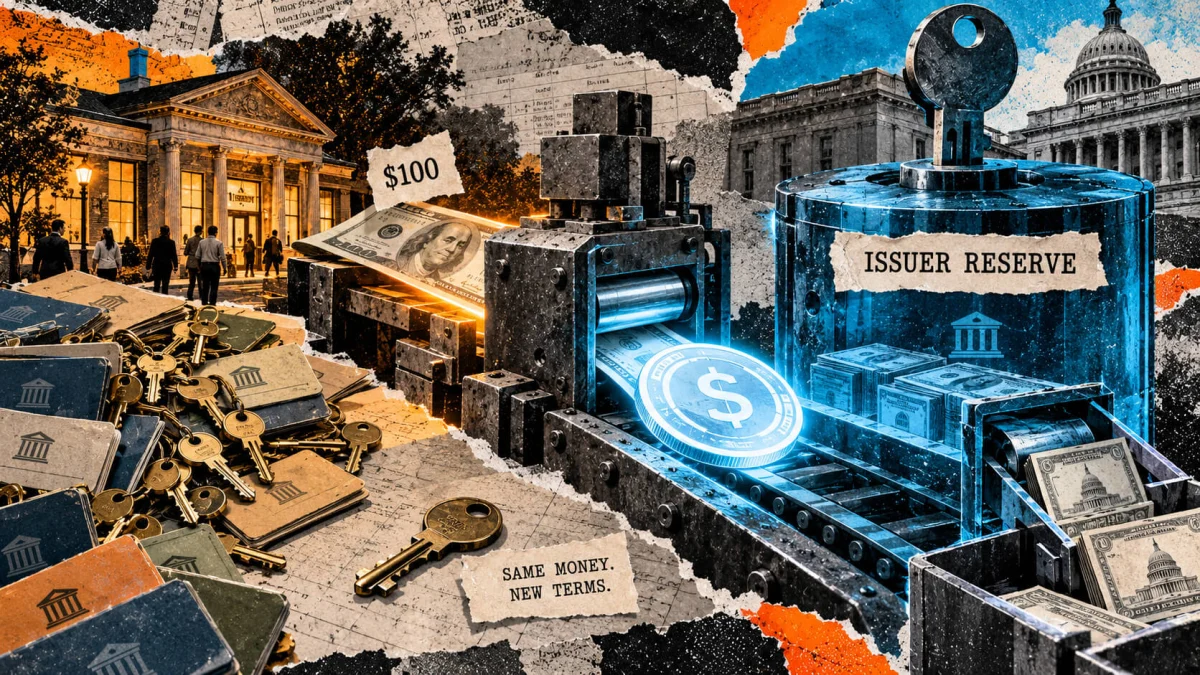
The rapid proliferation of stablecoins has introduced a complex set of challenges for the traditional banking sector, moving beyond simple concerns over deposit flight to more nuanced issues regarding the quality and stability of bank funding. In a hypothetical yet increasingly common scenario, a consumer may decide to withdraw $100 from a traditional bank account to purchase newly issued stablecoins. The issuing company receives these dollars, places them into its own institutional bank account, and provides the consumer with a digital balance on a blockchain. While the $100 remains within the banking system, its character has been fundamentally altered. From the perspective of the bank, what was once a stable, low-cost retail deposit has been transformed into a volatile, high-stakes wholesale liability. This shift is at the heart of why central bankers and financial regulators are sounding the alarm over the potential for stablecoins to drain liquidity and increase the cost of credit for the broader economy.
The Transformation of Deposit Profiles: From Retail to Wholesale
To understand why bankers are concerned, one must look at the nature of bank liabilities. For a commercial bank, a retail deposit—money held by an individual for everyday expenses—is a prized asset. These deposits are generally "sticky," meaning they tend to stay in the bank for long periods. Because thousands of individual customers rarely withdraw all their funds simultaneously, banks can use a significant portion of this "borer" money to fund long-term assets, such as 30-year mortgages or small business loans. This maturity transformation is the primary function of the banking system.
When a retail customer moves funds to a stablecoin issuer, the bank loses a relationship with a predictable individual and gains a relationship with a sophisticated institutional creditor. The stablecoin issuer manages reserves for thousands, or even millions, of token holders. Consequently, the issuer’s deposit is much larger and significantly more sensitive to market conditions. If the issuer’s customers begin to redeem their tokens for dollars, the issuer must withdraw large sums from its bank accounts almost instantly. This converts a fragmented, reliable base of retail funding into concentrated, "flighty" wholesale funding.
Research from the Federal Reserve regarding banks in the age of stablecoins highlights this conversion process. The research indicates that while the total volume of deposits in the system might remain unchanged, the "intermediated" nature of stablecoin reserves makes them less dependable. A single decision by a stablecoin issuer to move its reserves to a different bank or into different assets can create an immediate liquidity vacuum for the original holding institution.
Regulatory Pressure and the Liquidity Coverage Ratio
The shift from retail to wholesale deposits has tangible consequences for a bank’s regulatory compliance, specifically concerning the Liquidity Coverage Ratio (LCR). Established under the Basel III banking framework, the LCR requires banks to hold enough high-quality liquid assets (HQLA) to survive a 30-day stress scenario. The ratio is calculated by dividing a bank’s HQLA by its total net cash outflows over a 30-day period.
Regulators assign different "run-off rates" to different types of deposits based on their perceived risk of withdrawal during a crisis. Retail deposits typically have low run-off rates (often around 5% to 10%), meaning the bank only needs to hold a small amount of cash against them. In contrast, wholesale deposits from financial institutions carry much higher run-off rates, sometimes reaching 100%.
Consider a bank with $120 million in liquid assets and $100 million in projected outflows, resulting in an LCR of 120%. If its retail customers move $10 million into stablecoins, and the stablecoin issuer deposits that $10 million back into the same bank, the total deposits remain at $100 million. However, because the $10 million is now classified as a high-risk institutional deposit, the bank’s projected outflows might rise to $110 million. Without losing a single dollar in total deposits, the bank’s LCR drops to 109%. To return to its original safety margin, the bank must either acquire more liquid assets—which usually offer lower returns—or seek more expensive, long-term funding.
The Role of Treasury Bills in Reserve Composition
Stablecoin issuers do not always keep their reserves in cash deposits; they frequently diversify into short-term government debt, such as U.S. Treasury bills. This introduces a different set of mechanical shifts within the financial system. When an issuer uses its bank balance to buy an existing Treasury bill from a non-bank investor, the deposit simply moves from the issuer’s account to the seller’s account. The banking system as a whole retains the deposit, though its location and ownership change.
However, the situation changes if the issuer buys a Treasury bill directly from a bank’s own portfolio. In this instance, the bank gives up an asset (the Treasury bill) and the payment cancels out the issuer’s deposit liability. This "shrinks" the bank’s balance sheet. While a smaller balance sheet isn’t inherently negative, it reduces the bank’s capacity to use those Treasury bills as collateral for its own liquidity needs.
Furthermore, if the issuer buys newly issued debt from the government, the money moves into the Treasury’s account at the Federal Reserve. This removes liquidity from the private banking system entirely until the government spends that money back into the economy. As Pablo Hernández de Cos, General Manager of the Bank for International Settlements (BIS), noted in a 2024 speech, the specific route that reserve backing takes is the primary determinant of how stablecoins affect bank lending capacity.
A Chronology of Regulatory Scrutiny and Research
The evolution of stablecoin regulation and analysis has followed a clear timeline as the market cap of these digital assets grew to exceed $150 billion.
- 2019–2022: The Basel Committee on Banking Supervision began integrating crypto-asset exposures into the Basel framework, establishing the groundwork for how banks must treat digital asset-related deposits.
- August 2024: BIS General Manager Pablo Hernández de Cos delivered a landmark speech titled "Pushing the Monetary Frontier," emphasizing that the composition of stablecoin reserves is central to maintaining financial stability and that "tokenized deposits" might be a safer alternative for banks.
- September 2024: The Federal Reserve issued new proposals regarding payment stablecoins. These proposals aimed to set rigorous reserve and risk-management rules for issuers under Fed supervision, while creating a pathway for banks to issue their own stablecoins through subsidiaries.
- Projected 2025–2026: Ongoing research by the Federal Reserve and the BIS, including the "2026 Analysis," continues to model the long-term impact of stablecoin-induced deposit migration on credit availability and the transmission of monetary policy.
The Competitive Response: Tokenized Deposits
Banks are not merely passive observers in this transition. To prevent the loss of "sticky" retail deposits, many institutions are exploring "tokenized deposits." Unlike stablecoins, which are liabilities of a non-bank issuer, tokenized deposits are digital representations of a customer’s claim on a regulated bank, recorded on a blockchain.
By offering tokenized deposits, banks can provide the same programmable, 24/7 payment capabilities that make stablecoins attractive, while keeping the customer within the bank’s regulatory perimeter. This allows the bank to maintain its retail funding status and continue its lending operations without the LCR penalties associated with wholesale stablecoin reserves. However, the success of these products depends on interoperability—the ability to send these tokens across different platforms and to parties who may not use the same bank.
Broader Economic Implications and Lending Costs
The ultimate concern for the average consumer is how these "back-of-the-envelope" banking mechanics translate into the real economy. If banks find their funding becoming more expensive or less dependable due to stablecoin competition, they will inevitably pass those costs on.
When a bank’s LCR drops or its deposit base becomes volatile, it must adjust its profit margins. This can result in higher interest rates for mortgages, auto loans, and personal credit. Even a consumer who has never heard of a stablecoin could find themselves paying more for a home loan because the "boring" deposits that once funded that loan have been converted into high-velocity digital assets.
Moreover, the redistribution of deposits can create geographic or sectoral imbalances. A small community bank may lose local retail deposits to a global stablecoin issuer, which then places its reserves in a "too-big-to-fail" money center bank. The local bank’s ability to lend to a neighborhood grocery store is diminished, and the receiving large bank may have no interest in or mechanism for providing that specific local credit.
Conclusion: A New Era of Competition
The rise of stablecoins represents a fundamental challenge to the traditional bank-customer relationship. While the digital assets offer efficiency and speed, they strip away the "relationship premium" that banks have relied on for decades. As the BIS and Federal Reserve continue to monitor these developments, the focus remains on ensuring that the benefits of faster payments do not come at the cost of a fragile or prohibitively expensive lending environment.
The transition from retail-funded banking to a system intermediated by stablecoin issuers requires a recalibration of how liquidity is measured and managed. Whether through stricter regulation of issuers or the adoption of tokenized deposits by banks themselves, the goal is to balance the innovation of the crypto-economy with the stability required for the traditional financial system to function. The $100 that leaves a bank account today may eventually return, but the terms of its stay have changed forever, and with them, the very nature of modern finance.









