James Watt
The Lido DAO, a leading decentralized autonomous organization in the liquid staking sector, has officially approved a substantial $5 million treasury allocation to its yield-generating platform, Lido Earn. This strategic investment introduces a pioneering first-loss protection mechanism, meticulously designed to fortify the alignment between the protocol’s foundational principles and the security expectations of its user base. The decision, stemming from a comprehensive governance proposal, marks a significant step in enhancing user confidence and establishing a new benchmark for risk management within the decentralized finance (DeFi) ecosystem.
This newly implemented Lido Earn First-Loss Protection mechanism leverages dedicated Lido protocol reserves to serve as a crucial safeguard for user deposits. By strategically positioning its own capital, the DAO establishes an explicit, on-chain alignment, committing to absorb initial losses in severe, confirmed scenarios before they impact individual users. This proactive measure not only underscores the DAO’s commitment to the Lido Earn initiative but also addresses the inherent risks associated with DeFi strategies, providing an additional layer of assurance to participants.
The substantial allocation has been directly deployed into the respective Lido Earn vaults, with $3 million in wrapped staked Ethereum (wstETH) allocated to the EarnETH vault and $2 million in USD Coin (USDC) directed to the EarnUSD vault. Crucially, these DAO deposits are made under identical terms as any other user deposit. This means the Lido DAO pays the same fees, holds the same vault shares, and is exposed to the same underlying risks as its users, embodying a genuine "skin in the game" approach that is rare in the broader financial landscape, let alone within the nascent DeFi sector.
Understanding Lido Finance and the Genesis of Lido Earn
Lido Finance has cemented its position as the dominant force in liquid staking, particularly within the Ethereum ecosystem. By allowing users to stake their ETH and receive stETH (staked Ethereum) in return, Lido has democratized access to ETH staking rewards, providing liquidity for otherwise locked assets. This innovation has been instrumental in the growth of Ethereum’s proof-of-stake network and has seen Lido’s total value locked (TVL) consistently rank among the highest in DeFi, often exceeding $20 billion, making it a critical piece of the Web3 infrastructure.
Lido Earn represents a natural evolution and expansion of Lido’s offerings. While core liquid staking focuses on fundamental network rewards, Lido Earn ventures into the broader DeFi landscape, providing users with curated strategies to deploy their ETH or stablecoins for enhanced, auto-compounded earnings. These strategies often involve interacting with various other DeFi protocols, such as lending platforms or liquidity pools, to generate yield beyond simple staking. The platform aims to simplify access to complex DeFi strategies, making yield generation more accessible to a wider audience by abstracting away the intricacies of underlying protocols.
However, the pursuit of higher yields in DeFi inherently introduces greater risks. These can range from smart contract vulnerabilities in integrated protocols, oracle manipulation, temporary de-pegging of stablecoins, to general market volatility. Recognizing these challenges, and in line with its commitment to user protection and sustainable growth, the Lido DAO initiated discussions and proposals to implement more robust risk mitigation strategies for Lido Earn. The first-loss protection mechanism emerged as a direct response to these considerations, reflecting a maturation in the DAO’s governance and risk management philosophy.
The Mechanics of First-Loss Protection: A Detailed Overview
The concept of "first-loss protection" is a critical innovation in DeFi risk management. While every vault within the decentralized finance space carries inherent risks, Lido Earn is meticulously designed to manage these through a multi-layered approach involving curated strategy selection, diligent DAO oversight, and stringent independent security audits. Yet, no vault can unequivocally guarantee the complete absence of losses. This is where the DAO’s capital plays a pivotal role.
The mechanism functions as a financial buffer. The Lido DAO, through its $5 million allocation, holds vault shares alongside all other participants. In the event of a confirmed loss – a scenario where the underlying DeFi strategies incur an unrecoverable deficit – the DAO’s shares are specifically designated to absorb the initial impact. If a loss occurs, the value of the DAO’s shares can be reduced, effectively lowering the total supply of shares and proportionally offsetting the losses for the remaining depositors. In essence, the DAO’s position acts as the primary shock absorber, taking the first hit before any losses reach other users.
This protective mechanism operates under a strict, mandate-based framework, ensuring transparency and predictability. It is not subject to discretionary decisions. The precise conditions under which the mechanism activates, along with the detailed process for confirming and executing its activation, are rigorously defined within the original governance proposal. This includes criteria for loss confirmation, reporting protocols, and the mechanics of how the DAO’s shares would be adjusted. Furthermore, ongoing public reporting will meticulously document the DAO’s position within the vaults, any actions taken related to the first-loss mechanism, and its overall operational state on-chain, providing unparalleled transparency to the community.
DAO Alignment: True "Skin in the Game"
It is imperative to distinguish what this mechanism is and what it is not. The Lido Earn First-Loss Protection mechanism is emphatically not an insurance policy, nor does the $5 million allocation serve as a guarantee against all potential losses. DeFi strategies inherently carry a spectrum of risks, including exposure to smart contract vulnerabilities, market volatility, and dependencies on external protocols. These fundamental risks persist, and users must remain cognizant of them.
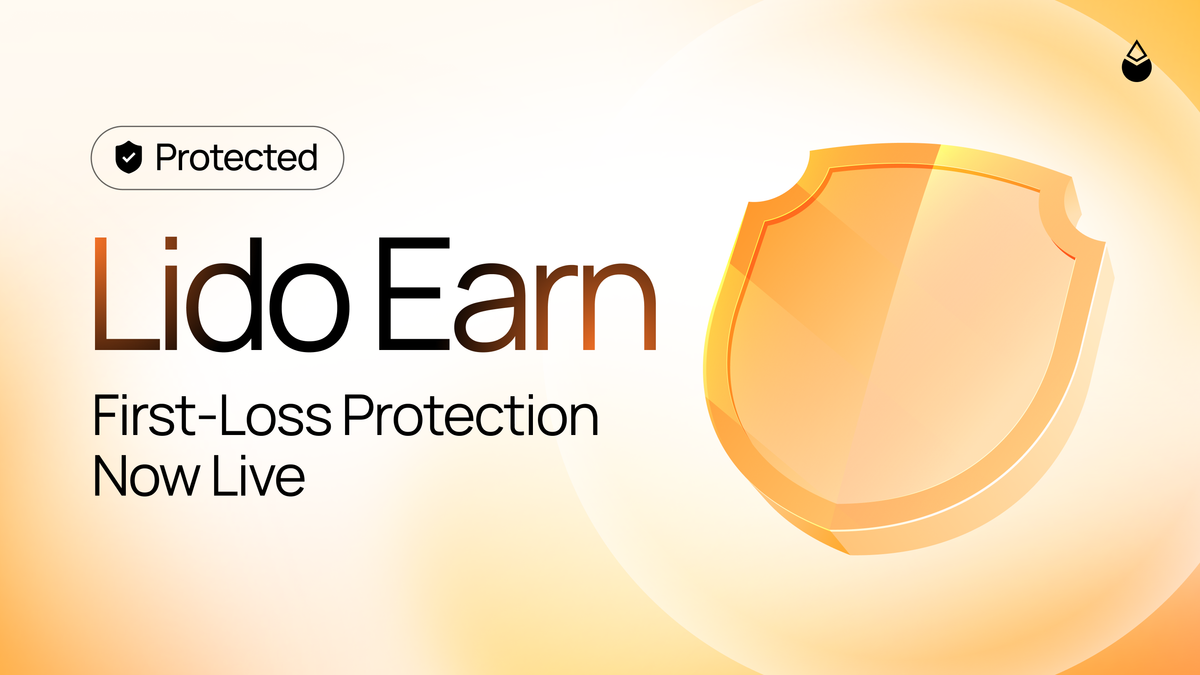
What this mechanism unequivocally represents is a clear, tangible, and on-chain commitment from the Lido DAO. It signifies that the DAO’s own capital is deployed alongside user funds, under precisely the same conditions and with identical exposure. The DAO does not receive any preferential treatment; it cannot unilaterally exit its position ahead of other depositors, nor does it possess any unique privileges within the vault mechanics. Its position is subject to the same rules as every other participant. In the event of a confirmed loss, the DAO’s capital is contractually obligated to be the first to absorb the financial impact. This profound commitment embodies the very essence of "skin in the game," fostering a deeper alignment of interests between the protocol’s governance and its user base.
Chronology and Governance Process
The journey to implementing this first-loss protection mechanism involved a thorough and transparent governance process characteristic of decentralized autonomous organizations. Discussions surrounding enhanced risk mitigation for Lido Earn began on the Lido Research forum, a public platform where community members, core contributors, and stakeholders engage in detailed dialogue about protocol development. These early discussions explored various models for user protection and risk absorption.
The formal governance proposal, outlining the specific $5 million treasury allocation and the mechanics of the first-loss protection, was then introduced for community review and voting. The proposal detailed the rationale, the specific allocation amounts ($3 million wstETH for EarnETH, $2 million USDC for EarnUSD), the operational framework, and the reporting requirements. Following a period of open discussion and debate, the proposal proceeded to a Snapshot vote, a widely used off-chain voting mechanism for DAOs, which signals the community’s sentiment. The final on-chain vote, likely occurring around the time indicated by the March 19, 2026 tweet (which serves as a recent timestamp for the approval), solidified the DAO’s decision, marking a pivotal moment in Lido’s evolution. Upon successful passage, the allocated funds were then programmatically deployed into the respective Lido Earn vaults, activating the protection mechanism.
Broader Market Context and Implications for DeFi Risk Management
The introduction of Lido’s first-loss protection mechanism arrives at a critical juncture for the broader DeFi ecosystem. While DeFi has demonstrated immense innovation and growth, its rapid expansion has also been accompanied by numerous high-profile incidents involving protocol exploits, oracle attacks, and market de-pegging events, leading to significant user losses. These incidents have highlighted the urgent need for more sophisticated and robust risk management frameworks beyond basic smart contract audits.
In this context, Lido DAO’s initiative is not merely an internal improvement but a potential paradigm shift. It signals a move towards protocols taking direct, financial responsibility for a portion of the risks associated with their offerings. This proactive approach contrasts with traditional models where insurance is often a third-party service, or where protocols merely advise users on risks without direct capital commitment. By integrating risk absorption directly into the protocol’s treasury, Lido is potentially setting a new standard for how decentralized applications approach user safety and trust.
Blockchain analysts and industry experts view this development with keen interest. "This move by Lido DAO is significant because it’s an explicit, on-chain commitment of capital by the protocol itself," commented a prominent DeFi analyst, who preferred to remain anonymous given the nascent nature of these mechanisms. "It’s a strong signal of alignment that could differentiate Lido Earn in a competitive yield market and potentially pressure other protocols to consider similar user-centric risk mitigation strategies." Early reactions from the Lido community have been largely positive, with many users expressing increased confidence in depositing funds into Lido Earn, viewing the DAO’s capital commitment as a tangible demonstration of its dedication to user security.
The implications extend beyond just user confidence. This mechanism could contribute to the overall maturation and professionalization of the DeFi space. As the industry strives for mainstream adoption, robust risk management and transparent accountability become paramount. Lido’s model, while not eliminating all risks, provides a blueprint for how DAOs can leverage their treasuries to build more resilient and trustworthy platforms, thereby fostering greater stability and attracting a broader range of participants, including institutional investors who prioritize risk-adjusted returns.
Lido Earn: DeFi Made Simple, Now with Enhanced Protection
Lido Earn is designed to make complex DeFi yield strategies accessible, allowing users to deploy ETH or stablecoins into curated strategies for daily, auto-compounded earnings with transparent allocations. Both EarnETH and EarnUSD vaults are currently live and operational at stake.lido.fi/earn, now fortified with the active First-Loss Protection mechanism. This dual offering aims to cater to different risk appetites and asset preferences, providing flexibility while upholding a commitment to security.
The full governance proposal, which meticulously details the mandate structure, comprehensive risk controls, and ongoing reporting requirements for this innovative mechanism, remains publicly accessible on the Lido Research forum. This commitment to transparency ensures that all stakeholders can review the underlying principles and operational specifics of how this vital protection functions, further solidifying the trust model that Lido DAO is actively building.
In conclusion, the Lido DAO’s allocation of $5 million for first-loss protection within Lido Earn represents a landmark decision in the evolving landscape of decentralized finance. It is a powerful affirmation of the DAO’s dedication to user security and protocol alignment, translating the abstract concept of "skin in the game" into a concrete, on-chain mechanism. By directly committing its treasury capital to absorb initial losses, Lido is not only strengthening its own yield platform but also potentially charting a new course for risk management within the wider DeFi ecosystem, fostering greater trust and paving the way for more sustainable and secure innovation in the decentralized future.