James Watt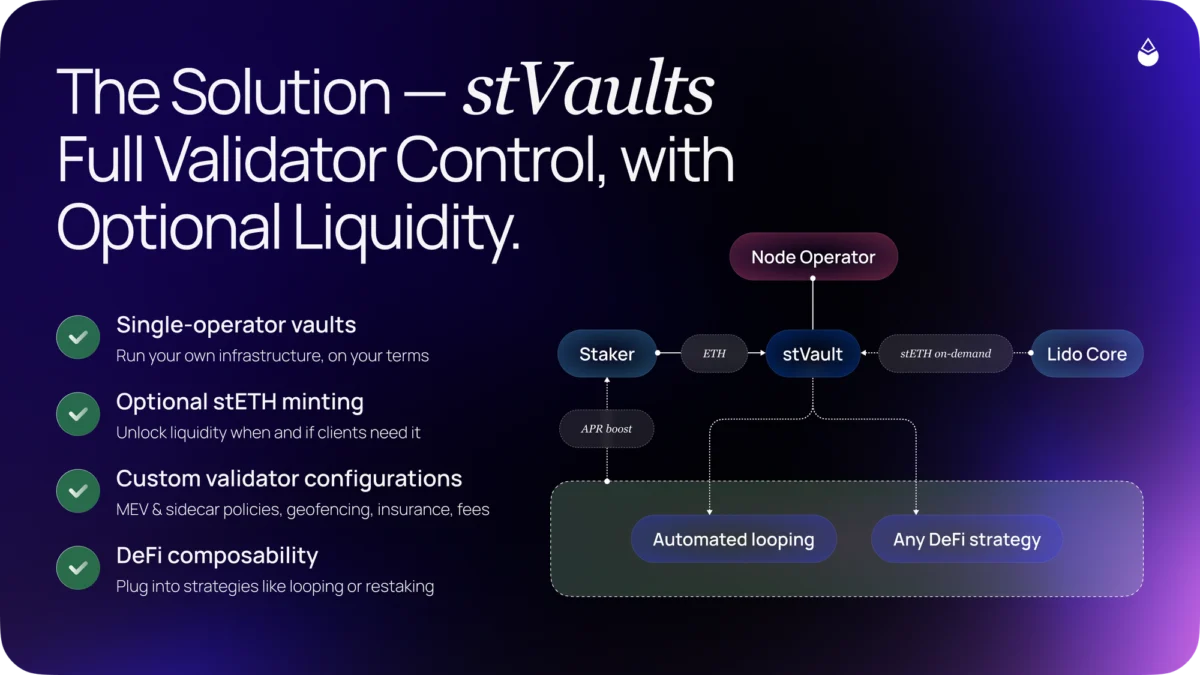
The Lido protocol, a leading liquid staking solution for Ethereum, has officially launched its V3 upgrade on the Ethereum mainnet, marking a significant evolution in its architecture with the introduction of stVaults. This pivotal upgrade transforms Lido from a largely monolithic, pooled liquid staking service into a modular and composable infrastructure, designed to cater to a broader spectrum of staking needs, particularly for institutional participants, specialized node operators, and Layer 2 (L2) ecosystems. The deployment follows an extensive period of rigorous validation, including multiple public testnets, comprehensive security reviews by independent auditors, and a strategic mainnet soft-launch, all undertaken with a steadfast commitment to security, community collaboration, and open-source principles.
A Paradigm Shift for Ethereum Staking
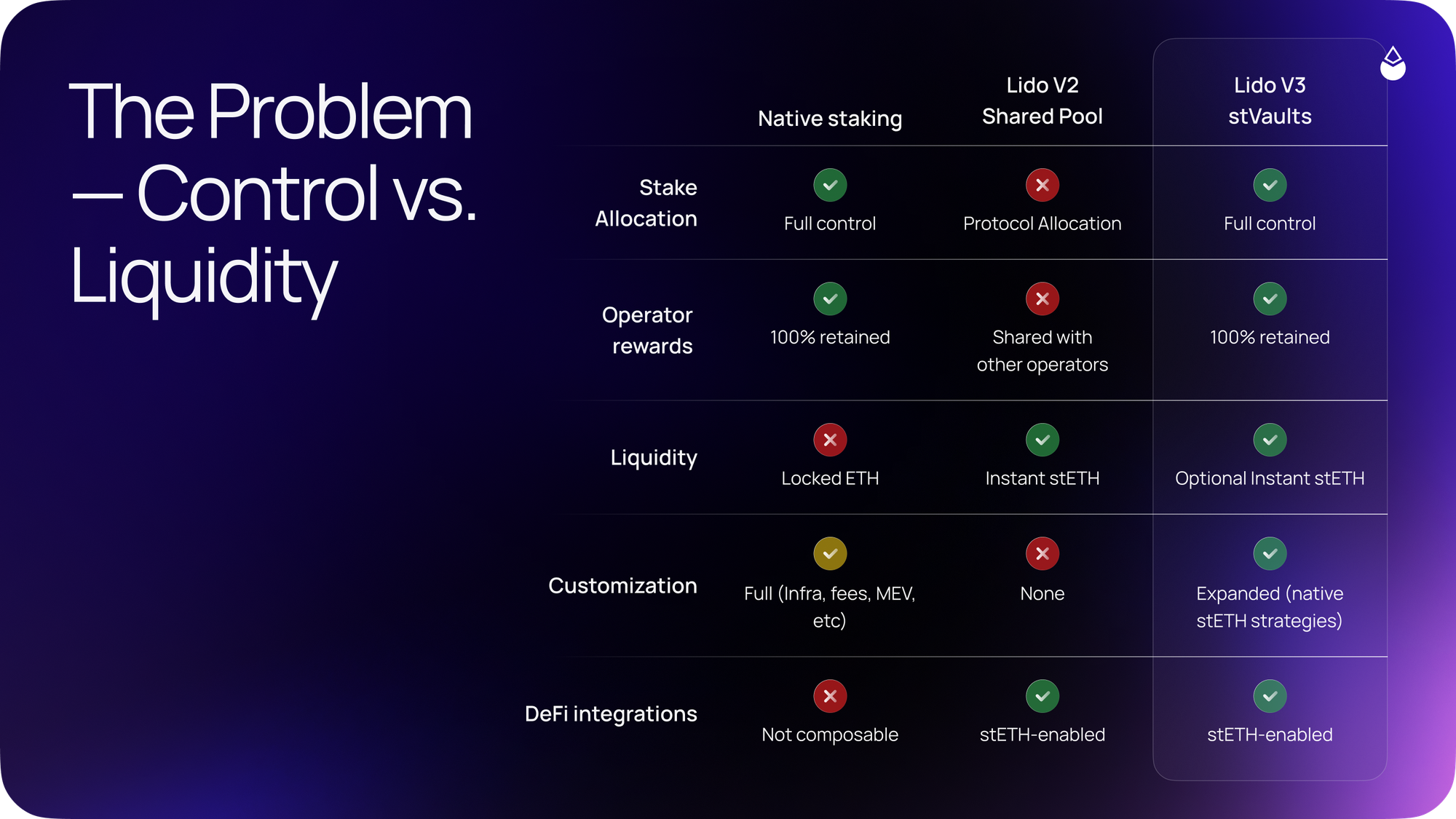
Lido V3, with stVaults at its core, addresses a long-standing structural trade-off faced by Ethereum stakers: the dilemma between maintaining bespoke control over staking parameters and benefiting from the unparalleled liquidity and network effects of tokens like stETH. Historically, stakers have often had to choose between operating their own validators, which offers maximum control but at the cost of significant capital outlay, technical expertise, and illiquidity, or participating in pooled staking solutions, which provide liquidity and ease of access but with less granular control over validator selection, fee structures, and risk profiles.
stVaults are engineered to resolve this dichotomy. They empower users to customize critical aspects of their staking operations—including validator operator selection, specific operational policies, fee structures, reward logic, and defined risk parameters—while simultaneously retaining access to the vast liquidity and widespread integrations offered by stETH. This innovation paves the way for any team or entity to build sophisticated staking businesses, leveraging the robust network effects that have made stETH a cornerstone of decentralized finance (DeFi). Lido contributors emphasize that this modularity extends the protocol’s utility beyond its original pooled model, fostering a new era of flexible and adaptable staking offerings within the Ethereum ecosystem.
Background: Lido’s Dominance and the Evolution of Liquid Staking
Lido DAO emerged as a critical player in the Ethereum staking landscape following the network’s transition to Proof-of-Stake (PoS) with the Merge. By offering a liquid staking derivative, stETH, Lido enabled users to stake their ETH and receive a tokenized representation of their staked assets plus accrued rewards, which could then be utilized across various DeFi protocols. This innovation effectively unlocked billions of dollars in capital that would otherwise be locked in staking contracts, fueling the growth of lending, borrowing, and liquidity provision across DeFi. As of late 2025/early 2026, Lido maintains a significant market share, often accounting for approximately 30% of all staked ETH, with its Total Value Locked (TVL) frequently exceeding $15 billion, solidifying its position as a central pillar of Ethereum’s economic security and DeFi liquidity.
The success of Lido Core proved a simple yet profound point: coupling staking with a liquid token unleashes potent market forces. stETH transformed staked ETH from an illiquid asset into a dynamic, yield-bearing primitive, integrating seamlessly into a myriad of DeFi strategies. However, as the Ethereum staking ecosystem matured, the need for more tailored solutions became apparent, particularly for larger entities and those with specific regulatory or operational requirements. Lido V3 directly responds to this evolving demand, extending the core principle of liquid staking to accommodate a wider array of staking models and business needs.
A Rigorous Development and Deployment Timeline
The journey to Lido V3’s mainnet launch has been characterized by a methodical, multi-stage validation process, reflecting Lido’s foundational commitment to security and reliability. Development began well in advance, with core contributors identifying the limitations of a singular pooled model for an increasingly diverse user base. This led to the architectural design of stVaults, which underwent extensive internal review and iteration.
- Design & Development: Over several months, Lido contributors meticulously designed the stVaults architecture, focusing on modularity, security, and composability.
- Testnet Deployments: Multiple public testnets were utilized to thoroughly test the stVaults primitive under various simulated conditions. This phase allowed for community feedback, identification of edge cases, and fine-tuning of smart contract interactions.
- Security Audits: A series of independent security audits were conducted by reputable blockchain security firms. These audits were critical for identifying and mitigating potential vulnerabilities, ensuring the robustness and integrity of the new protocol components. The commitment to multiple audits underscores the stringent security standards applied to Lido Core.
- Community Input: Throughout the development cycle, the Lido DAO governance forum served as a crucial platform for community discussion, feedback, and consensus-building, ensuring that the V3 upgrade aligned with the broader vision of the decentralized autonomous organization.
- Mainnet Soft-Launch: Prior to the full public launch, a controlled soft-launch phase was initiated on the Ethereum mainnet. This allowed for real-world testing with a limited scope, further validating the system’s stability and performance in a live environment before broader activation.
- Official Mainnet Launch: The culmination of these efforts is the official launch of Lido V3, making stVaults generally available for builders, institutions, and operators.
This methodical chronology underscores the disciplined approach taken by Lido contributors to deliver an upgrade that is not only innovative but also durable and secure, mirroring the qualities that have sustained Lido Core since its inception.
Empowering Institutional Staking Without Compromising Liquidity
A significant driver behind Lido V3 is the growing demand from institutional players for bespoke staking solutions. While many institutions already engage with liquid staking, their unique requirements often clash with the standard pooled model. These requirements typically include:
- Regulatory Compliance: The need for specific Know-Your-Customer (KYC) and Anti-Money Laundering (AML) frameworks, often necessitating segregated client funds and verifiable operational controls.
- Risk Management: The ability to select specific validator operators, define distinct risk profiles, and implement tailored reward distribution policies to align with internal compliance and risk appetites.
- Operational Control: Requirements for dedicated validator infrastructure, transparent performance reporting, and the ability to customize operational policies to meet corporate governance standards.
- Treasury Management: For modern asset managers, long exit queues and potential illiquidity risks inherent in traditional staking models are often incompatible with treasury and fund requirements that demand flexibility and rapid asset rebalancing.
stVaults directly address these institutional needs by enabling segregated vault structures that can be linked to dedicated validator infrastructure. This ensures a higher degree of control and transparency, crucial for regulatory reporting and internal risk frameworks. Crucially, these segregated vaults can still offer optional stETH liquidity, providing a critical bridge between institutional compliance and the market efficiency of liquid staking. This hybrid approach allows institutions to benefit from enterprise-grade staking controls without being forced into a hard choice between customization and liquidity.
Early stVault deployments exemplify this new design space, with prominent industry players already leveraging the technology:
- Blockdaemon and Stakefish: These infrastructure providers are deploying stVaults to offer institutional clients bespoke staking solutions, enabling specific validator choices and tailored reporting.
- P2P.org and Chorus One: Both are utilizing stVaults to create differentiated offerings, allowing them to cater to client-specific mandates for risk, jurisdiction, or infrastructure preferences. For instance, P2P.org is building dedicated stVaults that allow institutional clients to stake through segregated vaults linked to P2P.org’s validator operations, providing enhanced customization and transparent performance reporting.
These early adoptions demonstrate that Lido V3 is not merely an incremental update but a fundamental re-architecting designed to unlock a new tier of participation in Ethereum staking.
Fostering Operator-Led Products and Clearer Differentiation
Lido V3 significantly redefines the business case for Node Operators within the Lido ecosystem and beyond. In the pre-stVaults era, operators generally faced a dichotomy: either participate in Lido’s pooled system, where differentiation was limited, or build independent staking services, which required significant effort to attract and manage clients and lacked the immediate liquidity benefits of stETH.
stVaults create ample room for operator-led products, allowing Node Operators to offer highly customized staking services. Operators can now map stVaults to their specific validator infrastructure, implement unique operational policies, and differentiate based on factors like:
- Specialized Infrastructure: Offering vaults linked to carbon-neutral validators, geographically distributed nodes, or those optimized for specific Maximal Extractable Value (MEV) strategies.
- Customized Fee Structures: Tailoring fees based on client volume, service level agreements, or unique value propositions.
- Enhanced Reporting: Providing detailed, segregated performance metrics and attestation records for institutional clients.
This empowers operators to compete on factors beyond just price, focusing instead on performance, reliability, and vault configuration. The ability to create a "walled garden" for specific clients or strategies, while still benefiting from the stETH liquidity layer, represents a powerful new lever for business growth and innovation.
Beyond institutional offerings, stVaults also expand the design space for diverse staking strategies. Examples include:
- MEV-Focused Vaults: Allowing stakers to participate in specific validator sets optimized for MEV extraction, potentially offering higher rewards but with different risk profiles.
- Carbon-Neutral Staking: Curating validators that utilize renewable energy sources, appealing to environmentally conscious stakers and institutions.
- Geographically Distributed Staking: Enabling clients to select validators based on their physical location, addressing data residency or latency concerns.
Composable Staking Infrastructure and Builder Tooling
A crucial component of Lido V3’s broader impact is its transformation of liquid staking into a truly composable infrastructure. This is complemented by a new suite of tooling designed to significantly reduce the time-to-market for teams looking to launch user-facing staking products. The "DeFi Wrapper" toolkit offers a low-code deployment solution, providing:
- Modular Smart Contracts: Reusable components for creating custom staking vaults and managing stETH.
- Pre-integrated Curated Strategies: Builders can leverage existing, battle-tested strategies to quickly ship differentiated products without the overhead of building complex curation logic from scratch.
- API and SDK: Comprehensive developer tools that facilitate seamless integration of stVaults into existing applications or the creation of entirely new staking interfaces.
This toolkit empowers builders to either utilize established strategies for rapid deployment or integrate custom strategies to carve out unique competitive advantages in specific market segments. The objective is to democratize access to sophisticated staking product development, allowing a wider range of innovators to build on Lido’s robust foundation.
Embedded Staking for Layer 2s: Native Yield Integration
The modularity of stVaults also extends to Layer 2 (L2) networks, enabling staking to be integrated more closely with where users already hold their ETH. This capability is poised to unlock a new dimension of utility for L2s, allowing them to route bridged ETH into staking and utilize the resulting yield to support critical ecosystem functions, such as:
- Ecosystem Incentives: Funding developer grants, user rewards, or liquidity mining programs.
- Liquidity Programs: Enhancing liquidity for native assets or specific DeFi protocols on the L2.
- Network Economics: Making staking yield a foundational component of the L2’s economic model, potentially reducing reliance on inflationary token emissions.
Pioneering work in this direction includes implementations from L2s like Linea, which demonstrate how staking can become an intrinsic part of network economics while preserving familiar user flows. Instead of requiring users to explicitly navigate to a separate staking application, ETH held on an L2 could passively accrue yield, integrating staking as a fundamental, yield-bearing base layer that protocols can seamlessly build upon. This paradigm shift treats staking as essential infrastructure, rather than a standalone user action, potentially accelerating the adoption of both L2s and liquid staking.
Broader Market Implications and Future Outlook
The launch of Lido V3 and stVaults represents more than just an upgrade; it signifies a strategic evolution of the liquid staking market. It shifts the narrative from liquid staking as a single product category to a comprehensive, modular infrastructure that can support a multitude of staking businesses and use cases.
- Increased Institutional Adoption: By providing the necessary controls and flexibility, V3 is expected to significantly lower barriers for institutional capital to flow into Ethereum staking, enhancing the network’s decentralization and economic security.
- Diversified Product Offerings: The ability for node operators and other entities to create specialized stVaults will lead to a more competitive and innovative market, offering users a wider choice of staking products tailored to their specific needs and risk appetites.
- Enhanced DeFi Integration: Embedded staking for L2s and the composable nature of stVaults will deepen the integration of native Ethereum yield across the broader DeFi landscape, creating new primitives for yield generation and capital efficiency.
- Balancing Customization and Decentralization: While stVaults introduce more customization, the underlying architecture aims to maintain the benefits of collective security and liquidity provided by stETH, with Lido DAO governance overseeing the broader framework. The Lido V3 Whitepaper details concepts like Reserve Ratios, risk tiers, and forced rebalancing, outlining mechanisms to manage the complexities introduced by modularity.
Start Building on Lido V3 Today
Lido contributors are actively encouraging teams to explore the possibilities of Lido V3. Whether building institutional staking products, operator-led offerings, structured DeFi vaults, or L2-native staking integrations, stVaults provide the foundational tools.
To incentivize early adoption and foster innovation, Lido is offering a special campaign. Until March 31st, 2026, the Lido Infrastructure fee for identified stVaults with a Total Value Exceeding 250 ETH will be reduced from 1% to 0%. This promotional period aims to accelerate the deployment of new staking products and solutions built on the V3 architecture. Interested parties are encouraged to contact the stVaults team to initiate their building process.
For comprehensive technical guidance and to begin development, resources are available at the stVaults Documentation Center. A detailed understanding of the new architecture, including concepts like Reserve Ratios, risk tiers, and forced rebalancing, can be found in the Lido V3 Whitepaper. Lido V3 marks a pivotal moment, transforming liquid staking into a dynamic and adaptable infrastructure ready to meet the evolving demands of the Ethereum ecosystem.