James Watt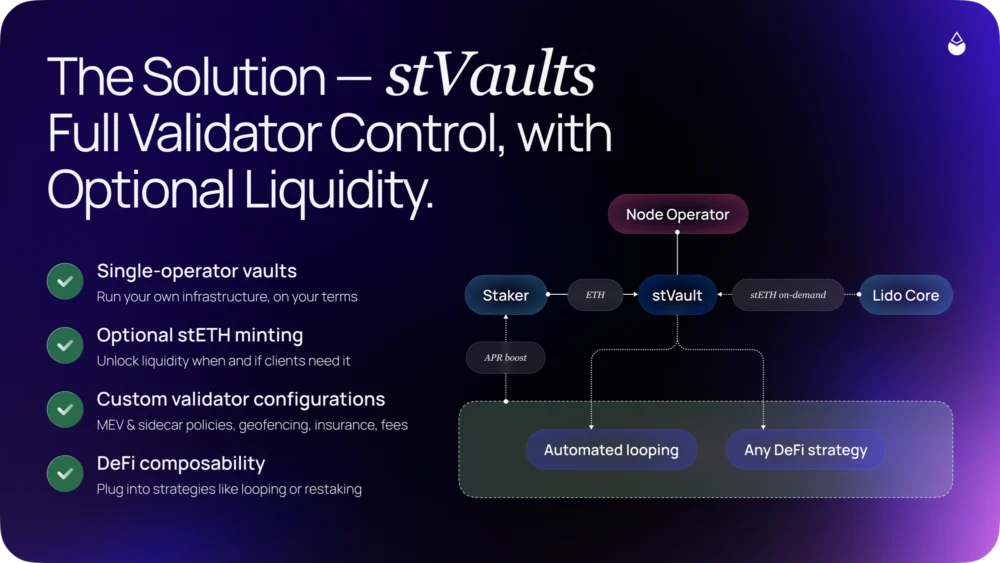
The highly anticipated Lido V3 protocol has officially launched on the Ethereum mainnet, introducing a groundbreaking primitive known as stVaults. This significant upgrade, which went live in January 2026, marks a pivotal shift for the liquid staking giant, moving beyond its foundational single pooled model to offer a more flexible, customizable, and enterprise-grade staking infrastructure. The deployment follows an extensive period of rigorous validation, encompassing multiple public testnets, exhaustive security reviews, and a meticulously managed soft-launch on the mainnet, underscoring Lido contributors’ unwavering commitment to security, community collaboration, and open-source development.
Background: The Evolution of Liquid Staking and Lido’s Dominance
Liquid staking has emerged as a cornerstone of the decentralized finance (DeFi) ecosystem, allowing users to stake their cryptocurrencies and earn rewards while maintaining liquidity through a derivative token. Prior to the advent of liquid staking, participants in proof-of-stake networks like Ethereum faced a significant trade-off: either lock up their assets to contribute to network security and earn yield, thereby sacrificing immediate access and capital efficiency, or forgo staking rewards to retain liquidity. Lido, through its flagship stETH token, largely resolved this dilemma, enabling stakers to access DeFi opportunities such as lending, collateralization, and liquidity provision without being subject to the long withdrawal queues inherent to native staking.
Lido has established itself as the undisputed leader in liquid staking, currently commanding approximately 30% of the total staked Ethereum, representing billions of dollars in Total Value Locked (TVL). Its stETH token has become one of the most integrated assets across various DeFi protocols, underpinning a vast network of financial applications. However, as the staking landscape matured and institutional interest grew, a new set of challenges emerged. Traditional pooled liquid staking, while efficient for retail users, presented limitations for entities requiring greater control, bespoke configurations, and specific risk parameters. Institutions, in particular, often navigate complex regulatory frameworks and internal compliance requirements that necessitate tailored solutions, which the monolithic pooled model struggled to provide.
Deep Dive into stVaults: A New Paradigm for Staking Businesses
At the heart of Lido V3 lies stVaults, a modular staking primitive meticulously engineered to address these evolving demands. stVaults are designed for stakers who require configurations beyond a single pooled model, yet still wish to leverage stETH’s unparalleled liquidity and extensive network integrations. This innovation resolves the longstanding dilemma between the desire for bespoke control over staking parameters and the need for liquid utility.
With stVaults, users and businesses can customize critical aspects of their staking operations, including:
- Operator Selection: Choosing specific node operators based on performance, geographical location, or compliance standards.
- Policies and Fees: Defining individualized reward distribution logic, fee structures, and operational policies.
- Reward Logic: Implementing custom strategies for how staking rewards are handled and distributed.
- Risk Parameters: Setting tailored risk profiles, such as exposure limits to certain operators or geographic regions.
Crucially, stVaults achieve this customization while maintaining access to a shared liquidity layer through stETH. This means that even segregated or highly customized staking positions can still benefit from the immediate liquidity and deep market integrations that stETH offers, mitigating the illiquidity risks associated with traditional staking. "stVaults represent a fundamental evolution in how staking can be structured and accessed," explained a lead developer at Lido. "We’re transforming liquid staking from a single product into a composable infrastructure, empowering any team to build a sophisticated staking business leveraging the most powerful network effects in DeFi."
Addressing Institutional Demand: Customization Without Compromise
The institutional appetite for cryptocurrency exposure has surged, yet many traditional asset managers and corporate treasuries have been hampered by the limitations of existing staking models. Their requirements often include:
- Dedicated Infrastructure: The need for segregated validator infrastructure for enhanced security and operational control.
- Jurisdictional Specificity: Compliance with regulations in specific legal jurisdictions.
- Custom Audit Trails: Detailed and transparent reporting for auditing purposes.
- Tailored Risk Management: Implementing specific risk management policies that align with their organizational mandates.
Traditional staking often fails these modern asset managers due to factors like long exit queues and significant illiquidity risk, which do not align with treasury and fund requirements for capital flexibility. stVaults directly address these concerns by enabling segregated vault structures with dedicated validator infrastructure. This segregation offers the institutional-grade control and compliance capabilities they demand, while crucially providing optional stETH liquidity, ensuring that capital remains accessible.
Early deployments of stVaults vividly illustrate this new design space. For example, some financial institutions are utilizing stVaults for sovereign staking, where they can choose specific operators to run their validators, ensuring geographical distribution and adherence to specific security protocols. Other regulated entities are exploring stVaults to manage their balance sheet staking, leveraging bespoke operational policies and segregated infrastructure to meet strict internal and external audit requirements. "This ability to blend bespoke operational control with the ubiquitous liquidity of stETH is a game-changer for institutional adoption," remarked a spokesperson for a prominent digital asset fund. "It removes a major barrier that previously prevented many traditional finance players from fully engaging with Ethereum staking."
Empowering Node Operators: New Business Models and Clearer Differentiation
Lido V3 significantly redefines the business case for Node Operators within the Lido ecosystem and beyond. In the pre-stVaults era, operators primarily faced a binary choice: either participate in the pooled liquid staking model, where their services were commoditized, or operate independent staking services, which often struggled with liquidity provision and market access. This dynamic limited their ability to differentiate their offerings effectively.
stVaults create ample room for operator-led products, allowing operators to develop and manage vaults mapped to specific validator infrastructure, complete with customized operational policies. This empowers operators to compete on factors far beyond mere price, including:
- Performance: Offering high-performance, low-latency validator services.
- Security Guarantees: Providing enhanced security measures or specialized hardware.
- Geographical Specialization: Catering to clients with specific regional compliance needs.
- Value-Added Services: Bundling additional services like transparent performance reporting or specialized support.
A prime example is P2P.org, which is actively developing dedicated stVaults designed to allow institutional clients to stake through segregated vaults linked directly to P2P.org’s validator operations. This setup not only supports high levels of customization but also ensures transparent performance reporting, which is vital for institutional clients. This same stVault foundation also opens the door to a broader spectrum of products, ranging from conservative staking exposures to more advanced, curator-driven DeFi vault strategies built around stETH. "stVaults enable us to truly showcase our operational expertise and build tailored products that meet the precise demands of our diverse client base," stated a representative from P2P.org. "It fosters innovation and differentiation, moving beyond a race to the bottom on fees."
Fostering Innovation in DeFi and Layer 2 Solutions
Beyond institutions and node operators, stVaults significantly expand the design space for new staking strategies and integrations across the broader DeFi and Layer 2 ecosystems. Early examples of these innovative strategies include:
- Structured Products: Creating complex financial instruments built on top of stETH, offering diversified yield strategies or risk-adjusted returns.
- Capital Allocation Optimization: Developing strategies that dynamically allocate capital between different stVaults or staking opportunities based on market conditions or specific risk appetites.
- Curator-Driven Strategies: Allowing expert curators to manage and optimize staking portfolios within stVaults for clients seeking passive but optimized yield.
A parallel innovation within Lido V3 is the introduction of tooling that drastically reduces time-to-market for teams aiming to launch user-facing staking products. The "DeFi Wrapper" toolkit, included in Lido V3, provides:
- Composable Modules: Building blocks for quickly assembling custom staking interfaces and functionalities.
- Pre-integrated Curated Strategies: Enabling builders to ship differentiated products without the need to develop complex curation strategies from scratch.
- SDKs and APIs: Streamlined development kits and application programming interfaces for seamless integration.
Builders can leverage either pre-integrated curated strategies for rapid deployment or integrate custom strategies to carve out unique competitive advantages for specific market segments.
Moreover, stVaults’ modularity enables staking to be embedded closer to where users already hold ETH, particularly within Layer 2 (L2) networks. L2s can now route bridged ETH into staking via stVaults and utilize the resulting yield to support ecosystem incentives, liquidity programs, or even partially offset transaction fees, all without introducing a new, cumbersome user journey. Collaborations with L2s like Linea illustrate how staking can become an integral part of network economics, preserving familiar user flows while adding native yield capabilities. This paradigm shift treats staking not merely as a standalone action for users but as foundational infrastructure—a yield-bearing base layer that protocols can seamlessly integrate, unlocking new forms of capital efficiency and economic models across the multi-chain landscape.
Security and Development Rigor: A Foundation of Trust
The launch of Lido V3 is underpinned by the same rigorous security philosophy that has defined Lido Core. The development process involved multiple public audits by leading blockchain security firms, extensive testing on public testnets, and continuous community input. This meticulous approach ensures that the new stVaults primitive is robust, secure, and resilient against potential vulnerabilities. "Security is paramount, especially when introducing new primitives that handle significant value," a Lido DAO representative affirmed. "Our staged validation process, coupled with multiple audits and an open-source ethos, ensures that stVaults meet the highest standards of reliability and trust." The commitment to open software means that the community can continually scrutinize and contribute to the protocol’s ongoing development, fostering transparency and collective ownership.
Market Implications and Future Outlook
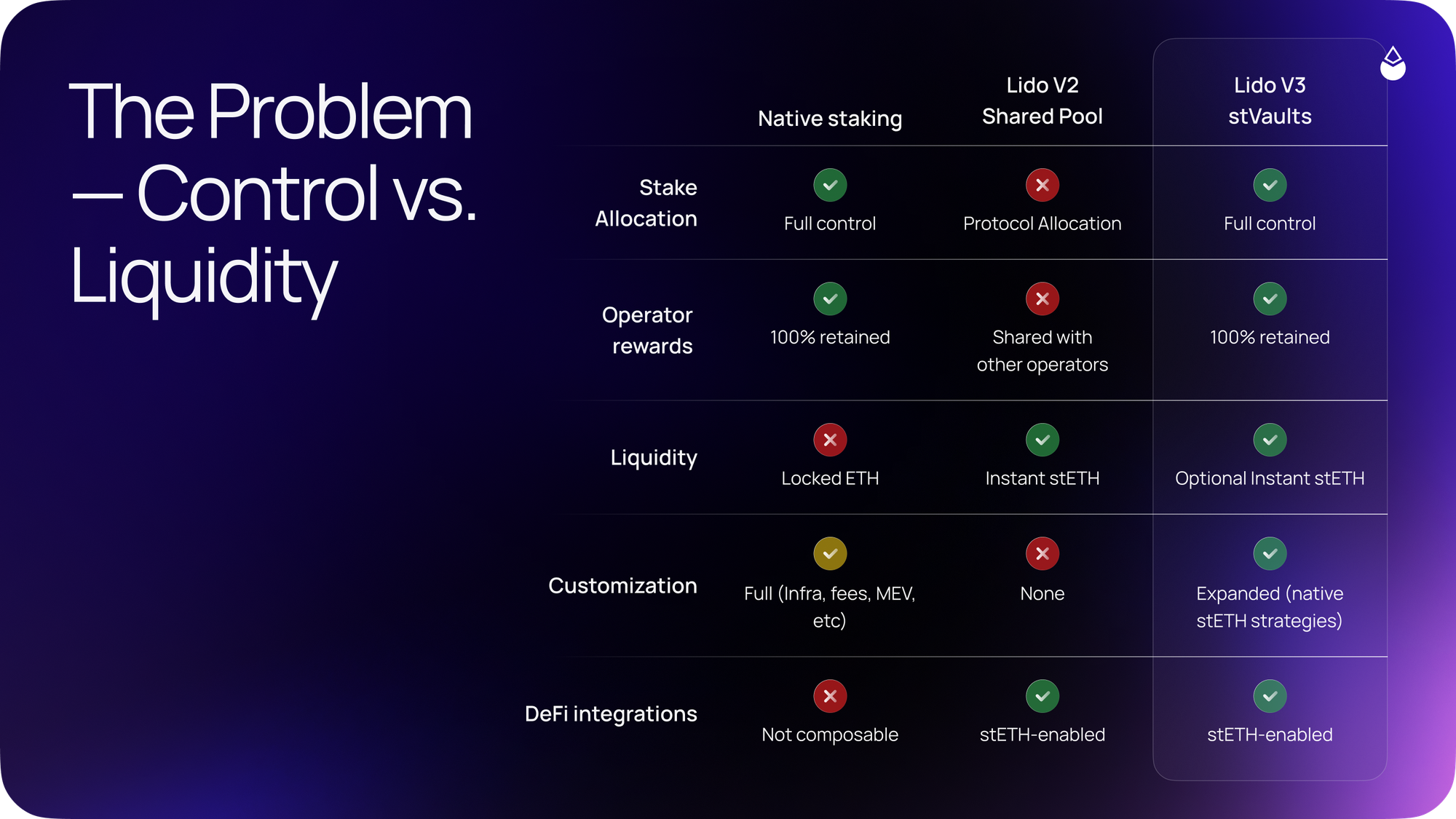
The introduction of stVaults by Lido V3 is poised to have profound implications for the entire Ethereum staking landscape and the broader DeFi ecosystem. By offering granular control and customization, Lido is not only solidifying its market leadership but also expanding the total addressable market for liquid staking.
- Enhanced Institutional Adoption: The ability to meet compliance and operational requirements is likely to unlock a significant wave of institutional capital, driving further legitimization and growth for the crypto space.
- Increased Competition and Innovation: Node operators now have new levers to differentiate their services, fostering a more competitive and innovative environment. This could lead to a wider array of specialized staking products.
- Capital Efficiency and New Use Cases: The embedded staking capabilities for L2s and the toolkit for DeFi builders will spur new applications and strategies, further increasing capital efficiency within Ethereum.
- Decentralization Considerations: While stVaults offer customization, their integration with Lido’s dominant stETH liquidity layer prompts ongoing discussions around the decentralization of staking power. The modular design, however, can also allow for greater diversity in validator sets selected by individual vaults, potentially mitigating some centralization concerns.
- Risk Management: While stVaults provide more control over specific risks, users must remain aware of inherent smart contract risks and the operational risks associated with chosen node operators. The flexibility demands a higher degree of due diligence from stVault users.
Start Building on Lido V3 Today: Early Adopter Campaign
Lido V3 transforms liquid staking from a singular product category into a expansive infrastructure for diverse staking businesses. stVaults make it possible to build institutional-grade staking products, launch operator-led offerings with clear differentiation, create structured DeFi vaults, and enable L2-native staking integrations that seamlessly embed yield.
To incentivize early adoption and foster innovation, Lido contributors are running a special early adopter campaign. Until March 31st, 2026, the Lido Infrastructure fee for identified stVaults with a Total Value Exceeding 250 ETH will be reduced from 1% to 0%. This promotional period offers a compelling opportunity for teams to explore and integrate stVaults without initial fee overhead. Interested parties are encouraged to contact the stVaults team to begin building today.
For comprehensive technical details, including concepts such as Reserve Ratios, risk tiers, and forced rebalancing mechanisms, the full Lido V3 Whitepaper is available. Additionally, the stVaults Documentation Center provides extensive resources for developers and businesses looking to leverage this groundbreaking new primitive. Lido V3 stands as a testament to the ongoing evolution of decentralized finance, promising a more accessible, flexible, and powerful future for Ethereum staking.