James Watt
July 09, 2026 – Lido V3, a cornerstone of the decentralized finance ecosystem, has announced a suite of significant updates to its stVaults, a pioneering modular staking primitive designed to cater to the complex needs of institutional participants and large-scale stakers. These enhancements, detailed on July 9, 2026, span new product integrations, critical Web UI features, and expanded documentation, all aimed at bolstering security, operational efficiency, and accessibility within the burgeoning Ethereum staking landscape. The rollout comes as the Ethereum validator entry queue continues to fluctuate, underscoring the pressing need for efficient and robust staking solutions.
The Genesis of stVaults: A Modular Approach to Institutional Staking
The introduction of stVaults under Lido V3 marked a pivotal moment in liquid staking, offering a sophisticated framework that allows for highly customizable and capital-efficient staking operations. Prior to stVaults, institutional-grade staking often grappled with challenges related to bespoke risk management, compliance, and the integration of staking rewards into complex financial strategies. Lido V3’s stVaults were conceived to address these very issues by providing modular infrastructure with the critical option for stETH minting. This feature allows participants to manage their underlying ETH collateral while still benefiting from the liquidity and composability of stETH within the broader DeFi ecosystem, without necessarily exposing their principal to the immediate liquidity risks of a pooled environment.
At its core, a stVault acts as a dedicated staking primitive, enabling entities to run their own validators through Lido’s infrastructure while retaining significant control over their assets and staking parameters. This level of customization is particularly attractive to institutions, corporations, and high-net-worth individuals who require tailored solutions that align with their internal governance, regulatory mandates, and risk appetites. The ability to mint stETH optionally provides flexibility, allowing stakers to leverage the benefits of liquid staking when desired, or maintain a more direct staking position without immediate conversion, thereby offering a hybrid model previously unavailable at this scale.
Navigating Ethereum’s Staking Landscape: The Entry Queue and Migration Strategies
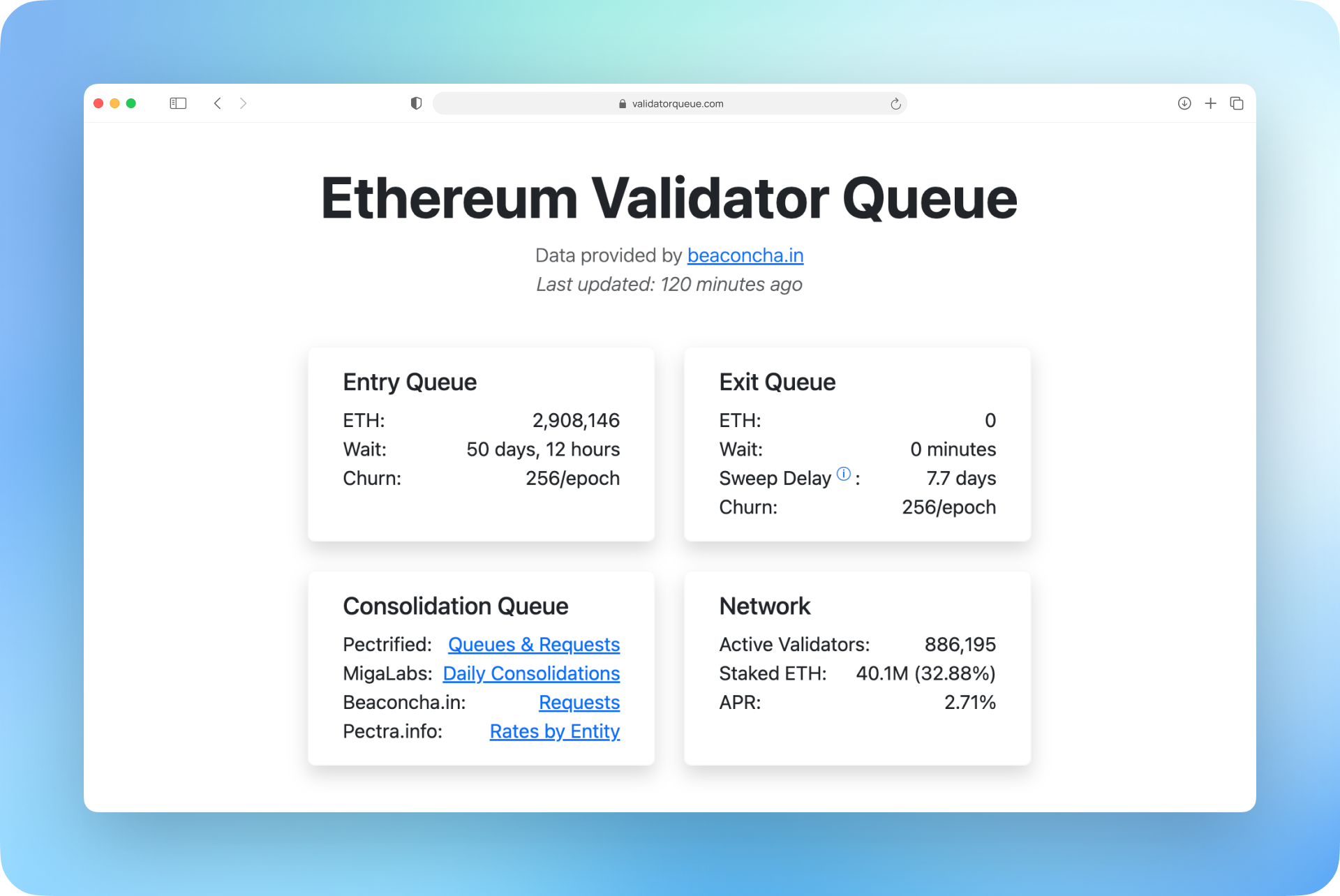
The operational landscape for Ethereum stakers is continually shaped by network dynamics, prominently exemplified by the validator entry queue. Throughout May 2026, the queue for new Ethereum validators experienced substantial growth, at one point exceeding 60 days. This indicated a robust and sustained interest in participating in Ethereum’s proof-of-stake consensus, yet it also highlighted a bottleneck for new capital seeking to enter the staking domain. While the queue eased slightly to an average of 50 days in June, it remains a significant consideration for any entity looking to deploy new staking capital.
The validator entry queue is a deliberate mechanism within Ethereum’s consensus protocol, designed to maintain network stability and prevent sudden, large-scale influxes or exits of validators. However, for institutions with specific deployment timelines or strategic capital allocations, a protracted waiting period can introduce inefficiencies and opportunity costs.
In response to these market conditions, Lido has actively promoted "validator consolidation" as a strategic pathway for existing stakers to migrate to stVaults without enduring the entry queue. This method allows source validators to continue accruing rewards throughout the migration process, ensuring uninterrupted yield generation. Post-consolidation, stakers gain access to stETH, unlocking a spectrum of benefits including enhanced DeFi composability, potential for boosted rewards through various protocols, and improved liquidity for substantial staking positions. This capital-efficient migration strategy is particularly appealing to large stakers looking to optimize their existing validator operations within the more flexible and controlled stVaults environment.
Adding further incentive, Lido has extended the stVaults infrastructure fee waiver through the end of August 2026. This financial benefit serves to reduce the initial operational costs for new stVault participants, making the transition even more attractive during a period of high demand for staking services. This move aligns with Lido’s broader strategy to foster widespread adoption of its advanced staking solutions and reinforce its position as a leading provider in the liquid staking sector.
Expanding the stVaults Ecosystem: New Products and Use Cases
The growth of the stVaults ecosystem is evident in the burgeoning "Products Overview Hub," a dedicated platform showcasing the innovative applications and use cases being built atop the stVaults infrastructure. This hub serves as a testament to the versatility and adaptability of stVaults, attracting a diverse range of builders and institutions. While specific examples were not detailed in the announcement, the concept implies a vibrant ecosystem where stVaults are leveraged for:
- Institutional Staking Services: Offering white-label or bespoke staking solutions for corporate treasuries, asset managers, and hedge funds.
- Decentralized Autonomous Organization (DAO) Treasury Management: Enabling DAOs to stake their native assets securely while maintaining liquidity.
- Custom DeFi Strategies: Developing complex yield-farming or lending strategies that integrate stETH from stVaults for enhanced returns.
- Custodial Staking Solutions: Providing secure, compliant staking options through qualified custodians.
The expansion of this hub indicates a robust and active development community around stVaults, with Lido actively encouraging new integrations. Entities interested in featuring their vault-based products on the hub are invited to reach out to the Lido team, fostering a collaborative environment aimed at accelerating innovation within the institutional staking domain. Industry analysts suggest that the growth of such a product ecosystem is crucial for proving the long-term viability and utility of modular staking solutions, driving broader institutional acceptance of liquid staking derivatives.
Enhancing User Experience: Key Updates to the stVaults Web UI
A critical aspect of broadening adoption, particularly among institutions, is the provision of a user-friendly and secure interface. The stVaults Web UI, designed to simplify the setup and monitoring of vaults, has received several significant updates focused on security, operational efficiency, and ease of use.
Anti-Scam Protections for Stakers: In an environment constantly threatened by malicious actors, security is paramount. The updated Web UI now incorporates advanced anti-scam protections. This includes proactive warnings to stakers about potentially risky transactions and, crucially, the blocking of certain operations if the stVault setup is identified as potentially allowing unauthorized third-party actors to exploit or defraud stakers. This feature represents a proactive step by Lido to safeguard users, particularly those who may be less familiar with the intricacies of smart contract interactions. A Lido spokesperson, commenting on the update, stated, "Our unwavering commitment to user security drives continuous innovation. These anti-scam measures are designed to provide an additional layer of defense, ensuring that stVault users can operate with greater peace of mind and confidence in the platform’s integrity."
Streamlined Fee Settlement: Previously, settling Lido fees, a prerequisite for certain stVault actions, often necessitated command-line interface (CLI) operations or direct smart contract interactions. This presented an operational hurdle, especially for institutions with stringent internal control frameworks and approval processes. The new Web UI now empowers Vault Owners and Node Operators to review and settle fees directly within the interface. This permissionless settlement mechanism drastically simplifies the workflow, eliminating the need for complex technical procedures and enhancing overall operational efficiency. The ability to manage these critical financial operations through a familiar graphical interface is expected to significantly reduce administrative overhead and accelerate decision-making processes for institutional users.
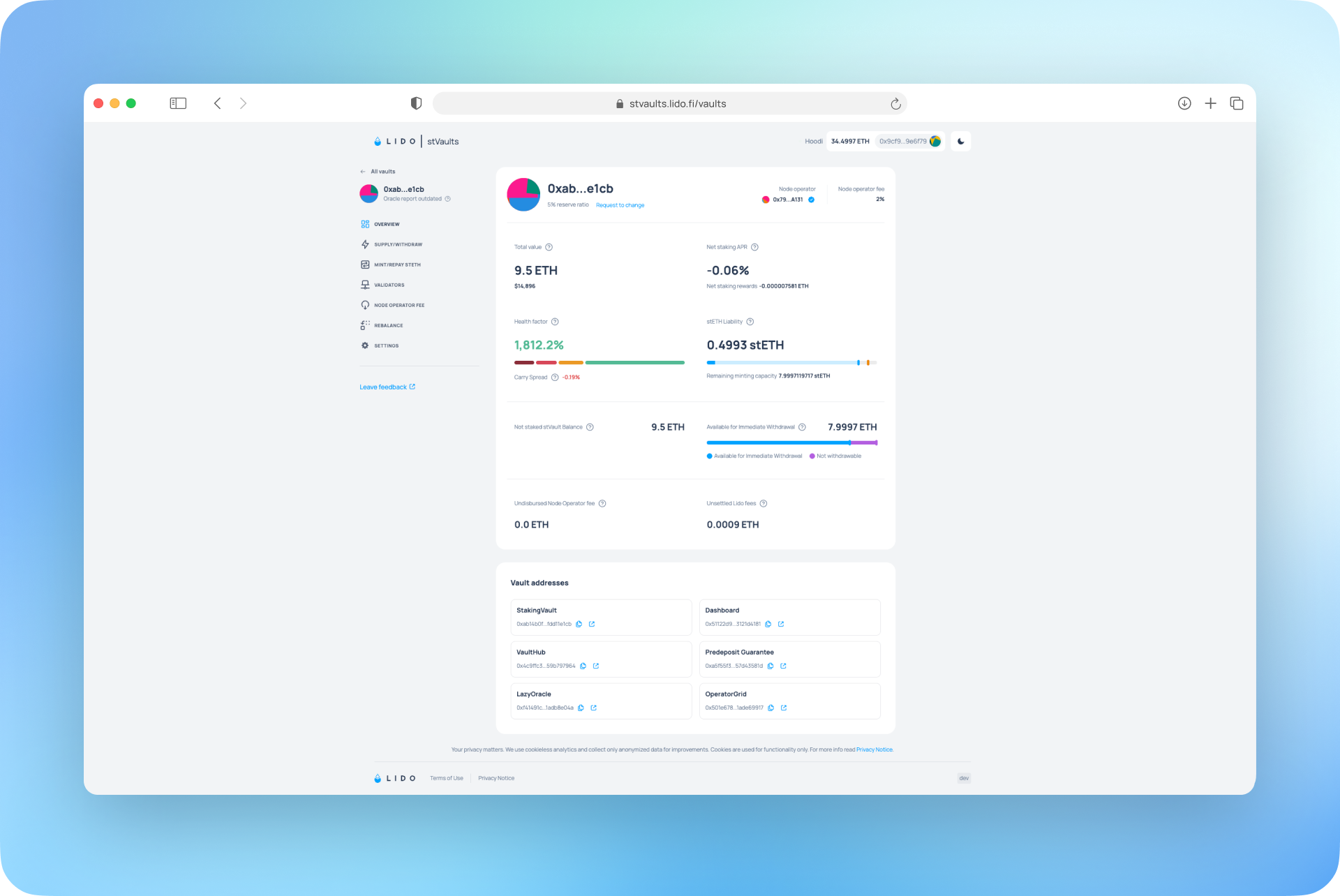
Intuitive Rebalancing in the Web UI: One of the most impactful additions to the Web UI is the direct support for rebalancing. Rebalancing in the context of stVaults involves repaying stETH liability using ETH from the vault’s own balance. This feature is particularly vital for institutions engaged in redemption fulfillment processes. For instance, after a redemption request is completed by minting stETH from the stVault and subsequently swapping it for ETH, the resulting stETH liability can now be efficiently covered by rebalancing the position through the intuitive web interface.
Prior to this update, such rebalancing operations required either intricate command-line interface commands or direct interaction with underlying smart contracts – methods that are often cumbersome and high-risk for institutional setups requiring multi-signature approvals and audit trails. By integrating rebalancing into the Web UI, vault owners can now perform this crucial operation themselves, seamlessly integrating it into their existing approval and custody workflows. This significantly enhances the operational autonomy and control for institutional stakers, reducing reliance on specialized technical teams and minimizing potential for human error. It is understood that this feature was a direct response to feedback from institutional partners seeking greater self-service capabilities for managing their large-scale staking positions.
Bolstering Institutional Adoption: The stVaults Doc Center
Comprehensive and accessible documentation is a cornerstone of institutional adoption in any technology sector, and Web3 is no exception. The stVaults Doc Center has been significantly enriched with new custodian guides, providing detailed instructions and best practices for integrating stVaults with various qualified custodial solutions. This expansion directly addresses a key requirement for institutional clients, who often operate within strict regulatory and compliance frameworks necessitating the use of trusted third-party custodians for asset management.
Furthermore, the Qualified Custodians overview section within the Doc Center now conveniently lists all stVaults smart-contract addresses that require whitelisting before interaction. Centralizing this critical information streamlines the onboarding process for custodians and institutional clients, eliminating the time-consuming and error-prone task of individually identifying and verifying contract addresses. This meticulous approach to documentation underscores Lido’s commitment to facilitating a smooth and secure integration experience for its institutional partners. Representatives from major digital asset custodians have reportedly welcomed these updates, noting that clear, consolidated information is vital for accelerating their internal review and integration processes, ultimately lowering the barrier to entry for their institutional clients looking to engage with Ethereum staking through Lido.
Broader Implications and Future Outlook
These comprehensive updates to Lido V3’s stVaults and its Web UI carry significant implications for the broader Ethereum staking ecosystem and the continued institutionalization of decentralized finance.
Enhanced Decentralization and Robustness: By empowering a more diverse array of node operators and institutional stakers with modular, customizable solutions, stVaults contribute to the overall decentralization and resilience of the Lido protocol. As more distinct entities operate their own vaults, the distribution of staking power within Lido becomes more robust, mitigating potential single points of failure.
Accelerated Institutional Inflow: The focus on security, operational efficiency, and user experience directly addresses key concerns for institutional capital. Features like anti-scam protections, simplified fee settlement, and intuitive rebalancing are critical in attracting and retaining large institutional clients who prioritize compliance, risk management, and streamlined operations. This could lead to a substantial increase in institutional ETH flowing into staking through Lido.
Competitive Positioning: In an increasingly competitive liquid staking market, these advanced features differentiate Lido V3, particularly in the institutional segment. By offering a sophisticated, user-friendly, and secure platform, Lido strengthens its position against other liquid staking protocols and direct staking solutions, solidifying its appeal to a segment of the market with high capital capacity.
Lido’s Vision for Liquid Staking: The consistent rollout of such impactful updates reaffirms Lido’s commitment to continuous innovation and making Ethereum staking more accessible, secure, and efficient for all participants, from retail users to large-scale institutions. These developments are not merely incremental improvements but represent strategic advancements in realizing a more mature and integrated liquid staking ecosystem.
As the Ethereum network continues to evolve and the demand for robust staking solutions grows, the advancements in Lido V3’s stVaults position it as a critical infrastructure layer. The ongoing dedication to enhancing user experience, security, and institutional integration suggests a future where liquid staking derivatives play an even more central role in the broader financial landscape, bridging traditional finance with the innovative capabilities of decentralized networks. Parties interested in exploring stVaults for their specific needs are encouraged to engage with the Lido team to discuss potential applications and roadmap integrations.