Nila Kartika Wati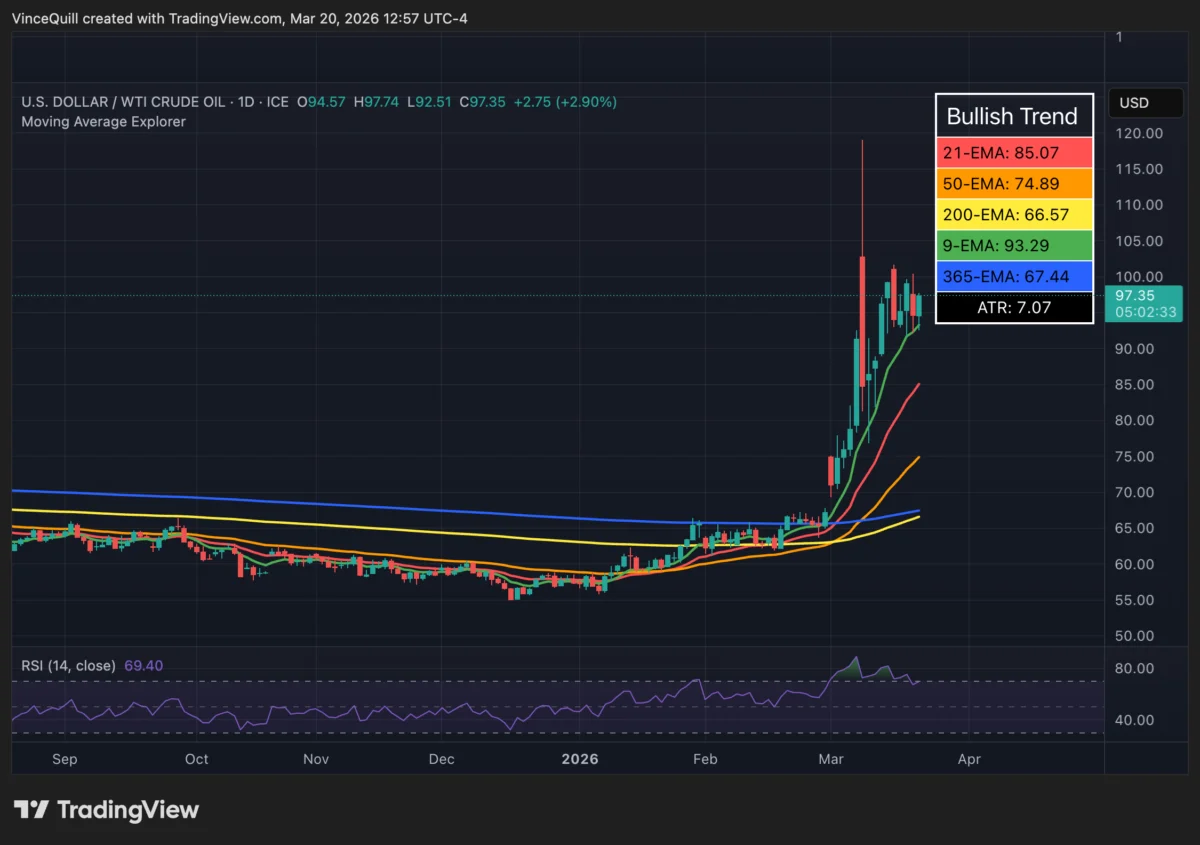
Financial markets are currently exhibiting a significant miscalculation regarding the potential severity and prolonged duration of economic repercussions stemming from the escalating Middle East conflict, according to a stark warning issued by Nic Puckrin, market analyst and founder of the Coin Bureau. This misjudgment is deeply embedded in a prevalent trading strategy dubbed the "TACO" trade, an acronym coined on Wall Street for "Trump always chickens out," which presumes a predictable de-escalation of geopolitical tensions by former U.S. President Donald Trump. However, Puckrin strongly cautions against this assumption, highlighting that "Trump is not in sole control of the situation," and the current geopolitical landscape offers no easy or quick exits from the burgeoning conflict.
The "TACO" trade, a term born from past instances where President Trump, despite initially aggressive rhetoric, often opted for de-escalation in international standoffs, reflects a market belief that the current Middle East tensions will similarly fizzle out without significant, lasting economic damage. This optimistic outlook, however, risks leaving investors ill-prepared for a more protracted and economically disruptive scenario. Puckrin emphasizes that the regional dynamics are far more intricate and involve a multitude of state and non-state actors, making a simple, unilateral de-escalation highly improbable. The historical precedent of a single leader dictating the ebb and flow of such complex conflicts may not hold true in the current environment, where proxy forces and regional rivalries play a substantial role.
The Looming Threat of Stagflation and Oil Price Volatility
A central concern articulated by Puckrin revolves around the critical threshold of oil prices. He warns that if crude oil continues to trade above $100 per barrel, the global economy faces a significant slowdown, and Personal Consumption Expenditures (PCE) inflation, a key metric closely watched by the Federal Reserve, could surge by as much as 1 percentage point. This environment dramatically increases the probability of stagflation – a perilous economic state characterized by the simultaneous occurrence of high inflation, stagnant economic growth, and rising unemployment.

The price of West Texas Intermediate (WTI) crude has already demonstrated extreme volatility since the conflict’s inception, briefly surging to nearly $120 per barrel. This spike is a direct consequence of heightened geopolitical risk, particularly concerns over supply disruptions from the oil-rich Middle East region. The sustained elevation of oil prices above the $100 mark would have a cascading effect across various economic sectors. Energy is a fundamental input in almost all economic activities, from manufacturing and transportation to agriculture and services. A persistent rise in energy costs directly translates into higher production costs for businesses, which are then passed on to consumers in the form of increased prices for goods and services. This fuels inflationary pressures while simultaneously dampening consumer purchasing power and corporate profits, leading to reduced investment and hiring.
Puckrin underscores the severity of such a scenario by drawing parallels to the 1970s, a period infamous for its stagflationary crisis. "If oil stays above $100 throughout Q2 and into Q3, stagflation becomes a real problem for the Fed," he stated. During the 1970s, the S&P 500, a benchmark for U.S. equities, went "essentially nowhere in real terms for an entire decade once stagflation took hold." This historical precedent serves as a stark reminder of the long-term, detrimental impact of unchecked stagflation on asset valuations and overall economic prosperity. The 1973 oil crisis, triggered by an OPEC embargo, saw crude oil prices quadruple, leading to widespread inflation, recession, and an unemployment surge across major economies. A repeat of such conditions, even in a modified form, would present immense challenges for policymakers and investors alike.
The Strait of Hormuz: A Critical Chokepoint
The geopolitical flashpoint most critical to global energy markets is the Strait of Hormuz. Puckrin stressed that "markets might have a rude awakening" to the realities of the Middle East conflict, emphasizing that the longer this vital waterway remains closed or significantly disrupted, the more severe the economic consequences will become. The Strait of Hormuz is arguably the world’s most important oil transit chokepoint, with approximately 20% of the world’s total petroleum liquids consumption, or about 21 million barrels per day (b/d), passing through it in 2023. This includes crude oil, condensate, and petroleum products from major producers such as Saudi Arabia, Iran, the United Arab Emirates, Kuwait, Iraq, and Qatar.
Any sustained closure or significant impediment to shipping through the Strait would trigger an immediate and drastic shock to global oil supplies, sending prices skyrocketing far beyond current levels. While alternative pipeline routes exist for some Middle Eastern producers, their capacity is limited and cannot fully compensate for a complete disruption of Hormuz traffic. Furthermore, even if direct conflict is avoided, heightened security risks can lead to increased shipping insurance premiums and longer transit times as vessels reroute, adding to costs and supply chain inefficiencies. Puckrin warns that "Even if the Strait of Hormuz were to open today, the disruption to the Gulf’s oil-producing infrastructure will take months to rebuild." This highlights the lasting nature of any damage and the non-immediate return to normalcy, even after a de-escalation of direct hostilities. The interconnectedness of global energy infrastructure means that disruptions in one region have ripple effects that can be felt worldwide, impacting industrial production, transportation costs, and ultimately, consumer prices.

The Federal Reserve’s Tightrope Walk: Rate Hikes vs. Rate Cuts
The economic fallout from a prolonged Middle East conflict and persistently high energy prices presents a formidable challenge for central banks globally, particularly the U.S. Federal Reserve. The Federal Open Market Committee (FOMC), responsible for setting interest rate policy in the United States, held interest rates steady at its March meeting, maintaining the Federal Funds rate between 3.5% and 3.75%. This decision reflected a cautious stance amid lingering inflation concerns and emerging geopolitical uncertainties.
However, the escalating tensions have dramatically altered market expectations for future monetary policy. Rate cut odds, which were once robust for the upcoming April FOMC meeting, have all but vanished. Instead, a small but growing probability – around 12%, according to the Chicago Mercantile Exchange’s (CME) FedWatch tool – suggests that the FOMC might even consider raising rates next month. This potential shift from anticipated easing to further tightening underscores the severity of the inflation threat posed by the Middle East crisis. Elevated inflation, particularly that driven by essential commodities like energy, means that the interest rate cuts, which are typically stimulative to risk assets like cryptocurrencies, will not materialize. On the contrary, if the Fed is forced to raise rates to combat persistent inflation, it would effectively quash any hopes of easing liquidity conditions and thereby dampen the prospects for a crypto market rally and broader economic growth.
Federal Reserve Chairman Jerome Powell acknowledged these growing uncertainties at a recent press conference, stating, "The implications of events in the Middle East for the US economy are uncertain in the near term. Higher energy prices will push up overall inflation." While Powell clarified that it is still "too soon" to accurately gauge the full scope and severity of the potential economic effects from the war and the disruption to the global energy infrastructure, his remarks highlight the central bank’s vigilance and the significant challenge posed to its dual mandate of achieving maximum employment and stable prices. Should inflation prove more persistent due to energy shocks, the Fed would be forced to prioritize price stability, potentially at the expense of economic growth and employment, a classic stagflationary dilemma.
Broader Economic Implications and Global Ripple Effects

The implications of a protracted Middle East conflict extend far beyond oil prices and central bank policy, permeating every facet of the global economy.
- Consumer Impact: Higher energy prices lead to increased costs for gasoline, heating, and electricity, directly reducing household disposable income. This, in turn, curtails consumer spending on discretionary goods and services, slowing economic activity. The higher cost of transporting goods also contributes to inflation across a wider range of products.
- Business Sector: Businesses face rising operational costs due to expensive fuel, raw materials, and shipping. This erodes profit margins, potentially leading to reduced investment, hiring freezes, or even layoffs. Industries heavily reliant on energy, such as manufacturing, transportation, and agriculture, would be particularly hard hit. Small and medium-sized enterprises (SMEs), often with thinner margins, would find it challenging to absorb these increased costs.
- Global Supply Chains: Disruptions to shipping routes, increased insurance costs for vessels, and potential port closures or delays would wreak havoc on global supply chains. This could lead to shortages of critical components and finished goods, further exacerbating inflationary pressures and hindering industrial production worldwide. The rerouting of ships around the Cape of Good Hope, for instance, adds significant time and cost to voyages between Asia and Europe, impacting delivery schedules and freight rates.
- International Economies: Energy-importing nations, particularly those in Europe and Asia that are heavily reliant on Middle Eastern oil, would experience severe economic strain. Their energy import bills would surge, weakening their currencies, fueling domestic inflation, and potentially pushing them into recession. Emerging markets, often more vulnerable to commodity price shocks and capital outflows, could face significant financial instability.
- Financial Markets: Beyond the direct impact on oil and gas stocks, a stagflationary environment would negatively affect equity markets broadly, particularly growth stocks, as higher interest rates reduce the present value of future earnings. Bond markets would likely see increased volatility, with long-term yields potentially rising due to inflation concerns. Cryptocurrencies, often seen as risk assets, would struggle in an environment of tightening liquidity and reduced speculative capital. Gold, traditionally a safe-haven asset, might see increased demand.
The current situation calls for extreme vigilance from investors and policymakers. The market’s tendency to price in a rapid return to normalcy, embodied by the "TACO" trade, appears increasingly detached from the complex and volatile geopolitical realities. The warnings from analysts like Nic Puckrin, reinforced by the cautious statements from Federal Reserve Chairman Jerome Powell, underscore the potential for a "rude awakening" if the Middle East conflict intensifies or persists, pushing oil prices higher and thrusting the global economy into a dreaded era of stagflation. The long-term consequences of such a scenario could redefine the economic landscape for years to come, making proactive risk assessment and prudent financial planning paramount.