Nila Kartika Wati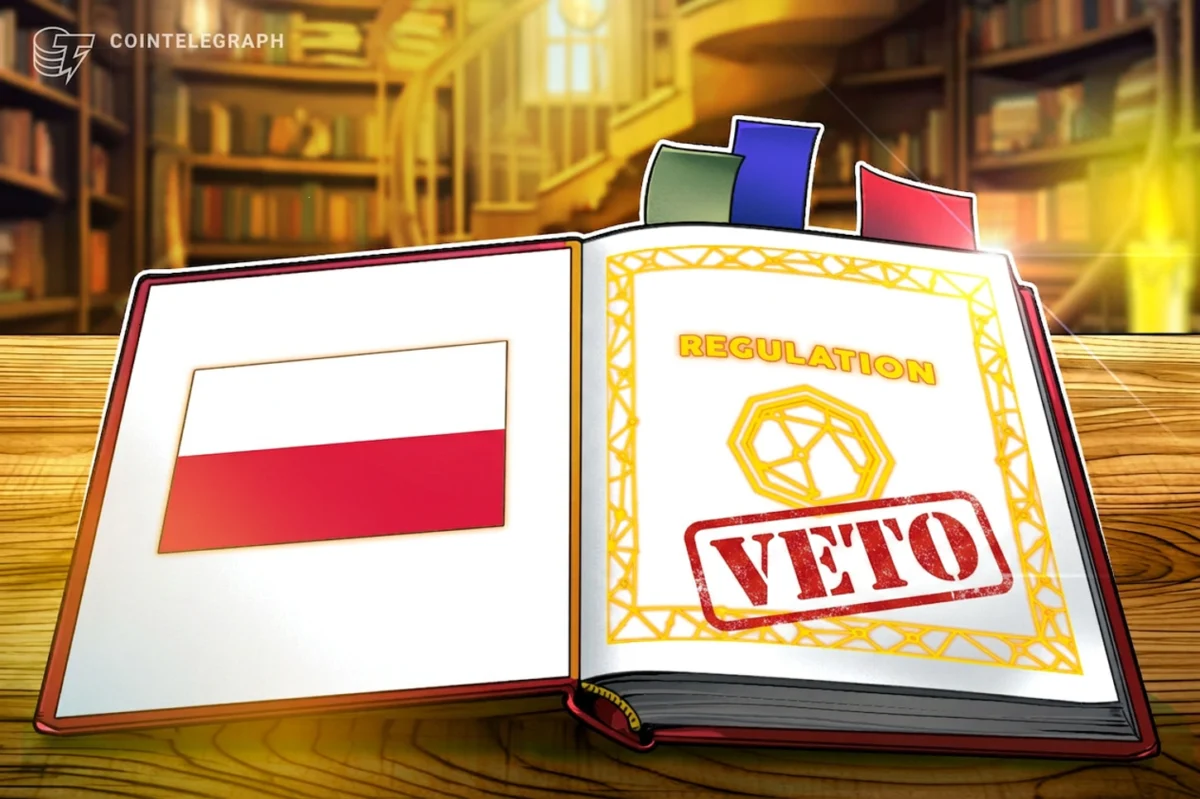
Polish lawmakers have once again fallen short of the crucial three-fifths majority required to overturn President Karol Nawrocki’s persistent veto of legislation designed to fortify oversight of the nation’s burgeoning crypto market, plunging the country further into a regulatory vacuum at a critical juncture for digital assets across the European Union. The Sejm, Poland’s lower house of parliament, convened on Friday for yet another decisive vote, resulting in 241 votes in favor of overriding the presidential veto, against 198 votes opposing it, with three abstentions. This tally, while representing a majority, unfortunately left the proponents of the bill 25 votes shy of the 266 needed to surmount the President’s objection, marking the third instance President Nawrocki has rejected such legislation. His consistent rationale centers on the argument that the proposed rules would impose an undue burden of "overregulation" on the nascent industry, stifling innovation and growth. This ongoing legislative deadlock is unfolding against a backdrop of escalating public concern, fueled by a deepening scandal involving the now-defunct crypto exchange Zondacrypto, whose Estonian operator has been officially declared bankrupt. Prime Minister Donald Tusk has seized upon the expanding criminal investigation into Zondacrypto, citing alarming allegations of political influence and fraud, to amplify his urgent calls for robust and immediate crypto oversight, highlighting a stark divergence in regulatory philosophy at the highest levels of Polish government.
The European Union’s landmark Markets in Crypto-Assets Regulation (MiCA) represents a pivotal step towards a harmonized regulatory framework for digital assets across all member states. Designed to provide legal certainty, foster innovation, and protect consumers within the volatile crypto space, MiCA began its phased implementation in June 2023, with rules for stablecoins and e-money tokens coming into effect in July 2024, and the full suite of regulations for other crypto-assets expected to be applicable by December 2024. For MiCA to be effectively operationalized, each member state is required to designate national competent authorities (NCAs) responsible for its supervision and enforcement. In Poland’s case, the vetoed legislation specifically aimed to establish the Polish Financial Supervision Authority (KNF) as this designated national supervisor for the crypto market. The KNF, a key independent financial regulator in Poland, has publicly expressed its frustration and concern over the protracted legislative paralysis. In a statement released on Friday, the KNF underscored the critical void, noting that Poland remains without a designated authority legally empowered to supervise the cryptoasset market, even as MiCA’s provisions are increasingly coming into force across the rest of the European Union. This places Poland in an anomalous and potentially vulnerable position, out of step with its EU partners and leaving its domestic crypto industry and investors exposed to regulatory uncertainty.
The Anatomy of a Legislative Stalemate: Presidential Prerogative vs. Parliamentary Will
The current impasse is not merely a technical disagreement over regulatory nuances; it reflects a broader political struggle between the presidential office, currently held by Karol Nawrocki, and the parliamentary majority that supports the legislation. President Nawrocki, while acknowledging the necessity of some form of crypto regulation, has consistently articulated specific reservations about the proposed Polish framework. His core arguments revolve around two main concerns: the potential for "overregulation" and the scope of authorities’ powers.
Firstly, the President argues that the drafted legislation goes beyond the necessary scope mandated by MiCA, introducing additional burdens and restrictions that could stifle the growth and competitiveness of Polish crypto businesses. While MiCA provides a baseline, member states do have some leeway to introduce national specificities, and it appears President Nawrocki perceives the proposed Polish additions as excessive. This perspective often aligns with proponents of a more libertarian approach to digital assets, who advocate for minimal government intervention to foster innovation. However, critics of this stance argue that a robust regulatory framework is precisely what is needed to build trust, attract institutional investment, and prevent illicit activities, especially in light of recent high-profile failures and scams within the crypto ecosystem.
Secondly, President Nawrocki has raised concerns about the extensive powers granted to authorities, specifically citing the ability to block websites. This particular point touches upon fundamental questions of digital freedom, censorship, and due process. While such powers might be envisioned as tools to combat fraudulent schemes or illegal operations, the potential for misuse or overreach is a significant concern for civil liberties advocates and parts of the tech industry. The President’s office has indicated a desire for more narrowly defined powers, ensuring that any interventions are proportionate and subject to stringent judicial oversight. These concerns, while framed as protecting industry and individual freedoms, have inadvertently left the market in a state of limbo, with the KNF unable to perform its critical supervisory functions.
The parliamentary attempts to push through the legislation reflect a determined effort by the ruling coalition to align Poland with EU standards and address growing concerns about market integrity. The repeated votes underscore the political will within the Sejm to establish a clear regulatory framework. However, the consistent failure to achieve the supermajority needed to override a presidential veto highlights the enduring strength of the presidential office in Poland’s semi-presidential system, particularly when the president is not aligned with the parliamentary majority. This dynamic creates a legislative bottleneck, where even popular initiatives can be stalled by presidential prerogative, raising questions about the efficiency of governance in areas requiring swift legislative action.
The Zondacrypto Catalyst: A Scandal Fueling Regulatory Urgency
The urgency for comprehensive crypto regulation in Poland has been dramatically intensified by the unfolding Zondacrypto scandal, a case that has evolved from a concerning disappearance into a full-blown criminal investigation implicating allegations of fraud, money laundering, and even political corruption. The saga traces back to 2022 with the mysterious disappearance of Sylwester Suszek, the founder of BitBay, a prominent Polish crypto exchange that later rebranded as Zondacrypto. This event sent ripples of concern through the Polish crypto community, and in July 2023, Polish prosecutors took the significant step of merging the investigation into Suszek’s disappearance with a broader probe into suspected fraud and money laundering connected to Zondacrypto itself.
The scale of the alleged malfeasance is staggering. Prosecutors in April estimated the losses linked to Zondacrypto at no less than 350 million Polish zlotys, equivalent to approximately $95 million. This figure represents a substantial blow to thousands of individual investors and underscores the significant financial risks present in an unregulated or under-regulated market. The legal and financial fallout further escalated in August when BB Trade Estonia, the Estonian operator of Zondacrypto, was officially declared bankrupt by an Estonian court, paving the way for a creditors’ meeting scheduled for September 17. This bankruptcy declaration signals the official collapse of the exchange, leaving investors facing an uncertain path to recovering their lost assets.
Prime Minister Donald Tusk has leveraged the gravity of the Zondacrypto scandal to exert considerable political pressure for immediate and decisive regulatory action. Ahead of Friday’s parliamentary vote, Tusk delivered a scathing address, publicly disclosing excerpts from what he described as testimony from a key witness in the Zondacrypto investigation. These revelations were explosive, alleging a 2 million Polish zloty ($550,000) payment arrangement involving a foundation linked to Zbigniew Ziobro, who served as Justice Minister in the previous government. Furthermore, Tusk cited separate testimony from the same witness, alleging that an unnamed individual had promised to secure a presidential pardon if the witness were to be convicted in connection with the Zondacrypto case. These allegations, if substantiated, point to a deeply entrenched network of corruption and influence peddling, directly linking the crypto scandal to the highest echelons of previous political power.
Tusk’s forceful intervention serves multiple purposes: it highlights the urgent need for a regulatory framework to prevent future abuses, it strengthens his government’s argument for stricter oversight, and it simultaneously casts a shadow over the political opposition, particularly those associated with the former ruling party. The Prime Minister’s public disclosure of these testimonies adds a highly charged political dimension to the regulatory debate, making it increasingly difficult for any party to argue against robust supervision without appearing to condone potential illicit activities. The Zondacrypto scandal thus acts as a powerful, albeit tragic, case study illustrating the very risks MiCA and the proposed Polish legislation aim to mitigate.
KNF’s Quandary: A Regulator Without a Mandate
The Polish Financial Supervision Authority (KNF) finds itself in an unenviable position. As the nation’s primary financial watchdog, it possesses the expertise, infrastructure, and institutional mandate to supervise financial markets, including, by extension, the crypto sector. The repeatedly vetoed legislation specifically designated KNF as the national authority responsible for applying MiCA. However, without the necessary legal framework in place, the KNF remains effectively handcuffed, unable to fulfill this critical role.
The KNF’s public statements reflect a growing sense of frustration and concern. They have consistently highlighted the dangers of a prolonged regulatory vacuum, not only for investors but also for the reputation and stability of Poland’s financial system. In an official communication following the latest veto, the KNF reiterated that Poland still lacks a designated authority responsible for supervising the cryptoasset market. This means that Polish entities dealing in crypto-assets, and Polish citizens investing in them, do not benefit from the same level of regulatory clarity, consumer protection, and market integrity safeguards that are increasingly available in other EU member states.
The absence of a designated supervisor creates several practical challenges:
- No Licensing Regime: Crypto-asset service providers (CASPs) operating in Poland cannot be licensed or authorized under MiCA, creating uncertainty about their legal status and operational legitimacy. This could deter legitimate businesses from establishing or expanding in Poland, or worse, encourage them to operate in a grey area.
- Lack of Investor Protection: Without KNF oversight, there is no formal mechanism for handling complaints, enforcing disclosure requirements, or ensuring that CASPs adhere to strict operational standards designed to protect client assets. This leaves investors vulnerable to fraud, mismanagement, and market manipulation, as vividly demonstrated by the Zondacrypto case.
- Market Integrity Risks: The KNF would typically monitor for market abuse, insider trading, and other illicit activities. Without this supervisory capacity, the Polish crypto market remains susceptible to these risks, potentially becoming a less attractive or trustworthy environment for both domestic and international participants.
- International Discrepancy: As MiCA becomes fully applicable, firms operating across the EU will need to comply with national supervisory regimes. Poland’s lack of one creates an inconsistency that could complicate cross-border operations and potentially lead to "regulatory arbitrage," where firms might choose to base their operations in countries with less stringent or clearer rules, rather than where their primary customer base resides.
The KNF’s readiness to take on the role is evident, but its hands are tied by the legislative impasse, leaving a significant regulatory gap in the heart of the EU’s single market.
Broader Implications and The Path Forward
The protracted regulatory uncertainty in Poland carries significant implications across various sectors:
For Polish Crypto Businesses: The current situation creates an environment of profound uncertainty. Legitimate crypto-asset service providers (CASPs) in Poland are caught between the looming deadline of MiCA’s full implementation and the absence of a national framework. This lack of clarity can deter new investments, make it difficult for existing businesses to plan for the future, and potentially force some to consider relocating their operations to other EU countries that have successfully established their MiCA supervisory frameworks. This "regulatory arbitrage" could lead to a brain drain and capital flight from the Polish digital economy. Furthermore, without a clear licensing regime, Polish CASPs may struggle to gain credibility with traditional financial institutions and international partners.
For Investors and Consumers: The primary victims of this regulatory void are often individual investors. The Zondacrypto scandal serves as a stark reminder of the financial risks inherent in an unregulated market. Without KNF oversight, there is no designated authority to whom investors can turn for protection, redress, or even clear guidance. This lack of safeguards can erode public trust in digital assets and the financial system more broadly, making consumers more hesitant to engage with a potentially innovative sector.
For Poland’s International Standing within the EU: As a key member of the European Union, Poland is expected to implement common EU regulations. Its inability to establish a MiCA supervisory framework puts it at odds with the collective efforts of the bloc. This could lead to increased scrutiny from European institutions and potentially damage Poland’s reputation as a reliable partner in harmonizing financial regulations. In an increasingly interconnected European financial landscape, being an outlier on such a fundamental piece of legislation can have long-term consequences for economic integration and influence.
Political Implications: The repeated vetoes highlight the deep political divisions within Poland. The President’s actions, while framed as protecting industry from overregulation, are also perceived by some as part of a broader political strategy that often places the presidential office in opposition to the current parliamentary majority. This ongoing power struggle affects not only crypto regulation but also has ramifications for other legislative initiatives requiring consensus. The Zondacrypto scandal, with its alleged links to former government officials, further politicizes the issue, making a swift, bipartisan resolution increasingly challenging.
The Path Forward: The immediate future of Polish crypto regulation remains uncertain. With MiCA’s full application deadline approaching rapidly (December 2024), Poland faces increasing pressure to act. Several scenarios could unfold:
- Further Legislative Attempts: The parliamentary majority could attempt to revise the legislation, perhaps incorporating some of the President’s concerns regarding the scope of powers or regulatory burdens, to secure his approval. This would require negotiation and compromise.
- Continued Stalemate: If no compromise is reached, the legislative impasse could persist, leaving Poland in breach of its EU obligations for MiCA implementation. This would inevitably invite questions and potential action from the European Commission.
- Alternative Regulatory Approaches: While less likely for MiCA, in some cases, EU member states might explore alternative legal mechanisms to implement parts of a regulation if primary legislation repeatedly fails, though this often comes with its own complexities.
The urgency for a resolution is palpable. The Zondacrypto scandal has vividly demonstrated the perils of an unregulated crypto market, while MiCA provides a clear blueprint for comprehensive oversight. Poland stands at a crossroads, balancing presidential concerns about overreach with the undeniable need for a secure, transparent, and compliant digital asset ecosystem. The global crypto market continues its rapid evolution, and Poland’s ability to navigate this complex regulatory landscape will be crucial for its future as a competitive and secure financial hub within the European Union. The outcome of this legislative battle will undoubtedly shape the trajectory of digital finance in the country for years to come.