admin
admin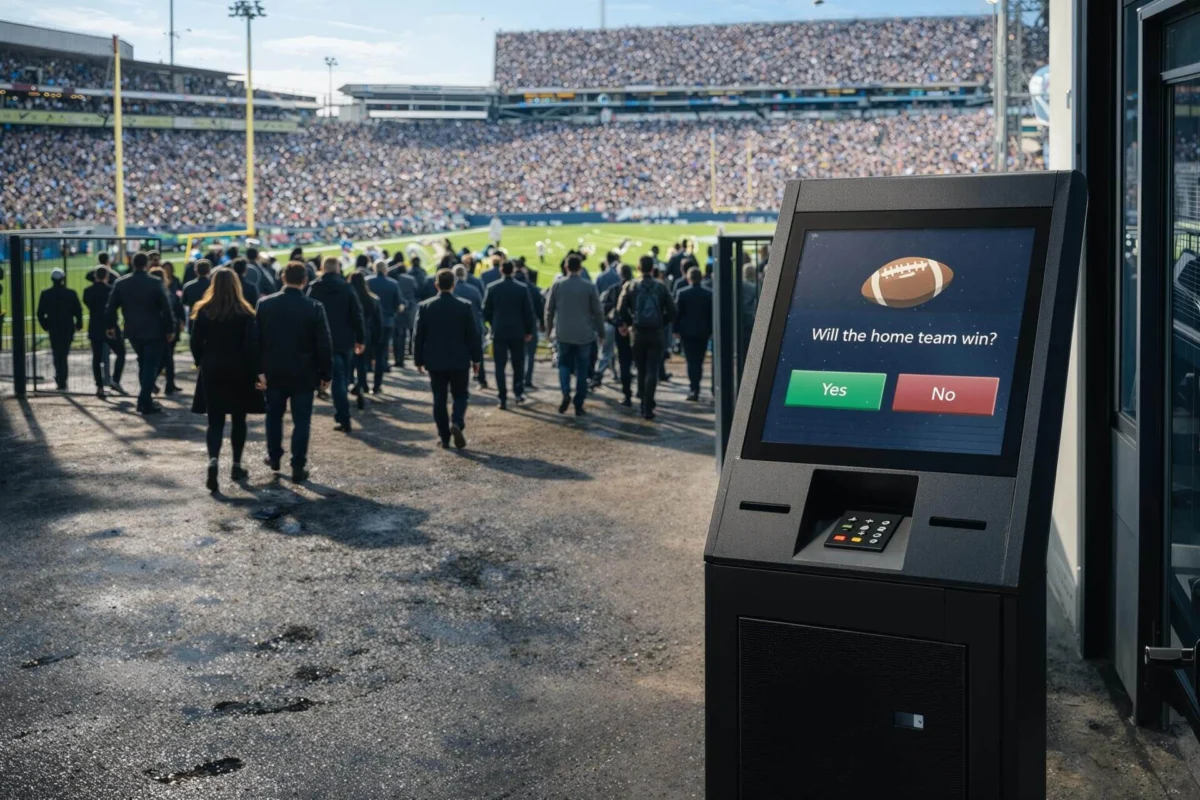
Prediction markets, once striving to position themselves as sophisticated analytical tools superior to mere gambling, now find themselves at a critical juncture. Their trajectory, propelled by the immense popularity of sports-related contracts, has catapulted them from a niche activity into the mainstream, simultaneously igniting a fierce regulatory backlash and a profound identity crisis. This seismic shift, driven by the very scale that brought them widespread attention, is forcing a reevaluation of their legal standing, market classification, and ultimately, their right to exist in their current form. The once-clear distinction between financial derivatives and wagers has blurred, leaving regulators and lawmakers scrambling to define the boundaries of this rapidly evolving industry.
The burgeoning popularity of prediction markets, particularly those focused on sports events, has not gone unnoticed by regulatory bodies and state governments. What began as a quiet debate over jurisdiction has rapidly escalated into a national confrontation, with federal agencies and state legislatures taking decisive action. The Commodity Futures Trading Commission (CFTC) has initiated a formal rulemaking process, signaling a federal intention to establish oversight. This move, coupled with aggressive actions by individual states, underscores the growing concern that these platforms may be exploiting a legal gray area to bypass established gambling regulations.
The core of the controversy hinges on a fundamental question: are these prediction market contracts best classified as speculative financial derivatives or as illegal wagers? This definitional battle has far-reaching implications, determining whether these platforms fall under the purview of federal financial regulators or state-level gambling commissions. The industry’s argument for federal oversight rests on their classification as commodities or derivatives, a stance that grants them a broader, more unified market. Conversely, states contend that the practical application and user engagement with these contracts overwhelmingly resemble gambling, thereby falling under their traditional regulatory authority.
A Rapid Escalation: From Niche to National Battleground
The timeline of events reveals a swift and dramatic intensification of the regulatory crackdown. On March 12, 2026, the CFTC officially opened a formal rulemaking process for prediction markets, indicating a serious federal interest in establishing regulatory frameworks. This announcement set the stage for subsequent actions by state authorities.
Just days later, on March 17, Arizona took a significant step by filing criminal charges against Kalshi, a prominent prediction market operator. This move marked a departure from the typical cease-and-desist letters, venturing into prosecutorial territory and signaling a hardening stance against the industry. The following week, on March 20, a Nevada judge issued a temporary injunction blocking Kalshi from operating within the state without a proper license, further emphasizing the legal challenges posed by operating without state-specific gambling permits. Massachusetts had already initiated its own actions against Kalshi’s sports-related contracts prior to these developments.
The momentum has now reached Capitol Hill, with a bipartisan group of senators reportedly preparing legislation. This proposed bill aims to ban sports betting and casino-style contracts from CFTC-regulated prediction markets. The rationale behind this legislative push is rooted in concerns that these platforms are exploiting legal loopholes to circumvent state gambling laws and infringe upon tribal sovereignty, which often holds exclusive rights to gambling operations within their territories.
This bipartisan legislative effort represents a critical turning point, transforming the dispute from a series of isolated legal skirmishes into a concerted federal effort to define the boundaries of prediction markets. It directly challenges the industry’s ability to operate under federal commodities law while mirroring the mechanics and appeal of state-regulated sports betting.
The Bet vs. Swap Dichotomy: Defining the Regulatory Landscape
At the heart of the intensifying conflict lies the fundamental question of whether prediction market transactions should be classified as "bets" or "swaps." This definitional nuance is not merely semantic; it dictates which regulatory body holds authority. As Linda Goldstein, a partner at CM Law, explained to CryptoSlate, "If these transactions are bets, states regulate them. If they’re swaps or derivatives, then the CFTC has the lead role."
States argue that while some contracts may possess the structural characteristics of derivatives, their actual function and the user’s intent are overwhelmingly akin to wagers. This argument is particularly potent when there is no apparent or credible commercial hedging use for the contract, and participants are primarily staking money on the outcome of an event for the sole purpose of financial gain. For instance, contracts predicting the winner of a major sporting event or the outcome of a political election, when lacking clear hedging applications, appear to be pure speculation.
Conversely, prediction market operators maintain that event contracts have a long-standing place within commodity law. They contend that a fragmented, state-by-state approach to regulating what they perceive as a unified federal product would cripple the national market. Their argument posits that such a system would create an untenable patchwork of legality, hindering innovation and interstate commerce.
The inherent instability of this situation stems from the dual nature of these products. From a consumer perspective, the activity is readily understandable: individuals place money on uncertain outcomes with the expectation of a payout if they are correct. However, the regulatory dispute operates at a higher, more abstract level, focusing on the legal classification of the contract itself. This creates a fundamental paradox where the same product can be framed as a legitimate derivative by federal regulators seeking to integrate it into financial markets, while simultaneously being characterized as illegal gambling by states seeking to maintain control over their established regulatory frameworks.
The current legal battles extend beyond individual platforms like Kalshi or Polymarket. They represent a broader struggle over jurisdictional authority: will states retain control over activities that closely resemble gambling, or will this authority be subsumed by federal financial oversight? The shift in focus is significant. What began as a debate over who regulates specific contracts has evolved into a fundamental question of whether a business that operates and markets itself like a sports betting platform can leverage financial market law to bypass the intricate, state-by-state licensing systems that traditional sportsbooks have spent decades and billions of dollars navigating.
States like Utah, Arizona, and Nevada are aggressively pushing back, not out of a desire to stifle innovation, but to prevent gambling-like activities from migrating into a federal regulatory sphere over which they have no influence or control. Their actions are a defensive maneuver to preserve their established regulatory authority and the revenue streams associated with licensed gambling operations.
Product Design: The Unseen Arbiter of Legitimacy
While legal battles will undoubtedly shape the future of prediction markets, the role of product design is often underestimated. A key factor contributing to the current regulatory friction is the temptation for prediction markets to loosen their criteria for defining "good" event contracts. The immense hype surrounding these platforms incentivizes the listing of fast-moving and popular events, as this directly drives trading volume and revenue.
However, when these products lack precise definitions and irrefutable settlement mechanisms, they can rapidly devolve into mere entertainment wagering. This drift towards gambling-like characteristics can occur even before regulators fully grasp the situation. The shift happens when the pursuit of spectacle and volume overshadows the need for precision, and when contract settlement becomes overly reliant on interpretation rather than objective data.
Binary contracts, for example, appear straightforward with their yes-or-no outcomes. Yet, their simplicity is directly proportional to the clarity and immutability of their definitions. Once the terms that define the outcome become elastic or subject to interpretation, the market begins to depend on judgment calls, subjective arguments, and, inevitably, litigation.
Ross Weingarten, a partner and co-chair of the Sports Integrity Group at Steptoe, highlighted a crucial distinction: "From the consumer standpoint, prediction markets work differently from traditional sportsbooks because users are trading ‘yes’ or ‘no’ positions against each other, not against a house." This peer-to-peer trading model is a cornerstone of the argument for treating these platforms as exchanges. However, when the question posed by a contract becomes murky or the answer is not unequivocally clear, the binary nature of the contract breaks down.
An illustrative example cited by industry observers involved bets on whether Cardi B would perform at the Super Bowl. While she was present on stage, she did not have a microphone. The question of whether this constituted a "performance" is subjective and depends heavily on the bettor’s interpretation, leading to potential disputes and legal challenges. Such ambiguous contracts undermine the credibility of the platform and push it closer to the realm of speculative betting.
The defensibility of sports-related contracts varies significantly. Contracts with simple, objective, and difficult-to-manipulate outcomes are inherently more defensible. This is why contracts predicting game winners remain popular. Conversely, contracts based on in-game props, subjective performance claims, officiating-dependent outcomes, or anything vulnerable to insider knowledge or integrity distortions, sit on precarious ground.
Ultimately, a platform’s credibility will be determined by its architectural design. A platform that presents itself as a neutral exchange, featuring visible order books, transparent pricing, independent settlement sources, and robust abuse detection mechanisms, possesses a stronger claim to federal market status. In contrast, a platform that closely resembles a bookmaker, with opaque operations and subjective settlement processes, will face a much weaker legal and regulatory standing. The legal question will be adjudicated in courts, but the industry’s legitimacy will be established by the very architecture of its products.
States’ Fight, Congress’s Decision: The Endgame for Prediction Markets
States have framed this ongoing dispute as a matter of consumer protection and public policy, a claim that carries significant weight. Licensed sportsbooks operate within a meticulously crafted regulatory regime encompassing age verification, responsible gambling initiatives, integrity monitoring, tax collection, and jurisdiction-specific rules. Prediction markets, by operating under a federal commodities framework, threaten to bypass much of this established system, offering a similar activity without adhering to the same consumer safeguards.
Goldstein emphasized the financial motivations driving state opposition: "Event contracts on sporting events account for the vast majority of transactions on prediction platforms like Kalshi and Polymarket, with some data estimating that it could be as much as 90% of the event contracts." These contracts directly compete with licensed sportsbooks, which generate substantial tax revenue for states through taxes on gross gaming revenue. The American Association of Gaming has reported that since the beginning of 2025, sports betting platforms have reportedly lost over $600 million to prediction markets.
Beyond financial considerations, states are resolute in their commitment to maintaining strict safeguards. Goldstein noted that prediction markets often circumvent consumer protection measures such as age verifications, game integrity oversight, and mandatory contributions to problem gambling funds. The American Gaming Association has been vocal in its criticism, accusing sports-related prediction markets of circumventing the state-based system that underpins legal sports betting. Even major sports leagues are adapting, with MLB’s deal with Polymarket and its memorandum with the CFTC on integrity cooperation signifying an acknowledgment of the growing influence and importance of these markets.
The recent escalations in Arizona and Nevada underscore the gravity of the situation. Arizona’s criminal case has propelled the dispute beyond the familiar realm of cease-and-desist letters into the sphere of active prosecution. Nevada’s temporary restraining order suggests that at least one court is willing to consider these products as unlicensed sports pools under state law, an attempt to pull the industry back under state control before federal market law solidifies as a permanent workaround.
However, not all judicial interpretations align. Weingarten clarified that "some courts have agreed; others have not." He pointed out that courts in New Jersey, California, and Tennessee have ruled that these contracts qualify as "swaps" under the Commodity Exchange Act, favoring federal jurisdiction. Conversely, courts in Maryland, Nevada, Massachusetts, and Ohio have emphasized the historical role of states in regulating gambling, leading to a fragmented legal landscape. This divergence means that the regulation of prediction markets remains highly fluid.
The eventual resolution is unlikely to be a simple endorsement or a complete ban. The CFTC has consistently asserted its exclusive jurisdiction over platforms like Kalshi and Polymarket, while states continue to claim their oversight authority. The most recent development, however, carries significant weight as it expands the backlash beyond individual states. The bipartisan bill introduced on March 23, proposing to carve out sports and casino-style contracts from CFTC-regulated prediction markets, presents a far more perilous scenario for the industry. This move challenges one of the industry’s core assumptions: that if prediction markets prevail in the federal versus state jurisdiction battle, sports contracts will ultimately survive.
This legislative proposal fundamentally alters the playing field. The industry will no longer be concerned solely with whether courts interpret sports contracts as gambling under state law, but rather with whether Congress itself will decide that these contracts should not be offered on regulated prediction markets at all. The endgame is no longer just a jurisdictional dispute but a fight over fundamental categories of financial activity. States are pursuing legal action, the CFTC is formulating its own rules, and lawmakers are considering outright bans on certain types of event contracts.
The most probable outcome points towards a hybrid regulatory regime. This future is likely to involve tighter federal rules, more specific category restrictions on permissible contracts, increased surveillance demands, greater pressure for contract clarity, and more stringent marketing expectations. Platforms may continue to operate under the guise of "exchanges," but they will be compelled to demonstrate this identity through their product design, settlement processes, surveillance capabilities, and how they present their offerings to the public.
This is not a fleeting issue within a niche market; prediction markets are here to stay, regardless of their regulatory status. The industry stands at the precipice of a foundational debate that will define the boundaries between finance and gambling, a process that is likely to unfold over several years. Prediction markets found their mass audience by aligning themselves more closely with sports betting. Now, their success has created a critical challenge: can they retain that audience while simultaneously convincing courts, regulators, and the public that they are fundamentally different from traditional gambling operations? The answer to this question will shape the future of financial innovation and the definition of acceptable market activity.