admin
admin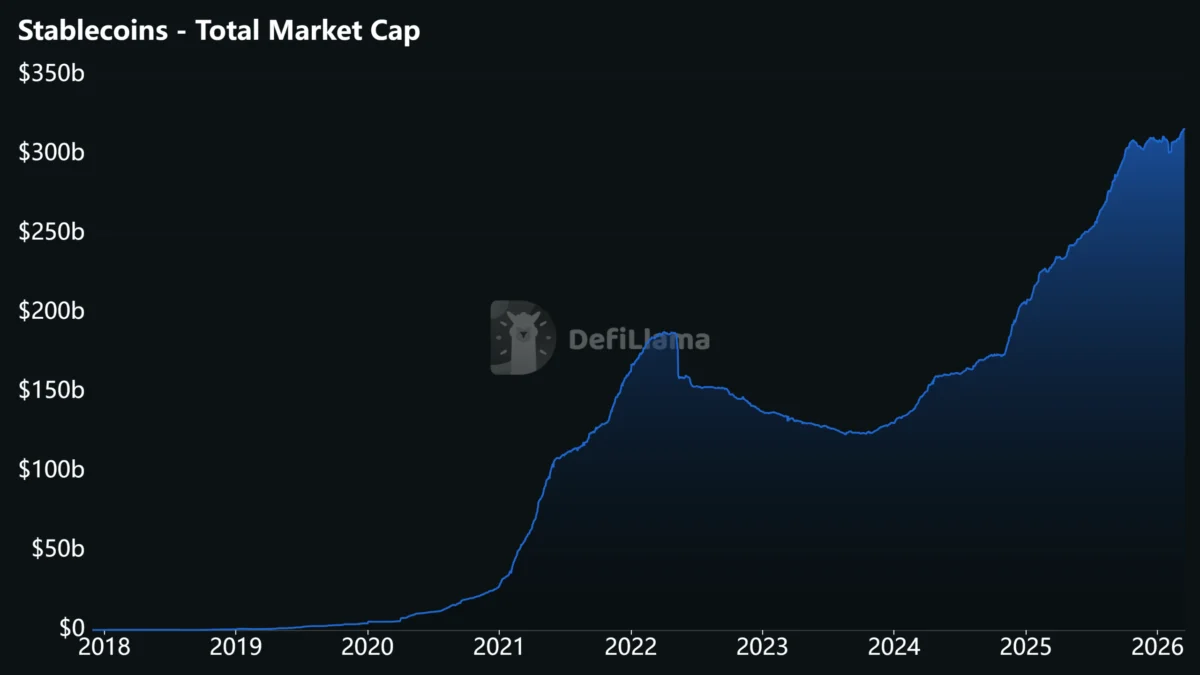
RedotPay, the Hong Kong-based stablecoin payments unicorn, has officially addressed reports regarding internal restructuring and leadership changes, characterizing the shifts as a "consolidation" of teams designed to enhance operational efficiency during a period of rapid scaling. The company’s response follows a detailed report from Bloomberg on March 18, 2026, which suggested that the firm is grappling with executive churn and sensitivities related to its connections with mainland China. These developments arrive at a critical juncture for RedotPay as it explores a potential public listing in the United States that could value the company at more than $4 billion.
The Bloomberg report, citing people familiar with the matter, claimed that at least five senior executives have departed the company within the past year. Most notably, these departures reportedly included two successive compliance chiefs, a role that is considered vital for any financial technology firm seeking to navigate the complex regulatory landscapes of both Hong Kong and the United States. Furthermore, the report described a demanding internal work culture characterized by extended hours and high-pressure expectations, which may have contributed to the turnover.
In a statement provided to the media, RedotPay did not directly refute the specific claims regarding individual departures but framed the changes as part of a natural organizational maturation. "As we transition from an early-stage startup to a unicorn, we are evolving our organizational structure and talent pool to support our ongoing growth trajectory," the company stated. RedotPay emphasized that its core leadership remains intact, noting that all co-founders—including Chief Executive Officer Michael Gao, the Chief Operating Officer, and the Chief Technology Officer—continue to lead their respective key functions.
The Challenge of Scaling a Fintech Unicorn
RedotPay’s rise has been nothing short of meteoric. Founded in 2023, the company quickly carved out a niche by offering a mobile application paired with a physical Visa card, allowing users to spend stablecoins such as USDT and USDC in everyday transactions. This bridge between traditional fiat-based commerce and the digital asset economy has proven highly lucrative, particularly in regions with high stablecoin adoption and a demand for efficient remittance services.
However, the transition from a nimble startup to a global financial entity with over 250 employees—the majority of whom are based in Hong Kong—presents significant "growing pains." In the fintech sector, leadership churn is often viewed through two different lenses: either as a sign of internal instability or as a deliberate effort to bring in "professionalized" management capable of taking a company public. RedotPay appears to be arguing the latter, suggesting that its team consolidation is a strategic move to sharpen its focus as it eyes a New York Stock Exchange or Nasdaq debut.
One of the more scrutinized aspects of the Bloomberg report was the mention of "sensitivities tied to mainland China." While Hong Kong operates under its own regulatory framework for digital assets, the proximity to and potential influence of mainland China remain a point of interest for Western investors and regulators. For a company seeking a U.S. IPO, demonstrating independence from mainland Chinese regulatory oversight and ensuring robust data privacy standards are often prerequisite conditions for approval by the U.S. Securities and Exchange Commission (SEC).
Financial Trajectory and Fundraising Milestones
Despite the reports of leadership turnover, RedotPay’s financial performance and ability to attract blue-chip venture capital remain strong. In 2025 alone, the company raised a total of $194 million across three distinct funding rounds, signaling high investor confidence in the stablecoin payments sector.
The company’s 2025 fundraising timeline illustrates its rapid ascent:
- March 2025: RedotPay closed a $40 million Series A round led by Lightspeed, a prominent venture capital firm known for early bets on successful tech companies.
- September 2025: A $47 million strategic round followed, which notably included participation from Coinbase Ventures. This round was instrumental in pushing RedotPay’s valuation into "unicorn" territory (above $1 billion).
- December 2025: The momentum culminated in a $107 million Series B round led by Goodwater Capital. Other high-profile participants included Pantera Capital, Blockchain Capital, and Circle Ventures—the issuer of the USDC stablecoin.
In response to rumors that it was seeking an additional $150 million in private funding, RedotPay clarified that there is currently "no urgency" for fundraising. The company cited strong operating cash flow and healthy liquidity as reasons for its fiscal independence. "We remain open to investors, but our current financial position allows us to be selective," the company noted. This stance is likely intended to project stability to the market and maintain leverage in any future IPO negotiations.

The Path to a U.S. Initial Public Offering
The prospect of a RedotPay IPO has been a topic of intense speculation since February 2026, when reports surfaced that the company was working with heavyweights JPMorgan Chase, Goldman Sachs, and Jefferies on a potential New York listing. The proposed IPO could seek to raise over $1 billion, potentially valuing the company between $4 billion and $5 billion.
A U.S. listing would be a landmark event for the Hong Kong crypto ecosystem, but it also invites rigorous scrutiny. The absence of a Chief Financial Officer (CFO) is one area that analysts have flagged. RedotPay confirmed it has not yet appointed a CFO, with one of the co-founders currently overseeing finance alongside investor relations and corporate development leadership. While common in startups, the lack of a dedicated CFO with public-market experience is generally seen as a hurdle for a company preparing for an IPO of this magnitude. RedotPay has acknowledged this, stating, "We may appoint a CFO at a later stage as the need arises."
For the lead underwriters—JPMorgan and Goldman Sachs—the challenge lies in vetting RedotPay’s compliance framework. The reported departure of two compliance chiefs within a year is a data point that regulators will likely examine. In the current regulatory climate, where the SEC and the Commodity Futures Trading Commission (CFTC) have taken an aggressive stance on crypto-linked firms, a "bulletproof" compliance record is essential for any firm seeking to enter the U.S. public markets.
Broader Impact on the Stablecoin and Payments Market
RedotPay’s evolution occurs against the backdrop of a massive expansion in the global stablecoin market. Recent data from DefiLlama indicates that the total stablecoin market capitalization has risen above $300 billion, driven by increased institutional adoption and the integration of stablecoins into mainstream payment rails.
Major financial institutions have revised their outlooks on the sector. Standard Chartered, for instance, recently maintained its forecast that the stablecoin market could reach $2 trillion by 2028. As stablecoins become a preferred medium for cross-border settlements and retail payments, companies like RedotPay that provide the "last mile" of connectivity—turning digital tokens into spendable currency via Visa cards—are positioned as critical infrastructure.
The implications of RedotPay’s success or failure are significant for the broader industry:
- Validation of the Hong Kong Hub: If RedotPay successfully navigates its internal restructuring and achieves a U.S. IPO, it will serve as a powerful validation of Hong Kong’s ambition to become a premier global crypto hub.
- Regulatory Benchmarking: The scrutiny RedotPay faces regarding its "China connections" will set a precedent for other Hong Kong and Asian-based fintech firms seeking Western capital. It highlights the ongoing geopolitical complexities of the "decoupling" or "de-risking" trends in global finance.
- The Shift to Yield-Bearing and Utility Stablecoins: Beyond simple payments, RedotPay’s expansion into yield and remittance services reflects a broader trend where stablecoins are not just "digital dollars" but programmable financial instruments that offer better returns than traditional savings accounts.
Conclusion and Outlook
RedotPay’s current situation is a classic study in the volatility of high-growth fintech companies. On one hand, the company boasts a multi-billion dollar valuation, the backing of the world’s most prestigious venture capital firms, and a product that addresses a genuine market need. On the other hand, it faces the internal stresses of rapid expansion, the loss of senior personnel, and the complexities of international geopolitics.
The company’s decision to consolidate its teams and lean on its founding leadership suggests a "circling of the wagons" strategy as it prepares for the rigors of a public listing. By emphasizing its strong cash flow and lack of urgency for new funding, RedotPay is attempting to distance itself from the narrative of a company in turmoil.
However, the road to a $1 billion IPO in New York is paved with regulatory hurdles. The coming months will be telling: should RedotPay appoint a high-profile CFO with U.S. public market experience and stabilize its compliance department, it would signal to investors that the "consolidation" phase was successful. If turnover continues at the senior level, the company may find its path to the public markets—and its $4 billion valuation—increasingly difficult to sustain. For now, RedotPay remains a central player in the stablecoin revolution, representing both the immense potential and the significant risks of the digital asset frontier.