Lina Irawan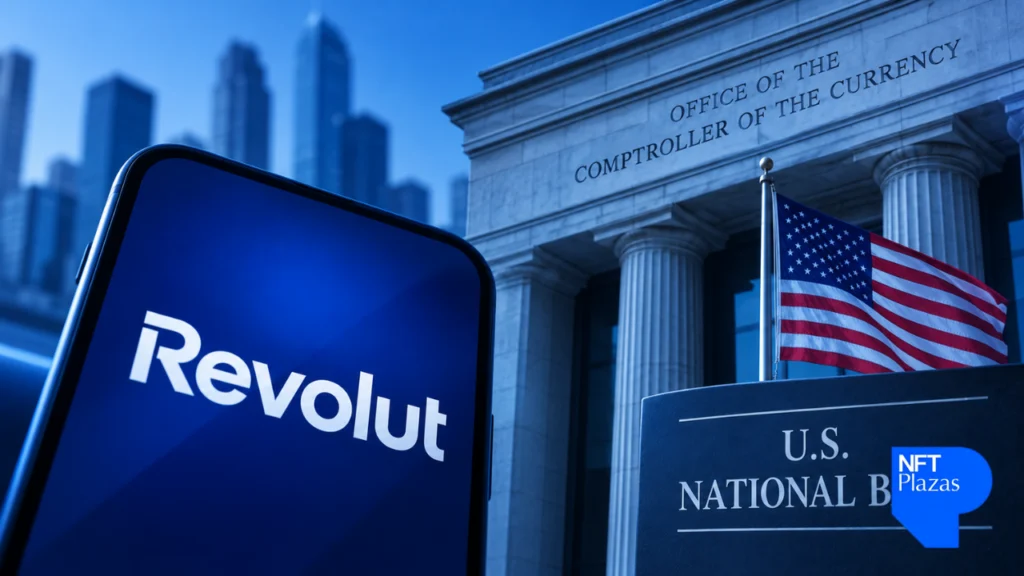
British fintech giant Revolut has taken a significant stride toward establishing a fully operational bank in the United States, having received conditional approval for a national bank charter from the U.S. Office of the Comptroller of the Currency (OCC). This milestone marks a pivotal moment in the company’s ambitious expansion strategy, signaling a transition from its current partnership-driven model to direct banking services for American consumers. The announcement, made on Thursday, positions Revolut to potentially launch its U.S. banking arm by the first half of 2027, a timeline that underscores the intricate regulatory pathways involved in such a transformative undertaking.
The path to becoming a fully licensed bank in the U.S. remains contingent on securing further approvals from key federal regulators, namely the Federal Deposit Insurance Corporation (FDIC) and the Federal Reserve. Despite these remaining hurdles, Revolut’s U.S. CEO, Cetin Duransoy, expressed confidence in the company’s ability to navigate the regulatory landscape and meet all prerequisites for a comprehensive launch. This strategic move involves a substantial capital commitment, with Revolut planning to inject approximately $95 million into its proposed U.S. banking entity, which is slated to be headquartered in Stamford, Connecticut.
The conditional OCC approval represents the foundational step in building "Revolut Bank US," as articulated by co-founder and CEO Nik Storonsky in a formal statement. Storonsky emphasized that this approval provides a crucial platform to build a robust presence within the world’s largest financial market, enabling Revolut to deliver its expansive suite of financial services directly to U.S. customers. This transition signifies a departure from Revolut’s established global model, which has largely relied on collaborations with existing banking institutions to offer its services.
From Fintech Innovator to Regulated Bank: A Strategic Evolution
Revolut, a company that has built its global reputation on a foundation of innovative, smartphone-centric financial services, began its journey by focusing on core offerings such as seamless currency exchange and efficient international money transfers. Over time, its product portfolio has broadened significantly, encompassing a wide array of banking and financial solutions. In the United States, prior to this development, Revolut’s operational strategy has primarily involved forging partnerships with established U.S. banks to facilitate its service offerings to customers.
However, the acquisition of a national bank charter would fundamentally alter this approach. It would empower Revolut to bring a greater proportion of its services in-house, operating them directly under its own regulated banking umbrella. This strategic shift is expected to enable the proposed U.S. bank to offer a comprehensive suite of traditional banking products, including checking accounts, installment loans, credit cards, and foreign exchange services. Furthermore, Duransoy indicated that Revolut is exploring the launch of a stablecoin, although specific details regarding this planned digital asset have not yet been disclosed.
The operational blueprint for the new U.S. bank includes an initial workforce of approximately 160 employees. Revolut also intends to leverage its established operations in Europe and Latin America to enhance its multicurrency services, a feature that has been instrumental in attracting its international customer base and remains a core differentiator. By gaining direct control over its U.S. banking products, Revolut aims to reduce its reliance on third-party financial partners. This move will also position the fintech company in more direct competition with incumbent American banks across a broad spectrum of financial services, including deposit-taking, lending, payments, and credit provision.
U.S. Market Ascendancy: A Strategic Imperative
The United States has progressively become a market of paramount importance for Revolut as it seeks to diversify its presence beyond its European origins. The company’s global ambitions are underscored by its current customer base, which exceeds 80 million worldwide, with a stated target of reaching 100 million customers across 100 countries. Revolut’s rapid growth trajectory has been reflected in its valuation, which reached approximately $115 billion following a secondary share sale in July.
The planned U.S. banking operation is a critical component of Revolut’s broader strategic transformation. The company is evolving from a purely digital financial services platform into a more comprehensive, regulated banking group with licenses in key international markets. This evolution is already evident in its European operations. In March, Revolut secured a full banking license in the United Kingdom, a significant achievement that permits it to offer lending services and engage in more direct competition with established retail banks, while also providing customers with enhanced banking protections.
More recently, in France, Revolut obtained a full banking license, establishing its French bank as a key operational hub within the European Union, complementing its existing subsidiary in Lithuania. These expansions highlight Revolut’s commitment to building an integrated international banking network while steadfastly maintaining its core focus on delivering digital-first financial services.
Navigating the Regulatory Labyrinth: Conditions and Scrutiny
The OCC’s conditional approval arrives at a time when Revolut continues to face heightened regulatory scrutiny, a common challenge for rapidly expanding fintech firms. In recent years, the company has encountered criticism regarding its ability to consistently meet stringent requirements related to fraud prevention and anti-money-laundering (AML) controls. These areas are particularly critical as Revolut transitions into the highly regulated banking sector, where obligations concerning customer funds, lending practices, and compliance are significantly more demanding.
The conditional nature of the OCC approval signifies that Revolut must satisfy a set of additional requirements before the national bank charter can be fully activated. The successful navigation of these prerequisites, alongside obtaining the necessary endorsements from the FDIC and the Federal Reserve, will be crucial. These remaining regulatory approvals will be closely monitored as Revolut proceeds with establishing its U.S. banking infrastructure, committing the required capital, and building its local operational team.
Despite the ongoing regulatory process, the OCC’s decision represents a profound shift in Revolut’s strategic orientation within the U.S. market. Rather than continuing to rely primarily on intermediary banking partners, the company is now actively laying the groundwork for its own independent U.S. banking entity. This development coincides with Revolut’s preparation for its next phase of corporate growth. CEO Nik Storonsky indicated in April that an initial public offering (IPO) is likely at least two years away, suggesting a strategic prioritization of business expansion and the completion of its international banking rollout before considering public market entry.
Should Revolut successfully secure the remaining regulatory approvals and proceed with its planned launch in 2027, its U.S. bank is poised to become a central pillar of the company’s global strategy. With an existing user base of over 80 million customers worldwide, Revolut is making a calculated bet that its proven digital-first model and its proficiency in cross-border financial services can translate into a substantial and competitive presence within the mature and highly competitive U.S. banking landscape. The successful integration of its banking operations in the U.S. will be a testament to its ability to balance innovation with robust regulatory compliance, a critical factor for long-term success in the global financial services industry. The infusion of capital and the establishment of a dedicated U.S. workforce will be key indicators of its commitment and operational readiness. The move also signifies a broader trend among fintech companies to seek full banking licenses, moving beyond app-based services to become fully regulated financial institutions. This transition, while complex, offers greater control, expanded product offerings, and potentially higher profitability.