James Watt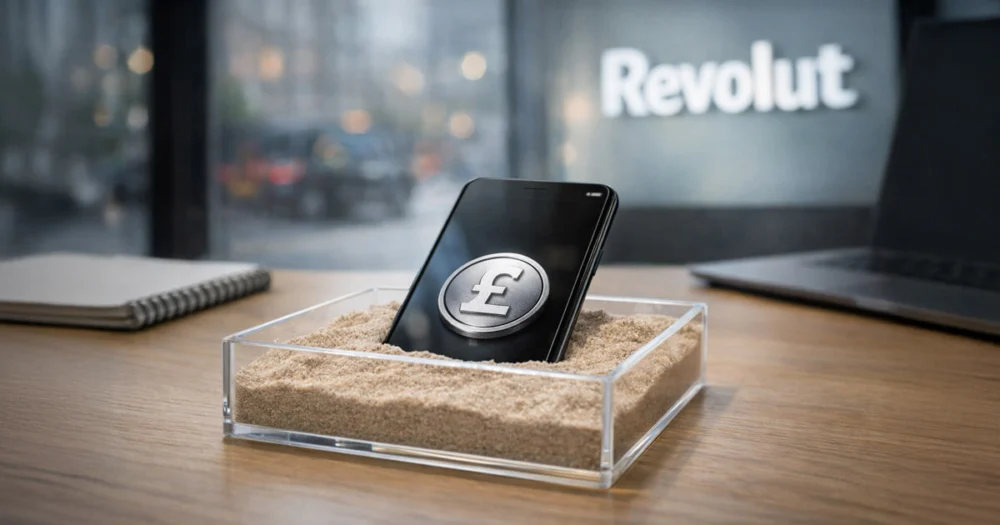
The initiative is not merely a technical experiment; it is a test of how digital assets can coexist with traditional banking habits under the watchful eye of national regulators. Unlike previous crypto-native projects that struggled to find a foothold in the "real economy," Revolut possesses the built-in distribution network necessary to normalize the use of tokenized sterling. As the FCA oversees the trial, the focus remains squarely on how these instruments are branded, protected, and integrated into the broader UK payments infrastructure.
The Regulatory Sandbox: A Controlled Environment for Innovation
The FCA’s decision to select Revolut as one of four firms for its stablecoin sandbox cohort marks a strategic shift in the UK’s approach to financial technology. The regulatory sandbox is designed as a "safe space" where businesses can test innovative products and services in a live market environment without immediately being subject to the full suite of traditional regulatory burdens, provided they operate under strict supervision and safeguards.
According to the FCA, the primary objective of this specific cohort is to observe real-world behavior to inform future policy. By allowing Revolut to issue and manage a pound-backed stablecoin, the regulator can gather data on transaction speeds, consumer understanding of risk, and the stability of the underlying reserves. This "supervised experimentation" is a cornerstone of the UK’s ambition to become a global hub for digital asset technology, ensuring that when a full regulatory regime is implemented—expected by late 2027—it is grounded in empirical evidence rather than theoretical assumptions.
The other participants in the trial are expected to focus on varied use cases, but Revolut’s role is uniquely significant due to its retail reach. While other firms might focus on wholesale settlement or institutional liquidity, Revolut provides the laboratory for mass-market retail adoption.
Mechanics of the Digital Pound: How the Trial Functions
To understand the impact of Revolut’s trial, it is necessary to examine the technical and operational mechanics of the proposed stablecoin. A stablecoin is a digital token whose value is pegged to a reference asset, in this case, the British pound sterling. For the user, the experience is intended to be seamless: £1 in the app should always equal £1 in the stablecoin balance.
However, behind the user interface, the structure involves complex layers of custody and settlement. The FCA’s sandbox documentation indicates that Revolut’s concept allows customers to buy, hold, sell, and transfer the stablecoin both within the Revolut platform and across the wider crypto ecosystem. This dual functionality is critical. Within the Revolut app, transfers can be handled on a private, internal ledger, allowing for instantaneous updates without the latency or costs associated with public blockchains. Conversely, the ability to move the tokens "across the crypto ecosystem" implies that the stablecoin will also exist on public rails, potentially allowing it to interact with decentralized finance (DeFi) protocols or external digital wallets.
For spending, the trial explores two primary avenues:
- Indirect Settlement: The app converts the stablecoin into traditional fiat currency at the point of sale, allowing the user to pay via their Revolut card at any merchant that accepts Mastercard or Visa.
- Direct Settlement: The trial investigates the possibility of merchants accepting the stablecoin directly. This would bypass traditional card networks entirely, potentially reducing transaction fees for merchants and enabling "programmable payments"—automated transactions triggered by specific conditions written into smart contracts.
Consumer Protection and the "Money-Like" Definition
One of the most significant challenges facing the FCA and the Bank of England (BoE) is the potential for consumer confusion. In a mobile banking app, a stablecoin balance of £500 looks identical to a traditional deposit balance of £500. However, the legal protections governing these two balances are fundamentally different.
In the UK, traditional bank deposits are protected by the Financial Services Compensation Scheme (FSCS), which guarantees up to £85,000 per person if a bank fails. Stablecoins, currently classified as "e-money" or "digital assets" depending on their structure, do not typically carry FSCS protection. Instead, they rely on "safeguarding" rules, where the issuer must hold the backing assets in separate accounts.

Andrew Bailey, Governor of the Bank of England, has expressed a clear preference for "tokenized deposits" over stablecoins for retail use. Tokenized deposits represent a claim on a commercial bank and sit within the established banking perimeter. Stablecoins, by contrast, are often issued by non-bank entities. To mitigate the risk of "run" scenarios or consumer loss, the BoE has advised that stablecoins must have distinct branding. The goal is to ensure that a user knows exactly which entity stands behind their digital balance and what happens in the event of an operational failure.
The Global Context: Addressing the Dollar Dominance
The UK’s push for a regulated pound stablecoin comes at a time when the global stablecoin market is overwhelmingly dominated by the US dollar. Data indicates that non-dollar stablecoins—including those pegged to the Euro, Pound, and Swiss Franc—account for less than 0.2% of the total global stablecoin trading volume.
Currently, the stablecoin economy is a "dollar-first" ecosystem, utilized primarily for trading on offshore exchanges or as a hedge against volatility in emerging markets. In Europe and the UK, stablecoins have remained a niche product for crypto enthusiasts rather than a tool for the general public.
Revolut’s trial is an attempt to change this trajectory. By providing a "credible container" for a pound-backed asset, the UK aims to create a domestic alternative to dollar-denominated tokens. If successful, this could pave the way for a more robust digital sterling economy, reducing the UK’s reliance on US-linked digital infrastructure for blockchain-based transactions.
A Timeline of UK Digital Asset Regulation
The Revolut trial is a key milestone in a multi-year roadmap established by the UK government and financial regulators. The chronology of this development reflects a cautious but deliberate approach to modernization:
- 2022-2023: The UK government announces its intention to make the UK a "global cryptoasset technology hub," leading to the Financial Services and Markets Act 2023, which brought stablecoins used for payments into the regulatory perimeter.
- 2024: The FCA and Bank of England release discussion papers on the regulation of stablecoins, emphasizing the need for full backing by high-quality liquid assets (such as central bank deposits or short-term government bonds).
- Q1 2026: Revolut and three other firms begin live testing within the FCA stablecoin sandbox.
- Late 2026: HM Treasury is expected to conclude consultations on the "systemic" stablecoin regime, which will govern issuers that reach a scale large enough to impact the stability of the UK financial system.
- 2027: The final regulatory framework for stablecoins and wider crypto-assets is slated to go live, providing a permanent licensing regime for issuers and payment service providers.
The European Landscape and Institutional Competition
While Revolut leads the fintech charge, traditional European financial institutions are not standing still. A consortium of major European banks, including UniCredit, recently formed "Qivalis," a venture dedicated to issuing a Euro-denominated stablecoin that complies with the EU’s Markets in Crypto-Assets (MiCA) regulation.
This highlights a growing divide in the market:
- The Fintech Path: Companies like Revolut focus on user distribution, retail wallets, and the "front-end" experience of spending and sending money.
- The Institutional Path: Banks like those in the Qivalis consortium focus on the "back-end" infrastructure, ensuring that digital tokens are anchored to regulated institutional money and can be used for high-value wholesale settlement.
The UK’s sandbox trial is essentially a bridge between these two paths. It allows a fintech with massive retail distribution to operate within a framework that mirrors institutional safety standards.
Analysis of Implications: What Constitutes Success?
For the Revolut trial to be considered a success, it must move beyond technical functionality and demonstrate behavioral change. Industry analysts point to three key metrics:
- Velocity of Peer-to-Peer Transfers: If users begin utilizing the pound stablecoin to send money to friends and family as a default option—due to speed or lower costs—it proves the asset has moved from a "trading feature" to a "payment rail."
- Merchant Integration: The ultimate test of a stablecoin is its utility at the point of sale. If Revolut can demonstrate that stablecoins reduce the "settlement gap" (the time it takes for a merchant to actually receive funds) from days to seconds, it provides a compelling economic reason for merchant adoption.
- Regulatory Feedback Loop: The trial’s success will also be measured by the quality of data it provides the FCA. If the sandbox identifies specific points of friction—such as difficulty in redeeming tokens for fiat or consumer misunderstanding of the backing assets—it allows regulators to fix these issues before a nationwide rollout.
Revolut’s digital pound trial is a calculated bet on the future of the UK’s financial architecture. By moving the focus away from the volatility of unbacked cryptocurrencies and toward the stability of a regulated, pound-pegged instrument, the trial seeks to prove that blockchain technology can serve the public interest. While the volume of non-dollar stablecoins remains statistically insignificant today, the combination of Revolut’s massive distribution and the FCA’s supervised environment provides the most credible path yet for digital assets to become a standard component of the British consumer’s wallet. As the trial progresses through 2026, the results will likely dictate the pace and direction of the UK’s transition to a truly digital economy.