Lina Irawan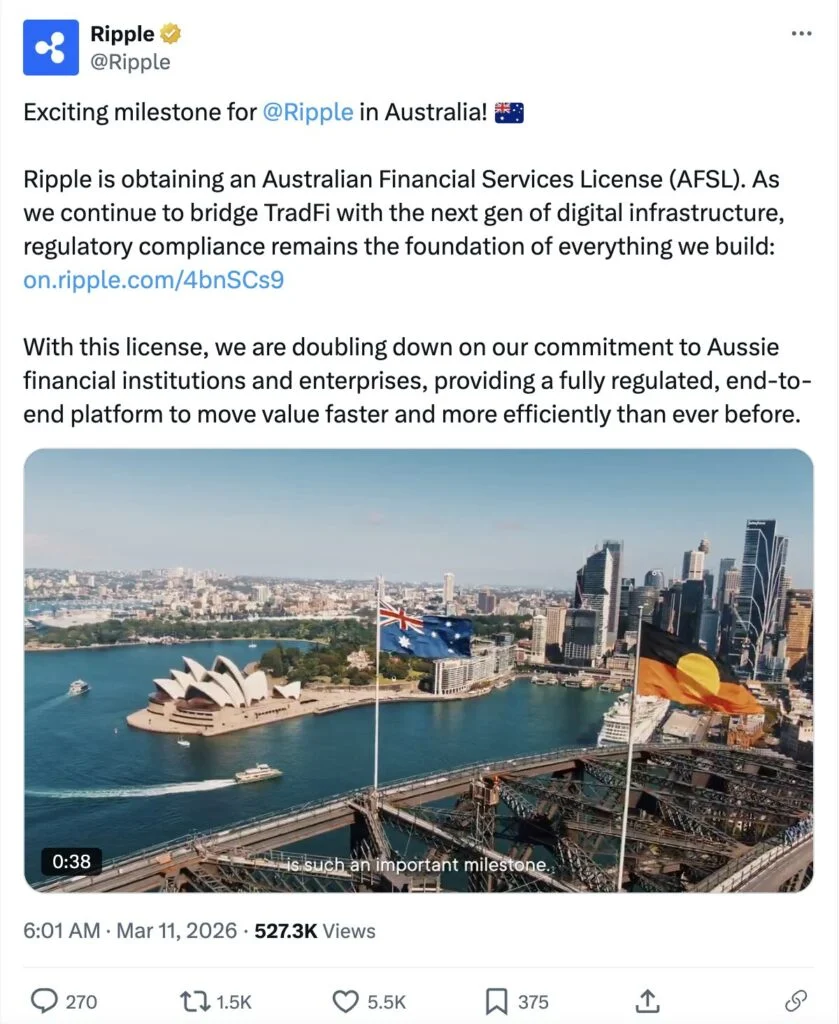
Ripple, a prominent player in the blockchain-based payments sector, is significantly advancing its global regulatory strategy with the impending acquisition of BC Payments Australia Pty Ltd. This strategic move is poised to grant Ripple an Australian Financial Services License (AFSL), a crucial authorization that will enable the company to formally establish and expand its operational presence within Australia, a pivotal financial hub in the Asia-Pacific region. The acquisition signifies a major stride for Ripple as it continues to forge a path towards a globally regulated payments infrastructure powered by distributed ledger technology, underscoring its commitment to bridging the gap between digital assets and traditional financial systems to revolutionize cross-border transactions. In an increasingly regulated global landscape for cryptocurrencies, Ripple’s unwavering focus on obtaining licenses and ensuring robust compliance is emerging as a distinct competitive advantage in the rapidly evolving digital finance arena.
Ripple’s Strategic Acquisition of BC Payments Australia: A Deep Dive
The acquisition plan, officially announced on March 11, targets BC Payments Australia Pty Ltd, an entity associated with the European Banking Circle Group. The transaction is slated for completion on April 1, contingent upon the successful conclusion of final regulatory approvals and the fulfillment of standard closing conditions. Through this acquisition, Ripple will gain direct access to BC Payments Australia’s AFSL. This license is a prerequisite for any entity wishing to legally offer financial services within Australia, encompassing a broad spectrum of activities from investment advice to the execution of financial transactions.
The attainment of the AFSL will empower Ripple to integrate more deeply into Australia’s financial ecosystem. This enhanced regulatory standing will, in turn, facilitate the expansion of its flagship Ripple Payments platform’s capabilities within the country and the broader region. Fiona Murray, Managing Director for Ripple in the Asia-Pacific, articulated the strategic importance of this move, stating, "Australia is a key market for Ripple, and securing an AFSL strengthens our ability to scale Ripple Payments across the region." The AFSL will empower Ripple to manage the complete lifecycle of a financial transaction. This comprehensive oversight includes customer onboarding, rigorous compliance checks, efficient facilitation of funding and foreign exchange operations, adept liquidity management, and the execution of final payouts. Ripple’s payment infrastructure is engineered to synchronize traditional banking rails with the transformative potential of blockchain technology and digital assets, thereby enabling cross-border transactions that are faster, more cost-effective, and demonstrably more transparent. For financial institutions, fintech enterprises, and corporations alike, this integrated system promises to significantly diminish the costs and timeframes associated with international money transfers.

A Pattern of Global Licensing: Ripple’s Expanding Regulatory Strategy
The acquisition of BC Payments Australia is not an isolated event but rather a testament to Ripple’s overarching strategy of proactively securing regulatory approvals across diverse international jurisdictions. The company has amassed an impressive portfolio, currently holding over 75 licenses and regulatory registrations worldwide. These approvals span major financial markets in North America, Europe, the Middle East, and Asia, demonstrating a deliberate and consistent effort to build a compliant global operational framework.
Over the past year, Ripple has achieved notable successes in obtaining payment licenses in several critical financial centers, including Singapore, the United Arab Emirates, and the United Kingdom. These approvals are instrumental in allowing Ripple to offer regulated financial services, thereby fostering greater trust and confidence among its institutional partners. Further bolstering its regulatory standing, Ripple recently received conditional approval for a national trust banking charter in the United States. This potential development could position the company as a fully regulated financial institution within its home market. Monica Long, President of Ripple, has consistently emphasized the pivotal role of regulatory compliance in scaling the company’s global payment infrastructure, famously stating, "Licensing wins keep stacking. Compliance is how we scale." By prioritizing adherence to regulatory frameworks, Ripple aims to construct a global payments network that facilitates seamless cross-border money movement for financial institutions and enterprises while ensuring full alignment with local legal and regulatory requirements.
Australia’s Ascendance as a Crucial Digital Asset Market

Ripple’s strategic expansion into Australia coincides with the nation’s concerted efforts to establish a more defined and robust regulatory framework for its burgeoning digital asset industry. In recent years, Australia has emerged as a significant market for cryptocurrency adoption, witnessing a palpable increase in interest from both retail investors and institutional players. In response to the growth of this dynamic sector, Australian lawmakers introduced a comprehensive Digital Asset Framework bill in the previous year. This legislative initiative aims to institute a clear and structured regulatory environment for cryptocurrency companies operating within the country. The bill successfully navigated the lower house of parliament earlier in 2026 and is currently undergoing scrutiny in the Senate.
Concurrently, the Australian Securities and Investments Commission (ASIC) has put forth new regulatory guidelines that are expected to mandate crypto platforms offering financial services to obtain an Australian Financial Services License. ASIC has indicated a grace period, stating that licensing requirements will not be enforced for crypto companies until June 30, 2026, providing businesses with ample time to adapt and comply with the forthcoming regulations. Ripple’s proactive decision to secure an AFSL ahead of these potential enforcement measures highlights its commitment to regulatory foresight and compliance. Other major cryptocurrency entities are also actively exploring similar licensing avenues. For instance, the prominent cryptocurrency exchange Coinbase is reportedly pursuing an AFSL as part of its strategic expansion plans within Australia, indicating a broader industry trend towards regulatory engagement.
Strengthening Ripple’s Integrated Payments Ecosystem
Ripple’s global expansion strategy extends beyond the realm of regulatory licensing; it actively encompasses strategic acquisitions designed to fortify its financial infrastructure and enhance its institutional services. A significant recent development was Ripple’s acquisition of Hidden Road, a non-bank prime brokerage firm specializing in clearing, financing, and brokerage services for institutional clients. This platform has since been rebranded as Ripple Prime. This acquisition marked a pivotal moment, positioning Ripple as the inaugural crypto-native company to operate a multi-asset prime brokerage. Ripple Prime offers a comprehensive suite of services across a wide array of financial products, including digital assets, derivatives, foreign exchange, swaps, and fixed-income instruments. This acquisition substantially broadens Ripple’s capacity to cater to a diverse range of institutional clients, such as hedge funds, asset managers, and other financial institutions. Furthermore, Ripple has strategically acquired GTreasury, a corporate treasury management platform that assists businesses in optimizing liquidity, payments, and financial risk management. Cumulatively, these acquisitions underscore Ripple’s ambition to evolve into a holistic financial infrastructure provider, moving beyond its identity as solely a blockchain technology company.

Expanding the Utility of XRP and RLUSD
Ripple’s ongoing regulatory expansion efforts are intrinsically linked to fostering the growth of its digital asset ecosystem. At the core of this ecosystem lies XRP, the native cryptocurrency designed to facilitate liquidity in cross-border payments. XRP enables near-instantaneous settlement between disparate currencies, thereby reducing the reliance on pre-funded accounts for international transfers. The XRP Ledger (XRPL), the robust blockchain network that underpins XRP transactions, is engineered for rapid and cost-efficient payment processing. Complementing its existing offerings, Ripple has also introduced its proprietary stablecoin, RLUSD. This stablecoin is specifically designed to support enterprise payments and financial settlements utilizing digital dollars. By synergistically integrating XRP, the XRPL, and RLUSD with regulated financial services, Ripple aims to construct a payment infrastructure capable of managing both traditional fiat transactions and digital asset transfers with equal efficacy. With the AFSL in hand, Ripple is well-positioned to accelerate the adoption of these technologies within Australia, offering compliant digital asset payment services to banks, fintech firms, and enterprises. This strategic integration has the potential to expedite the broader adoption of blockchain-based financial infrastructure across the Asia-Pacific region.
XRP Price Dynamics Reflecting Regulatory Progress
The implications of Ripple’s expansion into the Australian market have not gone unnoticed by cryptocurrency traders and investors. In the wake of the acquisition announcement, XRP experienced a discernible upward momentum in the market. The token was trading in the vicinity of $1.39, with its 24-hour price range oscillating between $1.38 and $1.44. Trading activity saw a significant surge, with overall volume increasing by approximately 37% over the preceding 24 hours. This notable spike in trading volume suggests a growing level of investor interest and confidence following Ripple’s latest regulatory development.

Data from the derivatives market further indicates increased trader participation. According to information from CoinGlass, XRP futures open interest climbed to approximately $2.40 billion. A rise in open interest is typically interpreted as a signal of escalating market engagement, as traders initiate new positions in anticipation of potential price movements. While the immediate impact on XRP’s price may appear relatively modest, the broader trajectory of regulatory progress and increasing institutional adoption are widely regarded as significant long-term catalysts for the sustained growth of cryptocurrencies.
Outlook: A Future of Regulated Digital Finance
Ripple’s planned acquisition of BC Payments Australia represents a pivotal step in its long-term strategy to establish a globally regulated blockchain payments network. By securing an Australian Financial Services License, Ripple is laying the crucial regulatory groundwork necessary to expand its payment services within one of the Asia-Pacific region’s most vital financial markets. This strategic move mirrors a broader industry trend where companies are increasingly prioritizing regulatory compliance and alignment as they pursue international expansion. As Ripple continues to secure licenses, forge strategic partnerships, and enhance its financial infrastructure, it is poised to play a substantial role in shaping the future of cross-border payments powered by blockchain technology. For the XRP ecosystem, these developments hold the promise of further strengthening adoption and reinforcing Ripple’s position as a key innovator in the evolving global digital finance landscape.