Lina Irawan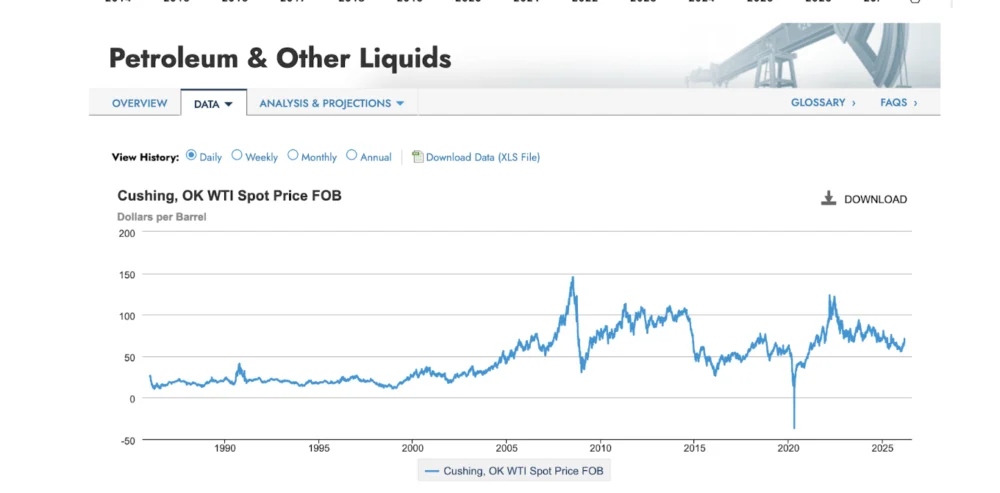
The intricate relationship between global energy markets and the burgeoning digital asset class, particularly Bitcoin (BTC), is becoming increasingly evident. While seemingly disparate, the fluctuations in crude oil prices are exerting a significant influence on capital flows into risk-on assets. Emerging analyses suggest that a period of stabilization in the oil market could catalyze a substantial upward trajectory for Bitcoin, marking a pivotal moment for the cryptocurrency’s integration into the broader macroeconomic landscape. This interconnectedness highlights how foundational economic indicators, like energy prices, can indirectly shape the future of digital assets.
The Intertwined Dynamics of Oil, Inflation, and Digital Assets
The global economy functions on a foundation of energy, with oil serving as a primary driver for transportation, manufacturing, and the cost of goods and services. Consequently, shifts in oil prices have a direct and profound impact on inflation rates. When oil prices escalate, they trigger a cascade of increased costs across various sectors, contributing to broader inflationary pressures. This inflationary environment often prompts central banks to adopt tighter monetary policies, which can reduce liquidity in financial markets and make investors more risk-averse.
Conversely, a cooling or stabilization of oil prices can alleviate inflationary concerns. Historically, a predictable Consumer Price Index (CPI) has been a precursor to monetary easing by central banks. This easing injects liquidity back into the financial system, making capital more accessible and encouraging investment in assets with higher potential yields. Assets like Bitcoin, often categorized as "risk-on," tend to benefit significantly from these periods of increased liquidity and investor confidence. The current volatility in the oil market, therefore, acts as a crucial "gatekeeper," influencing the appetite for such investments.

Historical Precedents: Oil Stabilization and Crypto Inflows
Examining past economic cycles reveals a discernible correlation between oil price stability and significant capital inflows into the cryptocurrency market. During the period between 2023 and 2024, following the price shocks of 2022, the West Texas Intermediate (WTI) crude oil price gradually found a more stable footing, generally oscillating within the $70 to $80 per barrel range. This period of relative calm in the energy sector coincided with a substantial resurgence of capital into the crypto market, most notably observed through the approval and subsequent inflows into Spot Bitcoin Exchange-Traded Funds (ETFs) in the United States.
The approval of these ETFs in early 2024 marked a significant milestone, offering traditional investors a regulated and accessible avenue to gain exposure to Bitcoin. The timing of this regulatory development, coupled with the stabilizing oil prices, created a fertile ground for renewed investment. Data from various financial institutions indicated a noticeable uptick in institutional capital deployment into digital assets as inflation concerns began to recede and the prospect of interest rate adjustments became more tangible. This historical pattern strongly suggests that a predictable energy market can unlock significant investment potential for Bitcoin.
Macroeconomic Indicators and Liquidity Expectations
The prevailing macroeconomic sentiment is heavily influenced by the trajectory of energy prices. When oil prices exhibit extreme volatility, whether due to geopolitical tensions, supply disruptions, or shifts in demand, it creates uncertainty. This uncertainty often leads investors to adopt a more cautious stance, diverting capital away from speculative or high-risk assets and towards safer havens like government bonds or cash. The elevated cost of energy also directly impacts consumer spending and business operational costs, potentially dampening overall economic activity.
However, the narrative shifts dramatically when the oil market enters a phase of equilibrium. Stabilization in oil prices has a dual effect: it reduces the immediate pressure of inflation and signals a more predictable economic environment. This predictability is crucial for institutional investors who manage large sums of capital and require a degree of certainty before committing to new asset classes or significantly increasing their exposure to existing ones.

According to recent macroeconomic reports from leading financial analysis firms, a sustained period of oil prices within a defined range (e.g., $70-$85 per barrel for WTI) has historically been associated with a decline in headline inflation figures. As inflation moderates, central banks, such as the U.S. Federal Reserve and the European Central Bank, may begin to consider or implement monetary easing policies. These policies typically involve reducing interest rates and increasing the money supply, which directly boosts market liquidity.
Increased liquidity in the financial system has a ripple effect. With lower borrowing costs and a greater availability of capital, investors are more inclined to seek out higher returns. This often leads to a reallocation of funds from lower-yielding assets to those with greater growth potential. Bitcoin, with its limited supply and potential for significant price appreciation, becomes an attractive option for investors looking to capitalize on these liquidity-driven market conditions. The current economic landscape, characterized by ongoing geopolitical considerations impacting oil supply and demand, makes the path to oil market stabilization a critical factor to monitor for future Bitcoin performance.
Beyond the Hype: An Objective Investment Perspective
While the correlation between oil market stabilization and Bitcoin rallies is compelling, an objective journalistic and investment perspective necessitates a thorough consideration of concurrent risks and potential counterarguments. The current global geopolitical climate, particularly the ongoing conflicts and tensions in key oil-producing regions, introduces a significant layer of unpredictability. Any escalation or unexpected development in these areas could rapidly disrupt oil supply chains, leading to renewed price surges and a reversal of the current stabilization trend.
Furthermore, the regulatory landscape for cryptocurrencies remains a dynamic and evolving factor. While the approval of Spot Bitcoin ETFs in the U.S. was a positive development, regulatory actions or pronouncements in other major economies could introduce new challenges or uncertainties for institutional adoption. The specter of stricter regulations or outright bans in certain jurisdictions can dampen investor sentiment and hinder capital inflows, regardless of the macroeconomic environment.

Another critical consideration is the inherent volatility of Bitcoin itself. As a relatively nascent asset class, Bitcoin is susceptible to sharp price swings driven by market sentiment, technological developments, and even social media trends. While macroeconomic factors can create favorable conditions for growth, they do not eliminate the idiosyncratic risks associated with investing in Bitcoin. Investors must be prepared for potential drawdowns and understand that past performance is not indicative of future results.
From an analytical standpoint, the oil market can be viewed as a barometer for global economic health and inflationary expectations. Its current state of flux directly impacts investor confidence and the cost of capital. The stabilization of oil prices would not only signal a decrease in inflationary pressures but also a reduction in the immediate geopolitical risks associated with energy security. This reduction in perceived risk is a vital prerequisite for large-scale capital deployment into assets like Bitcoin.
The narrative surrounding Bitcoin’s potential surge is predicated on the assumption that once the oil market finds its footing, the resulting economic stability will unlock pent-up demand for growth assets. This is a logical progression, as investors typically seek to redeploy capital into higher-return opportunities when inflation is contained and monetary policy becomes more accommodative. Bitcoin, with its finite supply and increasing institutional acceptance, is well-positioned to be a primary beneficiary of such a shift.
The Mechanics of Capital Flow and Institutional Adoption
The relationship between oil prices and Bitcoin’s performance is not a direct one-to-one correlation but rather a series of interconnected economic mechanisms. When oil prices are high and volatile, they contribute to inflation, which often prompts central banks to raise interest rates. Higher interest rates increase the cost of borrowing for individuals and businesses and make fixed-income investments more attractive, thus drawing capital away from riskier assets like stocks and cryptocurrencies. This environment can lead to a deleveraging process in markets that have experienced rapid growth, including the digital asset space.

Conversely, a stable oil market contributes to lower inflation and can pave the way for central banks to lower interest rates or maintain a loose monetary policy. Lower interest rates reduce the opportunity cost of holding non-yielding assets like Bitcoin and make it cheaper for investors to access capital for investment. This increased liquidity, coupled with reduced inflation expectations, encourages a shift towards growth-oriented investments.
The increasing integration of Bitcoin into the traditional financial system, evidenced by the launch of Spot Bitcoin ETFs, plays a crucial role. These ETFs provide a regulated on-ramp for institutional investors who may have previously been hesitant to invest directly in cryptocurrencies due to custodial and regulatory concerns. As oil prices stabilize and macroeconomic conditions become more favorable, these institutional players are more likely to allocate significant portions of their portfolios to Bitcoin, driving up demand and potentially leading to substantial price appreciation.
Looking Ahead: A Coiled Spring for Global Liquidity
The current state of the oil market can be likened to a coiled spring, holding back a significant amount of global liquidity. While prevailing energy price fluctuations have compelled major investors to adopt a defensive posture, this situation is not immutable. The eventual stabilization of the oil market will serve as a critical signal, indicating a safer and more predictable environment for institutional capital to re-enter riskier assets.
Given Bitcoin’s increasing entrenchment within the traditional financial system, bolstered by regulatory milestones and growing investor understanding, it possesses a robust foundation to anticipate a spectacular breakout. The trajectory of oil prices, therefore, transcends its role as a mere commodity; it is now a significant determinant of the macroeconomic conditions that will ultimately dictate the flow of capital into digital gold. Investors and market observers will be closely monitoring energy market developments for insights into the future performance of Bitcoin and the broader cryptocurrency ecosystem. The coming months, therefore, present a crucial juncture where the resolution of energy market uncertainties could unlock unprecedented growth opportunities in the digital asset realm.