
 James Watt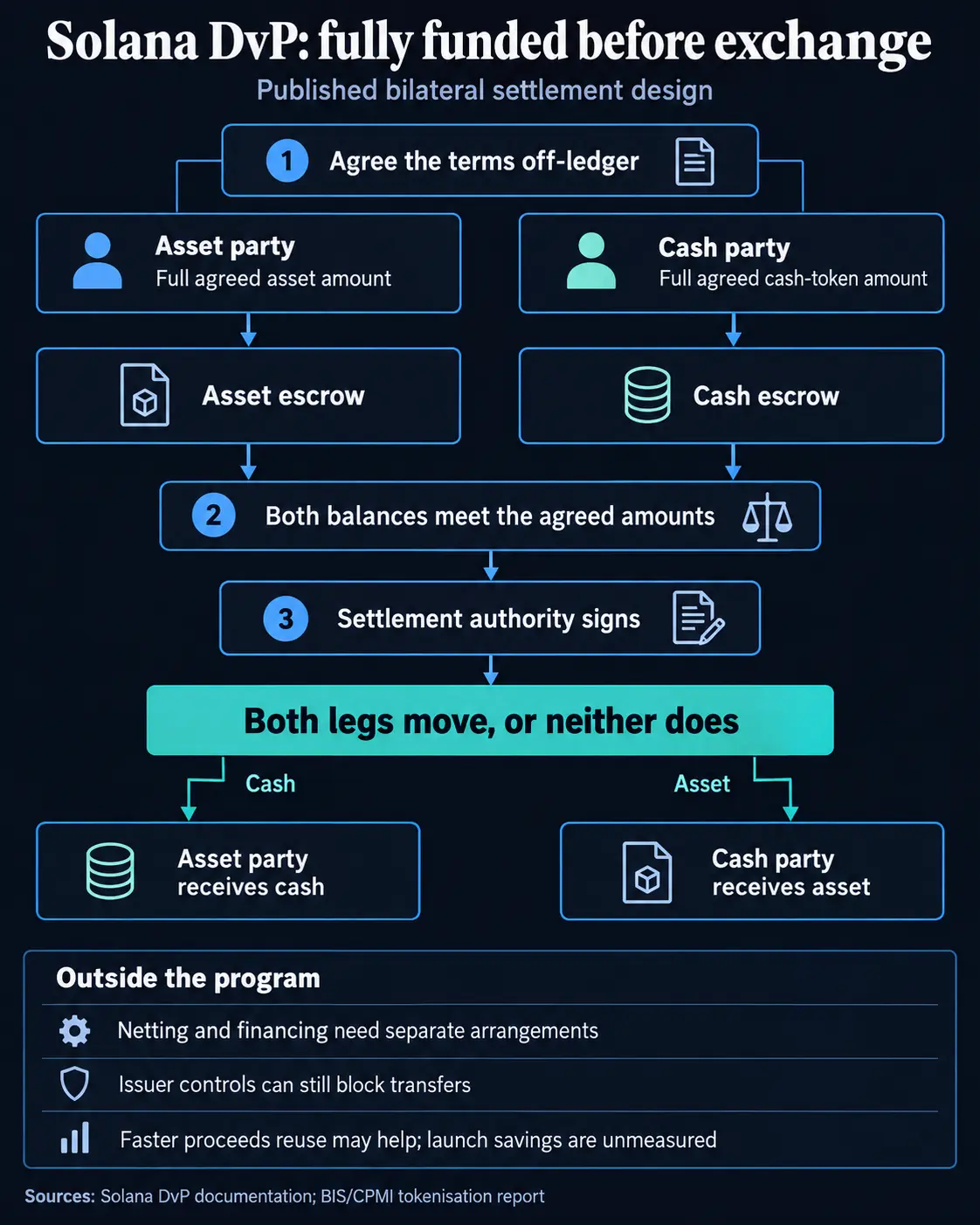
The Solana Foundation has officially introduced Solana DvP, an open-source technical standard designed to facilitate delivery-versus-payment (DvP) settlement for financial institutions. This new protocol establishes a framework for the atomic exchange of assets, ensuring that the transfer of a digital asset occurs if and only if the corresponding payment is successfully executed. While the program represents a significant step toward bringing traditional financial workflows onto the blockchain, its current design mandates that the full cash and asset legs of a trade be available in escrow before execution can proceed. This "gross settlement" approach eliminates principal delivery risk but places the burden of liquidity and financing entirely on the participating institutions.
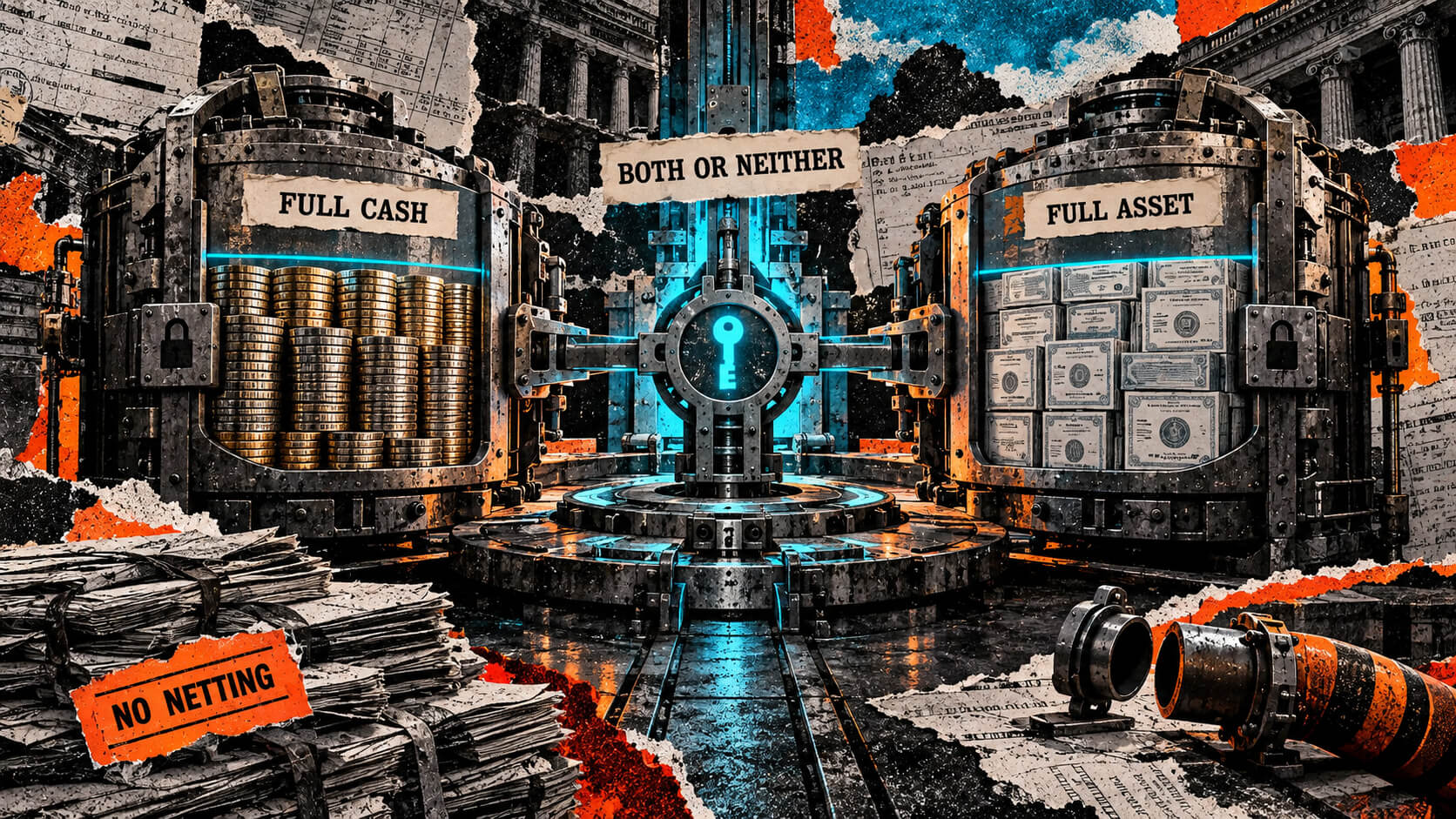
The announcement, made on October 6, 2024, positions Solana as a serious contender in the race to provide the underlying infrastructure for the burgeoning tokenized asset market. By providing a standardized program for bilateral settlement, the Solana Foundation aims to reduce the complexities of cross-institutional trades. However, the published design explicitly excludes netting—the practice of offsetting multiple obligations to settle only the remaining balance—meaning that users must source the total gross amount for every individual trade submitted to the program.
The Mechanics of Atomic Settlement on Solana
At the core of Solana DvP is the concept of an atomic transaction. In blockchain terms, atomicity ensures that a series of operations are treated as a single unit; either all operations succeed, or the entire transaction fails, leaving the state of the ledger unchanged. In the context of institutional settlement, this prevents the "free-ride" risk where a buyer might receive an asset without the payment being finalized, or a seller might lose their asset without receiving the funds.
According to the published program limits and documentation, the Solana DvP process follows a strict sequence:
- Trade Creation: Two parties agree on the terms of an exchange, defining the specific tokens and amounts involved.
- Escrow Funding: Each party moves their respective "leg" of the trade—the asset and the payment—into separate, program-controlled escrow accounts.
- Validation: The settlement code checks that each escrow balance meets or exceeds the agreed-upon amount.
- Authorized Execution: A designated "settlement authority," a third-party address named during the trade creation, must sign the settlement instruction.
- Atomic Swap: Upon receiving the signature and validating the funds, the program moves both legs to their final destinations simultaneously.
Crucially, the program does not allow for partial fills. If one side is underfunded, the settlement fails. Any excess tokens deposited into the escrow are returned to the original depositor rather than being transferred to the counterparty. This rigid structure ensures that the economic terms of the trade are respected exactly as documented in the trade record.
Chronology of Development and Security Audits
The path to the October launch involved several months of technical refinement and security benchmarking. The timeline reveals a deliberate approach to meeting the high-stakes requirements of institutional finance.
- May 21–28, 2024: The security firm Cantina conducted a comprehensive audit of an earlier version of the Solana DvP repository. The audit identified four medium-risk findings, three low-risk findings, and six informational observations.
- Summer 2024: The Solana Foundation worked on remediating the audit findings. Key fixes focused on ensuring that "unwind" instructions and "recovery" protocols could not be exploited to trap funds or bypass the settlement authority.
- September 30, 2024: The latest public source revision was committed to the GitHub repository, finalizing the logic for how the program handles upgrade authorities and finalized commitments.
- October 2, 2024: Observations from the mainnet-beta and devnet deployments confirmed the presence of an upgradeable program, allowing for future governance-led improvements.
- October 6, 2024: The formal public announcement of Solana DvP as an open-source standard.
The Foundation has stated that the program is now ready for "real funds," though it continues to invite design partners to participate in the early stages of production release.
The Liquidity Challenge: Gross Settlement vs. Netting
One of the most critical aspects of the Solana DvP design is its reliance on gross settlement. In traditional finance, most high-volume trading environments utilize netting, where a clearinghouse calculates the net difference between all buys and sells for a participant over a specific period. This significantly reduces the amount of actual cash and collateral that must move through the system.
The Solana DvP program does not perform these calculations. If a bank has ten trades of $1 million each, it must have $10 million available to fund the escrows, even if its net position at the end of the day would be zero. This requirement highlights a fundamental trade-off identified by the Bank for International Settlements (BIS) and the Committee on Payments and Market Infrastructures in their October 2024 report on tokenization.
The BIS report notes that while immediate gross settlement (like that offered by Solana DvP) reduces the duration for which capital is at risk, it simultaneously increases the "liquidity hurdle." Institutions must have the full amount of assets and cash ready at the moment of settlement. For many large-scale players, the cost of maintaining this high level of liquidity can outweigh the benefits of faster settlement unless they can achieve a high velocity of capital—reusing the proceeds from one trade to fund the next almost instantaneously.
Institutional Input and the Role of JPMorgan
The development of Solana DvP was not conducted in a vacuum. The Solana Foundation acknowledged that JPMorgan provided significant input regarding securities settlement practices. This collaboration suggests that the program was designed with an eye toward the specific regulatory and operational requirements of "Wall Street" entities.
However, the announcement includes a robust disclaimer: JPMorgan’s role was limited to providing practice-based input. The bank did not design, develop, or operate the program, nor does it endorse or guarantee its performance. This distinction is vital for market participants to understand; while the workflow may mirror traditional banking standards, the technical and operational risks remain with the users of the Solana protocol and the Solana Foundation’s governance.
The involvement of traditional banking expertise is also reflected in the "Roughrider" initiative in North Dakota. As reported in early October, nearly 90 banks in the state are exploring bank-payment arrangements on Solana. These arrangements often involve a hybrid model where token transfers occur on-chain, but the final netting of bank-account movements occurs through separate, traditional daily processes. Solana DvP provides the atomic exchange layer for such ecosystems, but it does not replace the necessity for external netting and credit facilities.
Risk Management: Beyond the Atomic Exchange
While the Solana DvP program protects against principal delivery risk, it cannot mitigate the inherent risks of the tokens themselves. The "atomic" nature of the swap only guarantees that the exchange happens; it does not guarantee the quality or the future liquidity of the assets being exchanged.
Several layers of risk remain relevant for institutional users:
- Issuer Controls: Most regulated asset tokens (such as tokenized treasuries or stablecoins) include "clawback," "freeze," or "pause" functions. If a token issuer freezes an account while the assets are sitting in the Solana DvP escrow, the settlement may fail, and the funds could become trapped until the issuer intervenes.
- Credit and Redemption Risk: A cash token is only as valuable as the issuer’s ability to redeem it for fiat currency. The Solana DvP program treats all tokens as equal units of value; it does not assess the underlying creditworthiness of the token minter.
- Governance Risk: The mainnet-beta deployment of the program is "upgradeable." This means a specific address (the upgrade authority) has the power to change the program’s code. For an institution, this introduces a dependency on the governance protocols of the Solana Foundation.
- Legal Finality: The documentation suggests that operators should consider a settlement final when the transaction reaches "finalized commitment" on the Solana blockchain. However, technical finality does not always equate to legal finality. The legal status of an on-chain swap depends on the specific jurisdiction and the private agreements between the trading parties.
The "Unwind" and Recovery Protocols
Recognizing that trades in the real world often encounter hurdles, the Solana Foundation included specific "unwind" and "recovery" instructions in the program. Either party involved in a trade can initiate an unwind to reclaim their deposited leg, provided the trade has not yet been settled. Alternatively, they can reject the trade entirely, which triggers a refund of both legs to their respective owners.
A unique challenge arises when deposits arrive after a trade has been closed or cancelled. To address this, a "recovery" instruction allows for the retrieval of stray tokens, though this remains subject to the individual token’s transfer rules. These features are designed to prevent the permanent loss of funds due to timing errors or operational mistakes, a common concern for institutional compliance officers.
Broader Impact and Industry Implications
The launch of Solana DvP is a clear signal that the Solana ecosystem is moving beyond retail DeFi and NFTs toward the "Institutional DeFi" space. By providing an open-source standard, the Foundation is attempting to prevent fragmentation. If every bank built its own proprietary settlement logic, the dream of a seamless, interoperable "Internet of Value" would remain out of reach.
For the broader financial industry, the success of Solana DvP will be measured by its ability to reduce the "Total Cost of Ownership" (TCO) for trade settlement. If the speed of the Solana network allows institutions to recycle their capital fast enough to offset the lack of netting, it could revolutionize the "T+1" or "T+2" settlement cycles currently prevalent in equities and bond markets.
However, the transition to a "T+0" (instant) settlement world requires more than just a fast blockchain. It requires a complete reimagining of how liquidity is provisioned. As the BIS highlighted, the shift toward atomic settlement may necessitate the creation of new types of 24/7 liquidity facilities or credit lines that can operate at the speed of a block producer.
Conclusion: A Foundation for Future Services
Solana DvP offers a well-defined, audited, and functionally robust atomic exchange mechanism. It solves the primary technical hurdle of trustless settlement between two parties on a public ledger. Yet, the "capital-saving" promise of blockchain technology remains a work in progress.
For institutions, the next phase of evidence will come from actual production use. The industry will be watching closely to see if the duration of funding—the time tokens sit in escrow—is short enough to provide a genuine economic advantage. While the Solana Foundation has provided the "rail" for settlement, the "trains"—the cash, assets, and financing—must still be provided by the global financial community. As it stands, Solana DvP is a powerful tool for reducing delivery risk, but the responsibility for liquidity and capital efficiency remains firmly in the hands of the participants.








