Nila Kartika Wati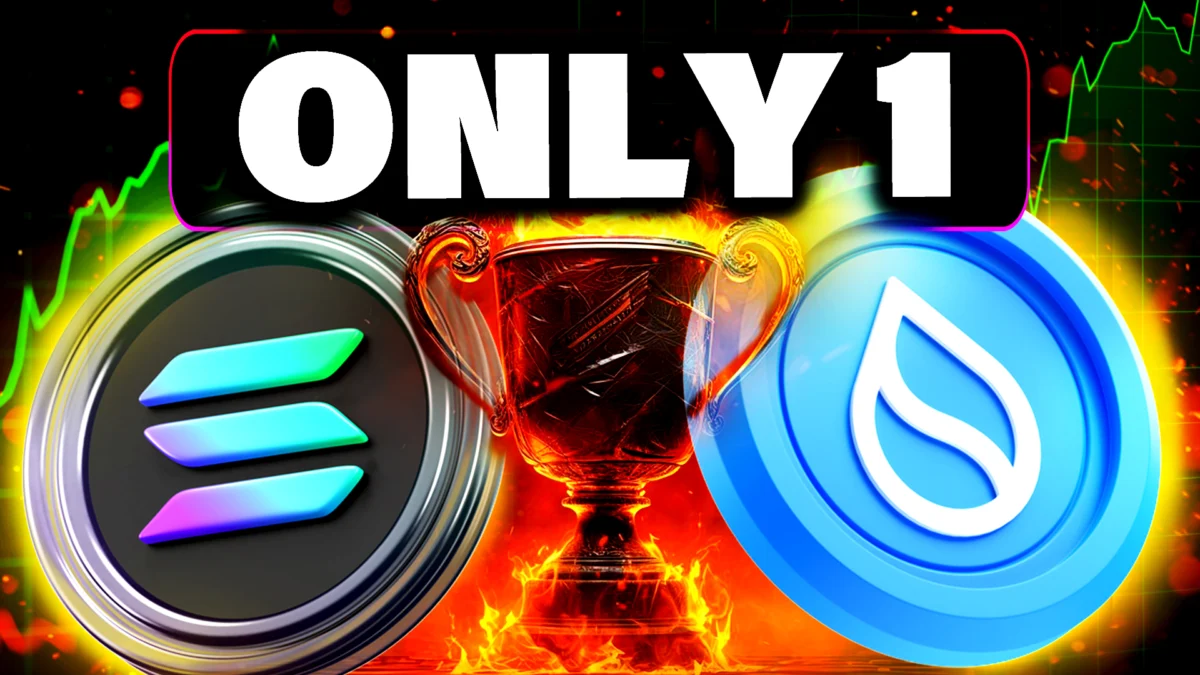
Bitcoin has maintained a stable position around the $90,000 mark as the year 2026 unfolds, yet the altcoin market presents a more fragmented landscape. Among the prominent contenders vying for investor attention and developer adoption are Solana and Sui, two blockchain platforms exhibiting distinct growth trajectories and technological underpinnings. Solana, a veteran known for its high throughput, is experiencing a resurgence fueled by memecoin enthusiasm and a revitalized decentralized finance (DeFi) sector. In contrast, Sui, a newer entrant, is steadily accumulating significant technological advancements and attracting institutional interest. This analysis seeks to dissect the current state, historical context, and future potential of both Solana and Sui to ascertain which platform is better positioned for sustained success throughout 2026 and beyond.
Solana: The High-Speed Contender Navigating Volume and Volatility
Solana has long been recognized for its impressive transaction processing capabilities, powered by its innovative Proof-of-History (PoH) consensus mechanism. This system allows validators to agree on the order and timing of transactions without extensive communication overhead, enabling theoretical throughputs of tens of thousands of transactions per second (TPS). During peak performance, Solana has demonstrated its ability to handle approximately 65,000 TPS in testing environments, a figure significantly higher than Ethereum’s base layer capabilities. This speed advantage positions Solana as a formidable platform for applications requiring rapid transaction finality, akin to a high-performance sports car on a dedicated race track, outpacing competitors when network conditions are optimal.
However, Solana’s history is not without its challenges. The network has experienced several notable outages, particularly in 2022, which raised concerns about its stability and reliability under extreme load. While significant strides have been made to enhance network resilience, including the ongoing Firedancer upgrades, the surge in memecoin activity has, at times, led to network congestion and increased transaction fees. This duality—unparalleled speed juxtaposed with occasional instability—defines Solana’s current narrative.
Ecosystem Expansion and DeFi Revival
Despite past setbacks, Solana’s ecosystem is experiencing a remarkable expansion in early 2026. The restaking protocol Jito has seen its Total Value Locked (TVL) climb to an impressive $2 billion by January 2026, a testament to the growing demand for yield-generating opportunities within the Solana ecosystem. Furthermore, the platform Pump.fun has facilitated the creation of an astonishing 1.2 million new tokens in the month preceding this report, with 37,000 tokens launched in the preceding 24 hours alone. This explosive growth in token creation highlights the accessibility and vibrant activity surrounding new project launches on Solana.
Decentralized finance (DeFi) on Solana is also experiencing a significant revival. The Jupiter DEX aggregator, a key component of Solana’s DeFi infrastructure, reported a staggering $150 billion in trading volume during the first quarter of 2026. This volume indicates a robust and active trading environment, attracting both retail and institutional participants.
Gaming, NFTs, and Mobile Ambitions
Beyond DeFi, Solana’s influence extends to the non-fungible token (NFT) and gaming sectors. Magic Eden, a leading NFT marketplace, continues to dominate the Solana NFT space with an estimated 40% market share. The migration of Helium, a decentralized wireless network, to Solana further underscores the blockchain’s appeal for scalability-intensive applications. Developer interest remains exceptionally high, with reports indicating over 3 million daily active wallets during 2025. Solana’s commitment to mobile integration is also evident with the development of the Solana Seeker phone, signaling a strategic push to bridge the gap between blockchain technology and everyday mobile usage.

Market Performance and Investor Sentiment
As of early 2026, the SOL token is trading around $122, with a market capitalization of approximately $69 billion. While this represents a 47% decrease over the preceding 12 months, the neutral Relative Strength Index (RSI) and other oscillator indicators suggest that current sentiment is not overly bullish. This could present a potential buying opportunity for long-term investors seeking value at a current valuation. The market appears to have digested previous declines, and the neutral indicators suggest a period of consolidation before a potential upward trend.
Sui: The Object-Centric Innovator Building for Enterprise
Sui distinguishes itself with its object-centric model and the use of the Move programming language, a derivative designed to offer the security of Rust with the benefits of parallel execution. This architecture aims to overcome the global state bottlenecks that can affect other blockchains, including Ethereum and even Solana, by enabling transactions to be processed independently. Sui’s approach to sharding allows for parallel transaction processing, a capability that has been demonstrated in lab tests to achieve up to 297,000 TPS. This is akin to upgrading a single-lane highway to an expansive network of parallel lanes, effectively eliminating traffic jams during periods of high demand. Notably, sharding is also Ethereum’s long-term scalability objective, making Sui’s current implementation a significant technological advantage.
Maturing Ecosystem and Institutional Adoption
Sui’s ecosystem is rapidly maturing, with its Total Value Locked (TVL) surging to $850 million. The Navi Protocol, a lending platform, leads this growth with $284 million in TVL. The DeepBook, Sui’s native decentralized exchange aggregator, plays a crucial role in facilitating a significant portion of this on-chain volume.
A critical component of Sui’s technological stack is Walrus storage, which enables high throughput for "blob" data—large blocks of unstructured information. This capability has been instrumental in driving a 400% increase in AI data storage on the platform, now accumulating 17 terabytes of data. This substantial increase in enterprise-scale data handling underscores Sui’s potential in areas requiring significant data processing and storage.
Institutional interest in Sui is also on the rise. Franklin Templeton has successfully tokenized funds on the Sui blockchain, managing assets worth $250 million. The platform’s zkLogin feature, which allows users to sign in using existing credentials like Google accounts, has significantly lowered the barrier to entry, leading to the creation of over 2 million wallets. This focus on enterprise readiness and simplified onboarding, rather than purely speculative memecoins, positions Sui as a platform with strong long-term potential.
Market Position and Investment Outlook
Currently, the SUI token is priced at approximately $0.91, with a market capitalization of $3.5 billion. While SUI has also experienced a decline over the past 12 months, its market capitalization is a mere 8% of Solana’s. This smaller valuation suggests that investors may be entering Sui at an earlier stage of its growth. The fully diluted valuation (FDV) of $11 billion, while appearing substantial, is contrasted by strong underlying fundamentals that suggest potential undervaluation. The primary risk associated with Sui’s lower liquidity is increased volatility, but the potential for significant returns—potentially a 5x increase—is a compelling factor for risk-tolerant investors.
Head-to-Head: Technology, Adoption, and Future Catalysts
Technological Stacks and Developer Ecosystem
When comparing the technological underpinnings, Solana currently boasts superior raw transaction speed. However, Sui’s parallel execution architecture offers a more robust and scalable solution for long-term growth. Solana’s developer ecosystem, built on Rust, hosts approximately 5,000 decentralized applications (dApps), significantly outnumbering Sui’s current 450 dApps. Despite this disparity in dApp numbers, Sui exhibits a higher developer retention rate, with a reported 30% higher growth rate in developer activity. This suggests that while Solana has attracted a larger developer base, Sui is fostering a more engaged and growing community of builders. The current market environment can be characterized as a "picker’s market," where investors must carefully choose between platforms focused on high-volume transaction throughput (Solana) and those prioritizing sustainable, long-term scalability (Sui).

Adoption Trends and Catalysts for 2026
Adoption metrics paint a nuanced picture for both blockchains. For 2026, Solana’s key catalysts include the mainnet launch of the Firedancer upgrade, anticipated in the second quarter, and the potential rollout of stablecoin services by Visa. Sui’s roadmap features the full integration of its Mysticeti consensus, promising a 50x improvement in transaction finality, and the launch of SuiPlay in the third quarter, a move aimed at enhancing gaming and entertainment experiences on the platform.
A significant macroeconomic tailwind for the entire cryptocurrency market is the anticipated interest rate cuts by the Federal Reserve, which are expected to inject liquidity into the market and potentially drive capital into altcoins. However, Solana’s reliance on the speculative memecoin market presents a notable risk. A surge in Bitcoin dominance, often seen during periods of market uncertainty, could negatively impact altcoins, particularly those heavily influenced by meme-driven narratives. The extractive nature of some memecoin issuance models on Solana applications also raises sustainability concerns.
Risk-Reward Analysis and Investment Thesis
The risk-reward profile for each blockchain presents a compelling contrast. Solana, with its $115 billion market capitalization, is a large-cap asset. Achieving a 10x return on such a massive valuation would require an extraordinary confluence of positive market events. In contrast, Sui, with a market capitalization closer to $10 billion, offers a significantly higher potential for parabolic growth. While Solana has demonstrated substantial growth in the past, experiencing a 50x surge from its 2021 lows, Sui possesses the potential to mirror or even exceed such impressive gains given its current valuation and technological trajectory.
Conclusion: Sui’s Undervalued Potential vs. Solana’s Established Presence
In summary, the thesis for evaluating Solana and Sui in early 2026 hinges on a fundamental distinction: Solana represents a battle-tested, high-volume leader that is currently delivering on its promises. However, Sui emerges as an undervalued contender, strategically positioned for potential dominance in the latter half of 2026 and beyond.
The analyst team at Altcoin Buzz expresses a bullish outlook on Sui, primarily due to its superior risk-reward ratio. The platform’s technological edge, demonstrated institutional inflows, and an entry point below a $15 billion valuation make it a more compelling investment for those seeking significant upside potential. Solana, while a solid holding for existing investors and a testament to blockchain innovation, may be approaching a phase of diminishing returns due to its substantial market capitalization.
Investors are always advised to conduct their own thorough research (DYOR) and adhere to prudent money management strategies, such as the 2% rule, which limits the risk exposure on any single trade. The cryptocurrency market is subject to considerable volatility, and an informed approach is paramount. For those interested in exploring Sui further, resources are available at sui.io and on the platform’s official X (formerly Twitter) channels.
The ultimate decision for portfolio allocation between Solana’s established hype machine and Sui’s quiet, technologically robust development will likely be a key consideration for investors navigating the dynamic cryptocurrency landscape of 2026.