James Watt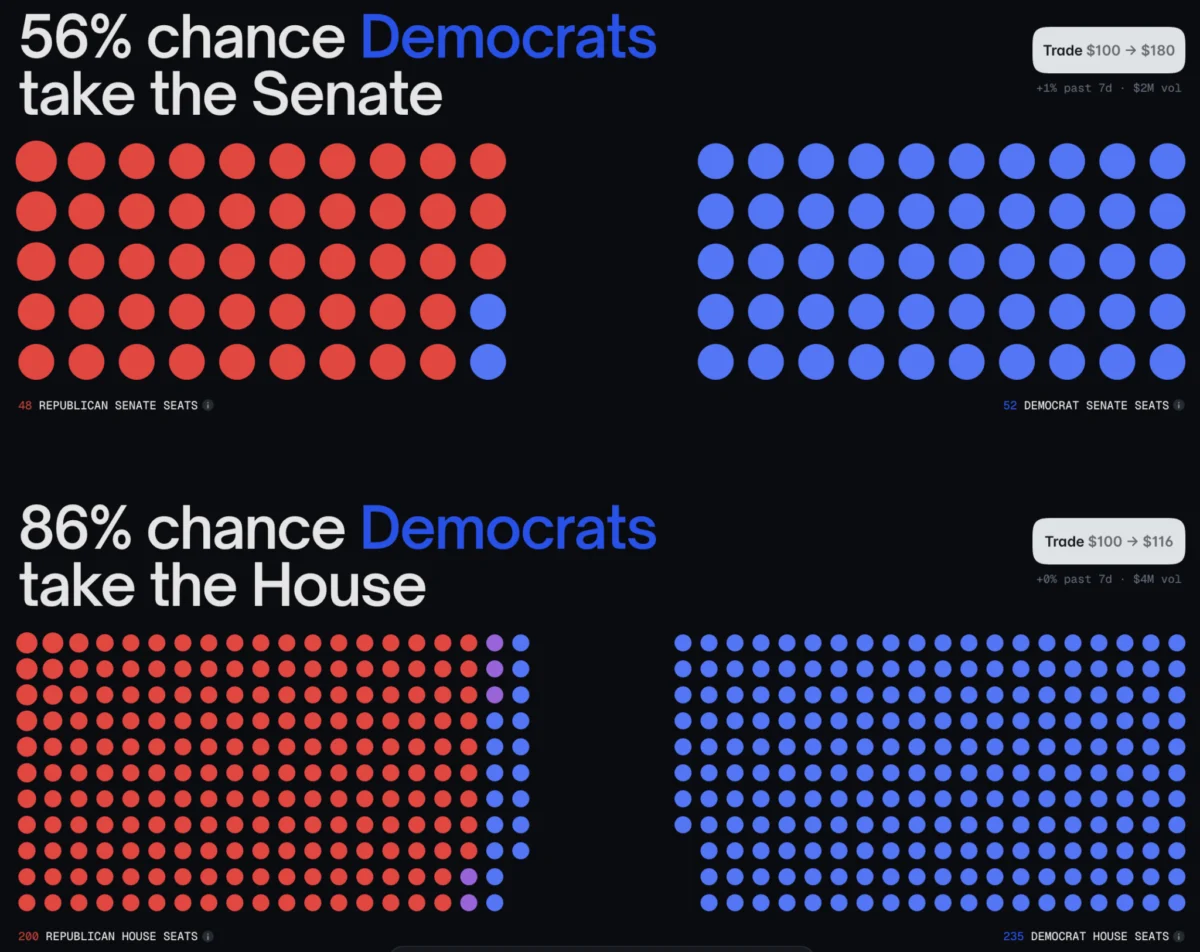
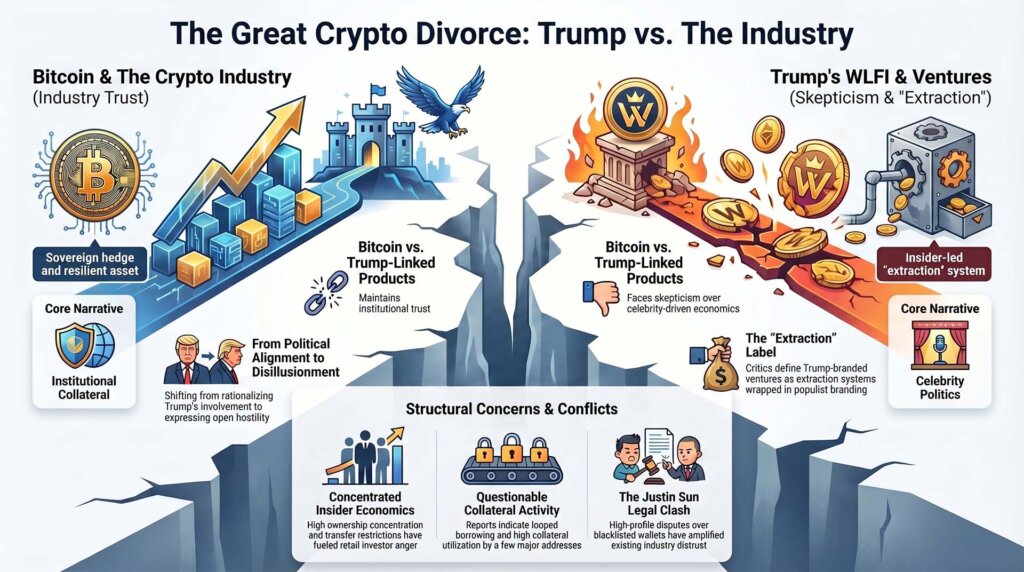
The political alliance between the digital asset industry and the Trump administration, once forged in the fires of regulatory frustration and shared populist rhetoric, has entered a period of profound fracture. Donald Trump secured significant support during the 2024 election cycle by positioning himself as the "Crypto President," offering a platform centered on reduced SEC enforcement, the dismissal of Chairman Gary Gensler, and a strategic vision that framed Bitcoin as a cornerstone of American economic growth. This alignment successfully mobilized a new demographic of voters who viewed crypto policy not merely as a financial interest, but as a broader struggle for innovation and decentralized power against state overreach. However, the narrative has shifted as the industry increasingly views the Trump-branded crypto complex—specifically the World Liberty Financial (WLFI) project—as a systemic liability rather than a political asset.
From Alliance to Extraction: The Changing Sentiment
The transition in sentiment has been marked by a move from post-election triumphalism to what market analysts now describe as a "prosecutorial" tone. In the immediate aftermath of the 2024 election, crypto social media was dominated by expectations of a "Golden Age" for digital assets. Pro-Trump voices celebrated the anticipated end of "regulation by enforcement." Yet, as the economics of the Trump family’s token ecosystem came under closer scrutiny, the mood soured.
The primary catalyst for this shift has been the performance and structural design of World Liberty Financial. What was initially marketed as a revolutionary platform for "democratized finance" is now being characterized by industry veterans as a mechanism for capital extraction. Prominent traders and founders have begun to describe the venture as a "stain on the industry’s legitimacy," arguing that it leverages the cultural and political authority of the presidency to enrich a small circle of insiders at the expense of retail participants.
Chronology of the Trump Crypto Relationship
The timeline of this relationship illustrates a rapid evolution from policy-driven cooperation to commercial controversy.
The 2024 Campaign Phase: During the election cycle, Donald Trump made high-profile appearances at events like the Bitcoin Conference in Nashville. His campaign accepted crypto donations and promised to establish a "strategic national Bitcoin reserve." This phase was characterized by a focus on macro-policy and the defense of self-custody rights.

The Post-Election Launch: Shortly after the election, World Liberty Financial was launched with significant fanfare. On its first day of public trading, the project was reported to have a headline valuation of approximately $7.4 billion. Initial excitement was driven by the Trump brand name and the promise of a platform that would bypass traditional banking hurdles.
The 2025-2026 Commercialization: Throughout 2025, the "Trump-branded crypto complex" expanded. This included the sale of "Super Node" access for $5 million per participant, a move that critics argued contradicted the project’s "finance for everyone" marketing. Financial disclosures began to reveal the scale of the family’s involvement. Reports from Reuters indicated that the Trump family’s crypto-related income exceeded $800 million in the first half of 2025 alone.
The April 2026 Crisis: By early 2026, the divergence between Bitcoin’s performance and the WLFI token became impossible to ignore. As WLFI slid toward its April lows, the industry’s patience evaporated, leading to public denunciations from both former supporters and long-time critics.
Market Divergence and Data-Driven Distrust
The "crypto divorce" is not merely a matter of rhetoric; it is reflected in stark market data. While Bitcoin has maintained its status as a resilient macro asset—often framed as "digital gold" or a sovereign hedge—the Trump-branded ecosystem has suffered from a lack of institutional interest and mounting retail losses.
Data regarding the distribution of wealth within the WLFI ecosystem has been particularly damaging. Analysis of verified WLFI-holding wallets on the Solana blockchain suggests a massive imbalance. Out of nearly 4,900 identified wallets with PnL data, more than 96% were found to be in a net loss position. This "retail pain narrative" has fueled accusations that the token structure was designed to favor insiders and provide liquidity for early-stage backers rather than create a sustainable ecosystem.
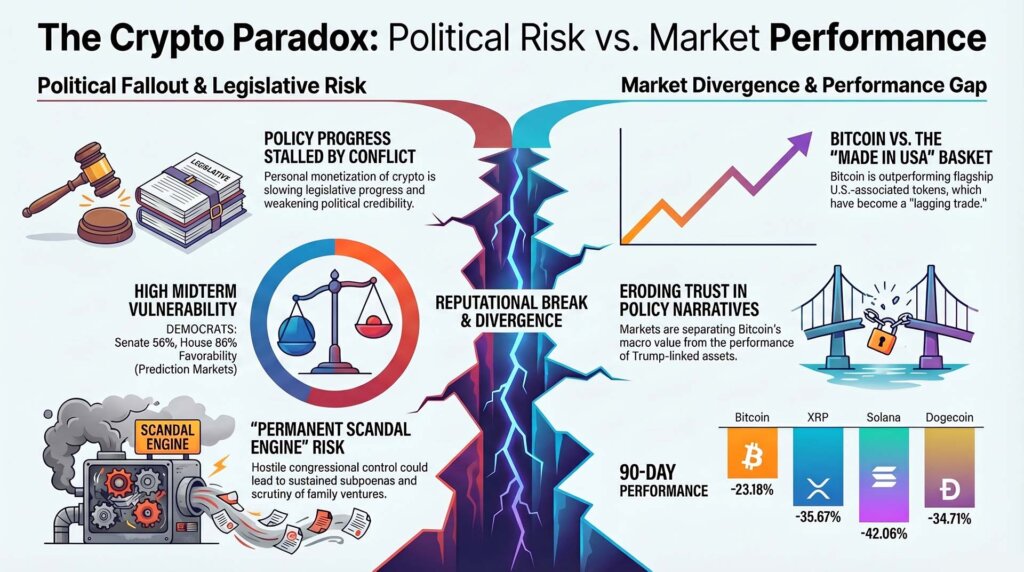
Furthermore, the "Made in USA" crypto basket, which Trump championed as a strategic national priority, has largely underperformed. While Bitcoin showed slight gains or resilience over a 90-day window, other flagship U.S.-associated assets saw significant declines:
- XRP: -35.67%
- Solana: -42.06%
- Dogecoin: -34.71%
- Chainlink: -33.96%
- Avalanche: -34.17%
This underperformance has weakened the political argument that a Trump presidency would automatically translate into market leadership for American-linked crypto projects. Instead, the market appears to be decoupling Bitcoin’s macro-utility from the volatile and controversial "celebrity politics" tokens associated with the administration.
Internal Strife and the Justin Sun Confrontation
The friction within the community reached a boiling point following a public clash between the WLFI project and Justin Sun, the founder of TRON and one of the largest investors in the token. Sun alleged that WLFI had embedded a "blacklist" function in its smart contracts, which was used to freeze his wallet and restrict his access to funds.
WLFI’s social media representatives responded aggressively, claiming they possessed "the contracts, the evidence, and the truth," and threatened legal action. Sun retorted by challenging the anonymity of the project’s management, demanding that the individuals behind the social media accounts reveal themselves. This exchange highlighted the "centralization risk" inherent in the project—a sharp irony for a venture that claimed to champion decentralized finance.
Other industry leaders have expressed similar disillusionment. Charles Hoskinson, the founder of Cardano, has publicly argued that the controversies surrounding the "TRUMP token" and associated ventures cost the industry a significant political victory. Hoskinson suggested that the association with a controversial family-branded token prevented a 70-vote "supermajority" in the Senate for pro-crypto legislation, as it allowed opponents to frame the entire industry as a vehicle for presidential self-enrichment.
The Influence Economy and Conflict of Interest
The convergence of presidential power and private crypto ventures has created what analysts call a "new influence economy." By selling "Super Node" access and high-value tiers of participation, the Trump family created a system where financial support for a crypto project could be perceived as a method of gaining political favor.
This perception has had tangible effects on policy. Throughout 2025, progress on broader crypto regulatory frameworks slowed in Congress as lawmakers raised concerns about conflicts of interest. The fear was that any legislation favoring the industry would be scrutinized as a direct benefit to the President’s personal portfolio. Forbes estimated Donald Trump’s net worth at $6.5 billion in March 2026, noting a significant portion of that growth was attributed to the valuation of his media and crypto ventures.
Political Risks and the Midterm Outlook
The most significant long-term impact of this "divorce" may be felt at the ballot box. The crypto voting bloc, which was a decisive factor in several 2024 races, is no longer a monolith of Trump support. The sense of "retail betrayal" among those who lost money on Trump-linked tokens has turned a former political asset into a live electoral vulnerability.
Prediction markets, such as Polymarket, currently reflect a shift in the political winds. As of April 2026, Democrats are priced at 56% to take the Senate and 86% to take the House in the upcoming midterms. If these predictions hold true, the Trump administration faces a "full-spectrum oversight environment."
A Democrat-controlled House would likely launch aggressive investigations into the financial intersection of the presidency and the WLFI project. This could involve:
- Subpoenas: Forcing the disclosure of internal communications regarding token distribution and insider trading.
- Hearings: Calling family members and project developers to testify on the "Super Node" influence economy.
- Audit Demands: Investigating the "looped-borrowing" structures and synthetic support mechanics alleged by groups like Chaos Labs.
Such an environment would transform the Trump crypto complex into a "permanent scandal machine," potentially alienating the very builders and innovators who initially viewed the administration as their greatest ally.
Conclusion: A Decoupled Future
The "Great Crypto Divorce" represents a maturing of the digital asset industry. The community is increasingly moving away from personality-driven ecosystems and back toward the fundamental principles of decentralization, transparency, and macro-utility. While the Trump administration’s early promises provided a spark for the 2024 rally, the subsequent focus on private monetization has created a rift that may be irreparable.
Bitcoin remains a resilient candidate for a national reserve asset and a tool for institutional finance, but it is being increasingly separated from the "Trump-branded" ecosystem. For the administration, the challenge is now one of damage control. If the perception of "grift" and "extraction" continues to grow, the same constituency that helped propel Trump back to the White House may become the most vocal force in his political opposition, viewing the "Crypto President" as the figure who ultimately turned their industry into a public punchline.