James Watt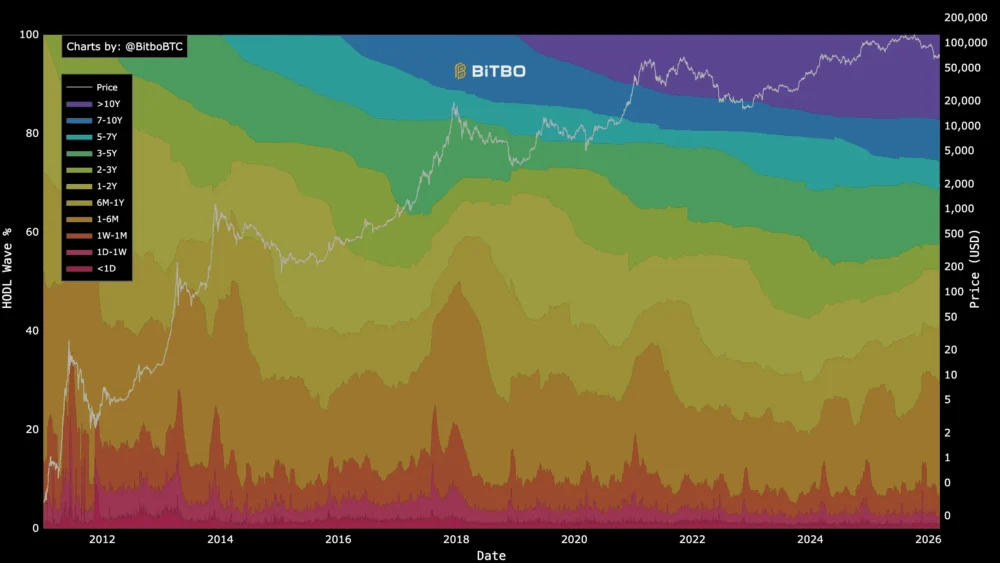
This event did more than just move assets; it effectively "broke" several of the most relied-upon indicators in the Bitcoin ecosystem. For years, market participants have treated the movement of "old coins" as a definitive signal of impending volatility or a shift in long-term sentiment. When coins that have been dormant for years suddenly move, the prevailing logic suggests that long-term holders (LTHs) are liquidating positions, potentially signaling a market top or a continuation of a bearish trend. However, the Coinbase migration proved that without proper context and entity-level filtering, these signals can be entirely illusory, reflecting administrative housekeeping rather than economic distribution.
The Mechanics of On-Chain Misinterpretation
To understand why the Coinbase migration was so disruptive, one must first understand the fundamental nature of the Bitcoin blockchain. The ledger records every transaction with absolute precision, but it is inherently "blind" to the intent behind those transactions. It tracks Unspent Transaction Outputs (UTXOs), which are essentially chunks of Bitcoin associated with specific addresses. When a transaction occurs, the existing UTXO is "spent," and a new one is created at the destination address.
From the perspective of a raw data scraper, there is no functional difference between a user selling 10,000 BTC to a buyer on the open market and an exchange moving 10,000 BTC from its "Cold Wallet A" to "Cold Wallet B." In both scenarios, the "age" of those coins—the time elapsed since they were last moved—resets to zero. This reset is what triggers alarms in various age-based metrics. Because Coinbase had held much of this BTC in cold storage for years, the migration appeared as a massive awakening of "ancient" supply, leading to a localized spike in metrics that typically precede significant market sell-offs.
A Chronology of the Coinbase Migration
The events leading up to and following the November 22 migration provide a clear timeline of how institutional transparency interacts with decentralized data.
- The Pre-Announcement: Recognizing the potential for market panic, Coinbase published a "Transparency Update" on its official blog prior to the move. The company explicitly stated that it would be executing a planned internal fund migration to adhere to updated security standards. It clarified that customer deposit addresses and trading activities would remain unaffected.
- The Execution Phase: On November 22, 2025, the migration began. On-chain monitoring tools immediately flagged dozens of high-value transactions. In total, nearly 800,000 BTC were moved in a series of batched transfers.
- The Data Reaction: Within hours, automated dashboards for HODL Waves and Coin Days Destroyed (CDD) showed vertical spikes. To an uncurated algorithm, it appeared that the largest "whale" in history had just decided to move their entire stack.
- The Analytical Lag: While sophisticated analysts who followed Coinbase’s announcement were prepared, many retail-facing platforms and automated trading bots reacted to the raw data. This led to a brief period of confusion where social media sentiment skewed bearish, fearing a massive "dump" that was not actually occurring.
The Distortion of Key Bitcoin Metrics
The Coinbase migration specifically targeted the three "pillars" of Bitcoin age analysis: HODL Waves, Coin Days Destroyed, and Long-Term Holder Supply. Each of these metrics was distorted by the internal transfer in a unique way.

HODL Waves and the "Younging" of Supply
HODL Waves provide a macro snapshot of the age distribution of the entire Bitcoin supply. They categorize coins into "bands" based on how long they have remained stationary (e.g., 1-2 years, 3-5 years, 5+ years). When Coinbase moved 800,000 BTC, many of which had been stationary for over five years, those coins were instantly removed from the "5y-7y" or "7y-10y" bands and reclassified into the "<1 day" band. On a chart, this looks like a massive wave of "new" supply hitting the market, a phenomenon usually associated with the late stages of a bull market where long-term investors exit their positions to retail buyers.
Coin Days Destroyed (CDD)
CDD is calculated by taking the number of coins in a transaction and multiplying it by the number of days those coins had stayed unspent. It is a measure of "economic weight." A single Bitcoin moved after 1,000 days "destroys" 1,000 coin days. When Coinbase moved 800,000 BTC—some of which had accumulated thousands of days of dormancy—the resulting CDD spike was one of the largest in the history of the network. Traditionally, a high CDD reading suggests that "smart money" is moving, yet in this case, the beneficial owner remained identical; only the "container" changed.
Long-Term Holder (LTH) Supply
Analysts define Long-Term Holders as entities that have held Bitcoin for more than 155 days. Statistically, after this threshold, the likelihood of the coins being spent decreases significantly. The Coinbase migration caused a massive, artificial drop in LTH supply because the moved coins were technically "spent" and would not re-enter the LTH category for another five months. This created a "paper loss" of conviction in the market that did not reflect the actual behavior of the holders.
Supporting Data: The Scale of the Impact
To put the $69.5 billion migration into perspective, consider the following data points:
- Circulating Supply Percentage: At 800,000 BTC, the migration involved roughly 4.05% of the total 19.7 million BTC in circulation at that time.
- Historical Comparison: This single internal move was larger than the total Bitcoin holdings of the United States government, Mt. Gox creditors, and MicroStrategy combined at the time of the event.
- Transaction Volume: For the 24-hour period of Nov 22, on-chain volume spiked by over 400% compared to the 30-day average, almost entirely due to internal exchange shuffling.
Official Responses and Expert Analysis
Coinbase’s proactive communication was cited by many as the only reason a market-wide flash crash was avoided. In their statement, Coinbase noted: "As part of our commitment to security and operational excellence, we periodically migrate funds between internal cold storage solutions. These transfers are planned, secure, and involve no change in the beneficial ownership of the assets."
Despite this, the event sparked a heated debate among on-chain data providers. Glassnode, a leading analytics firm, emphasized the importance of "entity-adjustment." By clustering addresses known to belong to the same entity (like Coinbase), Glassnode’s proprietary metrics can filter out internal transfers. An entity-adjusted HODL Wave chart would have shown almost no change during the Nov 22 event, as the coins never left the "Coinbase Entity" cluster.

However, many free or lower-tier data providers do not use entity-adjustment because it requires intense computational power and sophisticated heuristics to identify which addresses belong to which exchanges. This creates a "data gap" where retail traders looking at raw charts see a different (and often scarier) reality than institutional traders using filtered data.
Broader Impact and Implications for the Future
The Coinbase "illusion of movement" serves as a critical reminder that Bitcoin’s transparency is a double-edged sword. While the blockchain provides a level of auditability unseen in traditional finance, it also provides a surplus of "noise" that can be misinterpreted by the unwary.
The Death of the "Lazy" Bottom Signal
For years, the mantra "old coins moving = bad" was a shortcut used by many traders to gauge market tops. The Coinbase event has largely invalidated this as a standalone signal. Analysts now argue that any movement of old coins must be cross-referenced with exchange inflow/outflow data. If old coins move but exchange balances do not increase, it is highly likely an internal migration or a move to a new custodial setup rather than a sale.
The Evolution of On-Chain Forensic Science
This event has accelerated the demand for more sophisticated data products. We are moving away from "Address-Based Analysis" toward "Entity-Based Analysis." As more Bitcoin is held by large custodians (Coinbase, Fidelity, BlackRock), the frequency of these massive internal migrations will likely increase. Data providers will need to become even more adept at "tagging" institutional wallets to prevent routine operations from distorting market sentiment.
Institutional Custody vs. Individual Sovereignty
Finally, the event highlights the centralizing force of major exchanges. When a single entity can move 4% of the Bitcoin supply with a few keystrokes, their internal security protocols become a matter of systemic importance for the entire market. The fact that an administrative decision at one company could "break" the most trusted charts in the industry underscores the significant influence that large-scale custodians now wield over the Bitcoin narrative.
In conclusion, the Coinbase 800,000 BTC migration was a watershed moment for Bitcoin analysis. It exposed the flaws in relying on raw, uncontextualized on-chain metrics and reinforced the necessity of sophisticated, entity-aware data interpretation. For the modern trader, the lesson is clear: the blockchain shows you that something moved, but it takes a deeper level of investigation to understand if that movement actually matters. As the market matures, the ability to distinguish between "housekeeping" and "selling" will become the hallmark of a successful analyst.