James Watt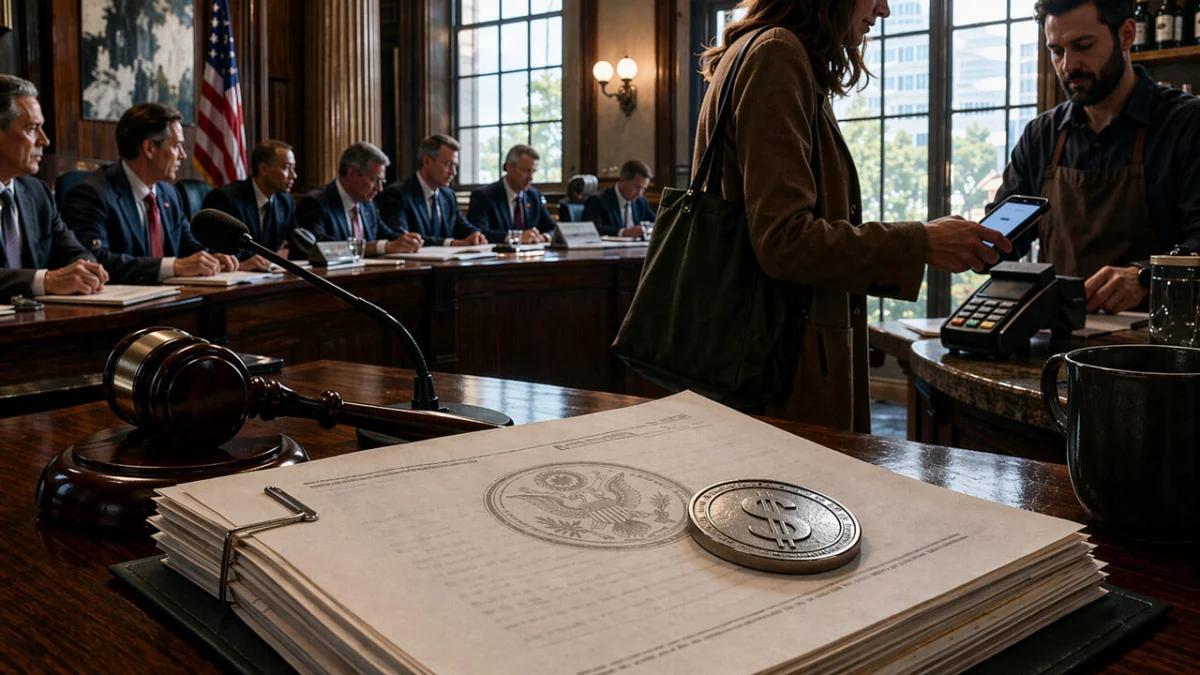
The United States government is currently undertaking a strategic pivot in its approach to digital asset oversight, moving away from a broad, all-encompassing cryptocurrency debate toward a more focused and pragmatic "stablecoins-first" policy. This shift is characterized by two major legislative and regulatory pillars: the Guiding and Establishing National Innovation for US Stablecoins (GENIUS) Act and the Digital Asset PARITY Act. While the former has already established the foundational regulatory requirements for issuers, the latter—a bipartisan tax discussion draft—aims to remove the practical barriers that prevent stablecoins from being used as a common medium of exchange. Together, these efforts represent a deliberate attempt to integrate dollar-pegged digital assets into the mainstream financial system, potentially transforming how consumers, merchants, and financial institutions interact with the US dollar in a digital-first economy.
The Digital Asset PARITY Act: Bridging the Tax Gap
The Digital Asset PARITY Act, formally known as the Digital Asset Payment and Receipt Integrity Act, was first introduced as a discussion draft in December 2025 by Representatives Max Miller (R-Ohio) and Steven Horsford (D-Nevada). Both lawmakers serve on the House Ways and Means Committee, the primary tax-writing body in the lower chamber, signaling a serious bipartisan interest in resolving the tax complexities associated with digital payments. An updated version of the draft, released on March 26, 2026, introduced critical refinements designed to align tax policy with the regulatory standards set by the GENIUS Act.
The core of the PARITY Act centers on the tax treatment of "regulated payment stablecoins." Under current Internal Revenue Service (IRS) guidelines, every time a consumer uses a digital asset to purchase a good or service, it is treated as a disposal of property, potentially triggering a capital gains tax event. Even if the value of a stablecoin fluctuates by only a fraction of a cent, the user is technically required to calculate and report the gain or loss. The PARITY Act seeks to eliminate this administrative burden for ordinary transactions.
According to the revised draft, gains realized from the sale or exchange of a regulated payment stablecoin would generally be excluded from a taxpayer’s gross income. Conversely, losses would not be recognized. This "tax-neutral" status would apply as long as the taxpayer’s basis in the token remains within a narrow band—specifically, if the basis does not fall below 99% of its redemption value. For the purposes of exchange, the recipient of the stablecoin would be assigned a "deemed basis" of $1. By creating this carve-out, the legislation intends to treat regulated stablecoins with the same practical flexibility as physical cash, where minor fluctuations in purchasing power do not result in complex tax reporting requirements.
To qualify for this favorable treatment, a stablecoin must meet three strict criteria: it must be issued by a "permitted payment stablecoin issuer" under the GENIUS Act; it must be pegged exclusively to the US dollar; and it must have demonstrated high price stability over the preceding 12-month period. Notably, the draft explicitly excludes professional brokers and dealers from these benefits, ensuring the relief is targeted toward retail consumers and merchants rather than high-frequency institutional traders.
The GENIUS Act: Constructing the Regulatory Foundation
The tax incentives proposed in the PARITY Act are entirely dependent on the regulatory framework established by the GENIUS Act. Passed by the Senate with a 68-30 vote and the House with a 308-122 margin, the GENIUS Act represents the first comprehensive federal law governing payment stablecoins. Its primary purpose is to define who can legally issue a stablecoin in the United States and what safeguards must be in place to protect the broader financial system.
The act mandates that all permitted payment stablecoin issuers maintain 100% reserve backing in highly liquid assets, such as US Treasury bills and cash deposits at insured depository institutions. Furthermore, it brings stablecoin issuers under the umbrella of the Bank Secrecy Act (BSA), requiring them to implement robust Anti-Money Laundering (AML) and "Know Your Customer" (KYC) programs. By setting these high standards, the GENIUS Act aims to mitigate the risks of "bank runs" on digital assets and ensure that stablecoins are not used to facilitate illicit finance or evade international sanctions.
The implementation of the GENIUS Act is currently a multi-agency effort. In early March 2026, the Office of the Comptroller of the Currency (OCC) proposed rules regarding capital and liquidity standards for stablecoin issuers. This was followed in April by a joint proposal from the Treasury Department, the Financial Crimes Enforcement Network (FinCEN), and the Office of Foreign Assets Control (OFAC), which detailed the compliance obligations for issuers regarding sanctions and financial transparency. Simultaneously, the Federal Deposit Insurance Corporation (FDIC) began establishing procedures for insured banks to issue stablecoins through dedicated subsidiaries. This coordinated regulatory rollout is expected to conclude by July 2026, the statutory deadline for final implementing rules.
Chronology of US Stablecoin Policy Evolution
The journey toward a regulated stablecoin market in the US has followed a specific sequence of legislative and executive actions:
- Late 2024 – Mid 2025: Intense bipartisan negotiations in the House Financial Services Committee and Senate Banking Committee lead to the drafting of the GENIUS Act, focusing on reserve transparency and consumer protection.
- Late 2025: The GENIUS Act is signed into law, establishing the "permitted payment stablecoin issuer" category.
- December 2025: Representatives Miller and Horsford release the initial Digital Asset PARITY Act discussion draft to address the "tax friction" of digital payments.
- January 2026: Tether launches USA₮, a US-compliant stablecoin issued through Anchorage Digital Bank, signaling a shift in offshore issuer strategy toward the US domestic market.
- March 2, 2026: The OCC publishes proposed rules for stablecoin reserve management and risk standards.
- March 26, 2026: An updated PARITY Act draft is released, narrowing the tax exclusion to tokens that maintain a 99% peg to the dollar.
- April 2026: Treasury and FinCEN issue joint AML/KYC guidelines for stablecoin issuers.
- July 2026: Statutory deadline for all federal agencies to finalize rules under the GENIUS Act.
Market Dynamics and Industry Reactions
The emergence of a clear regulatory and tax path has already begun to reshape the competitive landscape for stablecoin issuers. Circle, the issuer of USDC, is widely considered the primary beneficiary of the GENIUS Act. Circle has long maintained a policy of monthly reserve attestations performed by "Big Four" accounting firms and holds its reserves in regulated US financial institutions. Industry analysts expect USDC to be among the first tokens to receive formal "permitted payment stablecoin" status.
In contrast, Tether, the issuer of the world’s largest stablecoin (USDT), has historically operated outside the US regulatory perimeter. However, the passage of the GENIUS Act prompted a strategic pivot. Rather than attempting to bring its offshore USDT operations under US oversight, Tether partnered with Anchorage Digital Bank to launch USA₮. This new token is designed specifically to comply with the GENIUS Act’s requirements, allowing Tether to maintain its global operations while competing for a share of the regulated US market.
The banking sector is also moving to capitalize on the new framework. Traditional financial giants like JPMorgan Chase and Bank of America have signaled interest in on-chain settlement. JPMorgan’s blockchain division, Kinexys, has transitioned from internal "deposit tokens" toward exploring payment stablecoins that could circulate more broadly under the GENIUS Act. Bank of America researchers have noted that the legalization of stablecoins marks the beginning of a "multi-year shift toward on-chain banking," where traditional financial services are delivered via programmable blockchain infrastructure.
Analysis of Economic and Social Implications
If the PARITY Act successfully transitions from a discussion draft to law, the implications for the US economy could be significant. For retail users, the primary benefit is the removal of "accounting anxiety." By exempting micro-fluctuations from capital gains reporting, the law would make it feasible for consumers to use stablecoins for everyday purchases like coffee or groceries without fear of an IRS audit.
For merchants, the clarity provided by the PARITY Act removes one of the last major hurdles to crypto adoption. While many merchants are attracted to the lower transaction fees and near-instant settlement of blockchain payments, the perceived tax complexity for their customers has often stifled demand. A simplified tax regime would likely lead to a surge in the integration of stablecoin payment rails at the point of sale.
From a geopolitical perspective, the GENIUS Act and PARITY Act serve a broader strategic goal: the preservation of the US dollar’s role as the global reserve currency. By creating a safe, regulated, and tax-efficient environment for digital dollars, the US is effectively "exporting" its currency into the digital asset ecosystem. This ensures that even as the world moves toward decentralized finance, the underlying unit of account remains the dollar, bolstered by US law and Treasury-backed reserves.
The Gap Between Regulation and Routine Utility
Despite the momentum, challenges remain. A discussion draft is not a guarantee of legislative success. The PARITY Act must still navigate the complex political environment of a divided Congress, where crypto-related tax provisions are often bundled into larger, more contentious reconciliation packages. Furthermore, the technical language regarding the "99% redemption value" and "deemed basis" requires careful refinement to prevent unintended tax loopholes.
The fundamental question facing Washington is whether stablecoins will become active "everyday digital dollars" or merely remain "licensed financial products" that sit on a regulatory shelf. The GENIUS Act provided the necessary legal rails for the industry, but it did not necessarily make the tokens attractive for use. The PARITY Act is the bridge intended to close that gap. Without the tax simplification layer, the US risk creating a market that is highly regulated but remains too cumbersome for the average citizen to use in routine commerce.
As the July 2026 deadline for GENIUS Act implementation approaches, the focus will increasingly shift toward the PARITY Act. The success of this dual-track strategy—regulation followed by practical utility—will likely determine the future of the American digital economy for decades to come. If both pieces of the puzzle fall into place, the US will have successfully created a modern, digital version of the dollar that is as stable as cash and as efficient as the internet.