admin
admin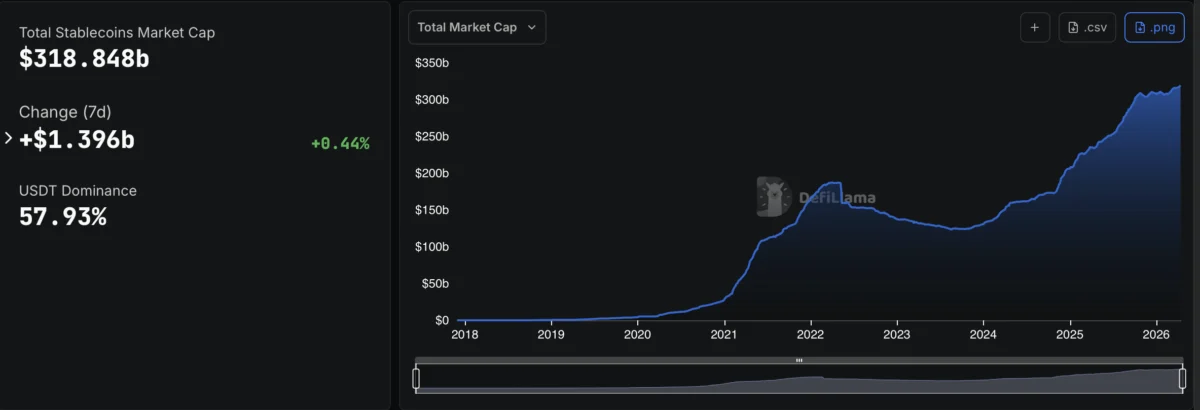
Visa has officially launched a validator node on the Tempo blockchain, marking a significant transition for the global payments giant from a service provider to a direct participant in the decentralized infrastructure of real-time stablecoin payments. By operating this node in-house using its own proprietary infrastructure, Visa has assumed the role of an "anchor validator" on the Tempo network, a Layer 1 blockchain specifically engineered to facilitate high-speed, stablecoin-based transactions. This move, developed over a six-month collaborative period with Tempo’s engineering team, places Visa alongside other major financial and fintech entities, including Stripe and Zodia Custody, in securing and maintaining the integrity of the ledger.
The deployment of a validator node represents a deepening of Visa’s technical commitment to blockchain technology. Unlike previous initiatives where the company primarily focused on the application layer—such as enabling crypto-linked debit cards—this role involves Visa directly in the transaction validation layer. As a validator, Visa is now responsible for ordering and confirming transactions, ensuring the network remains secure, and contributing to the overall performance of the blockchain during its critical early phases of adoption. This direct involvement allows Visa to gain first-hand operational experience with the consensus mechanisms that govern digital asset movements, positioning the company at the heart of the next generation of financial settlement.
The Technical Evolution of Visa’s Blockchain Strategy
Visa’s decision to operate its own infrastructure rather than outsourcing the node management to a third-party provider underscores a strategic emphasis on security and control. The six-month development cycle involved rigorous testing to ensure that Visa’s internal systems could meet the high-availability requirements of a Layer 1 blockchain. In a Proof-of-Stake (PoS) or similar consensus environment, validators are required to maintain near-constant uptime; failure to do so can result in "slashing" or the loss of rewards. By managing this in-house, Visa is signaling that it views blockchain participation as a core competency rather than a peripheral experiment.
The Tempo blockchain is designed to address the specific needs of the payments industry, focusing on low latency and high throughput for stablecoin transfers. On this network, validators package transactions into blocks and are rewarded with stablecoin-denominated incentives. This creates a new economic model for Visa, where the company can earn yields directly from the infrastructure it helps secure. This shift from earning transaction fees on a proprietary closed-loop network to earning protocol-level rewards on an open-source network reflects a broader transformation within the financial services sector.
A Comparative Analysis of the Global Payments Landscape
Visa’s move into the validator space is part of a larger, competitive race among payment giants to dominate the stablecoin and blockchain infrastructure market. The strategies employed by these companies vary between organic development and aggressive acquisition.
In October 2024, Stripe made headlines with its $1.1 billion acquisition of Bridge, a stablecoin orchestration platform. This acquisition allowed Stripe to rapidly integrate stablecoin capabilities, subsequently launching features that allow businesses in over 100 countries to hold and transfer US-dollar stablecoins as easily as traditional fiat balances. Stripe’s approach has been characterized by horizontal integration, buying established technology to accelerate its time-to-market.
Similarly, Mastercard has pursued an acquisition-heavy strategy. In early 2025, Mastercard reached an agreement to acquire BVNK, a stablecoin infrastructure firm, in a deal valued at approximately $1.8 billion. BVNK provides the essential "plumbing" for businesses to bridge the gap between traditional banking and crypto-native environments, operating across 130 countries. Mastercard’s acquisition signals its intent to provide a comprehensive suite of tools for institutional crypto adoption.
In contrast, Visa appears to be prioritizing a "build and participate" strategy. While it has engaged in partnerships, such as its work with Bridge for stablecoin card rollouts, its focus on launching its own validator nodes on networks like Tempo and the Canton Network suggests a desire to own the underlying operational stack. This approach may offer Visa greater long-term flexibility and security, as it does not rely on the proprietary code of a single acquired entity but rather integrates directly with the protocols that are becoming industry standards.

Chronology of Visa’s Blockchain Integration
To understand the significance of the Tempo node launch, it is essential to view it within the context of Visa’s multi-year blockchain roadmap:
- March 2021: Visa becomes the first major payments network to settle a transaction in USDC (USD Coin) on the Ethereum blockchain, working with Crypto.com to bypass traditional fiat conversion steps.
- September 2023: The company expands its stablecoin settlement capabilities to the Solana blockchain, citing the network’s high speed and low costs as a primary driver for merchant-level settlement.
- March 2024: Visa expands its partnership with Bridge to launch stablecoin-enabled cards in 18 countries, with a roadmap to exceed 100 markets by the end of the year.
- July 2024: The company expands its settlement platform to include support for PayPal USD (PYUSD) and Euro Coin (EURC), while adding compatibility for the Stellar and Avalanche networks.
- Late 2024: Visa joins the Canton Network as a validator, focusing on privacy-enabled on-chain payments in collaboration with other major financial institutions.
- 2026 (Current Milestone): Visa launches its in-house validator node on the Tempo blockchain, assuming an "anchor" role in the network’s governance and security.
This timeline illustrates a clear progression from experimental pilot programs to deep infrastructure integration. Visa is no longer just testing whether blockchain works; it is actively helping to run the blockchains that it believes will carry a significant portion of the world’s value in the coming decade.
Market Data: The Rising Dominance of Stablecoins
The launch of the Tempo node comes at a time of significant growth for the stablecoin market. According to data from DefiLlama, the total market capitalization of stablecoins reached approximately $319 billion in early 2026, up from $307.5 billion at the start of the previous year. This growth is driven by an increasing demand for "always-on" liquidity and the efficiency of 24/7 settlement.
While US-dollar-denominated stablecoins like USDT and USDC continue to lead the market, there is a growing trend toward non-dollar assets. A Visa-backed report recently highlighted the increasing dominance of Euro-denominated stablecoins (such as EURC) in the non-dollar market. As businesses in Europe and Asia seek to avoid the volatility and conversion costs associated with the US dollar, the demand for regional stablecoins has surged. The Tempo blockchain’s focus on real-time payments makes it an ideal environment for these diverse assets to circulate, and Visa’s role as a validator ensures it is positioned to facilitate this multi-currency future.
Implications for Global Finance and Cross-Border Settlements
The implications of Visa’s participation in the Tempo network extend far beyond the technical realm. Traditional cross-border payments are often plagued by high costs, transparency issues, and settlement delays that can take several days (T+2 or T+3). By utilizing Layer 1 blockchains like Tempo, Visa can move toward a model of near-instantaneous settlement (T+0).
For merchants, this means faster access to capital. For consumers, it could eventually lead to lower transaction fees and more seamless international spending. Furthermore, the role of a validator allows Visa to have a voice in the governance of these networks. As an anchor validator, Visa can influence the technical standards and protocol upgrades that will determine how these networks evolve, ensuring they remain compatible with the regulatory and operational requirements of the traditional financial system.
Industry analysts suggest that Visa’s move into the validation layer is a defensive and offensive play. Defensively, it ensures that Visa is not disintermediated by new, blockchain-native payment rails. Offensively, it allows Visa to capture new revenue streams in the form of network rewards and to offer enhanced services to its institutional clients who are increasingly demanding on-chain solutions.
Conclusion: The Institutionalization of Blockchain
The launch of the Visa validator node on Tempo is a landmark event in the institutionalization of blockchain technology. It signals that the world’s largest payment networks now view distributed ledgers not as a threat to be managed, but as the essential infrastructure of the future. By putting its own hardware and engineering talent behind the Tempo network, Visa is providing a powerful vote of confidence in the viability of real-time, on-chain payments.
As the stablecoin market continues to expand and more financial institutions take on roles as network validators, the distinction between "crypto" and "traditional finance" continues to blur. Visa’s strategic focus on building in-house capabilities, supporting multiple blockchains, and participating directly in network security suggests a future where the company’s value proposition is defined by its ability to navigate and secure a fragmented, multi-chain world. The "anchor validator" status on Tempo is not just a technical milestone; it is a declaration of Visa’s intent to remain the central pillar of global commerce in the digital asset era.