Nila Kartika Wati
Pineapple Financial, a pioneering entity in digital asset management, has successfully migrated over $1 billion in residential mortgage records onto Injective, a specialized layer-1 blockchain optimized for financial applications, marking a pivotal step in its ambitious strategy to transfer its entire historical loan portfolio on-chain. This monumental endeavor underscores a growing trend in the digitalization of real-world assets (RWAs) and positions Pineapple Financial at the forefront of innovation within the traditional finance sector, leveraging blockchain technology for enhanced transparency, efficiency, and auditability.
The Strategic Migration: A Deep Dive into Pineapple Financial’s Vision
The recent achievement of moving more than $1 billion worth of mortgage records is merely the initial phase of a much larger undertaking. According to statements released by Injective on Friday, Pineapple Financial harbors plans to eventually migrate over 29,000 funded mortgages, representing a staggering value exceeding $10 billion, onto the Injective network. This comprehensive migration is not about repackaging mortgages into new, tokenized securities but rather about creating an immutable, on-chain record for each underlying loan file. Each of these digital records is meticulously crafted to contain more than 500 distinct data points. These granular details encompass critical loan-level information, designed to facilitate robust verification processes, establish comprehensive audit trails, and enable sophisticated risk analysis, thereby revolutionizing how mortgage data is managed and accessed.
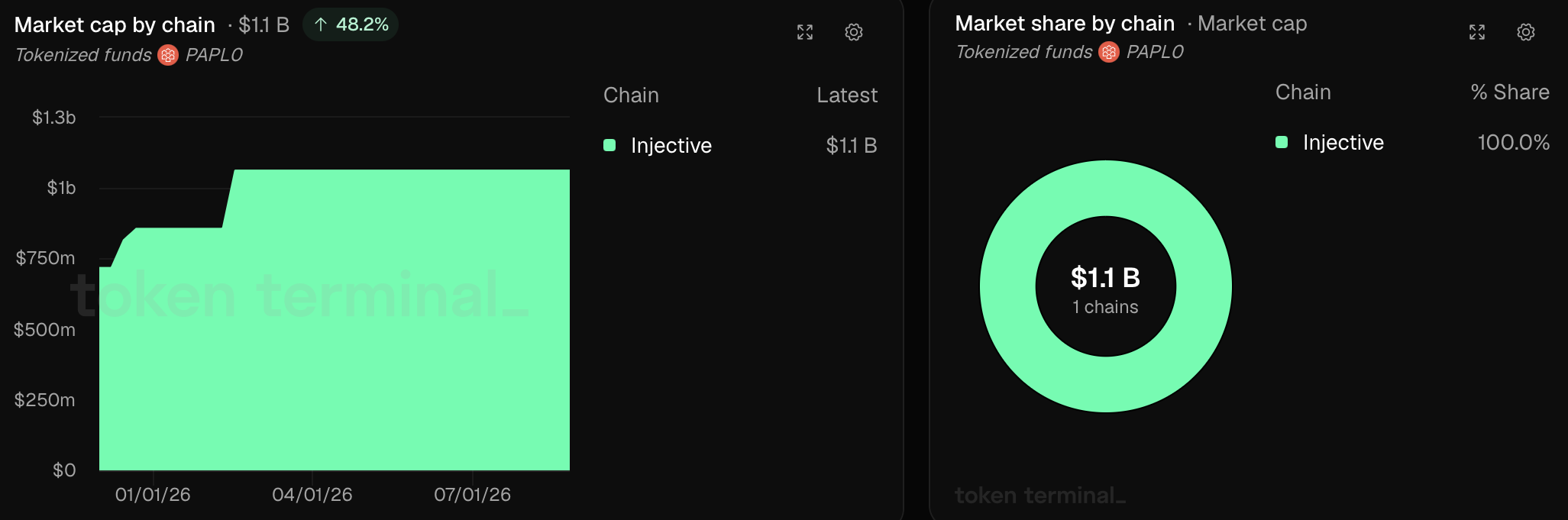
The initiative, which commenced in December 2025, has shown steady progress. Pineapple Financial’s dedicated dashboard indicates a significant ramp-up in activity, with the number of migrated mortgage records escalating from an initial 1,259 to a current total of 2,079. This progressive accumulation highlights the systematic and deliberate approach Pineapple Financial is taking to ensure the integrity and accuracy of each data transfer. The asset market capitalization of PAPL0, the on-chain representation tracking these mortgage records, has notably surged to approximately $1.1 billion. Data from Token Terminal reveals an impressive 48.2% increase in PAPL0’s market cap over the past nine months, signaling growing confidence and interest in this innovative approach to asset management. It is crucial to reiterate that these tokens signify the on-chain records of the mortgages, not direct ownership of the underlying loans themselves, a distinction that clarifies the nature of this tokenization effort.
Injective: The Backbone of Financial Decentralization
The choice of Injective as the foundational blockchain for this extensive migration is strategic. Injective is specifically engineered as a layer-1 blockchain for financial applications, offering high throughput, low latency, and a robust framework for decentralized finance (DeFi) protocols. Its architecture is designed to support complex financial instruments and large-scale data processing, making it an ideal candidate for handling the intricate details of mortgage records. The partnership extends beyond just data migration; Pineapple Financial also maintains a separate $100 million Injective (INJ) digital asset treasury. This treasury actively stakes INJ, with Kraken, a prominent cryptocurrency exchange, serving as a primary validator for these holdings. This multi-faceted relationship underscores a deep integration and shared vision between Pineapple Financial and Injective, aiming to unlock new efficiencies and opportunities within the financial ecosystem.

"Our collaboration with Injective represents a monumental leap forward in transforming traditional finance," stated a hypothetical spokesperson from Pineapple Financial. "By leveraging Injective’s robust and specialized blockchain infrastructure, we are not just digitizing records; we are building a foundation for unparalleled transparency, operational efficiency, and enhanced security in the mortgage industry. This move will significantly reduce friction points, streamline auditing processes, and ultimately create a more accessible and trustworthy system for all stakeholders."
Similarly, a hypothetical executive from Injective might comment, "Pineapple Financial’s ambitious migration validates Injective’s capabilities as the premier layer-1 blockchain for sophisticated financial applications. The sheer scale and complexity of managing $10 billion in mortgage records demand a platform that offers both performance and security. We are proud to provide the technological backbone for such a transformative initiative, further cementing Injective’s role in the mainstream adoption of decentralized finance and real-world asset tokenization."
The Broader Landscape of Real-World Asset (RWA) Tokenization
Pineapple Financial’s initiative is emblematic of a broader, accelerating trend: the tokenization of real-world assets (RWAs). Traditionally illiquid assets, ranging from real estate and art to commodities and private equity, are increasingly being brought on-chain. This process involves representing ownership or data pertaining to physical assets as digital tokens on a blockchain. The primary motivations behind RWA tokenization include enhanced liquidity, fractionalization of ownership, increased transparency, reduced transaction costs, and simplified transfer mechanisms.
The real estate sector, in particular, has emerged as a significant focal point within the RWA tokenization movement. The inherent complexities of real estate transactions—involving extensive paperwork, intermediaries, and lengthy settlement periods—make it a prime candidate for blockchain disruption. Tokenization offers the promise of making property or investment interests easier to divide, transfer, and access for a wider range of investors, potentially democratizing access to historically exclusive asset classes.
Examples of this burgeoning trend are surfacing globally. In June, Apex Group joined forces with financial giants like Goldman Sachs, Archax, and LRC Group on a pioneering tokenized real estate fund. The shares of this fund are issued as digital tokens through Goldman Sachs’ Digital Asset Platform, granting investors blockchain-based ownership of fund shares. This approach differs from Pineapple Financial’s, as it tokenizes ownership interests directly, rather than solely recording property data on-chain. This distinction highlights the varied applications and interpretations of real estate tokenization within the industry.
Dubai has also been a proactive player in expanding its real estate tokenization efforts. In February, the Dubai Land Department launched the second phase of a pilot program, following the successful tokenization of approximately $5 million worth of property. These transactions were meticulously recorded on the XRP Ledger, showcasing a government-led push to integrate blockchain technology into its property market. This regional initiative underscores a commitment to fostering innovation and attracting digital asset investment.
Market Dynamics and Future Outlook for Tokenized Real Estate
Despite the significant strides made by projects like Pineapple Financial and the increasing global interest, tokenized real estate still constitutes a relatively modest portion of the overall real-world asset (RWA) market. According to data from RWA.xyz, the sector currently boasts approximately $226.5 million in distributed value, reflecting an 11.7% increase over the past 30 days. While this growth is encouraging, it pales in comparison to the broader tokenized RWA market, which stands at a formidable $38.8 billion. This disparity suggests that while the potential of tokenized real estate is immense, it is still in its nascent stages, facing challenges such as regulatory clarity, scalability, and widespread institutional adoption.
The trajectory of PAPL0’s market cap on Injective, however, provides a compelling case study for the potential of granular data tokenization. The 48.2% growth over nine months for records that do not convey direct ownership but rather immutable, verifiable data, indicates a strong market appetite for enhanced transparency and auditability. This suggests that even without direct ownership tokenization, the value derived from verifiable on-chain records is substantial and can attract significant capital.
The implications of Pineapple Financial’s move are far-reaching. For the mortgage industry, it promises a future of reduced administrative overhead, faster verification processes, and a significant deterrent to fraud, given the immutable nature of blockchain records. For the blockchain ecosystem, it serves as a powerful validation of the technology’s utility beyond speculative trading, proving its capability to underpin core financial infrastructure. For investors, particularly institutional ones, it opens doors to more reliable due diligence and potentially new forms of investment products built upon transparent, auditable data.
Challenges and the Path Forward
While the promise of RWA tokenization is vast, several hurdles remain. Regulatory frameworks are still evolving, and varying interpretations across jurisdictions can create complexities. Interoperability between different blockchains and traditional financial systems is another critical area requiring further development to ensure seamless integration. Furthermore, educating traditional financial institutions and the broader public about the benefits and mechanics of tokenized assets is essential for widespread adoption.
Nevertheless, the momentum is undeniable. Pineapple Financial’s $1 billion milestone on Injective is not just a technical achievement; it is a declaration of intent for a future where traditional assets are managed with the precision, transparency, and efficiency offered by blockchain technology. As more financial institutions explore and adopt similar strategies, the landscape of global finance is poised for a profound transformation, with real estate likely to play an increasingly central role in this digital revolution. The journey from $1 billion to $10 billion in tokenized mortgage records will be closely watched as a benchmark for the industry’s progression towards a fully digitized and interconnected financial ecosystem.