Nila Kartika Wati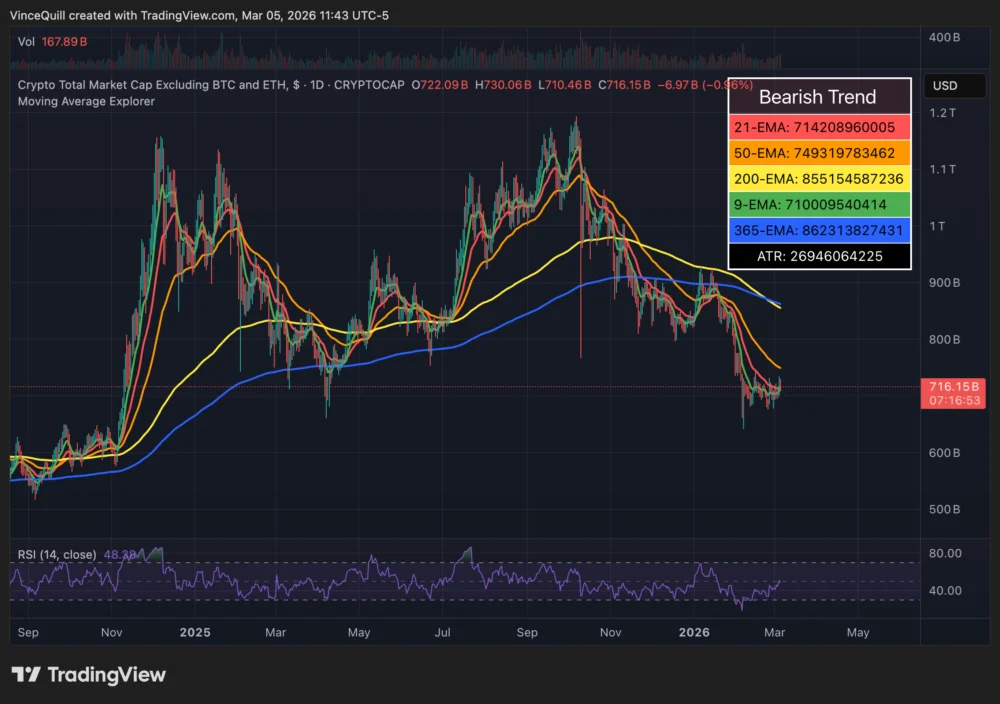
The cryptocurrency market is currently witnessing a severe and widespread capitulation among altcoins, with an estimated 38% of these alternative digital assets now trading perilously close to their all-time lowest valuations. This downturn represents a more significant period of distress for the altcoin sector than even the tumultuous aftermath of the FTX exchange collapse, a catastrophic event that sent shockwaves through the entire crypto ecosystem. The sobering assessment comes from Darkfost, a prominent analyst at CryptoQuant, who highlights a deepening investor disinterest and a pervasive "risk-off" sentiment dominating global financial markets.
Darkfost’s analysis underscores that the crypto markets, particularly the more volatile altcoin segment, are the first to register and absorb this shift away from risk-on assets. "For comparison," Darkfost stated, "this metric [percentage of altcoins near all-time lows] reached 35% during a significant market correction in a prior period and 37.8% just after the FTX crash. This chart perfectly illustrates the current situation for altcoins. Investors remain cautious and continue to lose interest in altcoins." This suggests that the current environment is not merely a cyclical dip but potentially indicative of a more profound re-evaluation of the altcoin landscape.
A Deeper Dive into the Altcoin Crisis
Altcoins, broadly defined as any cryptocurrency other than Bitcoin (BTC), emerged with the promise of offering enhanced functionalities, scalability, or unique use cases beyond what Bitcoin initially provided. Projects like Cardano’s ADA, Polkadot (DOT), and Polygon (POL) exemplify this diverse sector. However, even established altcoins are feeling the pressure. Cardano’s ADA, for instance, is currently hovering around $0.10 above its all-time low of $0.17, a testament to the persistent bearish pressure. Polkadot (DOT), which briefly touched an all-time low of $1.13 earlier in the year, has seen a modest rebound of 33% since, but remains significantly off its peak. Polygon (POL) also trades within a narrow margin of its all-time low of $0.08, currently just $0.02 above it. These examples paint a vivid picture of the widespread vulnerability across the altcoin spectrum, signaling a market characterized by extreme caution and a notable absence of speculative fervor.

The underlying cause, according to Darkfost, is a significant "liquidity drain" from altcoins, with capital actively being siphoned away into traditional equities and commodities. This migration of funds indicates a flight to perceived safety and established asset classes, leaving altcoins starved of the fresh capital needed to fuel growth and sustain valuations. Data from CoinMarketCap reveals a striking example of market volatility and liquidity movement: daily trading volume reached a high of over $417 billion on October 10 during a period of significant market activity. For context, daily trading volumes in previous months typically ranged from $49.4 billion to $268 billion, highlighting the extreme fluctuations in capital flow that have characterized recent market cycles.
Further illustrating the severity of the current market conditions, the Total3 metric—which tracks the market capitalization of the entire cryptocurrency market excluding Bitcoin (BTC) and Ethereum (ETH)—has retraced to levels last observed in November of a previous year. This metric is a crucial barometer for the health and vitality of the broader altcoin market, and its regression signifies a substantial reversal of gains and a widespread erosion of value across thousands of projects. Darkfost characterizes this altcoin drawdown as the "largest regression" recorded during the current market cycle, a stark warning to investors. However, he also suggests that such extreme market conditions could paradoxically present a significant buying opportunity for long-term investors willing to embrace the inherent risks.
Macroeconomic Headwinds and Shifting Investor Psychology
The current state of the altcoin market cannot be viewed in isolation. It is deeply intertwined with broader macroeconomic trends that have fostered a global "risk-off" environment. Persistent inflation across major economies, aggressive interest rate hikes by central banks like the U.S. Federal Reserve, and ongoing geopolitical tensions have collectively contributed to a climate of uncertainty. In such an environment, investors typically reallocate capital from high-risk, high-reward assets—like cryptocurrencies, especially altcoins—to more stable and traditionally safer investments.
This shift in investor psychology is further evidenced by a dramatic decline in public interest and social engagement surrounding altcoins. According to crypto market sentiment analysis platform Santiment, mentions of altcoins on social media platforms have plummeted to two-year lows. Concurrently, Google worldwide search volume for the term "altcoins" has also hit a yearly low of 4 out of 100, as reported by Google Trends. These metrics are critical indicators of retail investor sentiment and broader market curiosity. A lack of social buzz and search interest often precedes or accompanies sustained price declines, as fewer new participants enter the market, and existing ones become disengaged.

The Structural Challenges Facing Altcoins
Beyond macroeconomic factors, several structural issues within the crypto market itself are contributing to the altcoin slump. Jimmy Xue, co-founder of liquidity platform Axis, emphasized the concept of a "liquidity drain" in altcoins, where "even minor shifts in sentiment trigger outsized sell-offs." This vulnerability, Xue explains, stems from the fundamental difference between Bitcoin and the vast majority of altcoins: "Altcoins lack the same institutional support and the ‘digital gold’ narrative enjoyed by Bitcoin."
Bitcoin, with its fixed supply, robust decentralization, and growing acceptance among institutional players, has increasingly been positioned as a digital store of value—a modern-day equivalent to gold. This narrative provides a crucial layer of stability and trust that many altcoins, often newer and less proven, struggle to replicate. Institutional investors, when entering the crypto space, overwhelmingly prioritize Bitcoin due to its established track record and perceived lower risk profile compared to the thousands of nascent altcoin projects.
The sheer proliferation of crypto tokens is another significant factor. With over 36.8 million different crypto tokens listed on CoinMarketCap at the time of this writing, the market is saturated. This oversaturation creates intense competition for limited investor capital, making it incredibly challenging for even well-conceived projects to gain traction and maintain value. Many tokens offer similar functionalities or fail to articulate a compelling unique selling proposition, leading to a fragmented market where capital is spread thin.
Furthermore, the introduction of Bitcoin Exchange-Traded Funds (ETFs) in traditional financial markets has fundamentally altered market dynamics. These regulated investment vehicles provide institutional and traditional retail investors with a familiar and compliant pathway to gain exposure to Bitcoin without directly holding the cryptocurrency. While legitimizing crypto as an asset class, Bitcoin ETFs have inadvertently siphoned significant liquidity from the broader altcoin market. Capital that might have otherwise flowed into diverse altcoin projects is now increasingly directed towards these regulated Bitcoin-specific investment products, further concentrating institutional interest and capital in the market leader.

Historical Context and Future Implications
The current altcoin distress draws parallels to previous market cycles, though its severity appears distinct. Following the euphoria of the 2021 bull run, which saw many altcoins reach unprecedented highs, the market entered a prolonged bear phase throughout 2022. This period was marked by several high-profile collapses, including the Terra (LUNA) ecosystem, the Three Arrows Capital hedge fund, and most notably, the FTX exchange. The FTX collapse in November 2022 wiped out billions in investor capital and severely eroded trust in centralized crypto entities. While the market absorbed these shocks, the current situation, with 38% of altcoins near all-time lows, indicates a deeper, more systemic challenge that extends beyond the fallout of individual failures.
The implications of this prolonged altcoin regression are far-reaching. For retail investors, it represents a period of significant losses, potential capitulation, and a test of conviction. For altcoin projects, it poses existential threats, with many facing funding challenges, reduced development capacity, and increased pressure to demonstrate tangible utility and adoption. A period of consolidation is likely, where only projects with strong fundamentals, clear use cases, and robust communities will survive and potentially thrive in a future recovery.
Looking ahead, the market may be maturing, forcing a clearer distinction between speculative assets and those with genuine long-term value. The "largest regression" observed in this cycle, as noted by Darkfost, could be a necessary cleansing process, weeding out unsustainable projects and paving the way for a more resilient and fundamentally driven altcoin ecosystem in the future. While the present is undeniably challenging for altcoin holders, history suggests that such periods of extreme downturn can, eventually, precede opportunities for those with the foresight and patience to identify truly innovative and enduring projects. The immediate future, however, remains defined by caution, reduced liquidity, and a palpable shift away from risk.