James Watt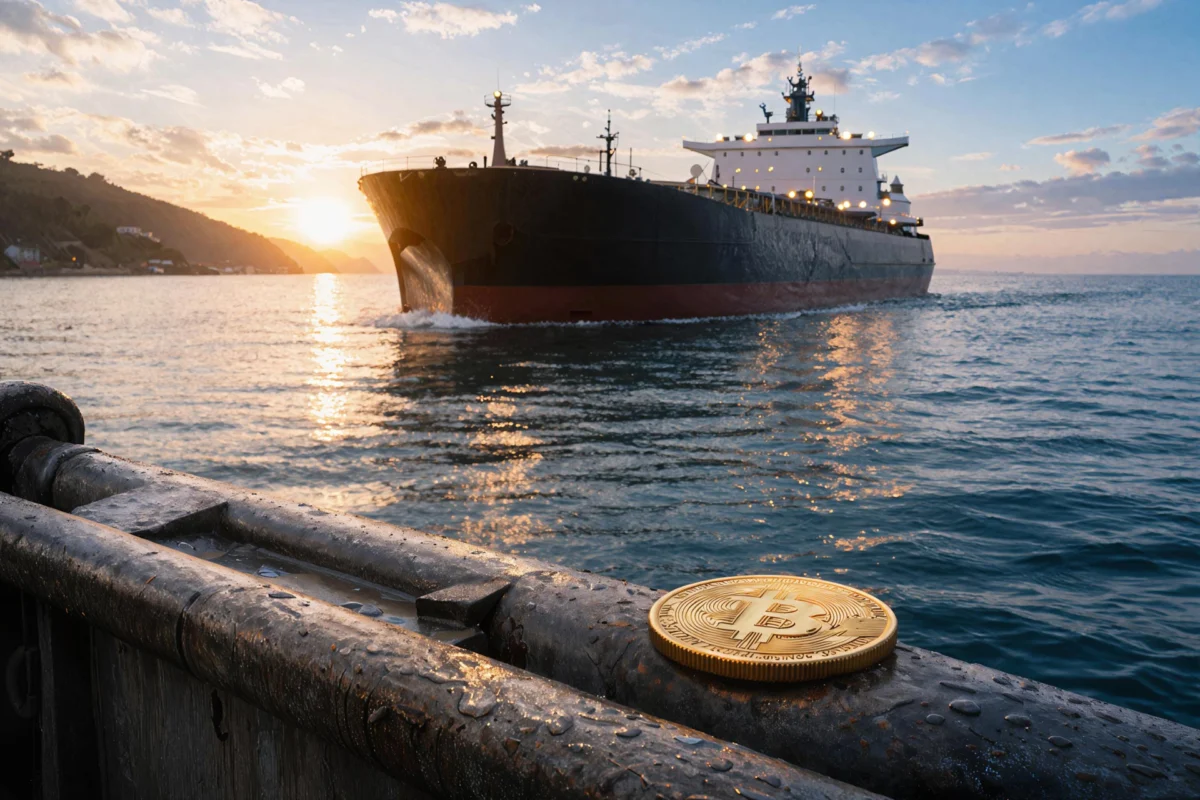
The global financial landscape is witnessing a significant shift as cooling geopolitical tensions in the Middle East begin to alleviate the energy-driven inflation fears that have constrained risk assets for several weeks. Bitcoin, the world’s leading digital currency by market capitalization, has demonstrated remarkable resilience, maintaining a position above the $71,000 threshold as market participants pivot their focus from conflict-induced volatility to an improving macroeconomic outlook. This shift is primarily driven by emerging signs of diplomatic engagement between Washington and Tehran, alongside a revised forecast from the U.S. Energy Information Administration (EIA) suggesting a downward trajectory for crude oil prices through the remainder of 2025 and into 2026.
The Diplomatic Pivot and Market De-escalation
The current market optimism follows a period of intense geopolitical friction that saw global energy prices surge. Since March 23, however, tangible traces of de-escalation have surfaced. In a surprising move, President Donald Trump ordered a five-day pause on planned strikes against Iranian targets, citing a need for "constructive conversations." This pause was intended to provide a window for mediated diplomacy, a development that immediately reverberated through the commodities and equities markets.
Reports indicate that the United States utilized Pakistan as a primary intermediary to deliver a 15-point diplomatic proposal to the Iranian leadership. Simultaneously, Turkey has played a critical role in facilitating back-channel communications between the two nations. While a formal ceasefire remains elusive and official negotiating tracks have yet to be established, the mere existence of these channels has provided a "risk-off" relief for traders.
The Iranian government has maintained a public stance of denial regarding direct talks with Washington. An Iranian military spokesperson characterized the U.S. efforts as "negotiating with itself." Despite this rhetoric, the cooling of active hostilities has been sufficient to trigger a correction in energy prices. Brent crude fell 5.2% to $99.01 a barrel, while West Texas Intermediate (WTI) dropped 5.1% to $87.62. These price movements suggest that the "war premium" previously baked into oil prices is beginning to evaporate.

The Critical Role of the Strait of Hormuz
The sensitivity of global markets to the US-Iran conflict is rooted in the strategic importance of the Strait of Hormuz. As the world’s most vital oil transit chokepoint, the strait facilitates the movement of approximately 20% of the global petroleum liquids consumption. Data from the EIA indicates that flows through the strait averaged 20.9 million barrels per day (bpd) in the first half of 2025. Furthermore, roughly 20% of the global liquefied natural gas (LNG) trade transited this narrow waterway in 2024.
Iran’s role as OPEC’s third-largest producer adds further weight to the situation. The nation pumps approximately 3.3 million bpd of crude and an additional 1.3 million bpd of condensate and other liquids. Roughly 90% of Iran’s crude exports are shipped through Kharg Island via the Strait of Hormuz. During the height of the recent conflict, shipping volumes through the strait reached a near-total standstill. Andre Dragosch, Head of Research for Europe at Bitwise, noted that at one point, shipping traffic had dwindled to a single vessel per day.
The potential for a 20% global supply shock is the primary reason why even mediated messaging between the U.S. and Iran moves markets so aggressively. Any discussion involving ceasefire terms, shipping safety, or the easing of sanctions carries immediate volumetric relevance for global energy supplies.
EIA Forecasts and the Path to Sub-$80 Oil
The EIA’s March outlook has provided a macro framework for the current market recovery. While the agency expects Brent crude to remain above $95 per barrel for the next two months due to lingering supply uncertainties, its long-term projections are decidedly more bearish. If regional disruptions continue to ease and global inventories begin to rebuild, the EIA forecasts that oil prices will fall below $80 per barrel in the third quarter of 2025, potentially reaching the $70 range by year-end.
The agency’s projections are based on an expected increase in global oil inventories, which are forecast to rise by an average of 1.9 million bpd in 2026 as global production once again outpaces consumption. For investors in risk assets like Bitcoin, this forecast is crucial. A credible diplomatic process does not need to yield an immediate surplus of oil to be effective; it only needs to increase the probability of this "softer path" for energy costs.

Monetary Policy and the "Oil-to-Rates" Transmission
The primary transmission mechanism between oil prices and Bitcoin is the impact of energy costs on inflation and, subsequently, on central bank interest rate policies. Higher oil prices exert direct upward pressure on headline inflation. Research from the Federal Reserve suggests that energy shocks also create a statistically significant pass-through into food and core prices over a period of approximately eight quarters.
The European Central Bank (ECB) recently quantified these stakes in its March 2026 staff projections. The ECB modeled an adverse energy scenario where oil prices hit $119 per barrel and gas prices reached €87 per megawatt-hour. Such a scenario was projected to lift Eurozone inflation by 0.9 percentage points, a move that would likely force central banks to maintain restrictive monetary policies for longer.
Crypto market maker Wintermute noted that if Brent crude stabilizes near the $100 mark and diplomacy holds, the inflation fears that dominated the previous month should subside. This would allow for the return of rate-cut expectations that were largely erased during the peak of the conflict. Federal Reserve Governor Michael Barr reinforced the high stakes of this dynamic on March 24, stating that while rates may need to hold steady for "some time," policymakers are looking for evidence that inflation is "sustainably retreating" before considering cuts.
Bitcoin as a Liquidity Proxy
Throughout the US-Iran conflict, Bitcoin has behaved less like a traditional geopolitical hedge (such as gold) and more like a high-beta expression of global liquidity conditions. Its recent rebound to $71,000 was not triggered by a crypto-specific event but rather by a broader recovery in technology shares and the stabilization of market risk.
Flow data from CoinShares supports this interpretation. Digital-asset investment products saw inflows of $230 million last week, with $219 million specifically targeting Bitcoin. This followed a significant $405 million outflow after a hawkish Federal Open Market Committee (FOMC) meeting. CoinShares analysts attributed the selling pressure to Federal Reserve policy rather than the conflict itself, suggesting that liquidity and interest rate expectations remain the dominant drivers for the crypto market.

Interest rate futures have reflected this volatility. At the height of the energy scare, futures markets implied almost no chance of a Fed rate cut before mid-2027. However, following the recent diplomatic headlines, the probability of a December rate hike dropped from 25% to approximately 16%.
Timeline of Key Events
- Early March 2025: Oil prices surge as tensions escalate in the Middle East; Bitcoin faces downward pressure amid "higher-for-longer" rate fears.
- March 19-22, 2025: Shipping traffic in the Strait of Hormuz slows to a crawl; EIA warns of a potential 20% global supply shock.
- March 23, 2025: President Trump announces a 5-day pause on military actions to facilitate diplomacy.
- March 24, 2025: Reports emerge of a 15-point U.S. proposal sent via Pakistan; Brent and WTI crude prices drop by over 5%.
- March 25, 2025: Bitcoin rallies above $71,000 as traders re-evaluate inflation risks and interest rate futures.
Future Implications and Market Outlook
The outlook for Bitcoin remains intrinsically tied to the stability of the energy market. A protracted diplomatic process, even one without a formal treaty, could serve to "cap" oil prices. If Brent crude continues to drift lower as shipping fears subside, the pressure on bond yields will likely ease, creating a more favorable environment for risk assets.
Under the EIA’s projected path toward sub-$80 oil, Bitcoin would have a clearer technical opening to revisit and potentially exceed its previous all-time highs. A formalized ceasefire or a return to normal shipping volumes in the Strait of Hormuz would likely accelerate this trend by removing the "stagflation" threat that has loomed over the global economy.
Conversely, a collapse in diplomatic efforts would likely reverse the recent gains. A return to hostilities would send oil prices back toward the $120 level, forcing markets to price in a more aggressive policy path from the Fed and other major central banks. As seen in previous weeks, the adjustment to such a scenario can happen rapidly, often resulting in sharp corrections for both equities and cryptocurrencies.
For now, the market is betting on the "diplomatic path." While Bitcoin can and has risen during periods of conflict, its most sustainable path higher appears to be aligned with the unwinding of energy shocks and the restoration of global liquidity. The coming weeks will be critical as the 5-day diplomatic window closes and the reality of the negotiated terms—or lack thereof—becomes clear to global investors.