Nila Kartika Wati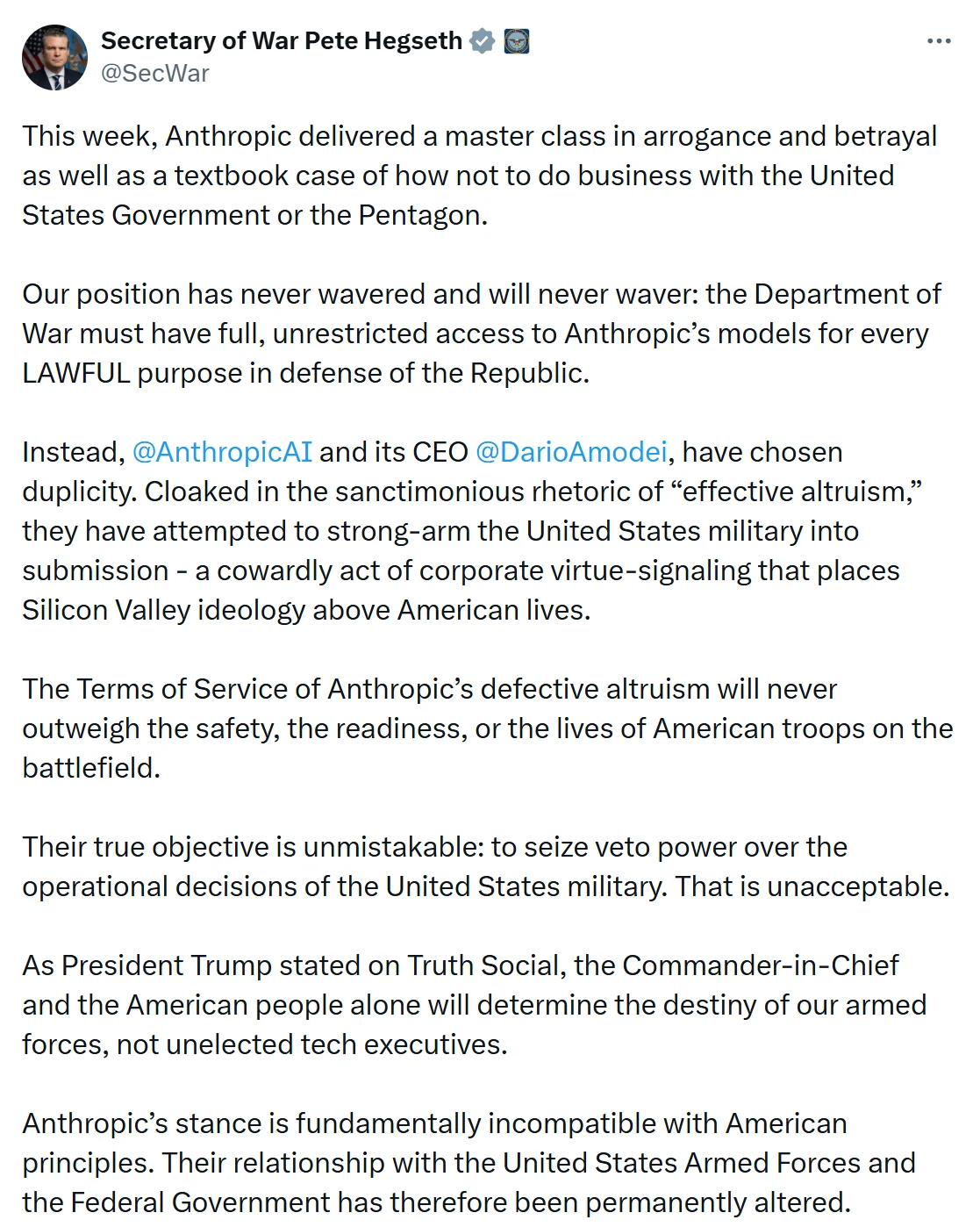
Google is poised to significantly back a multibillion-dollar data center project in Texas, leased to its strategic AI partner Anthropic, signaling a dramatic escalation in the global competition for artificial intelligence infrastructure. This ambitious undertaking, managed by Nexus Data Centers, is projected to surpass $5 billion in its initial phase, with Google reportedly extending crucial construction loans to facilitate its development. This financial commitment underscores Google’s deep vested interest in Anthropic’s success and its broader strategy to cement its position in the burgeoning AI ecosystem.
The Financial Times reported on Friday, citing sources close to the matter, that Google’s financial support is a critical component of the project’s funding structure. In addition to Google’s involvement, a consortium of major banks is actively vying to arrange further financing for the massive development, with a target of finalizing agreements by mid-year. This multi-faceted financing approach highlights both the immense capital requirements of advanced AI infrastructure and the strong institutional confidence in the sector’s long-term growth trajectory.
Anthropic, a leading AI research and deployment company renowned for its Claude series of large language models, recently finalized a lease for the expansive 2,800-acre campus. This agreement is a cornerstone of its deepening infrastructure collaboration with Google, which also includes a cloud computing partnership and a substantial investment from the tech giant. Construction on the vast site is already underway, supported by early-stage debt financing secured from Eagle Point, a publicly traded closed-end investment company, indicating the rapid pace at which these critical AI facilities are being brought online.
The Race for AI Infrastructure: A New Arms Race
The digital economy’s reliance on data centers has been growing for decades, but the advent of generative AI has ushered in an unprecedented demand for specialized, high-capacity computing infrastructure. Training and deploying sophisticated AI models like Anthropic’s Claude 3 or OpenAI’s GPT-4 requires colossal amounts of computational power, often measured in exaflops (one quintillion floating-point operations per second). These models are trained on petabytes of data, necessitating vast clusters of Graphics Processing Units (GPUs) and specialized AI accelerators, all of which consume enormous amounts of energy and generate significant heat, requiring sophisticated cooling systems.
Major tech companies, including Google, Microsoft, Amazon, and Meta, are locked in an intense "AI infrastructure arms race." Billions are being poured into building hyperscale data centers optimized for AI workloads, securing access to advanced chips from manufacturers like Nvidia, and developing proprietary AI accelerators. Google’s commitment to the Texas project for Anthropic is a clear manifestation of this trend, ensuring its strategic partner has the foundational computing power to innovate and compete effectively against rivals backed by other tech giants. Microsoft, for instance, has invested billions in OpenAI and provides the necessary Azure cloud infrastructure for its operations, while Amazon Web Services (AWS) is also a significant cloud provider for Anthropic and other AI startups.
Anthropic’s Strategic Partnerships and Growth
Anthropic was founded in 2021 by former members of OpenAI, driven by a commitment to developing safe and beneficial AI. Its flagship Claude family of models has emerged as a strong competitor in the LLM space, recognized for its advanced reasoning capabilities, context window, and robust safety features. To sustain its rapid innovation and scale its offerings, access to cutting-edge infrastructure is paramount.
Google’s multi-faceted relationship with Anthropic includes a significant financial investment, reported to be around $2 billion, and a long-term agreement for Anthropic to utilize Google Cloud services for its AI research and development. This deep integration means that Google has a vested interest in Anthropic’s operational capacity, making the investment in the Texas data center a logical extension of their strategic alliance. By providing construction loans, Google effectively underwrites Anthropic’s expansion, ensuring the availability of crucial computing resources without Anthropic having to bear the full upfront capital expenditure directly. This arrangement mitigates risk for Anthropic while guaranteeing Google a strategic foothold in the AI infrastructure supply chain for a key partner.
The Texas Gigafactory: Scale, Scope, and Economic Impact
The proposed data center campus in Texas represents an enormous leap in AI infrastructure capacity. The site is expected to deliver approximately 500 megawatts (MW) of power capacity by late 2026, an amount roughly equivalent to powering 500,000 homes. This initial phase alone positions it as one of the largest data center complexes globally. However, the ambitions extend far beyond this, with potential expansion plans envisioning a staggering 7.7 gigawatts (GW) of capacity. To put this in perspective, 7.7 GW is more than the generating capacity of many small countries and would rank among the largest single power consumers in the world, highlighting the insatiable energy demands of next-generation AI.
The strategic location of the 2,800-acre campus in Texas is not coincidental. Texas offers abundant land, a business-friendly environment, and, crucially, access to robust energy infrastructure. The site’s proximity to major natural gas pipelines operated by industry giants such as Enterprise Products Partners, Energy Transfer, and Atmos Energy is a key advantage. This allows the project to potentially rely on on-site gas turbines for power generation, offering a degree of energy independence and potentially more stable and cost-effective electricity supply compared to drawing solely from the grid. While natural gas remains a fossil fuel, on-site generation can offer efficiency benefits and reliability crucial for such mission-critical operations. The long-term environmental implications of such large-scale energy consumption and generation will undoubtedly be a subject of ongoing scrutiny.
The economic impact of a project of this scale on Texas will be substantial, including job creation during construction and operation, increased tax revenues, and the potential to attract ancillary businesses and skilled labor to the region, further solidifying Texas’s position as a hub for technology and energy.
Anthropic’s Regulatory Headwinds: The Pentagon Dispute
Concurrent with its rapid infrastructure expansion, Anthropic has been navigating significant regulatory and legal challenges, particularly concerning its engagement with the U.S. government. On Thursday, a U.S. federal judge in San Francisco temporarily blocked the Pentagon from designating Anthropic a national security risk, a move that would have halted government use of its AI tools. This ruling marked a significant victory for Anthropic in its legal battle against a directive that had sought to cut off federal access to its highly capable Claude chatbot.

Chronology of the Ban and Legal Challenge
- Undisclosed Date (Pre-Lawsuit): Negotiations between Anthropic and the Pentagon reportedly break down over the military use of Anthropic’s AI models. Anthropic maintained a strong ethical stance against allowing its models to be used for lethal autonomous weapons or mass surveillance.
- Undisclosed Date (Pre-Lawsuit): A directive, reportedly backed by former President Donald Trump and later pursued by Pentagon officials, labels Anthropic as a "supply chain risk" and seeks to ban its AI tools from federal use, citing national security concerns.
- Undisclosed Date (Lawsuit Filing): Anthropic files a lawsuit, arguing that the Pentagon overstepped its authority by unilaterally designating the company a supply chain risk without due process or clear legal justification.
- Thursday (Recent Ruling): Judge Rita Lin grants a preliminary injunction, effectively pausing the Pentagon’s directive. The judge described the government’s actions as "arbitrary" and warned against branding a U.S. company as a threat without a clear legal basis.
Ethical AI vs. National Security Imperatives
Anthropic’s principled stance against the use of its AI models for lethal autonomous weapons or mass surveillance highlights a growing tension between AI developers’ ethical guidelines and national security interests. Many leading AI companies, including Anthropic, have publicly articulated commitments to responsible AI development, emphasizing safety, fairness, and human oversight. These commitments often include red lines regarding military applications that could lead to autonomous decision-making in lethal contexts or widespread surveillance that infringes on civil liberties.
The Pentagon, conversely, views AI as a critical strategic advantage for maintaining military superiority and enhancing operational efficiency. From intelligence analysis and logistics to predictive maintenance and cyber defense, the U.S. military is actively exploring and integrating AI across numerous domains. The perceived risk of not having access to leading-edge AI models from companies like Anthropic, or the potential for foreign adversaries to gain an advantage, often drives calls for greater government control or access to these technologies. This fundamental divergence in priorities — ethical guardrails versus national security imperatives — is at the heart of the dispute.
Judicial Scrutiny and First Amendment Concerns
Judge Lin’s decision to grant the preliminary injunction was based on the finding that the government’s actions were likely "arbitrary" and potentially violated Anthropic’s First Amendment rights. The judge suggested that the Pentagon’s measures might have been retaliatory against Anthropic for its public stance on responsible AI use and its refusal to acquiesce to certain military applications. Branding a U.S. company as a national security threat without clear legal frameworks or demonstrable evidence raises significant concerns about governmental overreach and the chilling effect it could have on free speech and corporate autonomy, particularly for companies operating in sensitive technological fields.
This ruling sends a powerful message about the need for transparency, due process, and a clear legal basis when the government seeks to restrict the operations of private companies, especially those at the forefront of critical emerging technologies like AI. It underscores the judiciary’s role in safeguarding corporate rights and preventing executive agencies from exceeding their statutory authority.
Unsanctioned Use: AI on the Battlefield
Adding another layer of complexity and contradiction to the Pentagon’s ban, reports emerged that U.S. military units reportedly used Anthropic’s Claude AI model during a major airstrike on Iran, even after the ban order by the Trump administration. Military commands, including U.S. Central Command (CENTCOM) in the Middle East, allegedly deployed the AI model for operational support.
This reported unsanctioned use highlights a significant disconnect between policy directives from the top levels of government and the on-the-ground reality of AI adoption within military units. It suggests that while official bans or restrictions may be in place, the perceived utility and effectiveness of advanced AI tools can lead to their informal or covert deployment by operational units seeking a technological edge.
In an operational context, an AI model like Claude could be used for a variety of "operational support" tasks, such as:
- Intelligence Analysis: Sifting through vast amounts of open-source intelligence, satellite imagery, or communications data to identify patterns, anomalies, and potential threats more rapidly than human analysts.
- Logistics and Planning: Optimizing supply chains, predicting equipment failures, or assisting in the complex planning of military operations by simulating scenarios and identifying potential bottlenecks.
- Situational Awareness: Synthesizing real-time data from various sensors and feeds to provide commanders with a more comprehensive and up-to-date understanding of the battlefield.
- Report Generation: Automating the creation of reports, summaries, and briefings, freeing up human personnel for more critical tasks.
The fact that military units reportedly used Claude despite a ban raises serious questions about internal compliance, the urgency with which AI is being integrated into defense operations, and the potential for a "shadow AI" infrastructure to emerge if formal procurement channels are blocked.
Broader Implications for AI Governance
The confluence of these events — Google’s massive infrastructure investment, Anthropic’s rapid scaling, and its legal confrontation with the Pentagon — underscores the multifaceted challenges and opportunities presented by advanced AI. It highlights:
- The Criticality of Infrastructure: AI development is fundamentally bottlenecked by computing power. Whoever controls the most advanced data centers and chips will have a significant advantage in the AI race.
- The Power of Strategic Partnerships: The deep ties between tech giants (Google, Microsoft, Amazon) and leading AI labs (Anthropic, OpenAI) are shaping the competitive landscape and driving innovation.
- The Ethical Dilemma of Dual-Use Technologies: AI’s potential for both immense societal benefit and profound harm, particularly in military applications, demands careful governance, clear ethical frameworks, and robust oversight.
- The Role of the Judiciary: Courts are increasingly becoming arbiters in disputes involving cutting-edge technology and government regulation, shaping the boundaries of corporate autonomy and national security powers.
- The Challenge of Policy Implementation: The reported use of banned AI in military operations points to the difficulty of enforcing top-down policies in rapidly evolving technological domains, especially when operational necessity is perceived to be high.
As AI capabilities continue to advance at an exponential pace, the interplay between technological innovation, corporate strategy, ethical considerations, and governmental control will only grow more complex. The unfolding saga of Anthropic’s infrastructure expansion and its legal battles offers a compelling case study in the high-stakes environment of the modern AI frontier. The resolution of these challenges will not only determine the future trajectory of Anthropic but also set precedents for the broader governance and deployment of artificial intelligence globally.