James Watt
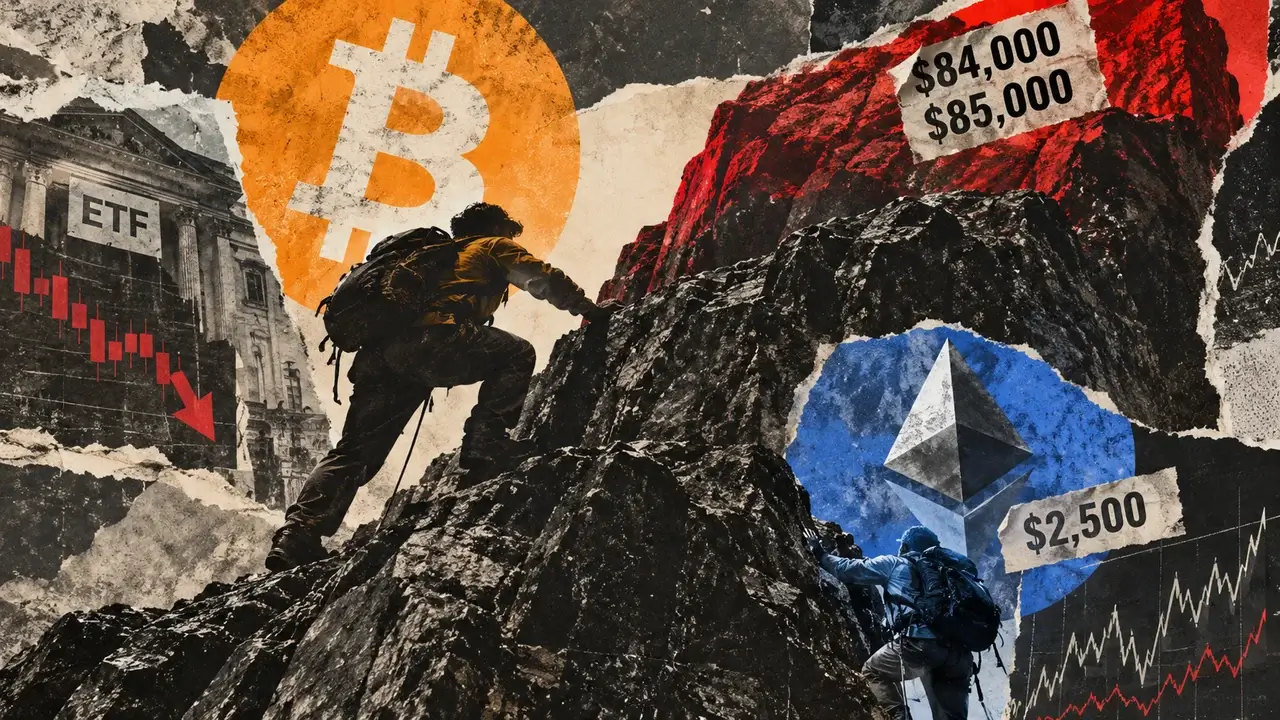
The recent volatility underscores a fundamental change in how participants utilize the cryptocurrency. When tensions between Washington and Tehran escalated, Bitcoin experienced a sharp selloff, dipping into the high-$68,000 range. However, as President Donald Trump announced that strikes would be delayed pending "productive" negotiations, the market responded with an immediate and aggressive rally, reaching an intraday high of approximately $71,782. This pattern—where escalation triggers liquidation and de-escalation fuels a relief rally—indicates that Bitcoin is acting as a high-beta expression of macro stress rather than a traditional "safe haven" asset like gold.
A Chronology of Geopolitical Influence and Market Reaction
To understand the emergence of Bitcoin as a geopolitical switch, it is necessary to examine the sequence of events that dictated the recent price action. The timeline reveals a market that is hyper-sensitive to headlines, reacting well before traditional equity or commodity markets can fully integrate new information.
The cycle began with an escalation of rhetoric regarding Iranian energy and nuclear infrastructure. As the threat of kinetic action became tangible, Bitcoin saw approximately $243 million in long liquidations within a narrow window. This downward pressure was mirrored by a rise in crude oil prices and a softening of global equity futures. During this phase, Bitcoin’s correlation with risk-on assets was high, as traders moved to reduce exposure to volatile instruments in anticipation of a supply-side shock in the energy sector.
The turning point occurred when the White House signaled a strategic pause. The five-day delay in planned strikes was framed not as a retreat, but as a window for diplomatic engagement. Almost instantly, Bitcoin reversed its losses. While traditional markets were still digesting the implications of the announcement, Bitcoin reclaimed the $70,000 level. This rapid recovery occurred in tandem with a sharp drop in oil prices and a weakening of gold, which had previously served as the primary hedge against the conflict. The divergence between Bitcoin and gold during this de-escalation phase is significant; it suggests that Bitcoin is being traded as a "relief asset" that benefits from the removal of tail risks, rather than a store-of-value that thrives on chaos.
The Energy Transmission Line: Why Iran and Hormuz Matter to Crypto
The structural reason for Bitcoin’s sensitivity to Iranian developments lies in the global energy market. Iran’s role in the geopolitical landscape is inextricably linked to the Strait of Hormuz, a critical chokepoint for global trade. Data from the Energy Information Administration (EIA) indicates that approximately 20.9 million barrels of petroleum liquids moved through the Strait daily in the first half of 2025. This represents roughly 20% of global consumption. Furthermore, one-fifth of the world’s liquefied natural gas (LNG) trade transits this route.
Any disruption to this corridor acts as a direct transmission line for global inflation. A spike in energy costs forces a repricing of the Federal Reserve’s interest rate path, as higher energy prices can lead to "sticky" inflation that delays expected rate cuts. Bitcoin, which is highly sensitive to the discount rate and financial conditions, sits at the end of this chain. When the threat to Hormuz increases, the market prices in higher inflation and tighter for longer interest rates, which is inherently bearish for Bitcoin. Conversely, when the threat recedes—as it did with the strike delay—the market prices in a more benign inflation outlook and a return to the "soft landing" narrative, providing a tailwind for Bitcoin.
Institutional Flows and Market Structure Analysis
The behavior of institutional investors provides further evidence of Bitcoin’s role as a macro instrument. According to recent data from Farside Investors, spot Bitcoin ETF flows have remained tactically unstable but overall engaged. Early last week, flows were positive, reflecting a baseline of institutional accumulation. However, as the geopolitical rhetoric intensified over the weekend, flows turned negative, indicating a retreat by shorter-term tactical allocators.
Following the news of the strike delay, ETF flows rebounded significantly, recording a net inflow of $167 million on the following Monday. This suggests that institutional participants are using these vehicles to express views on the global macro environment. The conviction among these buyers appears conditional; they are willing to provide support when the geopolitical premium fades but are quick to de-risk when the probability of a systemic shock rises.
Analysis from Glassnode supports this view of a stabilizing but reactive market. Throughout late February and early March, Bitcoin held a broad range between $62,800 and $72,600. The firm noted that the demand zone between $60,000 and $69,000 has become a critical area of price discovery. The fact that Bitcoin held the upper half of this range during the recent stress window suggests a growing resilience, even as the asset remains a primary target for deleveraging during moments of peak panic.
The Options Market and Tail-Risk Pricing
The derivatives market offers a more granular look at how professional traders are hedging against geopolitical uncertainty. Data from the CME Group indicates that during the height of the recent escalation, 25-delta implied volatility surged to its highest levels since 2022. The 25-delta risk reversal—a measure of the cost of puts versus calls—fell deeply negative, reflecting an unusually strong demand for downside protection.
On the Deribit exchange, realized volatility has since cooled into the mid-50s as the immediate threat of war receded. However, analysts note that tail-risk pricing has not entirely disappeared. While the "panic" has been repaired, the demand for puts at lower strikes remains higher than during the more benign periods of 2024. This indicates that while the "geopolitical switch" has flipped to a relief setting, the market remains wary of a sudden reversal. The presence of negative funding rates and improved ETF flows has also created a environment ripe for short squeezes, which may have mechanically amplified the recent move back above $70,000.
A Five-Layer Framework for Repricing Risk
To navigate this new regime, analysts are increasingly using a multi-layered framework to separate signal from noise. This model organizes the impact of geopolitical events into a sequence of market reactions:
- Geopolitical Development: The initial headline sets the directional impulse for Bitcoin as the 24/7 "first responder."
- Oil Response: The movement in crude oil determines whether the event will have a lasting impact on inflation and growth expectations.
- Rates Response: Shifting expectations for central bank policy determine whether Bitcoin is treated as a risk-on asset or a macro hedge.
- Flow Response: Data from ETFs and ETPs reveals whether institutional "smart money" is validating the price move.
- Positioning Response: Metrics such as funding rates and options skew help distinguish between genuine market acceptance and a mechanical short squeeze.
This framework clarifies why Bitcoin’s speed is its most defining characteristic in the current era. It is not necessarily that Bitcoin is a "smarter" market than gold or equities, but it is the most accessible market when news breaks outside of standard trading hours. As a globally distributed asset with deep derivatives liquidity, it allows for the immediate expression of a new macro probability.
Broader Implications and the "Digital Gold" Debate
The recent price action challenges the long-standing narrative that Bitcoin serves as "digital gold." In a traditional safe-haven regime, Bitcoin would be expected to rise alongside gold during times of war and fall when peace is signaled. Instead, Bitcoin is behaving like a high-velocity proxy for global financial conditions. It is sensitive to the same forces that drive tech stocks and high-yield credit, but with the added dimension of being a 24/7 sentiment instrument.
This does not preclude Bitcoin from eventually becoming a safe haven, but it suggests that the market is currently in a transitional phase. In the event of a genuine, prolonged disruption to the global energy supply, the first response for most investors would likely be a dash for cash, leading to the liquidation of high-beta assets including Bitcoin. Only after the initial deleveraging phase would a "hard money" or "haven" narrative potentially take hold.
The clean takeaway from the current market environment is that Bitcoin has entered a development-driven, reflexive phase. It is now a permanent fixture of the first-order price discovery process. When geopolitical changes alter the expected path of inflation and interest rates, Bitcoin is often the first major liquid asset to register that shift. For traders and policymakers alike, the digital asset has become a vital piece of the global macro puzzle—a real-time switch that reflects the world’s collective appetite for risk or its sudden need for caution. The next test for this regime will be whether Bitcoin can maintain its current levels once the immediate geopolitical headlines fade and the market returns its focus to domestic economic data.