James Watt
The November Lido Poolside community call, held in late 2025, served as a crucial LDO tokenholder update, outlining the protocol’s strategic direction, market performance, and financial health. Vasiliy Shapovalov, Executive Director at the Lido Labs Foundation, delivered a comprehensive presentation, delving into Lido’s current market position and financial standing, proposing an innovative buyback framework for LDO, and unveiling a forward-looking strategic outlook for 2026. This vision, set to be formally proposed to the Lido DAO within the ongoing Guided Open Objective Setting Exercise (GOOSE) cycle, signals an era of both consolidation in liquid staking and ambitious diversification into broader Web3 applications.
Lido Protocol: Pillars of Decentralized Staking
At its core, Lido stands as a leading liquid staking protocol on Ethereum, providing a streamlined and secure pathway for users to stake their ETH. The protocol issues stETH (staked ETH) in return, a liquid token that retains utility across the expansive decentralized finance (DeFi) ecosystem. This mechanism allows stakers to earn rewards while maintaining liquidity, a key differentiator from traditional, illiquid staking methods.
Governance of the Lido protocol is orchestrated by the Lido DAO, a decentralized autonomous organization comprising LDO tokenholders. Through a robust governance framework, tokenholders are empowered to define protocol parameters, approve upgrades, manage the Lido DAO Treasury, set strategic objectives, and authorize grants for its operational entities: the Lido Labs Foundation, Lido Ecosystem Foundation, and Lido Alliance Foundation. The Lido Labs Foundation, specifically, is instrumental in the protocol’s technical evolution, developing and maintaining its codebase, implementing upgrades, and integrating new features. Its leadership team includes Vasiliy Shapovalov as Executive Director, Isidoros Passadis as Chief of Staking, and Sam Kim as Chief Legal & Operating Officer, ensuring a blend of technical expertise, operational efficiency, and legal compliance.
Navigating the Ethereum Staking Landscape: Q1-Q3 2025 Performance
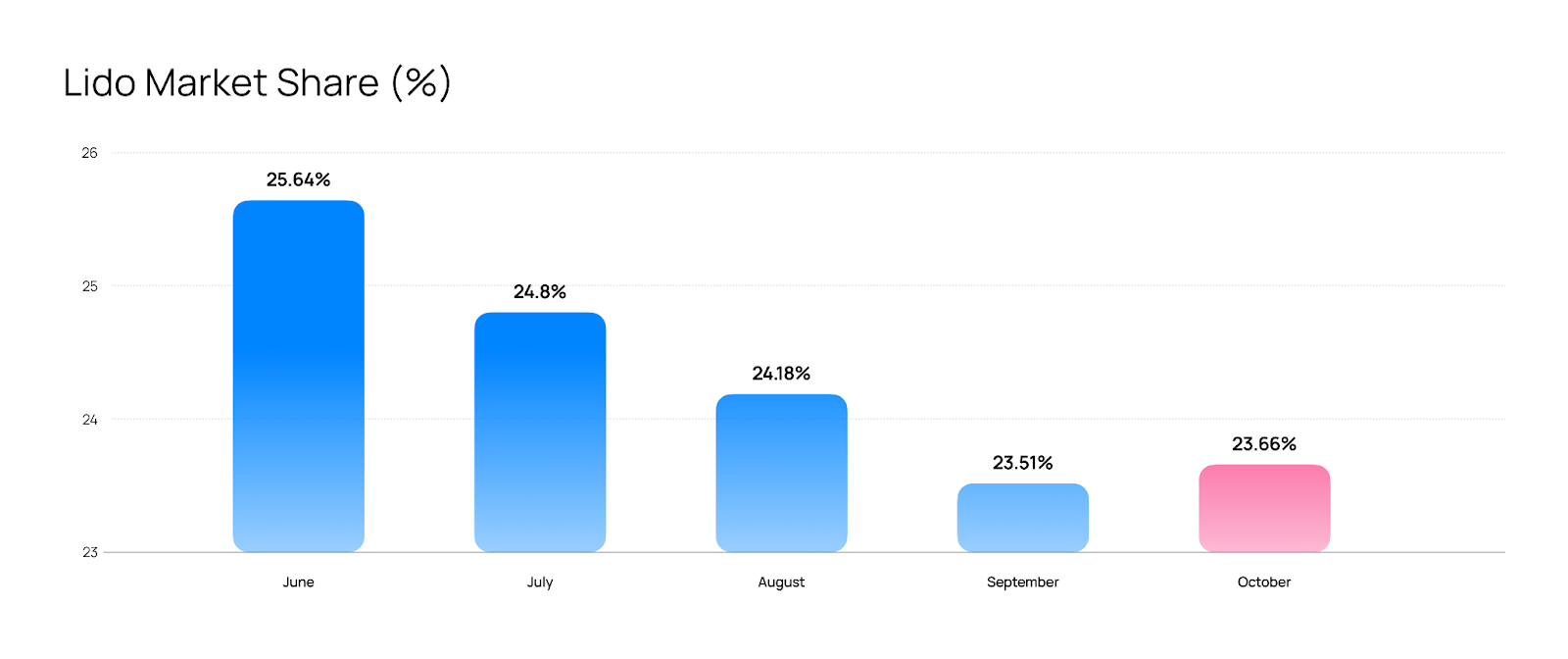
The third quarter of 2025 presented a dynamic and competitive landscape for Ethereum staking. Despite heightened competition from centralized exchanges (CEXs) such as Coinbase, Binance, and Kraken, alongside specialized staking providers catering to large institutional clients, the Lido protocol successfully maintained its dominant position, commanding 23.7% of the total staked ETH market. This leadership, however, was not without challenges. The broader staking ecosystem experienced a contraction, largely driven by a significant deleveraging trend. Funds employing delta-neutral strategies, which typically balance long positions in liquid or illiquid staking with stablecoin shorts, reduced their exposure across the board.
Consequently, Lido protocol’s market share observed a slight decline of 1.0 percentage point compared to Q2 2025. This period reflected a broader market recalibration, as investors adjusted their risk profiles amidst evolving macroeconomic conditions and regulatory uncertainties. Nevertheless, the onset of Q4 2025 saw a positive reversal, with Lido’s share resuming a growth trajectory, indicating a resilient underlying demand for its liquid staking solution and the effectiveness of its strategic adaptations. The ability to quickly rebound underscores Lido’s strong market fit and the enduring appeal of its value proposition.
Deep Dive into Market Segments and Growth Drivers

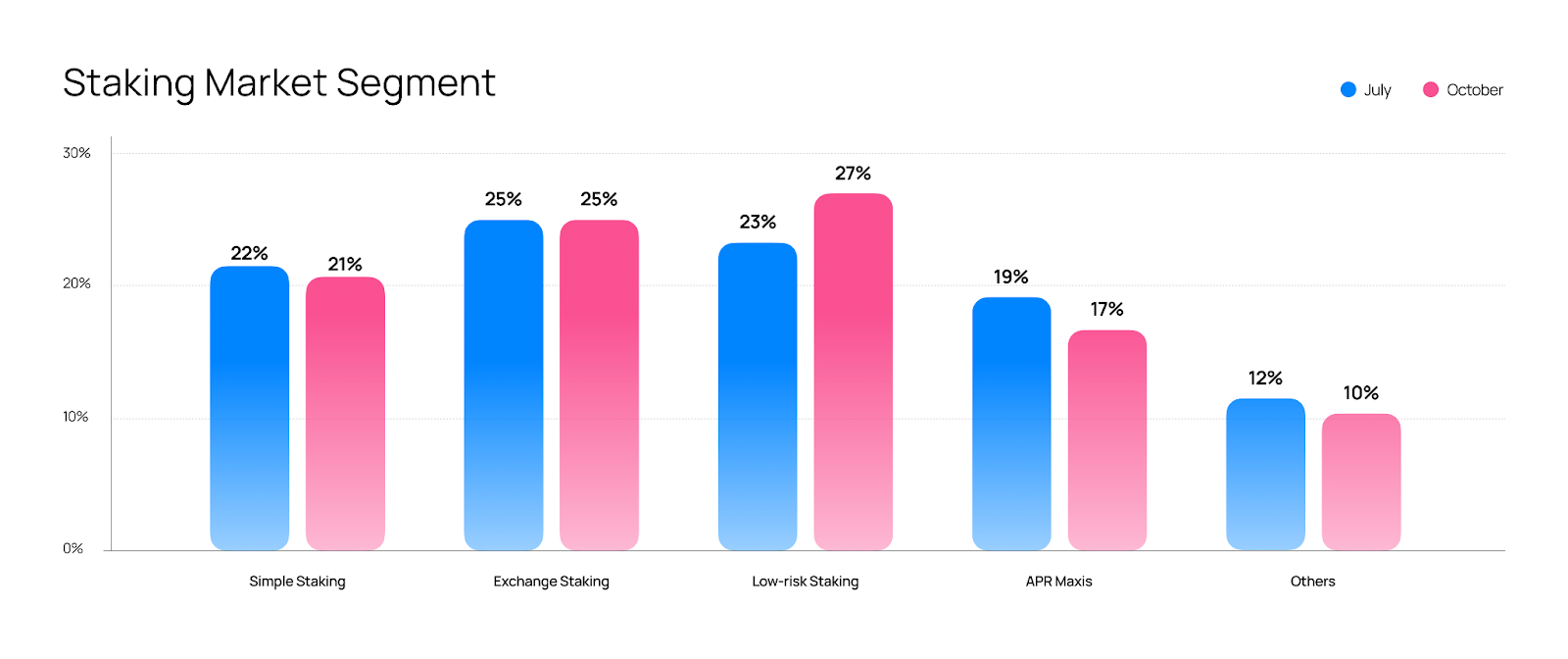
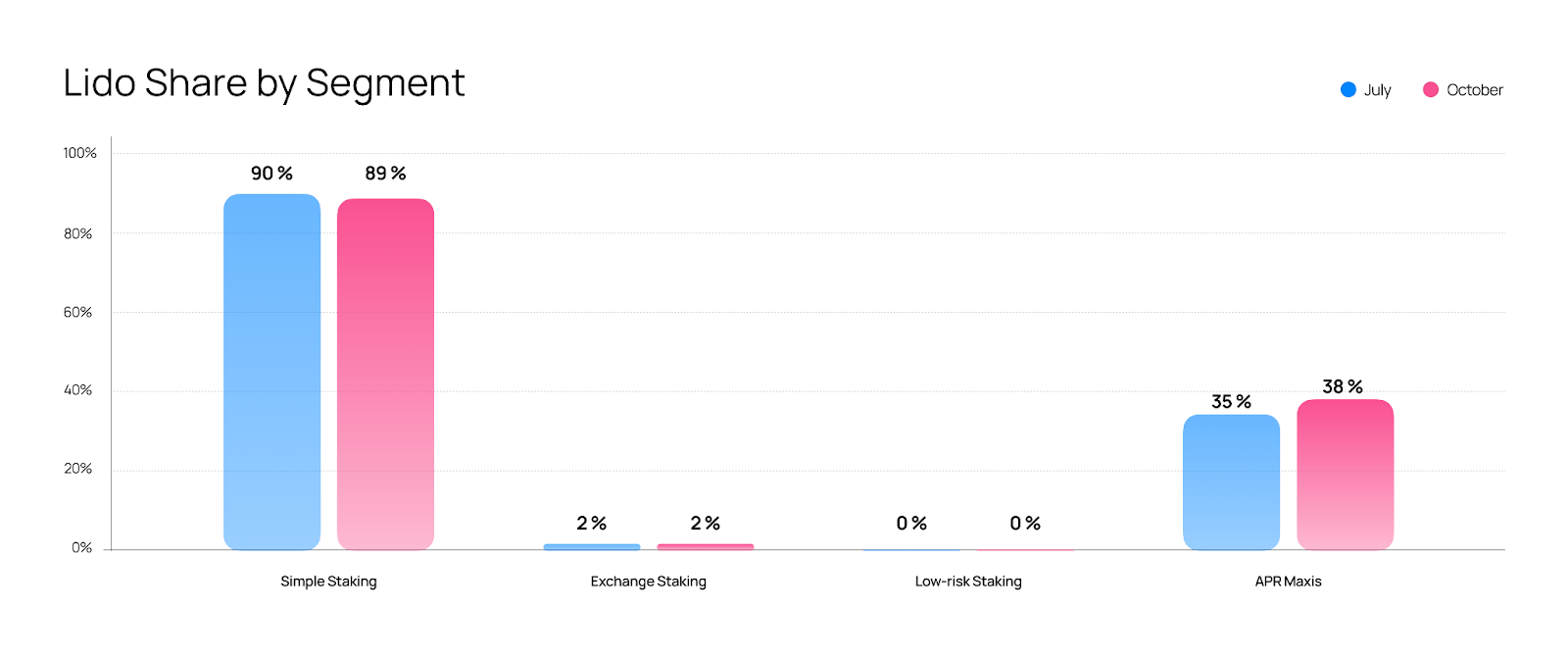
The Ethereum staking market, from Lido’s perspective, is segmented into five distinct categories, each presenting unique opportunities and challenges for the protocol. Lido’s engagement across these segments remained largely stable throughout Q2 and Q3 2025, though with strategic adjustments influencing future growth.
- Simple Liquid Staking: This segment constitutes approximately 21% of the total Ethereum staking ecosystem. Lido’s participation here is exceptionally strong, holding around 89% of this category. The recent one-percentage-point reduction in share was primarily attributed to withdrawals rather than direct competitive pressure, highlighting the loyalty and stickiness of its user base in this foundational segment.
- Exchange Staking: Accounting for roughly 25% of the market, this segment remains challenging for decentralized protocols like Lido. Lido currently holds a modest 2% share. The primary hurdles are custodial constraints and regulatory barriers that limit the integration of decentralized third-party products within centralized exchange environments. Overcoming these will require innovative solutions and potential shifts in regulatory frameworks.
- Low-Risk Staking: Lido currently lacks direct participation in this segment, which typically involves staking through custodians or regulated entities. However, early traction is being established through ongoing discussions with various custodians, signaling an intent to penetrate this crucial institutional market. The impending launch of Lido V3 is poised to be a breakthrough. This iteration will introduce "stVaults," offering instant liquidity on demand for delegated staking. This significantly enhances utility by combining liquidity with optional access to DeFi applications and their rewards, as well as enabling participation in traditional finance platforms through the use of liquid staked ETH in borrowing mechanisms. Several leading node operators, including Solstice, Chorus One, Everstake, and P2P, are already developing solutions leveraging stVaults’ design. Furthermore, Linea has integrated stVaults for Native Yield, a novel protocol mechanism enabling automatic, directly integrated Ethereum staking rewards. In a significant development for broader market access, VanEck’s filing for a Lido stETH ETF is currently under review in the U.S., which could open avenues for institutional capital into liquid staking.
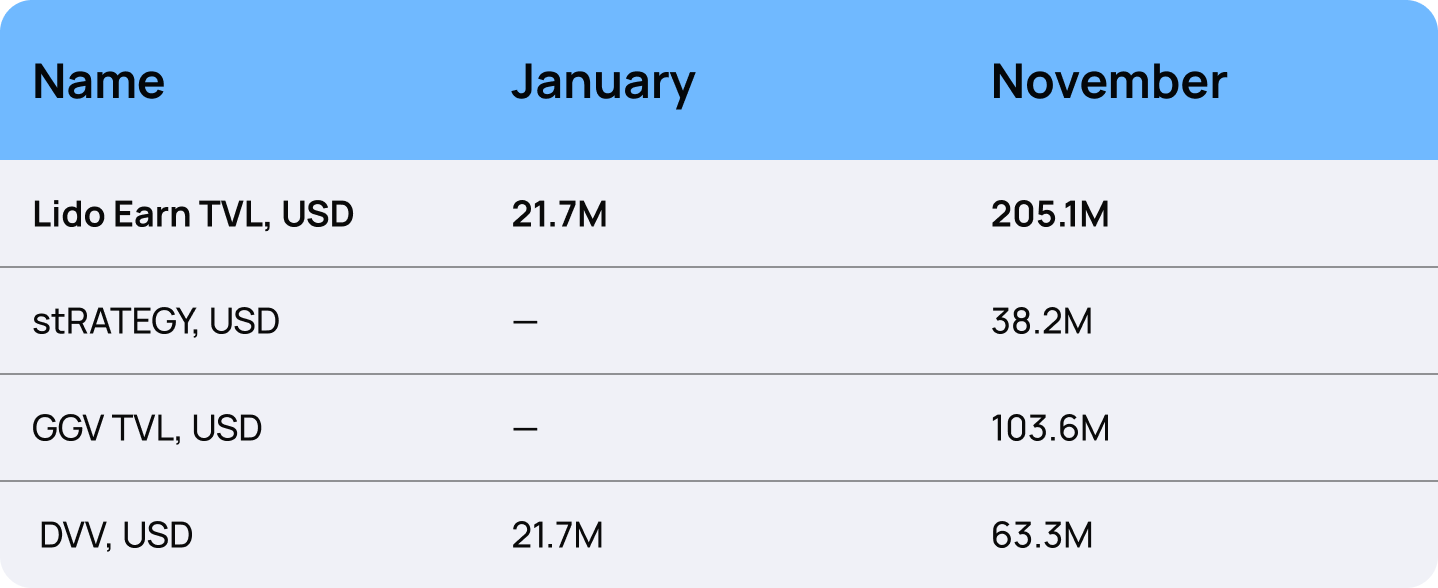
- APR Maxis: This segment, representing about 17% of the total market, caters to users seeking optimized annual percentage rates (APR) through more complex strategies. Lido’s participation here stands at approximately 38%, distributed across leveraged staking (22%), restaking collateral (15%), and Lido Earn activity (1%). Lido Earn has demonstrated remarkable growth, expanding from $21.7 million in January to an impressive $205.1 million in November 2025. This surge aligns with the successful launch of GGV and stRATEGY Vaults, reflecting a clear user appetite for higher-complexity integrations offering enhanced yields. Overall, Lido Earn’s burgeoning activity contributed an estimated 3-5% increase to the DAO’s revenue, underscoring its growing importance as a value driver.
Fortifying Financial Foundations: Operational Model and Treasury Health
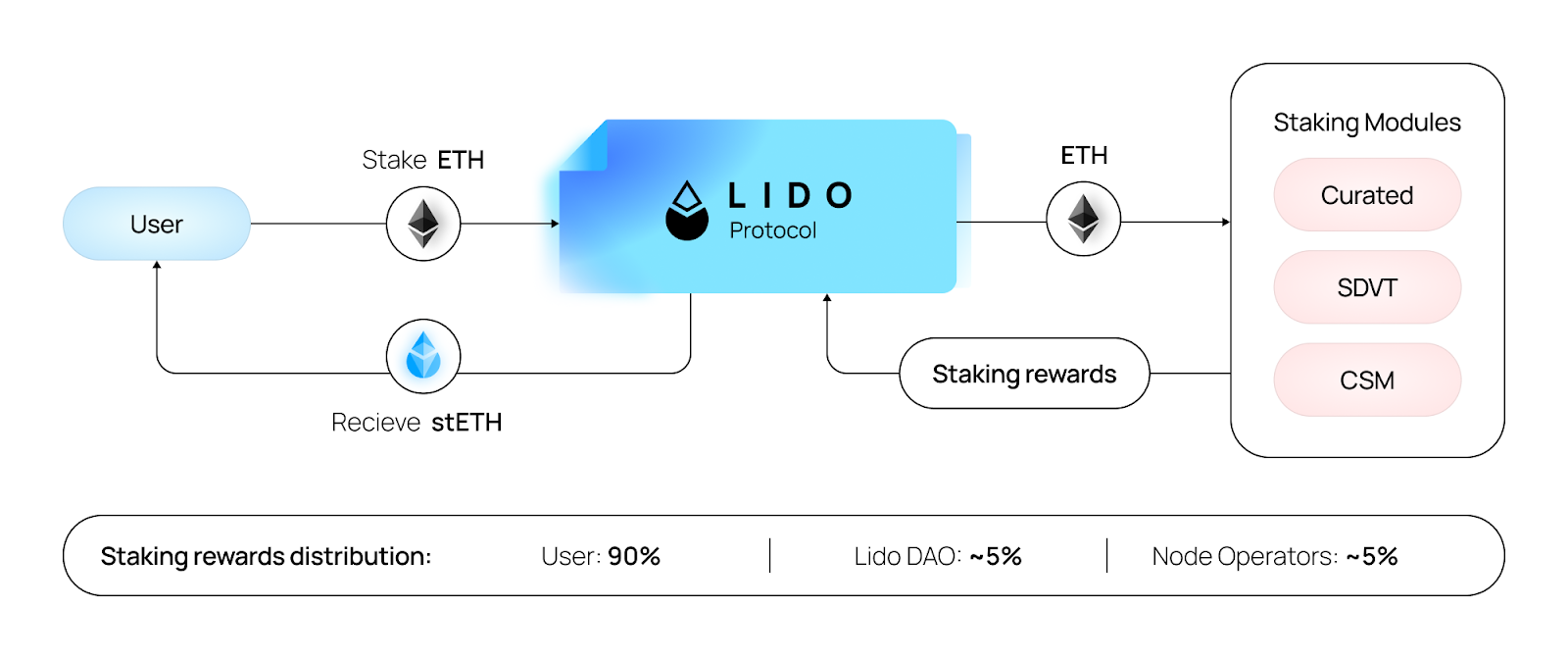
The Lido protocol operates on a transparent and robust financial model designed to distribute staking rewards efficiently while ensuring the long-term sustainability of the DAO. Users deposit ETH into the protocol and receive stETH in return. This ETH is then strategically allocated through the Staking Router into various Staking Modules, managed by a network of professional node operators.
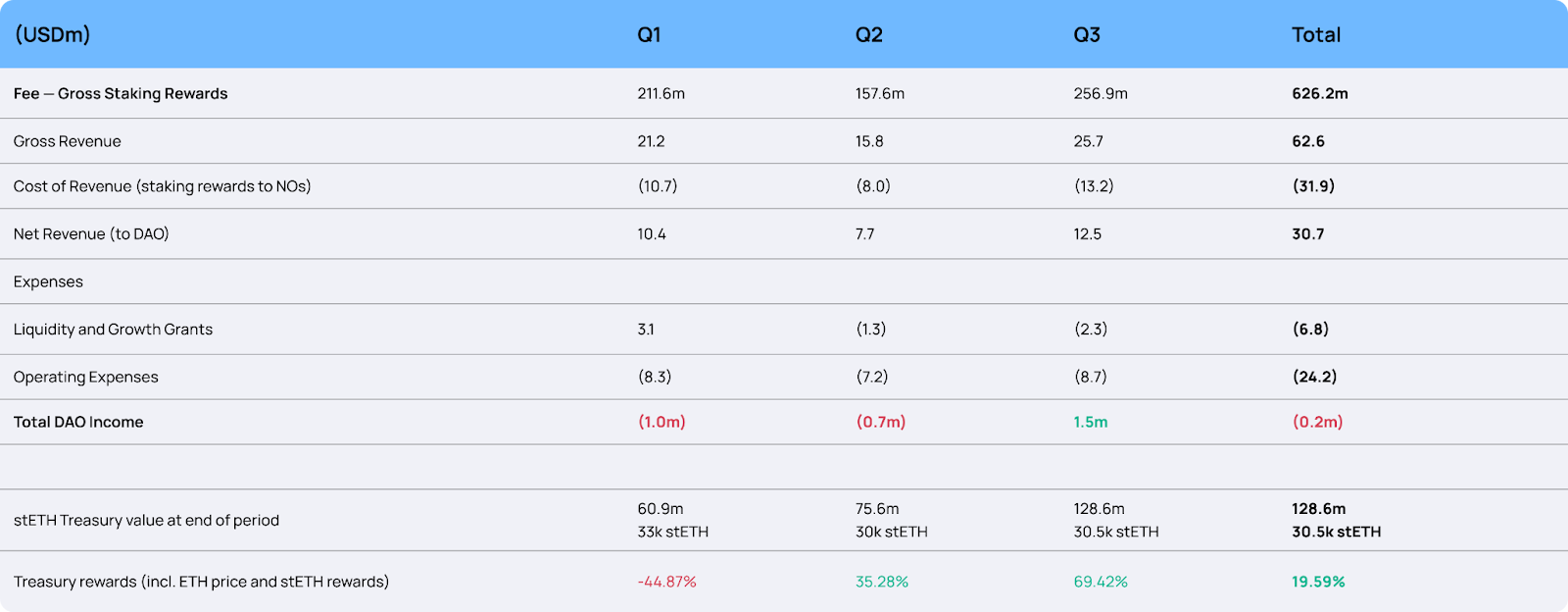
Ethereum staking rewards generated through this process flow back to the Lido protocol, where they are distributed as follows: 90% goes directly to stakers, approximately 5% (depending on the specific Staking Module) is allocated to Node Operators for their crucial services, and the remainder is directed to the Lido DAO Treasury. This model ensures that the protocol remains economically viable and capable of funding ongoing development and ecosystem growth.
From Q1 to Q3 2025, the Lido DAO maintained a strong and positive treasury position. Critically, overall expenses across the Lido Labs, Ecosystem, and Alliance Foundations remained meticulously on track with their approved annual target budgets. This disciplined financial management underscores the DAO’s commitment to fiscal responsibility and operational efficiency, providing a solid foundation for future growth and innovation. Detailed economic reports are publicly available, reinforcing transparency for all tokenholders and community members.
Empowering LDO Holders: The Proposed Buyback Framework
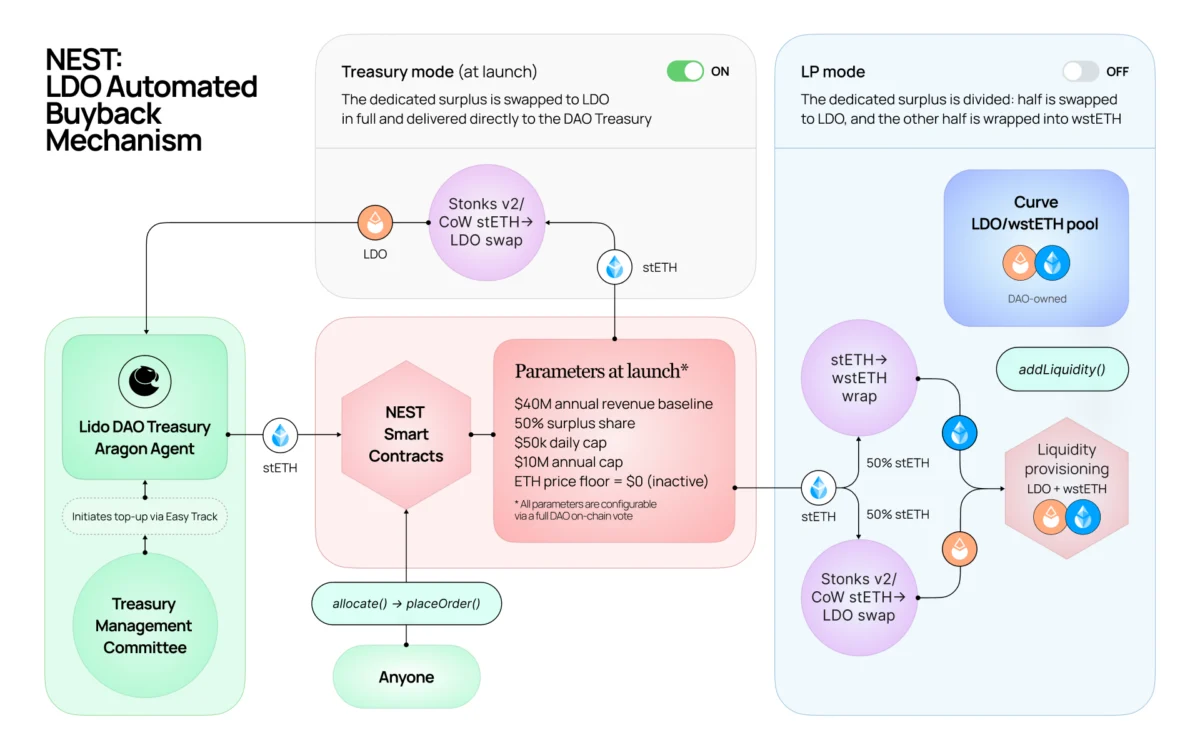
In a significant move to enhance LDO tokenomics and support long-term value accrual, a new buyback framework has been formally proposed on the Lido Research Forum for community deliberation. This innovative framework outlines a mechanism to automate LDO buybacks and strategically pair LDO with wstETH (wrapped stETH) in a liquidity position. This liquidity will be owned and managed by the Aragon Agent, an integral component of the Lido DAO’s operational infrastructure.
The primary objectives of this framework are multifaceted:
- Remove LDO from circulation: By buying back LDO tokens, the framework aims to reduce the circulating supply, potentially increasing the scarcity and value of remaining tokens.
- Deepen on-chain liquidity: The creation of LDO/wstETH liquidity pools owned by the DAO itself will enhance the stability and depth of LDO trading pairs on decentralized exchanges, reducing price volatility and improving market efficiency.
- Generate liquidity fees: The DAO-owned liquidity position will earn trading fees from swaps, creating a new, sustainable revenue stream that directly benefits the treasury and, by extension, the LDO tokenholders.
The proposed parameters designed to trigger this automated buyback mechanism are carefully considered:
- The DAO’s ETH treasury must exceed 100,000 ETH.
- Annualized DAO revenue must be greater than $20 million.
- The LDO/ETH price ratio must be above 0.0003.
- The LDO circulating supply must be greater than 90 million.
Under current market conditions (with ETH trading around $3,500 and annualized DAO revenue estimated at approximately $45 million), this mechanism would comfortably meet its activation criteria if deployed today. The framework is designed to be flexible and transparent, operating only when ecosystem conditions, protocol funds, and revenue metrics are favorable. This strategic approach aims to bolster Lido DAO’s long-term sustainability while directly supporting the value accrual for LDO tokenholders. The proposal is currently open for community feedback and discussion on the Research Forum, inviting all stakeholders to contribute to its finalization.
Lido’s 2026 Vision: The GOOSE-3 Strategic Blueprint
The strategic direction for 2026 is being formalized through the Guided Open Objective Setting Exercise (GOOSE) framework. GOOSE is a critical governance process within the Lido DAO, designed to establish clear one-year and three-year goals that align with the DAO’s overarching mission and vision. This framework allows any community member to submit a proposal, which is then subjected to a tokenholder vote and, if approved, executed under the DAO’s mandate.
The upcoming GOOSE-3 proposal, anticipated by the end of November 2025, represents Lido DAO’s next chapter. It will outline the organizational and product priorities for 2026, focusing on a dual mandate: consolidating Lido protocol’s leading position within Ethereum’s liquid staking ecosystem and significantly expanding its product scope beyond staking. This strategic blueprint signifies a pivotal moment for Lido, moving from a specialized staking provider to a broader DeFi infrastructure powerhouse.
Reinforcing Core Strengths: Innovations in Liquid Staking
While expanding its horizons, Lido’s core product—liquid ETH staking—remains foundational. The year 2025 saw significant milestones, including the implementation of Dual Governance, enhancing the protocol’s security and decentralization, and the launch of Community Staking Module v2, designed to further decentralize node operator participation. These advancements underscore Lido’s continuous commitment to making staking simple, secure, and decentralized. With these core improvements largely in place, the strategic focus for 2026 shifts to broadening the Lido protocol’s reach across various staking segments and cultivating a robust ecosystem around liquid staking through adjacent products.
Key initiatives planned to support and extend Lido’s leadership in liquid staking include:
- LSTfi (Liquid Staking Token Finance) Enhancements: Deepening integrations with DeFi protocols to maximize the utility and composability of stETH and wstETH.
- MEV (Maximal Extractable Value) Optimization: Implementing advanced strategies to capture and distribute MEV more efficiently, enhancing staker rewards.
- Layer 2 (L2) Integrations: Expanding stETH’s presence and utility on Ethereum Layer 2 solutions, improving scalability and reducing transaction costs for users.
- Institutional Access: Developing tailored solutions and partnerships to facilitate participation from institutional and custodial entities, addressing their specific compliance and operational needs. This includes further exploration of ETP/ETF avenues.
- Multi-chain Expansion: While Lido Labs’ primary focus remains on Ethereum, the DAO will explore strategic opportunities for wstETH’s expansion to other high-value chains like Solana and Hyperliquid, if deemed beneficial and aligned with decentralization principles.
These initiatives are strategically designed to reinforce Lido’s dominant position in liquid staking while concurrently extending its reach into institutional and custodial integrations, tapping into new pools of capital and user bases.
Pivoting Beyond Staking: A Multi-Product Future
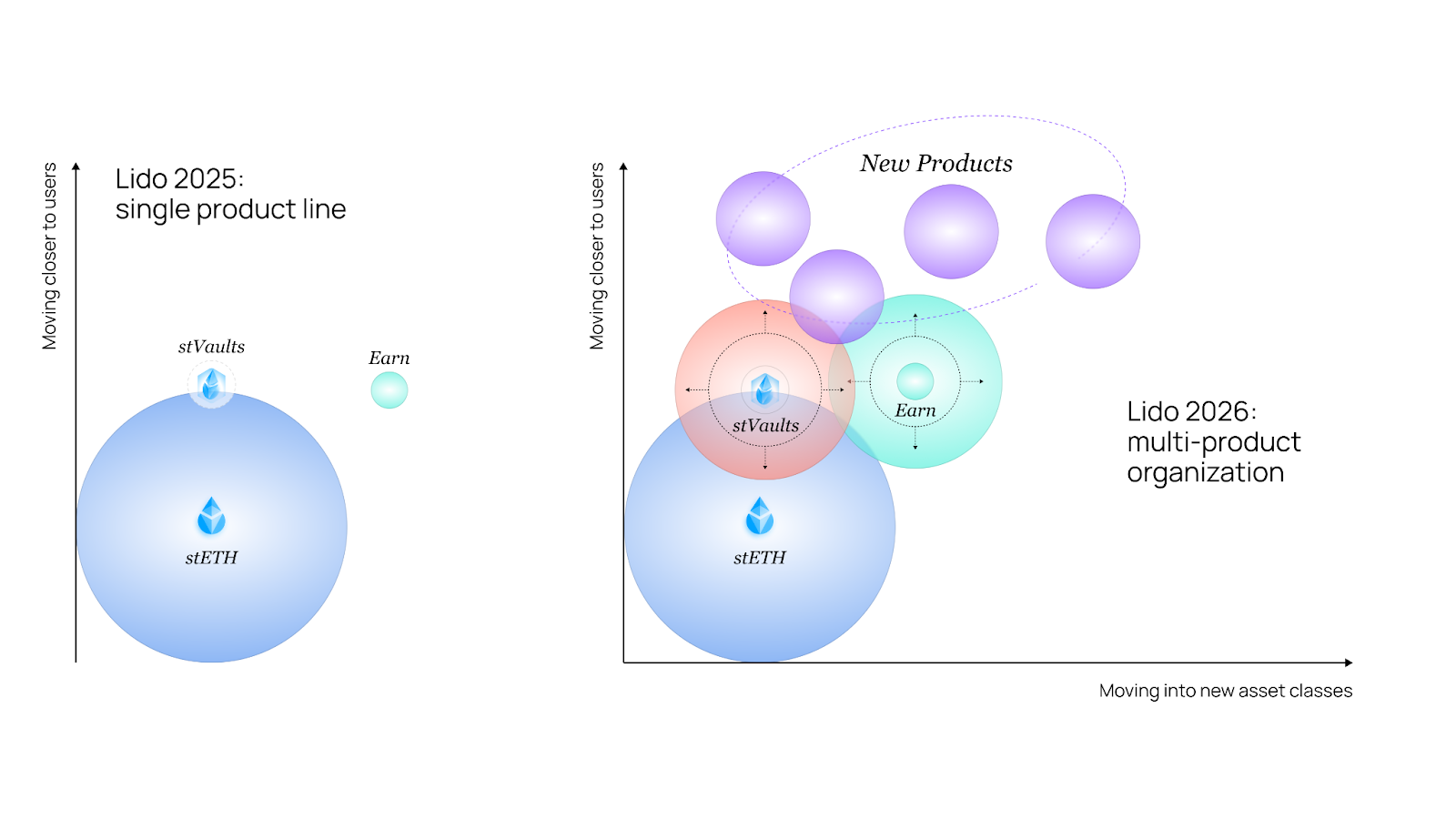
Currently, the Lido protocol is primarily known for its flagship product, stETH, supported by the recent advancements of Lido V3, stVaults, and the nascent but growing Lido Earn. However, the 2026 strategic outlook envisions a profound evolution: Lido protocol is poised to transition from a single-product entity into a multi-product powerhouse. This strategic pivot involves developing new offerings and continuously innovating not just within staking, but across the broader DeFi landscape and into real-world integrations. The goal is to move beyond being perceived as "staking only" to offering a wider range of use cases and services.
This shift is fundamentally driven by the evolving landscape of Web3. The industry is entering a pivotal phase of adoption, moving beyond early adopters to engage the early majority. Today, a growing number of businesses and individuals utilize blockchains primarily for stablecoin transfers or other functional applications, often without needing to engage with the underlying technical complexities. As this trend accelerates, decentralized intermediaries like Lido are expected to intersect with a wider, more diverse range of users, including businesses, professionals, individuals, and investment funds. To effectively meet the diverse and expanding needs of this emerging user base, the Lido protocol recognizes the imperative to offer more than just staking. The vision is to leverage its immense stETH liquidity, strong brand presence, and deep DeFi integrations to move closer to users and businesses, offering DeFi primitives and real-world integration opportunities that extend far beyond its initial scope.
Addressing Community and Industry Concerns: Key Insights from Leadership
During the Q&A session, Vasiliy Shapovalov and the Lido Labs team provided crucial insights into pressing community and industry questions, offering transparency and clarity on Lido’s future directions.
- stVaults Security: Addressing concerns about unbacked vaults on permissionless platforms, Vasiliy emphasized that Lido V3’s stVaults are designed with robust security. Funds held within stVaults are controlled by Lido’s whitelisted Node Operators, not by the vaults themselves. The Lido DAO maintains strict governance over these Node Operators, ensuring accountability. Furthermore, any potential risk is isolated to specific vaults, preventing systemic contagion across the protocol. This decentralized, governed structure mitigates risks associated with permissionless lending platforms.
- Multi-chain Expansion: When asked about expanding liquid staking to other chains like Solana or Hyperliquid, Vasiliy clarified that while multi-chain presence for wstETH is a strategic consideration, Lido Labs’ immediate development focus remains primarily on the Ethereum ecosystem. Any significant expansion to other chains would be a decision for the broader Lido DAO, weighing the benefits against the complexities and resource allocation required. This implies a cautious, governance-led approach to cross-chain ventures.
- CSM v2 Profitability and Decentralization: Regarding the Community Staking Module v2, Vasiliy stated that Lido Labs aims to increase its share by attracting new node operators through streamlined onboarding, continuous user experience improvements, and ensuring competitive APRs. The goal is to balance profitability with enhanced decentralization of the validator set.
- ETP/ETF Benefits: The potential benefits of ETPs and ETFs (like VanEck’s stETH ETF filing) for Lido were highlighted as significant. Such instruments provide increased legitimacy for liquid staking, broaden access for traditional financial institutions and retail investors, attract substantial institutional capital, and ultimately drive increased demand for stETH, strengthening its market position and liquidity.
- Competition with Custodial Staking Providers: In competing with centralized custodians like Coinbase or emerging ETF issuers, Lido Labs plans to differentiate by emphasizing decentralization, composability within DeFi, yield optimization strategies, and robust community governance. Lido’s open, programmable nature allows for unparalleled flexibility and integration that centralized entities cannot match, while active engagement with regulators ensures a proactive stance.
- Highest Impact Growth Items: Key growth drivers identified include Lido V3 and stVaults (for institutional and low-risk staking), expanded L2 integrations, direct institutional access channels, strategic multi-chain expansion for wstETH, and the continued growth of Lido Earn.
- New Products for Users: The initiatives bringing Lido closer to users include native yield integrations on Layer 2s, offering seamless staking rewards, and the tailored stVaults designed specifically for institutional and custodial clients, providing compliant and efficient access to liquid staking.
- Lido Earn Success Metrics: The success of Lido Earn in 2026 will be measured primarily by its ability to significantly increase funds flowing into the Lido DAO treasury, while prudently managing and avoiding excessive costs or risks associated with complex yield strategies.
Conclusion: A Future-Proof Strategy for Web3 Evolution
The November Lido Poolside tokenholder update paints a clear picture of a protocol poised for significant evolution. With a robust financial position, a proactive approach to LDO tokenomics through proposed buybacks, and a comprehensive strategic outlook for 2026, Lido is not merely adapting but actively shaping the future of decentralized finance. The dual focus on consolidating its leading position in liquid staking through continuous innovation and boldly expanding into a multi-product ecosystem beyond staking demonstrates a profound understanding of the shifting Web3 landscape. By leveraging its core strengths, addressing market challenges with strategic solutions like Lido V3, and fostering an engaged, governance-led community, Lido is laying the groundwork for sustained growth and broader impact as Web3 transitions into an era of mainstream adoption.