James Watt
The latest Q3 2025 VaNOM (Validator Node Operator Metrics) report from Lido Finance is now live, providing a comprehensive overview of the protocol’s significant advancements in decentralization, fault tolerance, and operational efficiency within the Ethereum staking ecosystem. This quarter’s data underscores a concerted effort by the Lido DAO to diversify its validator set and strengthen the underlying infrastructure, reflecting a pivotal period of strategic implementation and growth. The full report is available for public access, detailing the metrics and strategic initiatives shaping the future of liquid staking.
Strategic Expansion and Diversification of Lido’s Staking Modules
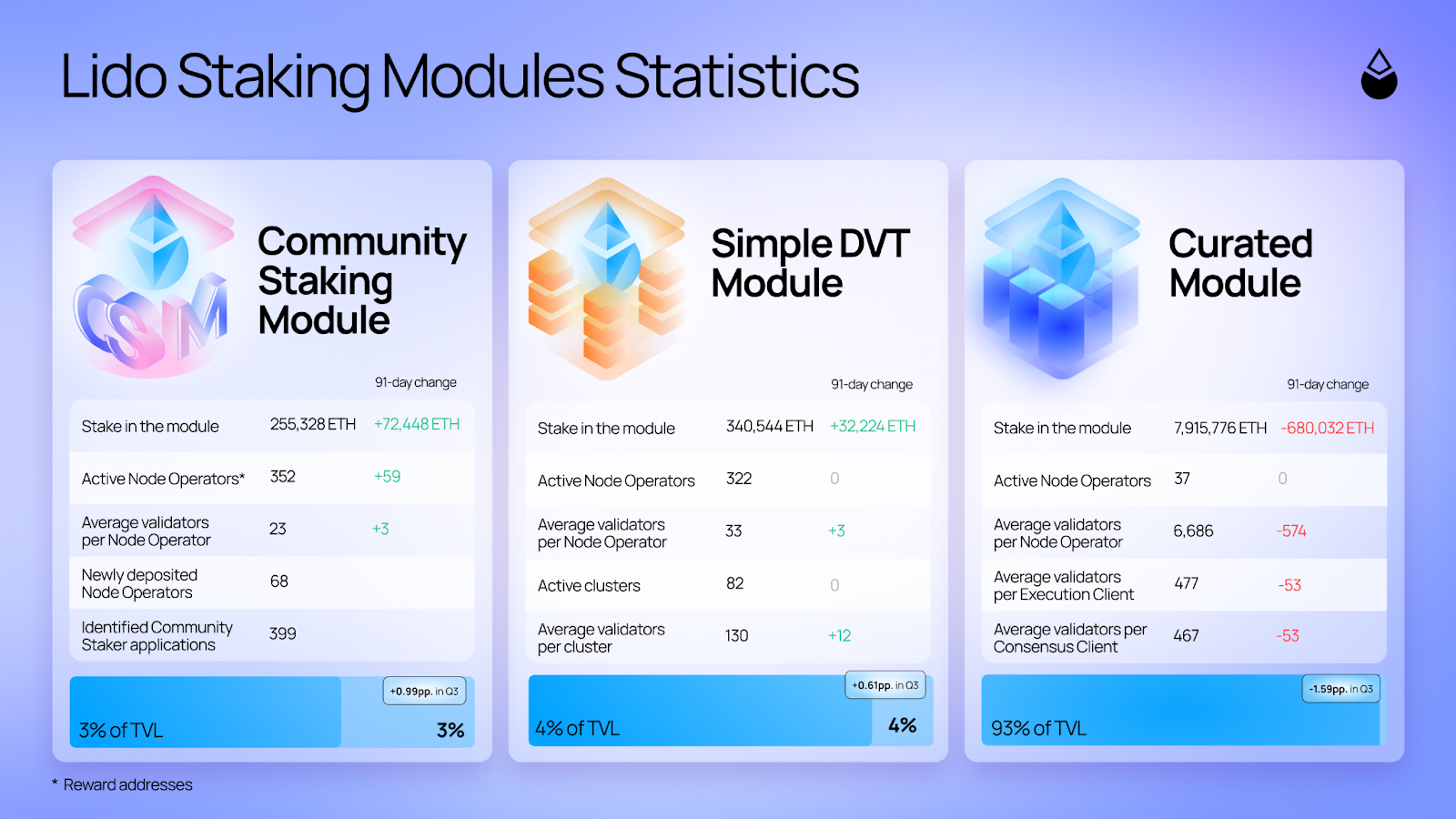
Q3 2025 marked a crucial phase in Lido’s ongoing mission to foster a more decentralized and robust validator network. The report highlights the remarkable growth and maturation of its permissionless staking modules: the Simple DVT Module (SDVTM) and the Community Staking Modules (CSM). Both modules successfully reached their predetermined stake share limits this quarter, with the SDVTM hitting 4% and the CSM reaching 3% of Lido’s total stake. Collectively, these two decentralized modules now account for approximately 600,000 staked ETH within the Lido protocol.
As of October 1, 2025, this combined stake from permissionless modules represented a significant 1.67% of the total Ethereum stake, a testament to Lido’s progressive strides toward empowering broader, permissionless participation. This growth is not merely about increasing numbers; it signifies a strategic shift to reduce reliance on a centralized set of operators, distributing power and responsibility across a wider array of participants. The move aligns with the foundational ethos of blockchain technology, prioritizing resilience and censorship resistance.
The expansion of these modules offers more entry points for independent node operators, moving beyond the initial curated set. This diversification strategy is critical for the long-term health of the Ethereum network, as it mitigates risks associated with single points of failure and enhances the overall decentralization of stake distribution, a key indicator of a healthy proof-of-stake blockchain.
The Ascendancy of Distributed Validator Technology (DVT)
A cornerstone of Lido’s decentralization efforts has been the accelerated adoption of Distributed Validator Technology (DVT). DVT, which involves splitting a validator’s private key across multiple independent nodes operated by different entities, significantly enhances fault tolerance, security, and geographic distribution. By reducing the risk of a single point of failure—whether due to hardware malfunction, network issues, or malicious attack—DVT makes staking more resilient. Solutions like Obol, SafeStake, and SSV Network are at the forefront of this technological shift.
Historically, DVT was primarily utilized within Lido’s Simple DVT and Community Staking Modules. However, Q3 2025 saw a landmark expansion of DVT usage into the Curated Module, following its proven reliability and growing adoption across the wider Ethereum ecosystem. A pivotal moment occurred in June 2025, when LDO tokenholders approved a proposal to allow operators in the Curated Set to opt into intra-operator DVT setups. This decision, following extensive discussions on the Lido Research Forum, marked a significant step toward integrating advanced decentralization techniques across all facets of the protocol.
The implementation phase began with rigorous testing on the Hoodi testnet, ensuring the stability and security of DVT integrations before deployment on the mainnet. This meticulous approach culminated in Q3 2025 with the successful migration of 4,900 validators, representing 156,800 ETH, to Obol and SSV Network setups by five prominent Curated Node Operators: A41, Blockscape, Ebunker, RockX, and Stakin. This move alone substantially bolstered the DVT footprint within Lido.
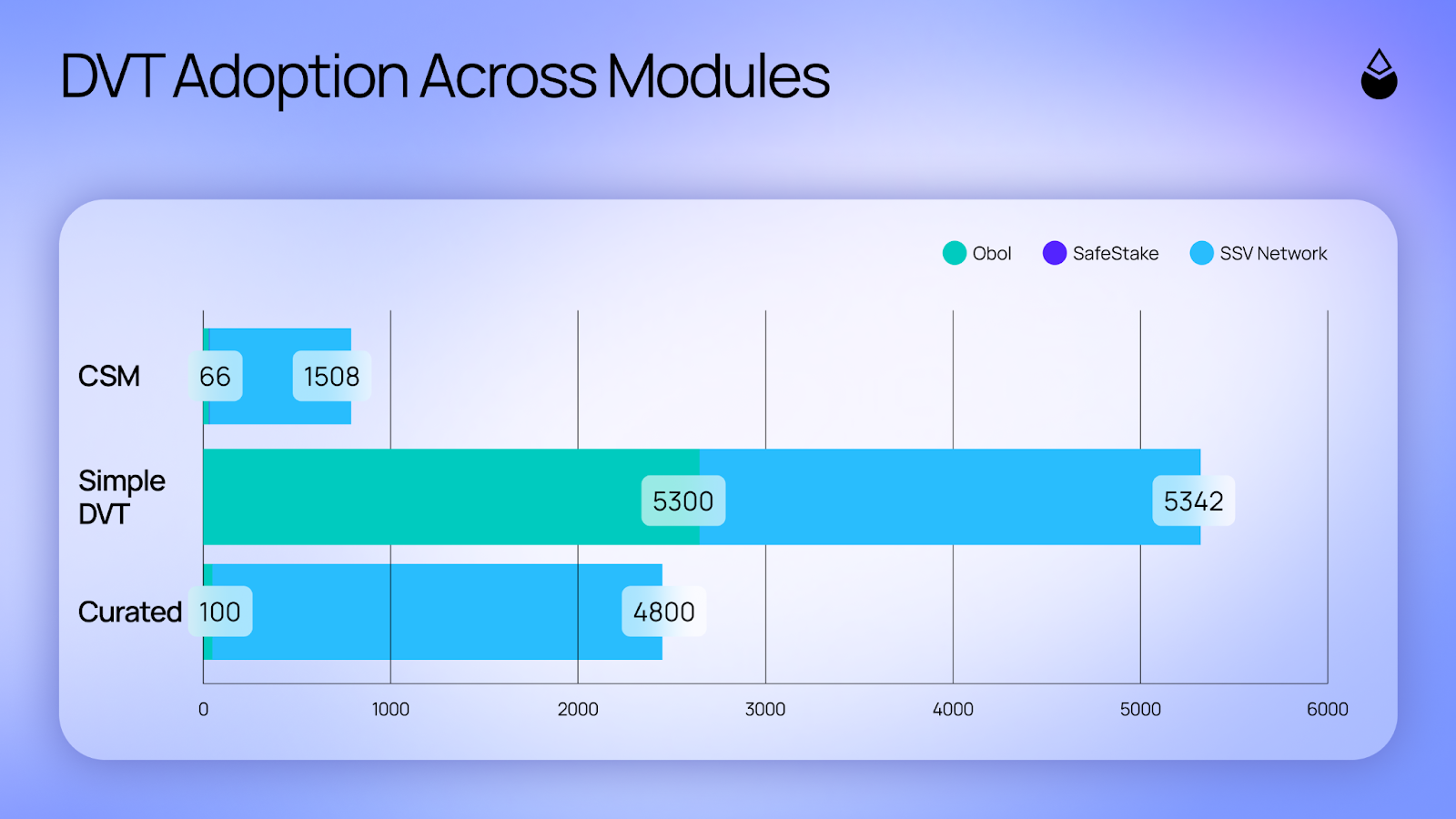
As of October 1, 2025, the total DVT utilization across the Lido protocol had soared to 17,124 validators, collectively securing 547,968 ETH. This represents a remarkable 57.65% quarter-over-quarter increase from the 10,862 DVT-powered validators recorded in Q2 2025. The data vividly illustrates the rapid embrace of DVT as a standard for enhanced operational security and decentralization.
Within the Simple DVT Module, 5,300 validators now leverage Obol, while 5,342 utilize SSV Network setups. This marks an increase of 80 Obol validators and a significant 1,087 SSV Network validators compared to Q2, operated by 217 and 229 operators respectively. The Community Staking Module also saw expanded DVT adoption, with 332 more validators utilizing the SSV Network. Additionally, 66 validators across eight operators are now supported by Obol, and SafeStake, exclusively used in the CSM, maintains a steady eight validators operated by four distinct entities. This pervasive adoption across Lido’s diverse staking modules signals a clear commitment to building a more resilient, diversified, and robust validator network, strengthening not just Lido but the broader Ethereum network it supports.
Enhancing Ethereum’s Health: Consensus Client Diversity in the Curated Module
Beyond DVT, Lido’s commitment to the health and security of Ethereum extends to actively promoting Consensus Layer (CL) client diversity. A critical risk for any proof-of-stake blockchain is the "supermajority risk," where a single client dominates the network. If this dominant client were to suffer a bug or exploit, it could lead to widespread correlated failures, jeopardizing network finality and overall stability. Lido’s strategy aims to mitigate these risks by fostering a balanced distribution across multiple CL clients.
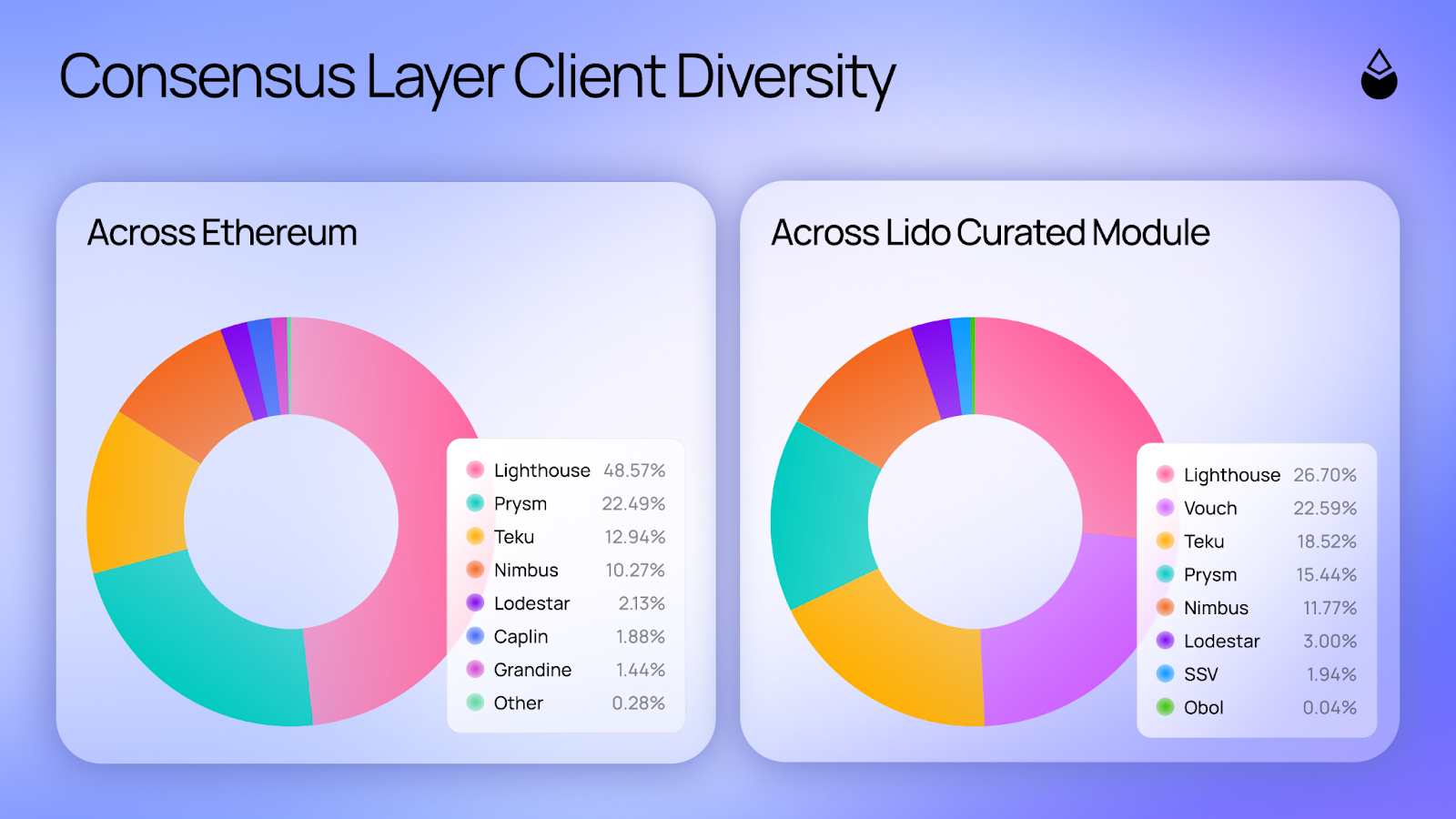
The adoption of Obol and SSV Network DVT setups within the Curated Module has directly contributed to this enhanced client diversity. As of Q3 2025, these DVT setups powered 5,900 Curated Module validators. Notably, 1.94% of these validators now operate via SSV Network (4,800 validators), with 100 validators using Obol, a solution that has recently begun ramping up its deployment and is anticipated to see increased adoption in subsequent quarters.
Further bolstering this diversification is Vouch, a Consensus Layer client developed by Attestant. Vouch’s design allows it to work seamlessly with multiple Beacon Nodes, offering additional flexibility and security layers. The report indicates that Vouch is now utilized by 22.59% of Curated Module validators, highlighting its growing importance in Lido’s client diversity strategy.
When juxtaposed with the broader pan-Ethereum CL client landscape, where Lighthouse remains the dominant client at 48.57% (an increase from 47.96% in Q2), Lido’s Curated Module maintains a significantly more balanced distribution. This proactive approach by Lido’s Node Operators to embrace client diversity and fault-tolerance is crucial. Industry experts often laud such efforts, noting that by fostering balanced usage across multiple CL clients, Lido not only strengthens its own operational resilience but also contributes significantly to Ethereum’s overall health and network security, reducing the probability of widespread correlated failure risks that could stem from a single client vulnerability. This commitment is a testament to Lido DAO’s dedication to the long-term viability and decentralization of Ethereum.
Optimizing Block Production: Auxiliary Proposer Mechanisms (APMs) Utilization
The evolution of Ethereum’s block proposal mechanisms is a dynamic area, and Lido has been at the forefront of safely exploring and adopting emerging tools through its Auxiliary Proposer Mechanisms (APM) framework. APMs are designed to enhance block production efficiency, reliability, and flexibility, offering stakers potential rewards and Node Operators new operational efficiencies. They represent a critical component of Ethereum’s evolving architecture, particularly in the post-Merge era.
The Q3 2025 report details how Node Operators in the Curated Module are actively integrating various APM infrastructure setups. A prime example is Proposer-Builder Separation (PBS), a fundamental design paradigm that separates the responsibilities of block building from block proposing. This separation is vital for preventing transaction censorship at the network level and ensuring fairness in block reward distribution. MEV-Boost, the most widely adopted implementation of PBS, is currently utilized by approximately half of Lido’s validators, showcasing its pervasive integration.
Beyond MEV-Boost, other significant APM implementations are also gaining traction within the Lido protocol. Vouch, which also serves as a CL client, is utilized by 22.6% of operators, indicating its dual role in both client diversity and block proposal optimization. Additionally, Commit Boost’s PBS Module is employed by 19% of operators, further diversifying the APM landscape.
Interestingly, the report notes that Consensus Layer clients’ native support for direct interaction with the MEV Boost Protocol is used by only 2.8% of Lido validators. This lower adoption rate is attributed to its more limited functionality compared to the robust MEV-Boost sidecar setup, which offers greater flexibility and features. The data illustrates a conscientious approach by Lido contributors to APM adoption, ensuring that as Ethereum’s proposer infrastructure continues to evolve, the Lido protocol remains innovative without compromising on the critical principles of safety, security, and ethical operation. This strategic embrace of APMs positions Lido to capitalize on advancements in block production while upholding the integrity of the network.
Looking Ahead: The Horizon of Lido’s Evolution
The period leading into 2026 is poised to bring forth even more transformative improvements across the Lido Validator Set, building on the strong foundation laid in Q3 2025. A significant development already underway is the Community Staking Module (CSM) v2 upgrade, which went live on mainnet on October 2. This upgrade is designed to further scale permissionless staking and empower community stakers by increasing the stake share limit to 5%. More critically, CSM v2 introduces differentiated parameters for various Node Operator (NO) types and enables the optional Identified Community Staker (ICS) framework. The ICS framework marks a substantial milestone in Lido’s roadmap, creating new avenues for more independent operators to participate in Ethereum validation, thereby deepening the protocol’s decentralization. Future VaNOM reports are expected to reflect these profound changes across CSM-related metrics and validator charts.
The commitment to DVT adoption within the Curated Module remains a key strategic imperative. Following commitments made by Curated Module Node Operators on the Lido Research Forum, the protocol anticipates a continued ramp-up in DVT utilization. This sustained focus will further strengthen validator resilience and diversity within the set, reinforcing Lido’s position as a leader in secure and decentralized liquid staking.
Finally, the forthcoming major upgrades – Lido V3, Staking Router v3, and Curated Module v2 – are set to collectively redefine how Node Operators engage with the protocol. These upgrades are designed to expand flexibility, improve modularity, and set the stage for what many in the industry are calling the next phase of Ethereum staking evolution. They promise to offer a more adaptable and efficient framework for all participants, from large-scale operators to individual community stakers.
As always, Lido DAO contributors remain dedicated to refining the protocol’s metrics and dashboards, ensuring that the increasing complexity of the network is met with clear, data-driven accountability. The ongoing transparency provided by reports like VaNOM is crucial for community oversight and informed decision-making. Stakeholders and interested parties are encouraged to stay tuned for future VaNOM updates and to explore the Lido Node Operator Portal and Validator Set Updates for monthly insights into the protocol’s dynamic evolution. This continuous cycle of innovation, transparent reporting, and community engagement underscores Lido’s unwavering commitment to the health and advancement of the Ethereum ecosystem.