James Watt
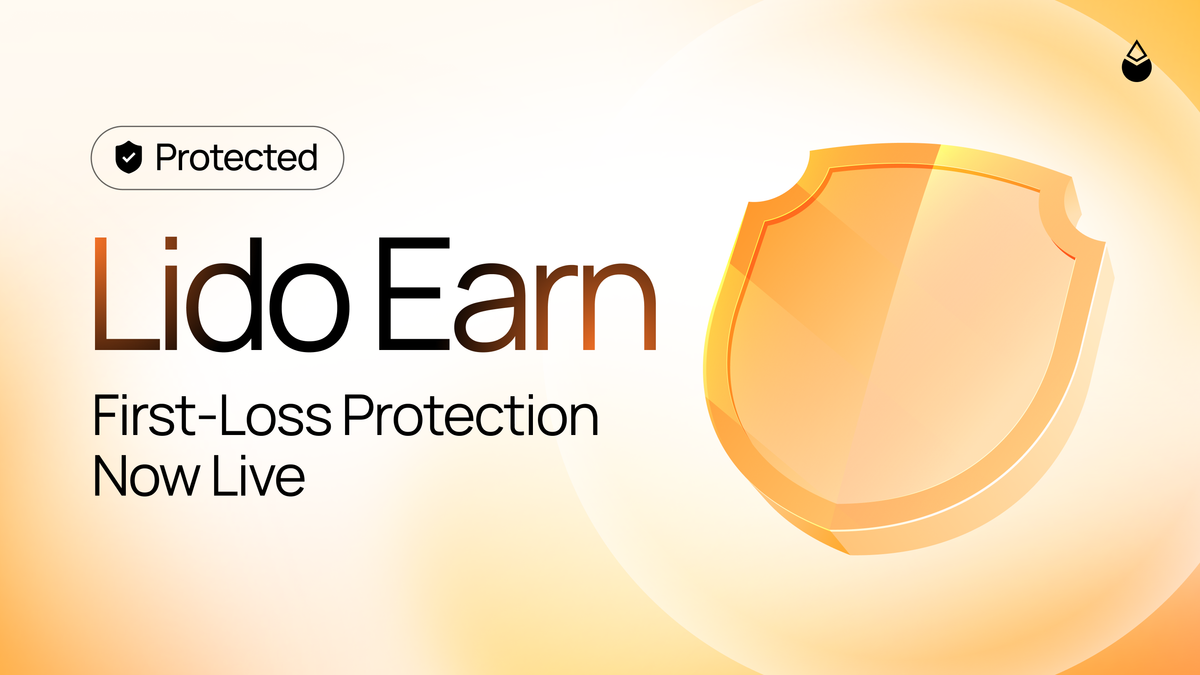
The Lido DAO, a leading decentralized autonomous organization in the liquid staking sector, has officially approved a substantial $5 million treasury allocation to its nascent yield product, Lido Earn. This strategic move introduces an innovative first-loss protection mechanism designed to significantly strengthen the alignment between the protocol and its users, setting a new precedent for risk management in decentralized finance (DeFi) yield strategies. The decision, formalized through a governance proposal and subsequently deployed, positions a portion of the DAO’s own reserves as a crucial buffer to safeguard user deposits within the Lido Earn vaults, underscoring a proactive approach to mitigating inherent DeFi risks.
A Deep Dive into the First-Loss Protection Mechanism
The core of this initiative lies in the Lido Earn First-Loss Protection mechanism. Under this framework, dedicated Lido protocol reserves are strategically deployed to act as an on-chain safety net, offering a layer of protection for user funds. This mechanism is specifically engineered to absorb initial losses in the event of severe, confirmed scenarios affecting the Lido Earn vaults, thereby shielding individual depositors from the immediate impact. This commitment represents a profound "skin in the game" approach, where the DAO’s capital bears the initial brunt of any potential adverse events, directly aligning its financial interests with those of its users.
The $5 million allocation has been meticulously deployed across two primary Lido Earn vaults: $3 million in wrapped staked ETH (wstETH) into the EarnETH vault and $2 million in USD Coin (USDC) into the EarnUSD vault. Crucially, the DAO’s deposits are made on identical terms as any other user. This means the Lido DAO pays the same fees, holds the same vault shares, and is exposed to the exact same risks as any other participant. This equitable treatment is central to the mechanism’s credibility, ensuring no preferential access or exit strategies for the DAO’s capital.
Every DeFi vault, by its very nature, carries a degree of risk, encompassing smart contract vulnerabilities, market volatility, oracle failures, and underlying protocol dependencies. While Lido Earn is meticulously designed to manage these risks through a rigorous process of curated strategy selection, extensive DAO oversight, and independent security audits, the reality remains that no vault can offer an absolute guarantee against all potential losses. Recognizing this, the DAO’s innovative step is to interpose its own substantial capital as a buffer.
Here’s a breakdown of how the First-Loss Protection mechanism operates: The DAO holds vault shares from its $5 million allocation alongside all other participants. Should a confirmed loss event occur within a vault – a scenario strictly defined and adjudicated through the governance process – the DAO’s shares are designed to be proportionally reduced. This reduction effectively lowers the total supply of shares, absorbing the loss and offsetting its impact for the remaining depositors. In essence, the DAO’s position is structured to be the first to incur a loss, protecting other users by absorbing the initial shock. This process is mandate-based, not discretionary, meaning the conditions for activation, confirmation, and execution are pre-defined in the governance proposal, ensuring transparency and predictability. Ongoing public reporting will detail the DAO’s position, any actions taken, and the current state of the mechanism on-chain.
Distinguishing First-Loss Protection from Traditional Insurance
It is imperative to clarify the precise nature of this mechanism. The Lido DAO explicitly states that this is not a form of insurance, nor does it constitute a guarantee against all losses. The $5 million allocation, while significant, does not render Lido Earn risk-free. The inherent risks associated with DeFi strategies, including smart contract exposure, market volatility, and protocol dependencies, persist. This mechanism does not eliminate these foundational risks but rather provides a structured, on-chain commitment from the DAO that its capital is deployed pari passu with user funds. The DAO does not receive preferential treatment, cannot exit ahead of other depositors, and its position adheres to the same vault mechanics as everyone else. In a confirmed loss scenario, its capital is unequivocally the first to absorb the impact. This distinction is crucial for managing user expectations and upholding the principles of transparency inherent in decentralized systems.
Strategic Context: Lido DAO’s Evolution and Vision
Lido DAO has established itself as the dominant force in liquid staking, particularly for Ethereum, where it accounts for a significant portion of all staked ETH. As of early 2026, Lido’s total value locked (TVL) often surpasses tens of billions of dollars, making it a critical infrastructure provider within the broader DeFi ecosystem. Its primary offering, stETH (staked ETH) and wstETH (wrapped stETH), allows users to stake their Ethereum while retaining liquidity, enabling them to participate in other DeFi protocols.
The introduction of Lido Earn marks a strategic expansion for the DAO beyond its core liquid staking services. In a competitive and rapidly evolving DeFi landscape, protocols are continually seeking ways to diversify their offerings and enhance user utility. Lido Earn is designed to allow users to deploy their ETH or stablecoins (such as USDC) into curated, optimized DeFi strategies to generate daily, auto-compounded earnings. These strategies aim for transparency in their allocations and operations. The move into diversified yield generation positions Lido Earn as a contender in the crowded field of yield aggregators and asset managers within DeFi.
The genesis of Lido Earn stems from a recognition that while liquid staking provides a foundational yield, many users seek more dynamic and diversified opportunities. However, navigating the complexities and risks of various DeFi protocols can be daunting for the average user. Lido Earn aims to simplify this by offering professionally managed and DAO-vetted strategies. The First-Loss Protection mechanism serves as a critical trust-building component in this expansion, addressing one of the most significant barriers to wider DeFi adoption: perceived risk.
The Rationale Behind "Skin in the Game": Building Trust and Aligning Incentives
The decision to allocate $5 million of the DAO’s treasury to act as first-loss capital is deeply rooted in the philosophy of "skin in the game" and a commitment to robust on-chain alignment. In the decentralized world, trust is not merely a matter of reputation but is increasingly encoded into the protocol’s mechanics and incentives. By placing its own substantial capital at risk, the Lido DAO sends a powerful signal to its user base: that its interests are directly intertwined with the safety and success of user investments.
This strategy is particularly potent in an environment where many DeFi protocols, while offering attractive yields, often lack direct financial commitment to covering user losses in extreme scenarios. The "skin in the game" approach fosters greater confidence, potentially encouraging broader adoption of Lido Earn. It demonstrates a maturity in DAO governance, moving beyond purely technical development to embrace comprehensive risk management and user-centric financial architecture. This alignment is critical for long-term sustainability and growth, as user trust is the ultimate non-fungible asset in decentralized ecosystems.
Governance Process and Transparent Implementation
The approval of this $5 million treasury allocation was not an arbitrary decision but the culmination of a rigorous governance process within the Lido DAO. Proposals for significant treasury deployments and protocol changes typically undergo several stages:
- Research and Discussion: Initial ideas are floated and debated on the Lido Research forum, allowing for community input and refinement. The specific proposal, "Lido Earn: Competing on Trust – $5M Treasury Allocation," was extensively discussed on this platform.
- Snapshot Voting: Once a proposal is refined, it often moves to a non-binding "Snapshot" vote, allowing token holders to signal their preliminary support or opposition without incurring gas fees.
- On-chain Voting: For critical decisions like treasury allocations, a final binding vote is conducted on-chain, requiring a minimum quorum and a supermajority of LDO token holders to pass. The timestamp of the tweet "March 19, 2026" likely corresponds to the successful conclusion or finalization of this on-chain governance vote.
The transparency of this process is paramount. The full governance proposal, including the detailed mandate structure, specific risk controls, and comprehensive reporting requirements, remains publicly accessible on the Lido Research forum. This commitment to public documentation ensures that all stakeholders can scrutinize the mechanism’s design and operational parameters, reinforcing trust through verifiable accountability. The on-chain deployment of funds and the mechanism’s activation are also publicly verifiable, adhering to the principles of immutable ledger technology.
Lido Earn: A New Frontier for Diversified Yield
Lido Earn currently features two main products: EarnETH and EarnUSD. EarnETH allows users to deposit wstETH (wrapped staked ETH) into curated strategies, aiming to enhance the base staking yield with additional DeFi opportunities. EarnUSD, on the other hand, enables users to deploy stablecoins like USDC into strategies designed to generate yield with relative stability. Both vaults are live and operating with the active First-Loss Protection mechanism.
The strategies employed within Lido Earn vaults are typically designed to be diversified and undergo continuous monitoring and rebalancing. They may involve lending protocols, liquidity provision in decentralized exchanges, or other yield-generating opportunities within the DeFi landscape. The curation process, combined with DAO oversight, aims to select strategies that offer an optimal balance of risk and reward for users, while the First-Loss Protection adds an additional layer of security previously unavailable in many yield-generating products.
Implications for the Broader DeFi Ecosystem
The Lido DAO’s decision to implement a First-Loss Protection mechanism has several far-reaching implications for the DeFi ecosystem:
- Enhanced User Confidence: This move could significantly boost user confidence in Lido Earn and potentially in other future Lido products. By demonstrating a tangible commitment to user protection, Lido positions itself as a more reliable and trustworthy platform in a space often characterized by high risk and uncertainty.
- A New Standard for DAO Treasury Management: The strategic deployment of DAO treasury funds for user protection sets a compelling precedent. Other DAOs managing substantial treasuries might consider similar models to align incentives and bolster user trust, moving beyond simply funding grants or operational expenses. This represents a maturation of DAO financial stewardship.
- Competitive Differentiation: In the fiercely competitive DeFi yield market, the First-Loss Protection mechanism provides Lido Earn with a distinct competitive advantage. It differentiates the product from numerous other yield aggregators that do not offer such a direct safety net from their own treasury. This could attract a more risk-averse segment of users who are currently hesitant to engage with DeFi yield strategies.
- Innovation in Risk Management: While not insurance, this mechanism is an innovative approach to on-chain risk sharing. It highlights the potential for DAOs to leverage their collective capital and governance structures to create novel forms of economic alignment and user protection that are unique to the decentralized paradigm.
- Precedent for Regulatory Engagement (Indirect): While not a direct regulatory response, initiatives like First-Loss Protection demonstrate a proactive approach to user safety within the DeFi space. Such self-regulatory measures could, in the long run, contribute to a more robust and resilient ecosystem that is better positioned to engage with evolving regulatory frameworks.
- Challenges and Considerations: While beneficial, such a mechanism also introduces considerations. The $5 million allocation, while substantial, is finite. The conditions under which it would be activated and potentially depleted need to be robustly defined and understood. Furthermore, the DAO itself takes on additional risk by committing its capital, which requires careful treasury management and a clear understanding of the trade-offs.
Looking Ahead: The Future of Trust in DeFi
The Lido DAO’s implementation of First-Loss Protection for Lido Earn represents a significant milestone in the ongoing quest to build more robust and user-friendly DeFi protocols. It exemplifies a growing trend towards greater responsibility and accountability from decentralized organizations. As the DeFi landscape continues to evolve, the ability of protocols to instill confidence and manage risk effectively will be paramount to their long-term success and widespread adoption. This initiative by Lido DAO serves as a powerful testament to the potential for decentralized governance to not only innovate technologically but also to forge deeper, more transparent financial alignment with its community of users, ultimately shaping a more resilient and trustworthy decentralized future.