James Watt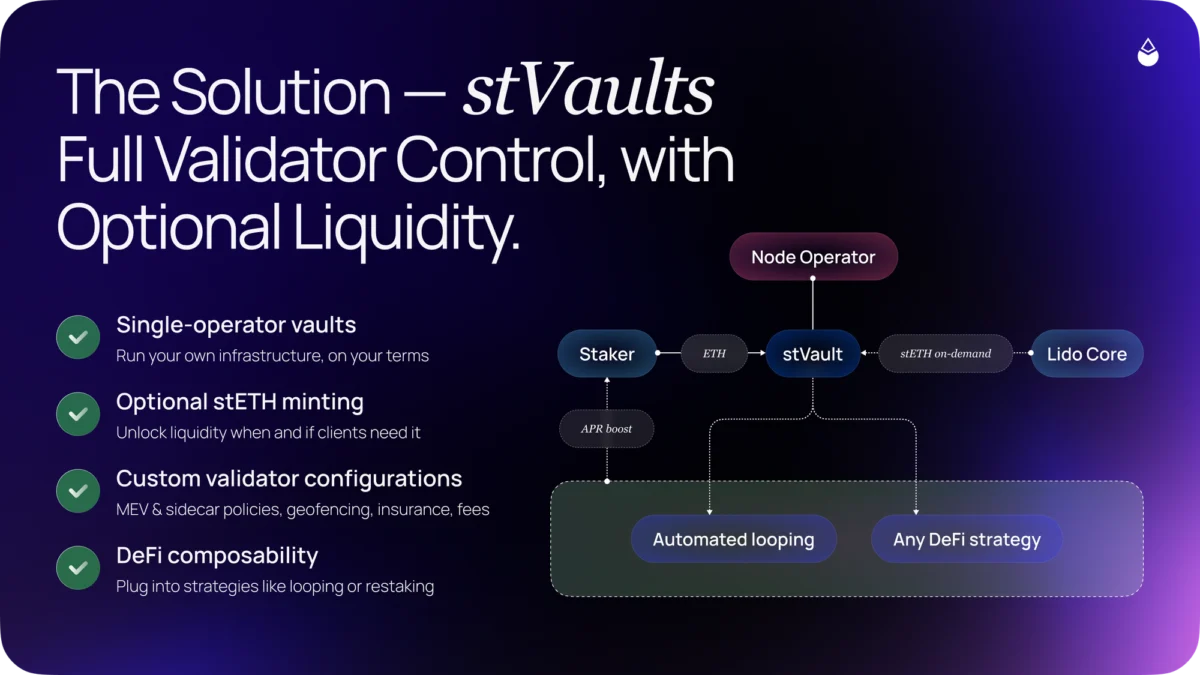
Lido V3, a significant evolution of the leading liquid staking protocol, has officially launched on the Ethereum mainnet, marking a pivotal moment for the decentralized finance (DeFi) ecosystem and the broader institutional adoption of Ethereum staking. This release introduces stVaults, a groundbreaking modular staking primitive designed to cater to the diverse and complex needs of stakers beyond the existing pooled model. The mainnet deployment culminates a rigorous validation process, encompassing multiple public testnets, comprehensive security reviews by leading blockchain auditing firms, and a meticulously managed soft-launch, all executed with Lido contributors’ steadfast commitment to security, community input, and open-source development.
The Evolution of Staking: From Pooled Liquidity to Bespoke Control
For years, Lido has been at the forefront of liquid staking, allowing users to stake their Ethereum (ETH) and receive stETH, a liquid representation of their staked assets. This innovation, dubbed "Lido Core," effectively addressed the long-standing challenge of illiquidity inherent in traditional staking, where assets would be locked and inaccessible, particularly during the early phases post-Ethereum’s transition to Proof-of-Stake (PoS) with The Merge. By providing stETH, Lido unlocked powerful market forces, enabling staked ETH to be utilized across various DeFi applications for lending, collateral, liquidity provision, and other sophisticated strategies, all without forcing stakers into the lengthy withdrawal queues that characterize direct staking. The success of Lido Core is undeniable; as of early 2026, Lido commands a substantial market share in liquid staking, often holding over 30% of all staked ETH, representing billions in Total Value Locked (TVL) and acting as a cornerstone of the Ethereum DeFi landscape. This dominance underscores the critical need for liquid staking solutions in a rapidly maturing Web3 economy.
However, despite the immense utility of stETH, a structural trade-off persisted for certain stakers, particularly institutions and specialized operators. They often faced a dilemma: either embrace the simplicity and liquidity of a pooled model like Lido Core, thereby sacrificing granular control over their staking parameters, or opt for a fully bespoke, self-custodial staking setup that offers complete control but comes at the cost of significant operational overhead, capital efficiency, and, crucially, a lack of liquid utility for their staked assets. This "either-or" scenario presented a barrier for entities requiring specific configurations related to operator selection, reward logic, fee structures, and tailored risk parameters, while simultaneously needing access to the robust liquidity and expansive network effects of stETH. This limitation highlighted a growing gap between the offerings of existing liquid staking solutions and the increasingly sophisticated demands of the market.
Introducing stVaults: The Modularity Paradigm for Staking
Lido V3 directly confronts this dilemma by introducing stVaults, a revolutionary primitive that allows for unprecedented customization without compromising the foundational benefit of stETH’s liquidity. StVaults enable stakers to define their specific operational policies, choose preferred node operators, customize fee structures, implement bespoke reward logic, and set precise risk parameters. This level of granular control moves beyond the one-size-fits-all pooled model, ushering in a new era of "composable staking infrastructure." The modular design of stVaults is a direct response to the evolving needs of the Ethereum staking ecosystem, which now requires more flexible and adaptable solutions to accommodate a wider range of participants.
The underlying philosophy behind stVaults is to transform liquid staking from a singular product category into a versatile infrastructure layer. It’s about empowering any team or entity to build a tailored staking business leveraging the most powerful network effects in DeFi. By maintaining access to a shared liquidity layer through stETH, stVaults ensure that customized staking solutions remain deeply integrated within the broader DeFi ecosystem, preserving the capital efficiency and composability that have defined Lido’s success. The meticulous development path for V3, which included extensive testing on multiple public testnets and comprehensive security audits by leading firms such as CertiK and ConsenSys Diligence, underscores the protocol’s unwavering focus on maintaining the highest standards of security and reliability. This rigorous validation process is paramount for any infrastructure aiming for widespread adoption, especially when handling significant digital asset values.
Institutional Staking Without Compromise
One of the most significant beneficiaries of Lido V3 and stVaults is the burgeoning institutional market. Modern asset managers, corporate treasuries, and regulated financial entities often find traditional staking models ill-suited to their operational and compliance requirements. Their needs extend beyond mere yield generation, encompassing:
- Regulatory Compliance: Adherence to specific jurisdictional laws, financial regulations (e.g., MiCA in Europe, SEC guidelines in the US), and internal governance policies.
- Bespoke Risk Management: Implementing tailored risk profiles, including diversification across operators, specific geographic locations, and defining acceptable levels of slashing risk.
- Segregated Infrastructure: The necessity for dedicated validator infrastructure to meet internal policies, client mandates, or to prevent co-mingling of funds for auditing purposes.
- Detailed Reporting and Attestation: Requirements for transparent, auditable performance metrics, proof of stake, and operational reporting for quarterly or annual financial statements.
- Capital Efficiency and Liquidity: While seeking control, institutions cannot afford the long exit queues and illiquidity risks associated with traditional staking, which clash with treasury management, fund liquidity requirements, and the need for rapid asset rebalancing.
Prior to stVaults, institutions often had to choose between full control (via self-operated validators, incurring high operational costs and complexity) and the liquidity benefits of pooled staking (sacrificing customization). Lido V3 resolves this by enabling segregated vault structures with dedicated validator infrastructure, while critically still offering optional stETH liquidity. This means an institution can set up a stVault with their chosen operators, define their specific parameters, and yet retain the flexibility to access the liquid stETH market if needed. This provides a robust solution that balances control, compliance, and capital efficiency, representing a significant leap forward for institutional participation in Ethereum’s PoS economy.
Early deployments of stVaults are already illustrating this new design space, with confidential setups enabling institutions to participate in Ethereum staking within their specific regulatory frameworks. Market analysts predict that this capability is expected to significantly accelerate the adoption of Ethereum staking by a wider array of institutional players, moving beyond early crypto-native adopters to more conservative and regulated entities looking for enterprise-grade solutions that do not compromise on the inherent advantages of liquid staking. This could unlock substantial capital previously hesitant to enter the market.
Empowering Node Operators: A New Business Landscape
Lido V3 also fundamentally reshapes the business case for Node Operators within the Lido ecosystem and beyond. In the pre-stVaults era, operators primarily navigated a landscape offering limited differentiation: they either ran their own independent staking services, competing directly on infrastructure and client acquisition, or they operated within large pooled protocols like Lido, where their individual contributions were largely aggregated, offering less opportunity for unique branding or customized service offerings. While operating within a large pool provided a steady stream of stake, it often lacked the levers for operators to truly compete on specialized services or distinct value propositions, leading to a race to the bottom on fees.
StVaults inject a new dynamic into this environment by creating ample room for operator-led products. This means node operators can now build and offer dedicated vaults mapped to their specific validator infrastructure, complete with customized operational policies, unique service level agreements (SLAs), and specialized risk profiles. This paradigm shift allows operators to differentiate themselves not just on technical prowess but on their ability to curate specific staking experiences for their clients.
For instance, P2P.org, a prominent staking provider and a long-standing Lido node operator, is actively leveraging stVaults to build dedicated offerings. These allow institutional clients to stake through segregated vaults directly linked to P2P.org’s validator operations, providing enhanced customization and transparent performance reporting. This model enables operators to offer premium services, attract specific client segments (e.g., those requiring particular compliance standards, geographic distribution of validators, or specific hardware setups), and compete on factors like uptime guarantees, security audits, specialized support, and tailored insurance offerings, rather than solely on generic commission rates.
Furthermore, stVaults expand the design space for staking strategies. Operators and builders can now develop and offer:
- Conservative Staking Exposure: Vaults optimized for maximum security and minimal slashing risk, perhaps utilizing a diverse set of highly reputable operators with proven track records.
- Curator-Driven DeFi Vault Strategies: More active strategies built around stETH, where a curator might dynamically manage exposure to various DeFi protocols to optimize yield or specific risk-reward profiles, subject to predefined parameters.
- Yield-Optimized Strategies: Vaults focused on maximizing staking rewards through specific operator selections, leveraging unique incentive structures, or integrating with specialized MEV (Maximal Extractable Value) strategies.
This new flexibility empowers operators to become innovators, creating specialized products that cater to a broader spectrum of staker preferences and risk appetites, ultimately fostering a more competitive, diversified, and resilient liquid staking market.
Accelerating Development with the DeFi Wrapper Toolkit and L2 Integrations
Beyond the core stVault primitive, Lido V3 introduces tooling designed to reduce the time-to-market for teams looking to launch user-facing staking products. The "DeFi Wrapper" toolkit is a crucial component of this, offering a low-code deployment solution for end-user staking products. This comprehensive toolkit includes:
- Modular Smart Contracts: Pre-built, audited contract components for various staking functionalities, enabling rapid assembly of new products.
- Software Development Kits (SDKs): Libraries and tools to simplify integration with existing applications and front-ends.
- User Interface (UI) Templates: Ready-to-use front-end components and design guidelines for rapid product deployment, reducing development overhead.
Builders now have the flexibility to either utilize pre-integrated curated strategies, allowing them to ship differentiated products quickly without building complex curation strategies from scratch, or to integrate custom strategies that enable unique competitive advantages for specific market segments. This toolkit significantly lowers the barrier to entry for developers and businesses wanting to tap into the liquid staking market, fostering innovation and accelerating the proliferation of stETH-powered applications across the DeFi ecosystem.
Moreover, the modularity of stVaults extends to enabling embedded staking for Layer 2 (L2) networks. This innovation allows staking to move closer to where users already hold their ETH, seamlessly integrating yield generation into the L2 ecosystem. L2s can now route bridged ETH into staking through stVaults, using the resulting yield to support crucial ecosystem incentives, fund liquidity programs, or even offset network operational costs, all without introducing a new, complex user journey. This is particularly important for the user experience, as it eliminates the need for users to bridge assets back to Layer 1 to participate in staking.
Projects like Linea, a leading L2 solution, are already exploring and implementing these L2 integrations, demonstrating how staking can become an intrinsic part of network economics. By treating staking as a foundational infrastructure layer—a yield-bearing base—protocols can integrate it directly, making yield generation a passive and automatic benefit rather than an explicit action users must undertake. This paradigm shift is vital for scaling Ethereum and enhancing the user experience, as it brings the benefits of staking to a wider audience within the convenience of their preferred L2 environment, potentially unlocking new capital flows into both L2s and the underlying Ethereum staking mechanism.
Broader Market Implications and Future Outlook
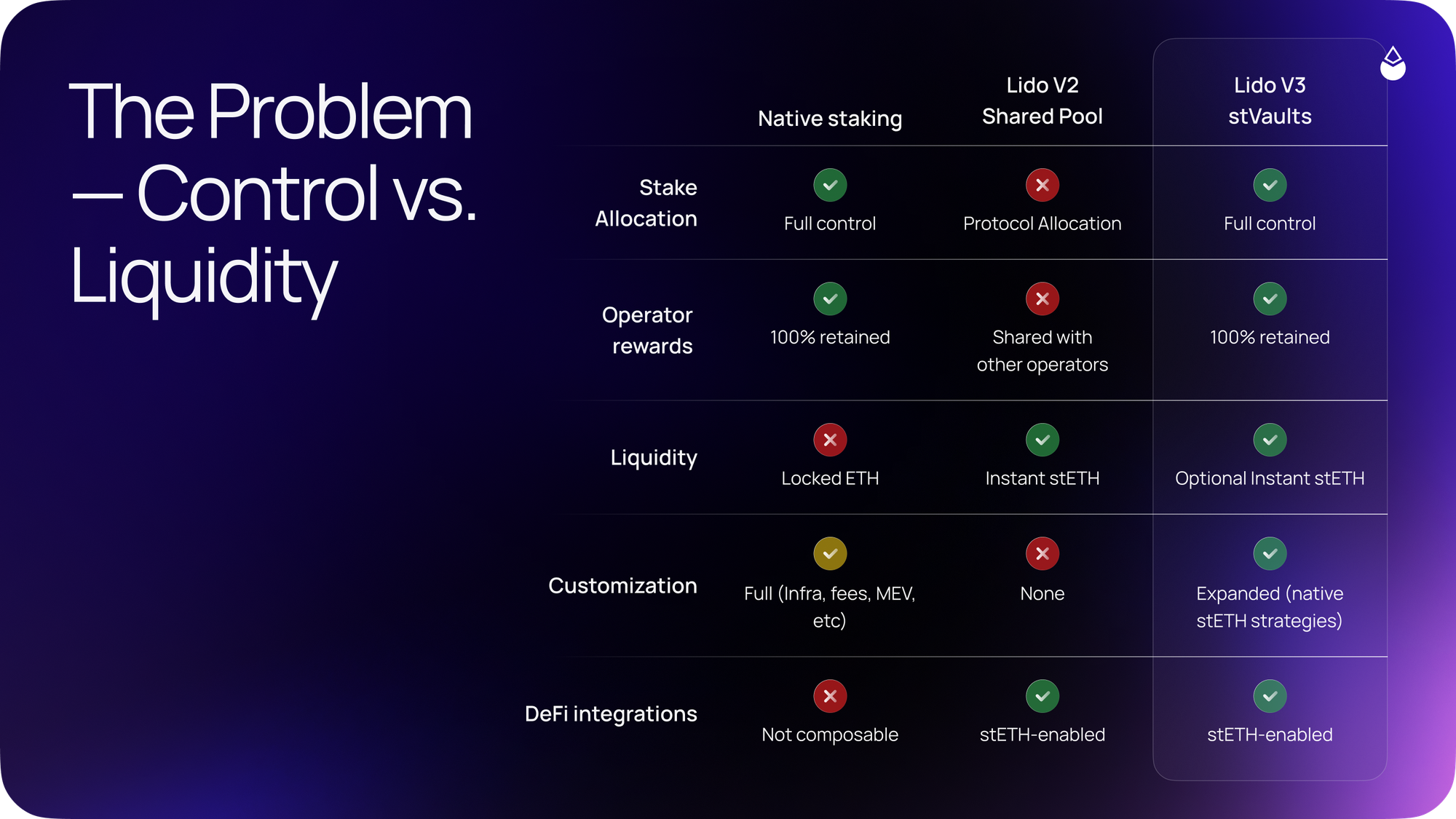
The launch of Lido V3 represents a strategic pivot for Lido and carries significant implications for the broader liquid staking and DeFi landscapes. By moving beyond a singular pooled product to a composable infrastructure, Lido is not merely upgrading its service; it is redefining the possibilities of liquid staking and setting a new industry standard.
- Enhanced Competition and Innovation: While Lido remains a dominant player, stVaults foster a more competitive environment by empowering node operators and builders to create specialized products. This increased competition is likely to drive innovation in terms of service quality, risk management, and pricing, benefiting end-users.
- Accelerated Institutional Adoption: The ability to customize staking parameters while retaining liquidity directly addresses key concerns for institutions, paving the way for a new wave of capital inflow into Ethereum staking from traditional finance. This influx could significantly boost Ethereum’s network security and decentralization over time as more diverse entities participate.
- Deepened DeFi Integration: The DeFi Wrapper toolkit and L2 integrations will lead to more sophisticated and diverse applications built on stETH. Expect to see new structured products, yield aggregation strategies, and native yield opportunities emerging across various L2s and DeFi protocols, further cementing stETH’s role as a fundamental building block.
- Decentralization Discourse: While the pooled model has faced scrutiny regarding centralization concerns, stVaults, by enabling diverse operator selection and segregated infrastructure, offer pathways towards a more distributed control model within the broader Lido ecosystem, promoting greater choice and potentially mitigating some centralization risks by allowing stakers to select specific validator sets or operator characteristics. This modularity could lead to a more nuanced and robust staking landscape.
Lido V3 transforms liquid staking from a monolithic offering into a flexible, extensible framework. It empowers a new generation of staking businesses, from regulated institutions to specialized node operators and innovative DeFi builders. The future of Ethereum staking, enabled by stVaults, promises a more tailored, efficient, and integrated experience for all participants, solidifying Ethereum’s position as the leading programmable blockchain.
Start Building on Lido V3 Today
Lido contributors invite teams building institutional staking products, operator-led offerings, structured DeFi vaults, or L2-native staking integrations to explore the capabilities of Lido V3. The stVaults framework makes it possible to:
- Build institutional-grade staking products with bespoke controls and optional stETH liquidity, meeting stringent compliance requirements.
- Launch operator-led staking services with differentiated policies and transparent reporting, fostering new revenue streams for node operators.
- Design innovative structured DeFi vaults that leverage stETH’s deep liquidity and composability, unlocking novel financial strategies.
- Integrate embedded staking yield directly into L2 ecosystems and other protocols, enhancing user experience and platform economics.
To incentivize early adoption and foster rapid development, Lido contributors are offering a special campaign. Until March 31st, 2026, the Lido Infrastructure fee for stVaults will be reduced from 1% to 0%. This promotional offer applies to identified vaults with a Total Value Exceeding 250 ETH. Interested parties are encouraged to contact the stVaults team to begin building today and capitalize on this limited-time opportunity. Further details on this campaign and the underlying risk assessment framework can be found on the Lido research forum, outlining the criteria and benefits.
For comprehensive guidance and resources, the stVaults Documentation Center provides all necessary information to start building on Lido V3, including technical specifications and implementation guides. Additionally, a detailed understanding of key concepts such as Reserve Ratios, risk tiers, and forced rebalancing can be found in the Lido V3 Whitepaper, offering in-depth technical insights into this transformative upgrade. The launch of Lido V3 not only solidifies Lido’s position as a leader in liquid staking but also sets a new standard for flexibility and innovation in the entire Web3 staking landscape.