Nila Kartika Wati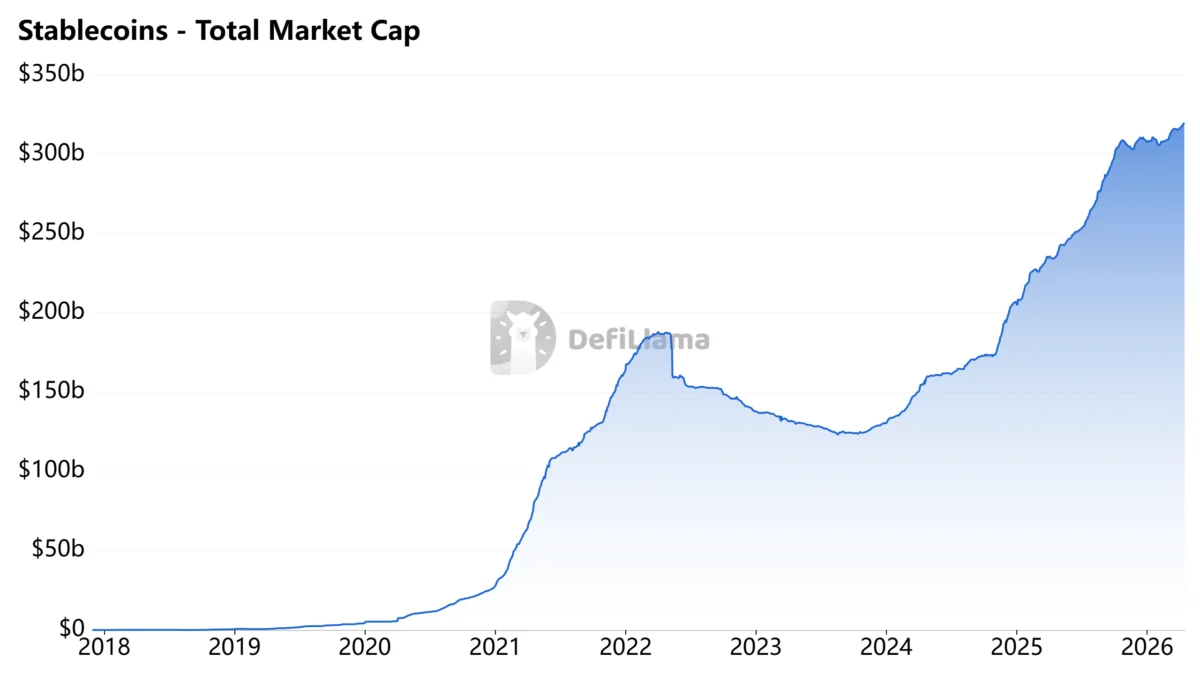
The burgeoning stablecoin market, now exceeding $320 billion in capitalization and led by giants like Tether’s USDt and Circle’s USDC, operates not as a unified financial instrument but rather as a highly fragmented digital foreign exchange landscape. This inherent fragmentation, characterized by liquidity spread across numerous blockchains, issuers, and decentralized finance (DeFi) pools, creates substantial price differences, uneven access to dollar liquidity, and a complex operational environment, particularly for institutions and large traders attempting to move significant sums. What appears to be a simple transfer of digital dollars often masks a multi-step, intricate transaction routing across disparate chains and liquidity venues, leading to an experience far from the seamless, low-cost transfers envisioned for digital currencies.
Ryne Saxe, CEO of stablecoin infrastructure company Eco, articulated this challenge clearly in an interview with Cointelegraph, describing the current state as "a very special case of a foreign exchange market onchain." He highlighted the tangible negative consequences for users, including "unexpected slippage, transaction reversion and unfamiliar information when moving your dollar from point A to point B." This reality stands in stark contrast to the perception of stablecoins as inherently fungible, dollar-pegged assets, exposing a fundamental friction point as the digital asset ecosystem matures and attracts more sophisticated participants.
The Illusion of Simplicity: Understanding Stablecoin Fragmentation
At its core, a stablecoin is designed to maintain a stable value relative to a reference asset, typically the U.S. dollar, or other fiat currencies like the Euro or Yen. This stability is crucial for mitigating the notorious volatility of cryptocurrencies, making stablecoins essential for trading, payments, and various DeFi applications. However, the promise of a universally fungible digital dollar is undermined by the multi-chain architecture of the blockchain world. Each blockchain (e.g., Ethereum, Solana, Avalanche, BNB Chain) represents a distinct ecosystem with its own set of validators, smart contracts, and liquidity pools. When a stablecoin like USDC is issued on Ethereum, it exists as an ERC-20 token. To move that USDC to, say, Solana, it often requires "bridging" – a process where the tokens are locked on the source chain and an equivalent amount is minted or released on the destination chain. This creates distinct "wrapped" or "bridged" versions of the same stablecoin, which, while theoretically backed by the same reserves, do not always behave identically.
Furthermore, within each blockchain, liquidity for stablecoins is distributed across various decentralized exchanges (DEXs) and lending protocols. These platforms, each with their own Automated Market Maker (AMM) designs, trading fees, and pool depths, contribute to the fragmented landscape. A stablecoin may be pegged to the dollar, but its practical value and ease of exchange are heavily dependent on the specific chain, issuer, and DeFi venue where it resides. "Stablecoins, between them, aren’t very fungible," Saxe emphasized. "The different profiles between those markets mean pricing and moving stablecoins seamlessly and efficiently across them is actually a hard problem that people take for granted."

The Price of Disunity: Slippage and Inefficient Transfers
The practical implications of this fragmentation manifest in several critical ways. "Slippage," for instance, refers to the difference between the expected price of a trade and the price at which the trade is actually executed. In fragmented stablecoin markets, especially for larger orders, the available liquidity in a specific pool might be insufficient to fulfill the entire order at the desired price, causing the execution price to move unfavorably. "Transaction reversion" can occur when a transaction fails due to insufficient liquidity, unexpected price swings, or network congestion, leading to wasted gas fees and a frustrating user experience.
These discrepancies are typically negligible for smaller, retail-level transactions in highly liquid markets. However, as the size of the transaction increases, the pricing gaps widen significantly. Factors contributing to these differences include variations in collateral backing for different stablecoin versions (even if they share the same name), differing market access conditions across chains and platforms, and the inherent depth of liquidity pools. For example, a stablecoin that has seen a minor de-peg on one chain due to specific market events or a liquidity crunch might still trade at its peg on another, well-supplied chain. Saxe noted, "The more major DeFi markets focus on stablecoins, the more chains focus on stablecoins, the more stablecoin assets there are, the more fragmented. People think these are just dollars, but they’re actually not." This highlights a crucial conceptual gap between the perceived fungibility of a dollar and the actual on-chain reality of its stablecoin proxies.
Institutional Ambitions Meet Fragmentation Reality
The stablecoin market’s rapid growth has been propelled by both retail and, increasingly, institutional adoption. Institutions are leveraging stablecoins for a myriad of purposes: facilitating cross-border payments, executing high-volume trading strategies, managing on-chain treasuries, and accessing yield opportunities across various DeFi markets. For these sophisticated players, speed, predictability, and efficiency of execution are paramount. Unlike retail users, who might move hundreds or thousands of dollars, institutions often transact in sums ranging from tens to hundreds of millions of dollars.
When an institution needs to move $10 million from one stablecoin to another, or from one blockchain to another, the fragmented liquidity becomes a significant constraint. "If liquidity is spread out, trying to sell $10 million of one stablecoin and buy $10 million of another in a single step will move the market," Saxe explained. This market impact, where a large order itself changes the price, necessitates a more complex approach. Institutions are often forced to break down a single large transaction into multiple smaller "branches," routing these smaller trades through different liquidity pools, across various chains, and eventually converging them at the desired destination. This multi-path execution introduces layers of complexity, increases operational risk, and makes predictable execution far more challenging. The current environment lacks the robust risk management tools, established trust mechanisms, and comprehensive infrastructure that institutions require to confidently move and hold large amounts of stablecoins on-chain by default.

A Growing Market, A Deepening Divide: Supporting Data and Trends
The stablecoin market capitalization has soared, reflecting their indispensable role in the crypto economy. As of mid-2024, the total market cap consistently hovers above $150 billion, with peaks reaching over $180 billion during periods of high market activity, underscoring their critical function as a bridge between fiat and crypto. Tether’s USDt has long dominated, holding over 60% of the market share, followed by Circle’s USDC, which commands around 25-30%. Other notable stablecoins include DAI, BUSD (though declining), and various smaller, regionally focused stablecoins. This growth is a testament to their utility but also amplifies the fragmentation issue. Each new stablecoin, each new blockchain, and each new DeFi protocol adds another layer of complexity to the overall liquidity picture.
A March report by payments startup Borderless provided empirical evidence of this pricing divergence. The report, titled "Same Coin, Same Chain, Different Price," analyzed hourly buy and sell rates throughout February across 66 stablecoin-to-fiat corridors. These corridors represented conversion routes such as USDC to Mexican pesos, covering 33 fiat currencies and seven different blockchains. The findings revealed that while USDC and USDT generally traded at near-identical prices in most cases, with 91% of pairs falling within a narrow 10 basis point (0.1%) band, larger differences emerged at the provider level. Across different liquidity providers within the same corridor, pricing gaps could exceed hundreds of basis points (several percentage points), highlighting that the quality of execution is heavily dependent on an institution’s access to various liquidity sources and its ability to intelligently route trades across these diverse venues. This reinforces the idea that access to aggregated, deep liquidity is more important than simply the overall market size.
Building Bridges, Unifying Liquidity: Industry Responses
Recognizing these significant gaps, various companies are actively developing infrastructure solutions, though their approaches differ based on their understanding of the core problem. Circle, the issuer of USDC, views stablecoins as the foundational layer for a new global foreign exchange system. Their "Circle StableFX" initiative aims to connect multiple currencies, liquidity providers, and settlement layers through shared infrastructure, effectively creating a more cohesive and efficient environment for digital currency exchange. Their vision is to build a comprehensive framework that integrates various stablecoins and fiat on-ramps/off-ramps, facilitating seamless global value transfer.
Eco, on the other hand, led by Ryne Saxe, focuses primarily on the routing and execution challenges within the existing fragmented landscape. Their solution aims to aggregate liquidity across these disparate markets, providing intelligent routing capabilities that can identify the best prices and execute trades efficiently, even when they need to traverse multiple chains and pools. This approach seeks to optimize within the current fragmented reality rather than attempting to fundamentally restructure the entire stablecoin ecosystem.

Both approaches, despite their differences, underscore a common understanding: the liquidity behind stablecoins, while substantial in aggregate, is distributed unevenly. Moving funds efficiently requires sophisticated interaction with this fragmented liquidity, which inherently introduces pricing differences, routing complexity, and execution risk. Saxe elaborated on Eco’s perspective: "Fragmentation creates more spread between prices, meaning worse execution in many cases. To solve that, you need to read across markets, see the full liquidity picture, even if it’s fragmented, and route across it."
The Road Ahead: Implications for the Digital Economy
The current state of stablecoin fragmentation carries significant implications for the broader digital economy. For institutions, this complexity directly limits the amount of capital that can reliably and efficiently move on-chain. Without the necessary risk management frameworks, predictable execution, and robust infrastructure, institutional adoption, particularly for large-scale operations like corporate treasury management or interbank settlements, will remain hindered. The promise of instant, borderless, and low-cost digital value transfer remains partially unfulfilled due to these underlying structural inefficiencies.
Beyond institutions, fragmentation also impacts the overall capital efficiency of the DeFi ecosystem. Liquidity locked in isolated pools across different chains cannot be easily accessed or utilized by other parts of the ecosystem, leading to suboptimal capital allocation and potentially higher costs for users. Regulatory bodies, increasingly scrutinizing stablecoins, also face challenges. The fragmented nature makes comprehensive oversight more complex, as different stablecoin versions and their underlying reserves might fall under varying jurisdictional rules.
The journey towards a truly unified and fungible digital dollar is ongoing. It necessitates not just an increase in stablecoin supply, but a concerted effort to build robust, interoperable infrastructure that can seamlessly connect disparate liquidity pools and blockchains. This will likely involve a combination of sophisticated cross-chain bridging technologies, aggregated liquidity solutions, and standardized protocols that enable atomic swaps and efficient routing. Only when stablecoin flows become far more predictable, and the infrastructure provides the necessary assurances of risk management and trust, will the digital asset space fully unlock the transformative potential of stablecoins for both retail and institutional participants in the global economy. The evolution from a collection of isolated digital islands to a cohesive digital ocean of liquidity will be a defining factor in the maturation of the blockchain and crypto industry.