admin
admin
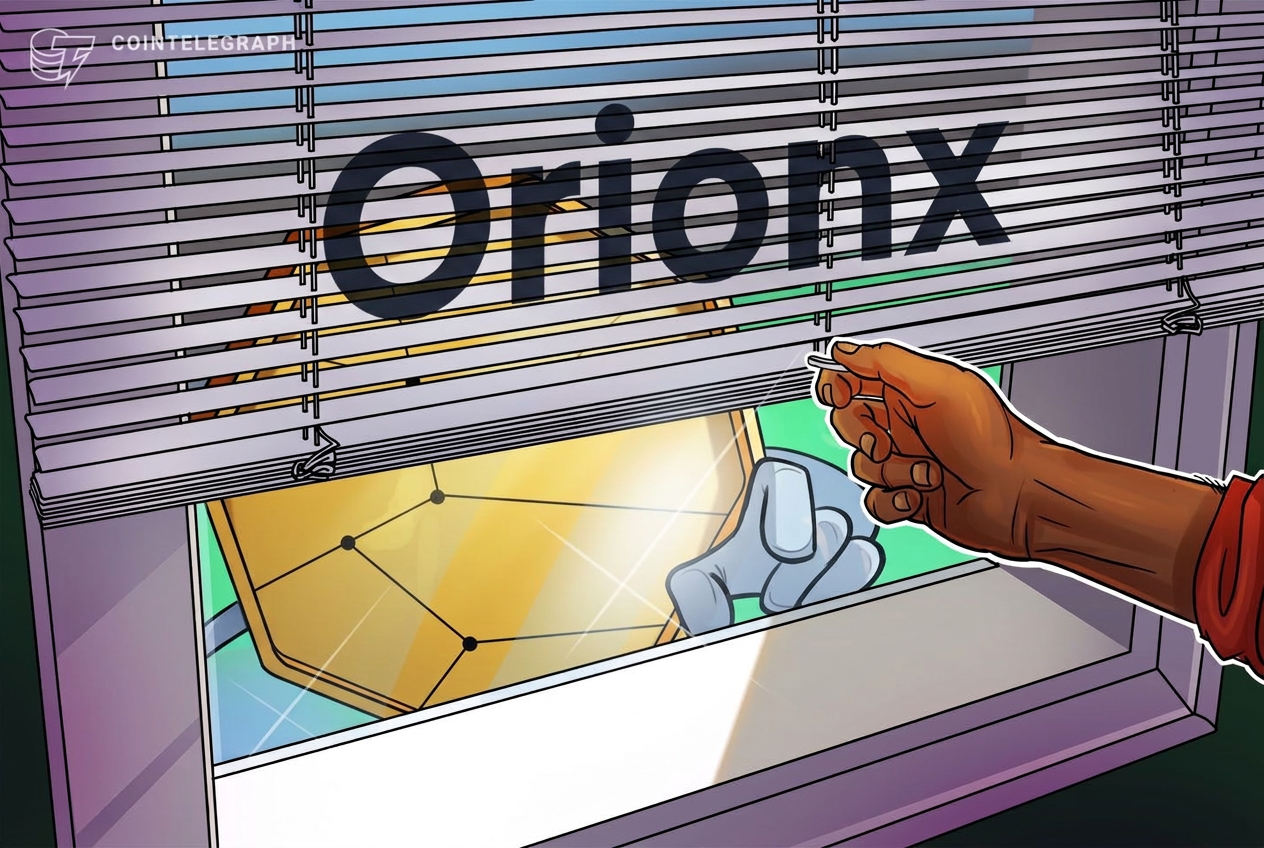
Orionx, a major Chilean cryptocurrency exchange that recently secured strategic investment from the stablecoin giant Tether, has officially announced the permanent cessation of its operations. The decision follows a forensic audit that revealed a massive discrepancy in custodial assets, amounting to more than $7 million. The exchange, which had been a cornerstone of the digital asset market in the Southern Cone, cited a loss of control over specific wallets and unauthorized asset movements as the primary drivers for the shutdown. This development marks a significant blow to the burgeoning Latin American crypto ecosystem, particularly given the high-profile backing the platform received just over a year ago.
The closure process began immediately following the conclusion of an exhaustive internal and external review. According to an official statement released by Orionx via social media, the company’s current and sole priority is the restitution of client funds. However, the path to recovery remains fraught with legal and technical complexities. Withdrawals have been temporarily suspended to prevent further instability while the firm attempts to reconcile its remaining balances. The situation has sent shockwaves through the Chilean financial sector, highlighting the persistent risks associated with centralized custodial services in the cryptocurrency industry.
The Discovery of the $7 Million Shortfall
The timeline of the collapse traces back to late August 2025. As part of its efforts to align with Chile’s rigorous new Fintech Law, Orionx had been undergoing a series of operational reviews and structural upgrades. On August 27, the company’s Chief Operating Officer, Thomas Mac Millan, identified what was described in legal filings as a "significant mismatch." This discrepancy existed between the balances recorded in the exchange’s internal accounting systems and the actual assets held within the platform’s custodial wallets.
Upon this discovery, the exchange commissioned an external forensic audit to verify the state of its holdings. The audit involved a deep dive into on-chain data, comparing historical transaction logs with the current state of Orionx’s managed addresses. The results were stark: the audit confirmed that the internal ledgers were vastly inflated compared to the tangible assets under the company’s control. The missing funds spanned several major cryptocurrencies, including Bitcoin (BTC), Ether (ETH), XRP, and Polygon (POL).
The forensic investigation further revealed that the bulk of these unauthorized transfers did not occur recently. Instead, the audit suggests that assets were moved out of Orionx’s custody in a series of transactions between 2018 and 2021. These funds were allegedly directed toward wallets not managed by the exchange, including accounts on competing international cryptocurrency platforms. The delay in detecting these movements has raised serious questions regarding the exchange’s historical internal controls and auditing procedures during its period of rapid expansion.
Criminal Allegations and the Accused Co-Founders
In response to the audit’s findings, Orionx filed a formal criminal complaint with Chilean authorities. The complaint specifically names two of the company’s co-founders and former executives: Roberto Zibert and Joaquín Díaz. According to the legal filing, both individuals held high-level access to the exchange’s sensitive crypto custody systems during the period when the discrepancies originated.
The allegations detailed in the complaint are specific and substantial. It is alleged that an account linked to Joaquín Díaz received over $1.5 million across 14 separate transfers. Furthermore, another wallet, which investigators are attempting to link definitively to the accused, reportedly received 187 Ether, more than 4.1 million USDT (Tether), and approximately 200,000 USDC. These assets represent a significant portion of the total missing $7 million.
Both Zibert and Díaz have vehemently denied the accusations. In statements made to local media, the former executives characterized the allegations as baseless and asserted that they always acted in the best interests of the exchange and its users. They argued that the cause of the asset shortfall remains unexplained and that the focus on them is a misdirection from broader systemic failures within the firm. The legal battle is expected to be lengthy, as prosecutors delve into years of blockchain data and internal communications to trace the flow of the missing millions.
Tether’s Strategic Investment and Regional Expansion
The timing of the shutdown is particularly notable given the involvement of Tether, the issuer of the world’s most widely used stablecoin. In June 2025, Tether led Orionx’s Series A funding round, a move that was heralded at the time as a major step toward accelerating digital asset adoption across Latin America. Tether’s investment was intended to provide Orionx with the capital and institutional support necessary to expand its footprint beyond Chile into markets such as Peru, Colombia, and Mexico.
At the time of the investment, Tether executives expressed confidence in Orionx’s potential to bridge the gap between traditional finance and the digital economy in the region. Orionx had evolved from a simple retail exchange into a provider of diverse financial services, including crypto-integrated payment solutions for businesses. The partnership was seen as a validation of Orionx’s business model and its compliance-first approach to the Chilean market.
However, in the wake of the recent scandal, Tether appears to have distanced itself from the exchange. The original announcement of the strategic investment has been removed from Tether’s official website, and the stablecoin issuer has not yet provided a detailed comment on the exchange’s closure. This situation underscores the risks that even institutional-grade investors face when performing due diligence on platforms with long operational histories and complex internal structures.
Chile’s Fintech Law and the Regulatory Context
The discovery of the missing funds was an indirect result of Chile’s evolving regulatory landscape. The Chilean government has been proactive in establishing a legal framework for digital assets through the "Ley Fintech" (Fintech Law), which seeks to provide clarity and security for both providers and consumers of financial technologies. Under this law, cryptocurrency exchanges are required to meet stringent standards for asset custody, transparency, and operational integrity.
Orionx’s decision to bring in financial professionals and conduct a forensic audit was part of its preparation for full compliance with these new regulations. The fact that the audit uncovered years-old discrepancies suggests that the new regulatory environment is performing its intended function—forcing companies to reconcile their books and ensuring that custodial risks are brought to light. While the outcome has led to the closure of Orionx, proponents of the law argue that it is better for such issues to be identified and addressed now than to allow them to fester and grow into an even larger systemic failure.
The Chilean Financial Market Commission (CMF) is expected to monitor the liquidation and asset return process closely. The case serves as a high-profile test for how Chilean law handles the insolvency of a digital asset platform and the prioritization of retail creditors in the event of a criminal misappropriation of funds.
Broader Implications for the Latin American Crypto Market
The collapse of Orionx is likely to have a chilling effect on the cryptocurrency market in Latin America, at least in the short term. For years, the region has been viewed as a high-growth area for crypto adoption due to high inflation rates and a large unbanked population. However, the failure of a platform backed by an industry giant like Tether may erode consumer trust in local exchanges.
The incident highlights a critical vulnerability in the centralized exchange model: the "black box" of internal custody. Even when an exchange appears to be growing and securing prestigious partnerships, the underlying reality of its on-chain reserves can remain hidden without regular, independent, and transparent audits. This has led to renewed calls within the Chilean crypto community for the adoption of "Proof of Reserves" (PoR) protocols, which allow users to verify that an exchange holds the assets it claims to manage in real-time.
Furthermore, the Orionx case may prompt other regional exchanges to undergo similar forensic reviews. If the missing funds at Orionx went undetected for nearly seven years, there is a lingering concern that other long-standing platforms might harbor similar historical discrepancies. Investors and users are likely to become more discerning, favoring platforms that can provide cryptographic proof of solvency and those that operate under the direct supervision of robust regulatory bodies.
The Future of Orionx Clients and Asset Recovery
For the thousands of users who held assets on Orionx, the immediate future is uncertain. The exchange has committed to returning as much of the assets as possible, but the $7 million shortfall represents a significant portion of the total pool. In many cases of exchange insolvency, users are treated as unsecured creditors, meaning they may only receive a pro-rata share of the remaining assets after legal and administrative costs are settled.
The criminal complaint and the potential recovery of funds from the accused individuals offer a glimmer of hope for full restitution. If the court finds that the assets were indeed misappropriated and can successfully freeze and seize the linked wallets, those funds could be returned to the exchange’s estate. However, the technical nature of cryptocurrency means that if private keys are lost or if the funds have been effectively "mixed" or laundered through various protocols, recovery becomes exponentially more difficult.
As the legal proceedings move forward, the Orionx story will serve as a cautionary tale for the global cryptocurrency industry. It illustrates the vital importance of rigorous internal controls, the necessity of proactive regulation, and the inherent risks of custodial centralization. While the exchange’s journey ends in a courtroom, the lessons learned from its downfall will likely shape the regulatory and operational standards of the Latin American crypto market for years to come.