admin
admin
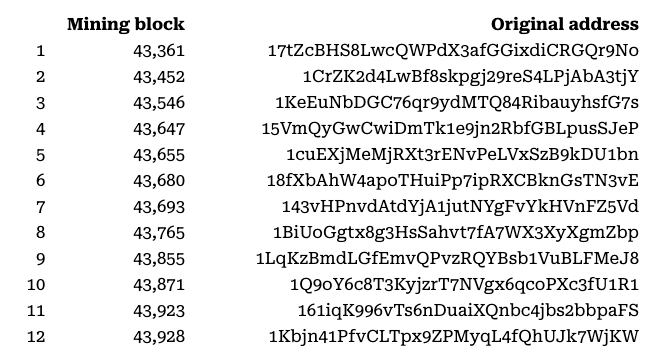
In a significant event for on-chain analysts and cryptocurrency historians alike, a series of long-dormant Bitcoin addresses dating back to the earliest days of the network’s operation have suddenly sprung to life. On Saturday, a total of 12 separate Bitcoin addresses, each containing 50 BTC earned as mining rewards in early 2010, transferred their holdings for the first time in over 16 years. The combined 600 Bitcoin (BTC), which carries a current market valuation of approximately $48 million, represents a relic of the "Satoshi Era"—a period when the network’s pseudonymous creator, Satoshi Nakamoto, was still actively contributing to the project’s development.
The sudden movement of such ancient coins frequently triggers intense speculation within the digital asset community, often leading to rumors that Satoshi Nakamoto or one of the earliest developers may be liquidating their holdings. However, blockchain tracking platform Whale Alert has moved quickly to temper these expectations. Following a comprehensive review of the on-chain data, the platform confirmed that while the coins are indeed from the era of Satoshi’s activity, they do not appear to be linked to the creator’s known mining patterns.
Detailed Breakdown of the On-Chain Activity
The movement was first flagged when a cluster of addresses began transferring funds in quick succession. According to data provided by Whale Alert and corroborated by Lookonchain, the 600 BTC originated from 12 distinct mining blocks. During the period these coins were generated—specifically March 2010—the Bitcoin protocol provided a block subsidy of 50 BTC per block to successful miners. This was long before the implementation of the four halving events that have since reduced the subsidy to its current level of 3.125 BTC.
The sequence of transactions began with what analysts describe as a "test transaction." One of the 12 addresses moved its 50 BTC reward slightly ahead of the others, a common practice among high-net-worth holders (whales) to ensure the security and accuracy of the destination address before committing a larger sum. Shortly thereafter, the remaining 11 addresses followed suit, consolidating or moving the funds to new, modern wallet architectures.
Lookonchain’s initial analysis identified seven of these wallets, noting that they had remained untouched for roughly 16.5 years. Whale Alert’s expanded research eventually identified the full set of 12 addresses, all of which were traced back to block rewards issued in March 2010. At the time of their mining, these coins had virtually no market value; today, they represent a fortune that highlights the unprecedented appreciation of Bitcoin over the last decade and a half.
The Patoshi Pattern and the Search for Satoshi
The primary reason these transactions caused a stir is the timing of their origin. Satoshi Nakamoto was actively involved in the Bitcoin community from the publication of the whitepaper in late 2008 until their final known communication in April 2011. Any Bitcoin mined during this window is colloquially referred to as "Satoshi-era BTC."
However, forensic blockchain analysts use specific markers to distinguish Satoshi’s coins from those of other early miners. The most famous of these markers is the "Patoshi Pattern," a term coined by researcher Sergio Demian Lerner. Lerner’s research suggests that Satoshi used a specific, identifiable mining algorithm that left a unique "fingerprint" in the extraNonce field of the Bitcoin blocks. Satoshi is estimated to have mined approximately 1.1 million BTC using this method, most of which remains unmoved to this day.

A spokesperson for Whale Alert clarified that the 600 BTC moved this past weekend do not align with the Patoshi Pattern. “None of the blocks can be connected to Satoshi based on our research,” the spokesperson stated. This suggests that the miner was likely one of the few dozen hobbyists or early adopters who were running the Bitcoin software on personal computers in early 2010, rather than the creator themselves.
Historical Context: Bitcoin Mining in 2010
To understand the significance of these 600 BTC, one must look back at the state of the network in March 2010. At that time, Bitcoin was less than 15 months old. The "pizza transaction"—widely cited as the first real-world purchase using Bitcoin—would not even occur for another two months (May 2010).
Mining in 2010 was a vastly different endeavor than the industrial-scale operations seen today. In the early months of that year, the network difficulty was so low that a standard home computer’s Central Processing Unit (CPU) was sufficient to successfully mine blocks. There were no specialized ASIC (Application-Specific Integrated Circuit) miners, and the concept of "mining pools" was still in its infancy.
The 12 blocks in question were mined during a period of relative obscurity for the project. The total hash rate of the network was a tiny fraction of its current power. For a single entity to have controlled 12 blocks worth of rewards suggests they were either a very dedicated early enthusiast or a group of individuals who have only recently regained access to their private keys.
The Evolution of Block Rewards and Halvings
The movement of these 50 BTC block rewards serves as a stark reminder of Bitcoin’s programmed scarcity and its deflationary monetary policy. The Bitcoin protocol is designed so that the reward for mining a block is cut in half every 210,000 blocks, or approximately every four years.
- 2009–2012: The Genesis era, where the reward was 50 BTC per block. This is when the 600 BTC in question were generated.
- 2012–2016: The first halving reduced the reward to 25 BTC.
- 2016–2020: The second halving brought the reward down to 12.5 BTC.
- 2020–2024: The third halving reduced the subsidy to 6.25 BTC.
- 2024–Present: Following the April 2024 halving, the reward is now 3.125 BTC.
For the miner of the 600 BTC, the 16-year wait has resulted in an astronomical return on investment. In March 2010, the "price" of Bitcoin was not even listed on major exchanges, as they did not yet exist in a meaningful capacity. By the time the coins were moved on Saturday, the price of Bitcoin was hovering near the $80,000 mark, turning a hobbyist’s experiment into a $48 million windfall.
Implications for Market Liquidity and Sentiment
While 600 BTC is a relatively small amount compared to Bitcoin’s total circulating supply of 19.7 million coins, the movement of "ancient" supply can have psychological effects on the market. Traders often view the awakening of dormant whales as a potential signal of intent to sell.
When coins that have been held for over a decade move to new addresses, it typically indicates one of three things:
- Security Upgrades: The owner may be moving funds from older, less secure "Legacy" address formats (P2PKH) to modern formats like SegWit or Taproot to take advantage of lower fees and better security features.
- OTC Sales: The coins may be being moved to an exchange or a custodian to facilitate an over-the-counter (OTC) trade, allowing the owner to liquidate their position without causing a massive price slippage on public exchanges.
- Estate Planning: Given the age of the coins, the move could be related to the transfer of assets to heirs or the consolidation of a long-lost portfolio.
Market analysts note that the absorption of 600 BTC by the current market is well within the daily liquidity limits of major exchanges. Unlike the early days of Bitcoin, where a 600 BTC sell order could have crashed the price, the modern market—bolstered by institutional ETFs and high-frequency trading—can handle such volumes with minimal volatility.
Technical Forensics and Wallet Management
Blockchain forensics companies like Chainalysis and Elliptic often monitor these "virgin" Bitcoins—coins that have never been moved since they were first mined. These coins are considered highly desirable by some collectors because they have no "history" and are not linked to any previous transactions, hacks, or illicit activity.
The fact that 12 addresses moved simultaneously suggests a single entity controlled all of them. In 2010, the standard Bitcoin-Qt client (now Bitcoin Core) managed private keys in a file called wallet.dat. If the original miner kept this file secure for 16 years, or perhaps recently discovered a backup on an old hard drive, they would have been able to sign the transactions using the original private keys.
The move from 2010-era addresses to new ones also highlights the technical evolution of the Bitcoin network. The original addresses used a "Pay-to-Public-Key" (P2PK) or "Pay-to-Public-Key-Hash" (P2PKH) script. Moving these funds to a Bech32 (SegWit) address not only makes future transactions cheaper but also ensures compatibility with modern hardware wallets and multi-signature setups.
Conclusion: The Enduring Mystery of the Satoshi Era
The awakening of these 600 BTC provides a rare glimpse into the formative years of the world’s first cryptocurrency. While Whale Alert’s data has effectively ruled out a direct link to Satoshi Nakamoto, the event underscores the fact that a significant portion of Bitcoin’s early supply remains in the hands of individuals who have shown remarkable "HODLing" discipline—whether by choice or by circumstance.
As Bitcoin continues to mature as a global financial asset, the movement of Satoshi-era coins will likely continue to fascinate the public. Each time an ancient wallet wakes up, it serves as a reminder of the network’s humble beginnings and the anonymous individuals who supported the protocol when its success was far from guaranteed. For now, the 600 BTC moved on Saturday remain a testament to the enduring value and transparency of the blockchain, even as the identity of their owner remains shrouded in the same pseudonymity that defines Bitcoin itself.