Nila Kartika Wati
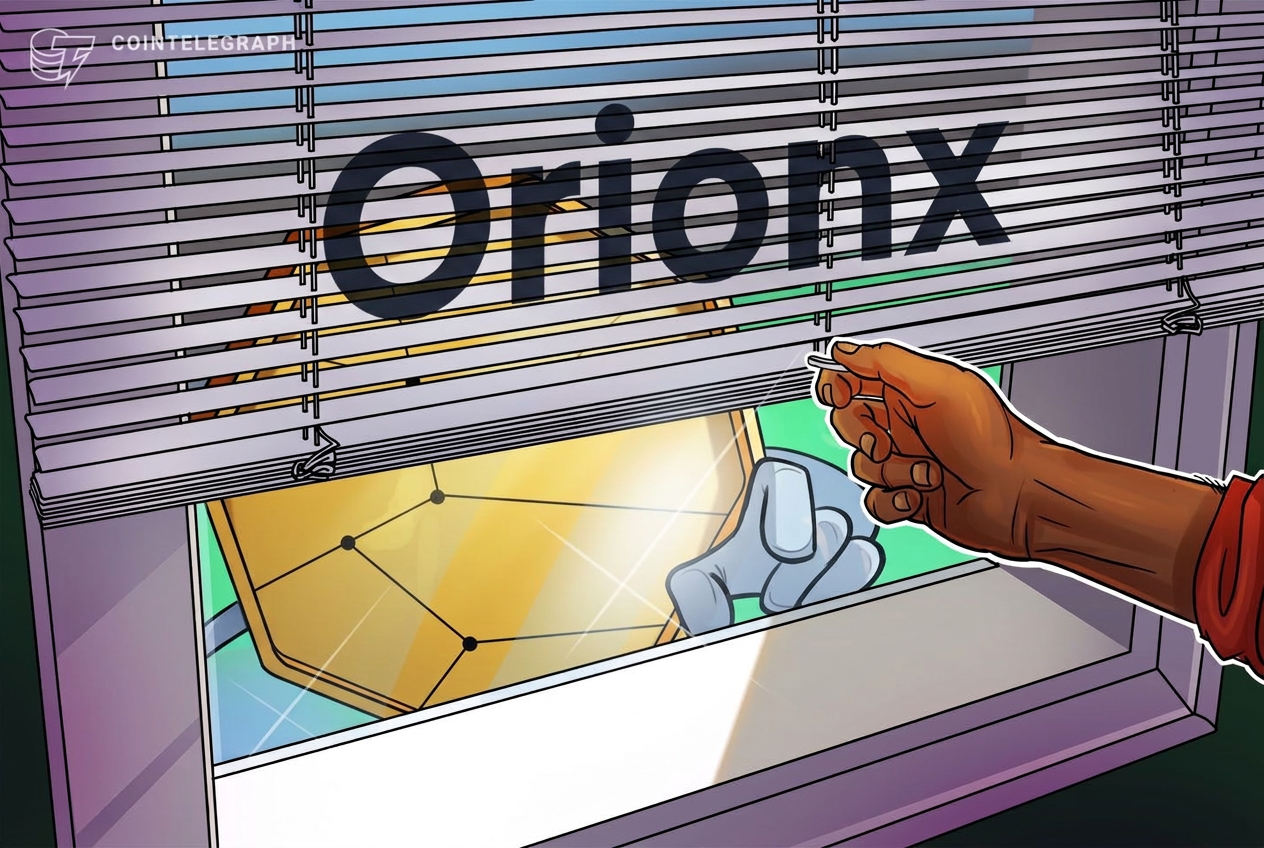
Santiago, Chile – Orionx, once a prominent Chilean cryptocurrency exchange that garnered strategic backing from stablecoin giant Tether, has commenced a permanent closure process following the discovery of a multi-million dollar discrepancy in its custodial assets. The startling revelation, unearthed during a forensic audit, indicates that over $7 million in client funds were allegedly transferred to unauthorized wallets, prompting the exchange to file a criminal complaint against its former co-founders. This dramatic collapse sends shockwaves through the burgeoning Latin American crypto market and casts a shadow over Tether’s strategic investment initiatives in the region.
The announcement, shared by Orionx on X (formerly Twitter) on Thursday, detailed the immediate suspension of withdrawals and outlined the company’s new singular priority: to return as much of its clients’ assets as possible. This abrupt cessation of operations comes barely 15 months after Tether, the issuer of the world’s largest stablecoin, USDt, exclusively led Orionx’s Series A funding round, signaling a significant push to expand digital asset adoption across Latin America. The incident now raises critical questions regarding due diligence processes, the security of centralized exchange custody, and the reputational risks for major industry players like Tether.
The Unraveling: A Custody Catastrophe
The crisis at Orionx began to fully manifest on August 27, 2026, when Chief Operating Officer Thomas Mac Millan reportedly detected a "significant mismatch" between the balances recorded in Orionx’s internal systems and the actual assets held in custody. This discovery was made amidst the exchange’s ongoing efforts to comply with Chile’s stringent Fintech Law, which prompted a comprehensive review of its operations in 2025 and the engagement of external financial professionals. The Chilean newspaper La Tercera, citing the company’s criminal complaint, provided these details, offering a glimpse into the internal mechanisms that led to the uncovering of the alleged fraud.
Following the initial internal review, Orionx commissioned an external forensic audit. Such audits in the cryptocurrency sector are highly specialized, involving a meticulous comparison of an exchange’s internal ledger records with verifiable data directly from the blockchain – the immutable public record of all cryptocurrency transactions. This process is designed to uncover discrepancies that might not be visible through traditional financial audits alone. The forensic examination confirmed the worst: balances recorded in Orionx’s systems far exceeded the assets actually held at its designated custody addresses for several major cryptocurrencies, including Bitcoin (BTC), Ether (ETH), XRP, and Polygon (POL). The total shortfall was estimated to be in excess of $7 million.
Custodial assets, in the context of cryptocurrency exchanges, refer to digital assets that clients deposit with the exchange, trusting the platform to securely store and manage them on their behalf. Unlike self-custody, where users retain direct control over their private keys, third-party custody involves relinquishing direct control to the exchange. This model, while convenient for trading and liquidity, inherently introduces counterparty risk – the risk that the custodian may mishandle, lose, or misappropriate the assets. The Orionx case serves as a stark reminder of these inherent risks, echoing the "not your keys, not your coin" adage prevalent within the crypto community.
Timeline of Treachery and Discovery
The criminal complaint filed by Orionx paints a disturbing picture of alleged misappropriation stretching back years, predating Tether’s investment and even before the full implementation of Chile’s new financial regulations. According to La Tercera, the complaint alleges that assets were systematically transferred out of Orionx’s custody between 2018 and 2021. This extended period suggests a long-running scheme, with funds allegedly moving to accounts on other crypto platforms, complicating tracing efforts and potentially involving multiple layers of transactions designed to obscure their origin and destination.
- 2017: Orionx is founded in Chile, establishing itself as one of the country’s pioneering cryptocurrency exchanges, initially focusing on retail trading.
- 2018-2021: This period is identified in the criminal complaint as the timeframe during which the alleged unauthorized transfers of custodial assets occurred, moving funds to external, unmanaged wallets and accounts on other platforms.
- June 2025: Tether, a dominant force in the stablecoin market, leads Orionx’s Series A funding round, providing a significant capital injection and endorsing the exchange as a key player in its Latin American expansion strategy.
- 2025 (Ongoing): Orionx begins a comprehensive review of its operations, spurred by the impending requirements of Chile’s new Fintech Law, which aims to regulate financial innovation and safeguard consumer interests.
- August 27, 2026: Orionx COO Thomas Mac Millan detects a "significant mismatch" between internal records and actual custodial holdings, triggering an internal investigation.
- Late August/Early September 2026: An external forensic audit is commissioned, which independently verifies the discrepancies by comparing Orionx’s internal data with on-chain verifiable records, confirming a shortfall of over $7 million across BTC, ETH, XRP, and POL.
- Wednesday (prior to Thursday’s announcement): Orionx files a criminal complaint against former executives and co-founders Roberto Zibert and Joaquín Díaz.
- Thursday (Date not specified, but following the complaint): Orionx publicly announces its permanent closure process, the suspension of withdrawals, and its commitment to client asset recovery, citing the forensic audit findings.
- Immediate Aftermath: Zibert and Díaz publicly deny the allegations, maintaining their innocence and questioning the true cause of the asset shortfall.
Allegations Point to Founders: A Legal Battle Ensues
At the heart of Orionx’s legal action are its co-founders, Roberto Zibert and Joaquín Díaz, who are explicitly named in the criminal complaint. The complaint alleges that these former executives had privileged access to the company’s critical crypto custody systems, positioning them to potentially execute or facilitate the unauthorized transfers. Such allegations, if proven, would represent a profound breach of trust and fiduciary duty by individuals entrusted with safeguarding client assets and guiding the company’s growth.
Specific details from the complaint, as reported by La Tercera, highlight alleged movements of substantial sums. An account associated with Joaquín Díaz is claimed to have received more than $1.5 million across 14 separate transfers. Furthermore, another wallet allegedly received 187 Ether (ETH), over 4.1 million USDt (USDT), and 200,000 USDC from Orionx’s custody. These figures represent significant portions of the overall $7 million shortfall, suggesting a direct link between the named individuals and the missing funds. The diverse array of cryptocurrencies involved – from major assets like ETH to stablecoins like USDT and USDC – indicates a comprehensive siphoning operation rather than an isolated incident.
In a swift and forceful response, both Roberto Zibert and Joaquín Díaz have vehemently denied all allegations. Through their legal representatives, they issued statements rejecting the charges, asserting that they never acted against the interests of Orionx’s customers. They have also cast doubt on the company’s explanation, stating that the true cause of Orionx’s asset shortfall remains unclear. This sets the stage for a protracted and complex legal battle, likely involving deep forensic analysis of blockchain transactions, internal company records, and potentially digital forensics on former employees’ systems. The legal proceedings in Chile will undoubtedly scrutinize the evidence presented by Orionx and the defense mounted by Zibert and Díaz, determining culpability and the path to potential restitution.
Tether’s Ill-Fated Investment and LatAm Ambitions
Tether’s involvement in Orionx began with considerable fanfare in June 2025, when it exclusively led the exchange’s Series A funding round. At the time, Tether framed the investment as a strategic move to "advance digital asset adoption across Latin America," highlighting Orionx’s growth from a retail crypto exchange into a platform offering a broader suite of crypto payment and financial services across Chile, Peru, Colombia, and Mexico. This investment aligned with Tether’s broader strategy of fostering the growth of the cryptocurrency ecosystem, particularly in emerging markets where stablecoins often find strong utility as a hedge against local currency volatility and for facilitating cross-border payments.
However, the rapid downfall of Orionx and the serious allegations against its co-founders present a significant setback for Tether’s regional ambitions and carry substantial reputational risk. Tether prides itself on its transparency and the stability of its USDt stablecoin, which relies heavily on trust in the broader crypto infrastructure. An investment in an exchange now accused of internal fraud directly impacts this narrative. The fact that Tether’s official announcement regarding its Orionx investment is no longer available on its website further underscores the company’s likely efforts to distance itself from the unfolding scandal, implicitly acknowledging the negative implications.
This incident will undoubtedly prompt renewed scrutiny of Tether’s due diligence processes for its strategic investments. While no investor can guarantee the integrity of every company they back, especially in a nascent and often volatile sector like cryptocurrency, a multi-million dollar fraud allegedly perpetrated by co-founders of a company they recently funded raises questions about the depth of their vetting procedures and ongoing oversight. For Tether, which has faced its own share of scrutiny regarding its reserves and operational transparency, this event is an unwelcome distraction and a potential dent in its efforts to build trust and expand its global footprint.
Regulatory Environment and Due Diligence
The timing of the discovery, prompted by Orionx’s compliance efforts with Chile’s Fintech Law, highlights the critical role of regulation in fostering transparency and accountability within the crypto industry. Chile’s Fintech Law, enacted to regulate various financial innovations, including cryptocurrency exchanges, mandates stricter operational standards, enhanced reporting, and robust internal controls. Orionx’s proactive review in 2025, in anticipation of or in response to these regulations, inadvertently led to the unraveling of the alleged long-running scheme. This suggests that while regulation can be perceived as burdensome, it also serves as a vital safeguard, potentially exposing malfeasance that might otherwise remain hidden.
The Orionx case also serves as a stark reminder for all investors, from venture capitalists like Tether to individual retail users, about the paramount importance of thorough due diligence. In an industry characterized by rapid innovation and sometimes less mature governance structures, understanding the internal controls, security protocols, and the character of leadership within crypto projects is crucial. The alleged transfers occurring between 2018 and 2021, years before the forensic audit, suggest that previous auditing methods or internal oversight may have been insufficient to detect the fraud, or that the alleged perpetrators were adept at concealing their actions for an extended period. This underscores the need for continuous, sophisticated auditing, including on-chain analysis, for any entity handling custodial assets.
The Broader Ripple Effect: Trust, Regulation, and the Crypto Landscape
The collapse of Orionx, a seemingly reputable exchange backed by a major industry player, carries significant implications beyond Chile’s borders. It contributes to a broader narrative of caution and skepticism surrounding centralized cryptocurrency exchanges, especially in the wake of high-profile failures like FTX, Celsius, and Voyager. Each such event erodes public trust, making it harder for the industry to attract mainstream adoption and shed its image of being a wild west fraught with risks. For emerging markets like Latin America, where cryptocurrency offers tangible benefits as an alternative to unstable traditional financial systems, these incidents can particularly stifle innovation and investment.
Regulators across Latin America and globally will undoubtedly take note of the Orionx scandal. It provides further impetus for governments to accelerate the development and enforcement of comprehensive regulatory frameworks for digital assets, focusing heavily on consumer protection, asset segregation, and robust auditing requirements for custodial services. The Chilean legal system’s handling of the criminal complaint against the co-founders will be closely watched, as it could set precedents for how financial fraud in the crypto space is prosecuted and how victim recovery efforts are managed in the region.
What Lies Ahead: A Difficult Road to Recovery
For Orionx’s clients, the path ahead is uncertain and likely fraught with difficulty. While the exchange has stated its "sole priority" is to return client assets, the complete recovery of funds from a multi-million dollar shortfall, especially when alleged to have been transferred to external wallets and possibly other platforms over several years, is a complex and often lengthy process. Users will likely face a prolonged period of uncertainty, potentially requiring participation in legal proceedings or class-action lawsuits to seek restitution. The temporarily suspended withdrawals mean that even unaffected funds, if any, are currently inaccessible.
The company itself faces a challenging future. The permanent closure process suggests a move towards liquidation, overseen by legal and financial professionals. This will involve unwinding operations, assessing remaining assets, and attempting to trace and recover the missing funds. The legal battle with its former co-founders will be central to this process, as any successful prosecution and asset forfeiture could directly contribute to client recovery efforts.
The Orionx scandal serves as a sobering reminder that while the cryptocurrency industry offers transformative potential, it remains susceptible to the same human frailties and criminal intentions that plague traditional financial systems. It underscores the critical importance of robust security, transparent operations, stringent regulatory oversight, and constant vigilance from all participants – from investors and founders to regulators and individual users – to build a truly resilient and trustworthy digital economy.