admin
admin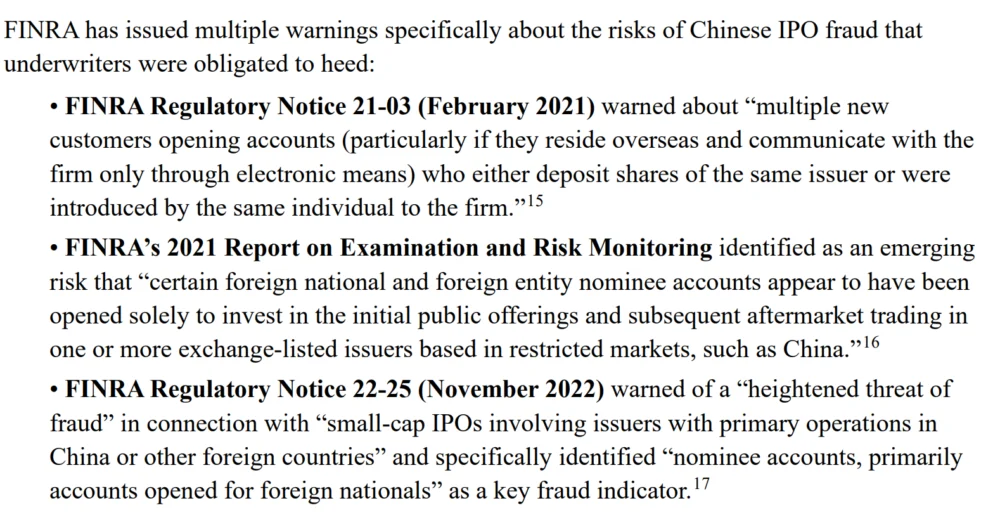
The United States House of Representatives Select Committee on the Strategic Competition Between the United States and the Chinese Communist Party has officially initiated a high-stakes investigation into three prominent Wall Street underwriting firms. The probe focuses on the firms’ roles in facilitating the initial public offerings (IPOs) of Chinese companies that were subsequently implicated in sophisticated "ramp-and-dump" stock manipulation schemes. This investigation, led by Committee Chair John Moolenaar (R-MI) and Ranking Member Ro Khanna (D-CA), signals a significant escalation in congressional efforts to protect American retail investors from cross-border financial fraud and to scrutinize the gatekeeping functions of domestic financial institutions.
The committee’s inquiry targets D. Boral Capital, Dominari Securities, and Revere Securities. In letters dispatched on Monday, lawmakers demanded comprehensive documentation regarding the due diligence processes, communication records, and funding sources associated with several Chinese-linked listings on American exchanges. The lawmakers allege that these firms may have served as conduits for "scam centers" that utilize Chinese shell companies to defraud American households, leading to billions of dollars in losses.
The Mechanics of Ramp-and-Dump Schemes
The core of the investigation revolves around the "ramp-and-dump" phenomenon, a modern evolution of the classic pump-and-dump scheme. According to the committee, these operations typically involve Chinese-based entities that list on U.S. exchanges, often as shell companies with little to no substantive business operations. Once listed, the stock prices are artificially inflated—or "ramped"—through coordinated trading activities and aggressive promotion, frequently targeting retail investors via social media platforms and encrypted messaging apps.
Evidence cited by the committee suggests that in several instances, dozens of accounts placed nearly identical buy orders at prices significantly above the IPO price immediately following the commencement of trading. This coordinated buying creates a facade of high demand and upward momentum, luring in unsuspecting retail investors. Once the share price reaches a predetermined peak, the insiders and coordinated "scam centers" liquidate their holdings—the "dump"—causing the stock price to collapse. The resulting crashes often leave retail investors with nearly worthless securities, while the perpetrators vanish with the proceeds.
Quantifying the Financial Toll on American Investors
The scale of the alleged fraud is immense. Lawmakers cited data suggesting that since 2023, approximately $16 billion in U.S. investor wealth has been liquidated through these specific types of manipulation schemes involving Chinese issuers. This figure underscores the systemic risk posed by inadequate oversight of small-cap international listings.
Furthermore, the Federal Bureau of Investigation (FBI) has reported a staggering 300% increase in complaints related to Chinese stock manipulation cases over the past two years. This surge in reported criminal activity has prompted the Select Committee to question whether U.S. financial intermediaries are performing their legally mandated "gatekeeper" functions or if they are, perhaps inadvertently, facilitating these schemes in exchange for underwriting fees.
The committee’s letters specifically highlight concerns that the targeted underwriters may have ignored clear "red flags." These indicators include anomalous trading patterns, lack of transparency regarding the beneficial owners of the Chinese entities, and the rapid-fire nature of the IPOs. By providing these companies access to U.S. capital markets, the underwriters effectively provide a "stamp of legitimacy" that fraudsters exploit to deceive the public.
The Political Dimension: Dominari Securities and the Trump Family
Among the three firms under scrutiny, Dominari Securities has drawn particular attention due to its high-profile political connections. Dominari Securities is a subsidiary of Dominari Holdings, a firm headquartered in New York’s Trump Tower. The company’s ties to the family of President Donald Trump are well-documented and have become a focal point of public interest.
Eric Trump, the son of the former president, is currently the fourth-largest shareholder in Dominari Holdings. In February 2025, both Eric Trump and Donald Trump Jr. officially joined the company’s advisory board. While the investigation does not explicitly accuse the Trump family members of wrongdoing, the timing of their involvement with a firm now under federal investigation for its underwriting practices has intensified the scrutiny.
Dominari’s recent business activities have also intersected with the burgeoning cryptocurrency sector. Last year, the firm facilitated a significant fundraising round for Thumzup, a publicly traded company that garnered headlines for adopting a Bitcoin-centric treasury strategy. Donald Trump Jr. notably invested millions of dollars into Thumzup, further cementing the links between the brokerage firm, the Trump family, and speculative financial markets. The committee is now looking into whether the due diligence standards applied to these ventures were consistent with federal requirements, especially regarding the Chinese IPOs that form the basis of the current probe.
A Chronology of Regulatory Warnings and Market Volatility
The investigation by the Select Committee does not occur in a vacuum; it follows years of mounting tension between U.S. regulators and Chinese issuers.
- 2020-2022: The passage and implementation of the Holding Foreign Companies Accountable Act (HFCAA) began forcing Chinese companies to allow U.S. auditors to inspect their books or face delisting. While this improved transparency for large-cap firms, it arguably pushed fraudulent actors toward smaller, less-scrutinized IPOs.
- Late 2022: The Financial Industry Regulatory Authority (FINRA) issued a series of alerts to member firms regarding the rise of "pig butchering" and stock manipulation schemes involving small-cap IPOs. These alerts specifically warned underwriters to be vigilant about suspicious account activity and coordinated trading.
- 2023: The "ramp-and-dump" trend accelerated, with several Chinese companies experiencing 500% to 1,000% gains on their first day of trading, only to lose 90% of their value within weeks.
- February 2025: Dominari Holdings expands its advisory board to include Eric and Donald Trump Jr., signaling an aggressive growth phase for the firm.
- March 2025: The House Select Committee on China officially launches its probe, setting a Friday deadline for the production of internal documents.
The committee’s aggressive timeline—demanding documents by the end of the week—reflects the urgency lawmakers feel in addressing what they characterize as an ongoing threat to the integrity of the U.S. financial system.
The Scope of the Investigation and Information Requests
The letters sent to D. Boral Capital, Dominari Securities, and Revere Securities are exhaustive. The committee is seeking:
- Internal Communications: Emails and messaging records between the underwriters and the management teams of the Chinese companies they helped list.
- Due Diligence Records: Documentation showing how the underwriters verified the business claims, revenue, and ownership structures of the issuers.
- Trading Data: Information regarding the specific accounts that participated in the IPOs and subsequent secondary market trading.
- Funding Sources: Clarification on the origins of the capital used to support these IPOs, with a focus on whether the funds originated from entities linked to the Chinese Communist Party or known criminal syndicates.
The lawmakers are particularly interested in whether the underwriters conducted "Know Your Customer" (KYC) and Anti-Money Laundering (AML) checks on the entities that purchased large blocks of shares during the "ramp" phase of the schemes.
Broader Implications for U.S.-China Financial Decoupling
The investigation carries significant implications for the broader relationship between Washington and Beijing. For years, the U.S. capital markets have been the preferred destination for Chinese entrepreneurs seeking liquidity and prestige. However, the Select Committee’s probe suggests that this openness has been weaponized.
If the investigation finds that U.S. underwriters were negligent or complicit, it could lead to much stricter regulations on international IPOs. This might include mandatory third-party audits of all foreign-based shell companies before they can list on the Nasdaq or NYSE, as well as increased liability for underwriters when an IPO is found to be part of a manipulation scheme.
Furthermore, the probe highlights a bipartisan consensus on the need to protect the "American Dream" of retail investing from foreign interference. Rep. Ro Khanna, a leading Democrat on the committee, emphasized that financial fraud is not just a white-collar crime but a direct hit to the savings of working-class Americans. Chair John Moolenaar echoed these sentiments, framing the issue as a matter of national security and economic sovereignty.
Official Responses and Industry Reaction
As of the time of reporting, the three firms—D. Boral Capital, Dominari Securities, and Revere Securities—have not issued formal public statements regarding the investigation. However, industry analysts suggest that the firms are likely to argue that they followed existing regulatory guidelines and that they cannot be held responsible for the subsequent trading behavior of independent market participants.
The Securities and Exchange Commission (SEC) and FINRA have also remained relatively quiet regarding the specific House probe, though both agencies have previously expressed concerns about the volatility of small-cap Chinese IPOs. The outcome of this congressional inquiry could provide the SEC with the political backing needed to implement more aggressive enforcement actions against domestic broker-dealers who facilitate high-risk international listings.
Conclusion and Future Outlook
The investigation into Dominari, D. Boral, and Revere marks a pivotal moment in the oversight of Wall Street’s role in the global economy. By focusing on the intersection of Chinese shell companies, sophisticated manipulation schemes, and politically connected financial firms, the House Select Committee is addressing a complex web of modern financial risks.
As the Friday deadline for document submission approaches, the financial community will be watching closely. The findings of this probe could result in legislative proposals to overhaul the IPO process, increased oversight of advisory boards at financial institutions, and a potential chilling effect on the listing of Chinese companies in the United States. For retail investors who have already lost billions, the investigation represents a long-awaited effort to bring accountability to a corner of the market that has operated in the shadows for too long.