James Watt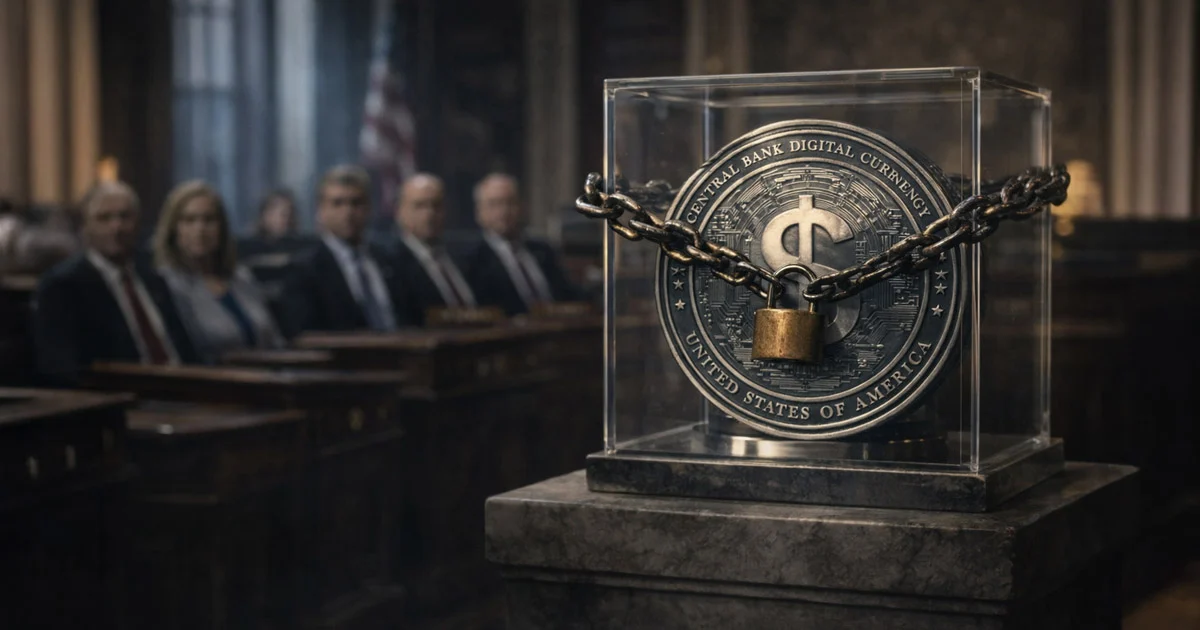
This lopsided margin of victory indicates that the debate over a "digital dollar" has moved beyond the fringes of crypto-policy circles and into the heart of mainstream American governance. By attaching anti-CBDC language to a major housing package, lawmakers have effectively turned the issue of government-backed digital assets into a central pillar of the ongoing national conversation regarding financial privacy, the limits of state authority, and the future of the American banking system.
The Legislative Mechanics of H.R. 6644
The core of the current legislative push is found within a broader package titled the "21st Century ROAD to Housing Act." While the headlines have focused on the digital currency ban, the bill itself is a massive omnibus-style effort to address the American housing crisis. It includes provisions for increasing housing supply, enhancing affordability, restructuring disaster-recovery block grants, and modernizing rural housing data. It also provides targeted support for manufactured housing communities, which are often overlooked in federal urban development policies.
The anti-CBDC provision is strategically embedded within this larger framework. The amendment defines a CBDC as a digital asset denominated in U.S. dollars, treated as legal tender, and carried as a direct liability of the Federal Reserve System that is made widely available to the general public. Crucially, the text explicitly forbids the Federal Reserve Board or any individual Federal Reserve Bank from issuing or creating such a currency, or any "substantially similar" digital asset, either directly or indirectly.
The inclusion of a "sunset clause" dated December 31, 2030, is a significant detail. It suggests that Congress is not necessarily seeking to ban the concept of a digital dollar in perpetuity, but rather intends to "fence off" the issue for the remainder of the decade. This moratorium provides a cooling-off period, allowing for further study while preventing the executive branch or the central bank from acting unilaterally without explicit congressional authorization.
Chronology of the Senate Action
The legislative momentum for H.R. 6644 built rapidly during the first week of March. The timeline of the proceedings highlights the urgency felt by the Senate leadership to move the package forward:
- March 2: The Senate held a roll call vote on the motion to invoke cloture on the motion to proceed. The result was 84 in favor and 6 against. This vote was the primary indicator of the supermajority’s willingness to advance the anti-CBDC language alongside the housing reforms. Senator Cory Booker voted "present," and nine senators were absent for the vote.
- March 3: Legislative staff and committees worked through the procedural "cooling-off" period required by Senate rules following a cloture vote. During this time, the specific language of the substitute amendment was scrutinized by both proponents of financial privacy and advocates for housing reform.
- March 4: The Senate reaffirmed its commitment to the package with a second vote. This time, the motion to proceed was agreed to by an even wider margin of 90-8. This second anchor point confirmed that the initial 84-6 split was not a statistical anomaly but reflected a deep-seated legislative resolve.
Analyzing the Six Holdouts
The six senators who voted "no" on March 2 represent a diverse cross-section of the political spectrum, making it difficult to assign a single ideological motive to their opposition. The holdouts were Ron Johnson (R-WI), Mike Lee (R-UT), Chris Murphy (D-CT), Rick Scott (R-FL), Tommy Tuberville (R-AL), and Chris Van Hollen (D-MD).
It is important to note that a "no" vote on a motion to proceed to an omnibus package does not necessarily equate to support for a Federal Reserve digital dollar. For many of these senators, opposition was likely rooted in the "size and breadth" of H.R. 6644 itself rather than the specific CBDC language. Conservative senators like Mike Lee and Rick Scott frequently vote against massive spending packages or procedural motions that they believe circumvent regular order. Conversely, Democratic holdouts like Chris Van Hollen or Chris Murphy may have had reservations about specific housing provisions or the tactical decision to include a digital currency ban in a bill intended to address the housing shortage.
The Federal Reserve’s Stance and the Question of Necessity
One of the most striking aspects of the Senate’s rush to ban a CBDC is that the Federal Reserve has repeatedly stated it has no immediate plans to issue one. In a seminal 2022 discussion paper, the Fed outlined the potential benefits and risks of a digital dollar but emphasized that it would not proceed without a clear mandate from both the executive branch and Congress.
Federal Reserve Chairman Jerome Powell has testified before Congress on several occasions, asserting that the Fed does not have the legal authority to offer direct accounts to individuals—a prerequisite for a retail CBDC—without an act of Congress. Critics of the Senate’s current move argue that the legislation is a solution in search of a problem, given that the Fed is already legally constrained.
However, proponents of the ban argue that the Fed’s research into the technology—including "Project Hamilton," a joint initiative between the Boston Fed and MIT—suggests a level of institutional readiness that requires a legislative firewall. They point to the "indirect" issuance mentioned in the bill as a way to prevent the Fed from using intermediary banks to bypass the prohibition on direct consumer accounts.
Data and Context: The Global CBDC Landscape
The Senate’s move comes at a time when other major economies are racing ahead with their own digital currencies. According to the Atlantic Council’s CBDC Tracker, over 130 countries, representing 98% of global GDP, are currently exploring a CBDC.
- China: The People’s Bank of China has already launched the e-CNY, which is currently in an advanced pilot phase involving millions of users and billions in transaction volume.
- European Union: The European Central Bank (ECB) is in the "preparation phase" of the digital euro, with a potential launch window between 2026 and 2028.
- The Bahamas and Nigeria: These nations have already fully launched retail CBDCs (the Sand Dollar and the eNaira, respectively), though adoption rates have remained relatively low.
The U.S. Senate’s decision to implement a moratorium until 2030 suggests a calculated risk. By stalling a state-backed digital dollar, the U.S. aims to prioritize the stability of the existing two-tier banking system and protect consumer privacy, even if it means trailing behind geopolitical rivals in the race for digital currency standards.
Implications for the Private Sector and Stablecoins
The legislative hostility toward a government-issued digital dollar provides a significant opening for the private sector. If the Federal Reserve is barred from creating a digital liability for the public, the demand for digital dollars will almost certainly be met by private issuers of stablecoins and tokenized bank deposits.
Industry analysts suggest that every legislative blow against a CBDC strengthens the market position of firms like Circle (issuer of USDC) and Paxos, as well as traditional banks looking to tokenize their deposits. However, this shift is not without its own controversies. Recent reports have highlighted that "private digital dollars" can carry many of the same surveillance risks as a CBDC if they are subject to strict federal oversight and "backdoor" regulatory requirements.
The recent operational milestone of Kraken, a major cryptocurrency exchange, gaining a direct link to Federal Reserve payment rails further complicates the narrative. It demonstrates that the real power in the digital economy may not lie in the "branding" of the currency (government vs. private) but in who controls the underlying settlement infrastructure.
Broader Impact and the Path Ahead
The Senate’s 84-6 vote is a watershed moment that signals a hardening of the American stance against the "surveillance state" implications of central bank digital currencies. It aligns with previous actions in the House of Representatives, which passed its own anti-CBDC bill earlier in 2024.
As H.R. 6644 moves toward final passage, the focus will shift to how the executive branch responds. While the White House has previously explored the potential for a "Responsible Development of Digital Assets" through Executive Order 14067, the overwhelming bipartisan support in the Senate makes a presidential veto unlikely.
The 2030 deadline sets a definitive timeframe for the American financial industry to innovate within the private sector. By effectively removing the threat of a government-run competitor for the next six years, Washington is placing a massive bet on the ability of the private market to deliver a digital dollar system that is efficient, inclusive, and, most importantly, beyond the direct control of the central bank. The struggle over the CBDC ban is ultimately a struggle over the future of the dollar itself: whether it will remain a tool of private commerce or become an instrument of federal policy.