Nila Kartika Wati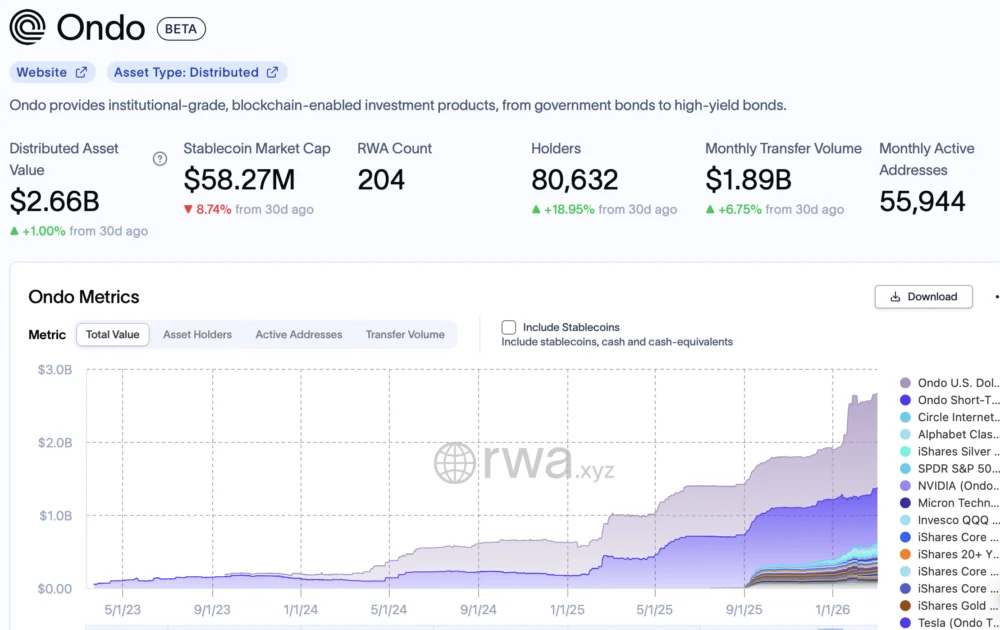
In a significant stride towards bridging traditional finance with the burgeoning digital asset ecosystem, cryptocurrency exchange MEXC has announced a substantial expansion of its tokenized equities offering. This strategic move, executed in partnership with Ondo Finance, introduces new on-chain representations of US stocks, providing global users with enhanced accessibility to a diversified portfolio of real-world assets. The expanded listings, which trade against Tether (USDT) on the MEXC platform, underscore the accelerating trend of asset tokenization within the crypto industry.
The latest expansion, detailed in company announcements this week, encompasses a total of 24 new tokenized stock pairs. This includes an initial batch of 17 newly listed tokenized stock pairs, followed by an additional seven tokens specifically tied to prominent US defense and energy companies. These developments signify the ninth such expansion since the product’s inception, highlighting a consistent and aggressive push by MEXC and Ondo Finance to broaden their tokenized asset portfolio. The initiative aims to democratize access to US equities, allowing for fractional ownership and 24/7 trading, features often unavailable in traditional markets.
Deep Dive into the Expansion: New Listings and Strategic Focus
The initial wave of 17 tokenized stock pairs, unveiled in a March 3 announcement, spans a diverse array of sectors, including technology, healthcare, and finance. While the specific names of all companies within this batch were not disclosed, the breadth of sectors suggests a comprehensive approach to offering exposure to key segments of the US economy. To incentivize adoption and facilitate seamless entry for traders, MEXC has introduced a 30-day waiver on trading fees for these newly listed pairs, a common strategy to boost liquidity and user engagement.
Following swiftly, a separate release on Wednesday introduced seven additional tokenized equities with a distinct strategic focus on the defense and energy sectors. This batch includes shares from industry giants such as Lockheed Martin (LMT), a global aerospace and defense company renowned for its advanced technologies; RTX (RTX), formerly Raytheon Technologies, a leading aerospace and defense manufacturer; ConocoPhillips (COP), one of the world’s largest independent exploration and production companies; and Occidental Petroleum (OXY), a major international oil and gas exploration and production company. The inclusion of these particular companies reflects a calculated move to provide exposure to sectors that are often considered robust and strategically important, appealing to investors seeking stability or exposure to specific geopolitical and economic trends. Withdrawals for these newly listed tokens are scheduled to commence on March 5, providing users with full control over their tokenized assets shortly after listing.
The Mechanics of Tokenization: Bridging the Digital and Traditional
The tokenized stocks offered by MEXC and Ondo Finance are issued as ERC-20 assets on the Ethereum blockchain. This choice of standard leverages Ethereum’s robust infrastructure, security, and broad interoperability within the decentralized finance (DeFi) ecosystem. Each token is meticulously designed to represent ownership of a corresponding underlying equity share. This representation is not merely symbolic; the actual underlying shares are held in regulated trust accounts, ensuring a critical layer of security and compliance.
A cornerstone of this tokenization model is the commitment to transparency and accountability. The underlying assets are subjected to quarterly third-party audits. These audits serve to verify that the number of tokens in circulation accurately corresponds to the number of underlying shares held in custody, thereby maintaining the integrity and trust in the tokenized assets. By tethering these digital representations to physically held and audited traditional securities, the partnership aims to mitigate risks associated with purely synthetic assets and provide investors with a verifiable claim to real-world value. The pairing with Tether (USDT), the largest stablecoin by market capitalization, offers a stable and liquid trading environment, allowing for easy entry and exit from positions without the volatility inherent in other cryptocurrencies.
Strategic Partnership: MEXC and Ondo Finance at the Forefront
This latest expansion is a testament to the enduring and evolving partnership between MEXC, a prominent centralized cryptocurrency exchange, and Ondo Finance, a specialized blockchain company focused on Real World Asset (RWA) tokenization.
MEXC, established in 2018, has rapidly ascended to become a significant player in the crypto exchange landscape. According to CoinMarketCap data, it ranks as the ninth-largest exchange by spot trading volume, offering a comprehensive suite of services including spot and derivatives trading for a vast array of digital assets. Its global reach and established user base provide a fertile ground for the adoption of tokenized securities. Representatives from MEXC would likely emphasize the exchange’s commitment to innovation and its vision of becoming a comprehensive multi-asset trading platform, providing users with diverse investment opportunities beyond traditional cryptocurrencies.
Ondo Finance, based in New York, has carved out a niche as a leader in bringing traditional financial assets onto the blockchain. Its expertise lies in structuring, issuing, and managing tokenized versions of real-world assets. The firm’s focus on regulatory compliance and robust asset custody solutions positions it as a crucial enabler for this new class of digital securities. As of the time of writing, assets issued through Ondo Finance total approximately $2.66 billion in tokenized value, according to RWA.xyz data. This substantial figure underscores Ondo Finance’s significant footprint in the RWA tokenization space and its growing influence in democratizing access to institutional-grade assets. The partnership with MEXC allows Ondo to leverage a vast user base, accelerating the adoption and liquidity of its tokenized offerings.
The Broader Landscape: The Rise of Real World Asset (RWA) Tokenization
The expansion by MEXC and Ondo Finance is indicative of a much larger, transformative trend sweeping through the financial industry: the tokenization of Real World Assets (RWAs). RWA tokenization involves converting tangible and intangible assets—ranging from real estate and commodities to equities and bonds—into digital tokens on a blockchain. This process offers several compelling advantages over traditional asset management:

- Fractional Ownership: Tokenization allows for assets, especially high-value ones, to be divided into smaller, more affordable units, making them accessible to a broader range of investors who might otherwise be priced out.
- Increased Liquidity: By enabling 24/7 trading on global blockchain networks, tokenized assets can enjoy significantly higher liquidity compared to their traditional counterparts, which are often constrained by market hours and geographical barriers.
- Enhanced Transparency: Blockchain’s immutable ledger provides a transparent record of ownership and transactions, reducing fraud and increasing trust.
- Reduced Costs: Automation through smart contracts can streamline many administrative and operational processes, potentially lowering transaction fees and overheads.
- Global Accessibility: As demonstrated by the MEXC-Ondo partnership, tokenized assets can transcend geographical limitations, allowing investors from virtually anywhere in the world to participate in markets previously restricted by national borders and complex regulatory hurdles.
The strategic rationale behind tokenizing US equities is particularly strong. The US stock market is the largest and most liquid in the world, representing a vast pool of value. By tokenizing these assets, platforms like MEXC can offer global users, particularly those in regions with less developed financial infrastructure or restrictive capital controls, a direct and efficient way to gain exposure to leading American companies. This democratizes investment opportunities, potentially attracting a new demographic of investors to both the crypto and traditional financial markets.
A Competitive Arena: Exchanges Embracing Tokenized Equities
The race among cryptocurrency exchanges to tokenize traditional assets, particularly stocks, has been gaining considerable momentum, creating a competitive yet innovative environment. This trend highlights a broader industry shift as crypto platforms seek to evolve into comprehensive multi-asset financial hubs.
In June, more than 60 tokenized equities became available on exchanges such as Kraken and Bybit through Backed Finance’s xStocks product. This extensive lineup included shares of major technology and consumer goods companies like Apple, Amazon, Nvidia, Tesla, Meta, and Netflix, offering users access to some of the most sought-after stocks globally.
Gemini, another prominent crypto exchange, has also made significant inroads into the sector through a partnership with Dinari. In July, Gemini announced that its customers in the European Union could trade a growing list of tokenized US stocks on its platform. This offering included shares tied to companies such as Exxon, Sony, BlackRock, and Visa, catering specifically to the European market where regulatory frameworks might be more conducive to such innovations.
Beyond tokenization, some exchanges are expanding into traditional equities through brokerage-style services. In April, Kraken announced plans to offer trading in approximately 11,000 US-listed stocks and exchange-traded funds (ETFs) as part of a phased rollout across the United States. This move signifies Kraken’s ambition to compete directly with traditional brokerage firms. Similarly, over the past few months, Coinbase and Bitpanda have also introduced stock trading features, allowing users to buy and sell equities alongside cryptocurrencies on their platforms, aiming to provide a seamless, integrated investment experience.
These developments collectively illustrate a clear strategic direction for crypto exchanges: to diversify their offerings, attract a wider user base, and ultimately position themselves as the future of integrated financial services. The competition is not just about who can list more tokenized assets, but who can do so reliably, compliantly, and with the best user experience.
Regulatory Headwinds and Market Bifurcation
Despite the global enthusiasm for tokenized equities, the regulatory landscape remains a significant hurdle, particularly in the United States. Tokenized equities remain largely unavailable to US users due to the ongoing ambiguity and lack of clear regulatory guidance for blockchain-based securities. The Securities and Exchange Commission (SEC) has yet to provide a definitive framework for how these digital representations of traditional stocks should be classified and regulated. This regulatory uncertainty creates a de facto bifurcation of the market: non-US users often have access to a broader range of tokenized assets, while US investors are largely excluded.
The SEC’s cautious approach stems from concerns around investor protection, market manipulation, and the potential for these new instruments to circumvent existing securities laws. Until clear guidelines are established, exchanges and issuers are reluctant to offer these products to US residents, fearing potential enforcement actions. This situation underscores the critical need for regulatory clarity to unlock the full potential of tokenized assets within major financial markets. The continued expansion in non-US jurisdictions, as seen with MEXC and Ondo Finance, demonstrates a pragmatic approach by industry players to operate where the regulatory environment is more permissive, while simultaneously advocating for clearer rules in more restrictive markets.
The Future of Finance: Bridging TradFi and Crypto
The latest expansion by MEXC and Ondo Finance is more than just a product launch; it is a clear indicator of the evolving symbiosis between traditional finance (TradFi) and the cryptocurrency world. This convergence is poised to redefine investment accessibility, market efficiency, and global financial participation.
The ability to trade fractional shares of major US companies 24/7 on a blockchain, using a stablecoin like USDT, represents a fundamental shift in how assets are owned, traded, and settled. It offers a glimpse into a future where investment opportunities are truly global and inclusive, breaking down the geographical and temporal barriers that have historically defined financial markets. As technology continues to advance and regulatory frameworks gradually adapt, the tokenization of real-world assets is expected to proliferate across various asset classes, from commodities and real estate to intellectual property and alternative investments.
The ongoing innovation from partnerships like MEXC and Ondo Finance, alongside the strategic moves by other major exchanges, is paving the way for a more integrated and accessible global financial system. While regulatory challenges persist, particularly in key markets like the US, the momentum behind RWA tokenization is undeniable. This trend is not merely about digitizing existing assets; it is about reimagining the very infrastructure of finance, making it more efficient, transparent, and equitable for investors worldwide. The ultimate outcome will likely be a hybrid financial ecosystem where the best attributes of traditional finance and blockchain technology converge to create unprecedented opportunities.